
Growing indoor vegetables can be very rewarding. But, it needs careful attention to their watering needs. Overwatering is a big mistake that can cause root rot and other issues.
As I explore indoor gardening, I’ve learned that knowing how to water is key. In this article, we’ll talk about why Proper watering for indoor vegetables is important. We’ll also give you a detailed guide to help you start.
Key Takeaways
- Understand the importance of proper watering for indoor vegetables
- Learn how to avoid common mistakes like overwatering
- Discover the best practices for watering your indoor vegetable garden
- Get tips on how to create a thriving indoor vegetable garden
- Find out how to tailor your watering schedule to your plants’ needs
Understanding Indoor Vegetable Watering Needs
Indoor vegetables need special care when it comes to watering. Knowing how to water them right is key to a good harvest.
Several things affect how much water indoor veggies need. These include the type of veggie, the pot size, the room temperature, and the home’s humidity.
Factors Affecting Water Requirements
The type of vegetable you grow matters a lot. For example, leafy greens like lettuce need more water than root veggies like carrots.
Also, the environment around your plants plays a big role. Veggies in warmer rooms dry out quicker than those in cooler ones.
“The key to successful indoor gardening is not just about watering your plants, but understanding when and how much to water them.”
| Vegetable Type | Watering Frequency | Soil Moisture Level |
|---|---|---|
| Leafy Greens | Daily | Consistently Moist |
| Root Vegetables | Every Other Day | Moderately Dry |
Importance of Soil Type
The soil your veggies grow in is very important. It should drain well to avoid waterlogged soil and root rot.
Using a soil moisture meter helps you check the soil’s moisture. This way, you can avoid overwatering or underwatering your plants.
By understanding what affects watering needs and the role of soil, you can water your indoor veggies just right. This ensures they grow well.
The Role of Light in Watering
Light is key in figuring out when to water indoor veggies. The light your plants get affects their growth, water use, and health.
How Light Influences Plant Growth
Light is vital for photosynthesis, where plants make their food. Indoor veggies need enough light to grow well and stay healthy. The light’s intensity and how long it lasts changes how fast plants use water.
For example, lettuce and spinach do okay in less light. But tomatoes and peppers need more. Knowing what light your veggies need helps you water them right.
Adjusting Watering Based on Light Levels
When watering indoor veggies, think about the light they get. Plants in brighter light need more water because they’re making food faster. Plants in less light might need less water.
Check soil moisture by feeling it with your finger. If it’s dry, it’s time to water.
“The key to successful indoor gardening is observing your plants’ responses to their environment and adjusting your care.”
Watching how light impacts your indoor veggies helps you water them right. This ensures they get the water they need to grow well.
Signs of Overwatering
Overwatering can harm your indoor vegetable garden a lot. Too much water can cause many problems. These issues can affect how well your plants grow and live.
One common sign of overwatering is yellow leaves. This happens because too much water stops roots from getting oxygen. Without oxygen, roots can’t get nutrients, making leaves turn yellow.
Yellowing Leaves and Root Rot
Yellow leaves often mean root rot, too. Root rot happens when roots decay from too much water. This makes it hard for plants to get the nutrients they need. To see if roots are rotting, take the plant out of its pot and look at the roots. If they’re soft and mushy, they’re rotting.
Experts at Bloomscape say, “Overwatered plants often have yellow leaves and droopy stems. This shows they’re getting too much water.”
When to Cut Back on Water
If you see signs of overwatering, stop watering right away. Check the soil moisture by sticking your finger in it up to the first knuckle. If it’s wet, wait a few days before watering again. Changing your watering schedule can help save your plants.
To avoid overwatering, know how much water your indoor vegetables need. Pay attention to signs of overwatering and act fast. This will keep your plants healthy and strong.
Signs of Underwatering
It’s key to spot underwatering signs to keep your indoor veggie garden healthy. Not enough water can harm plants as much as too much. Look out for symptoms that can slow down growth.
Wilting Leaves and Cracked Soil
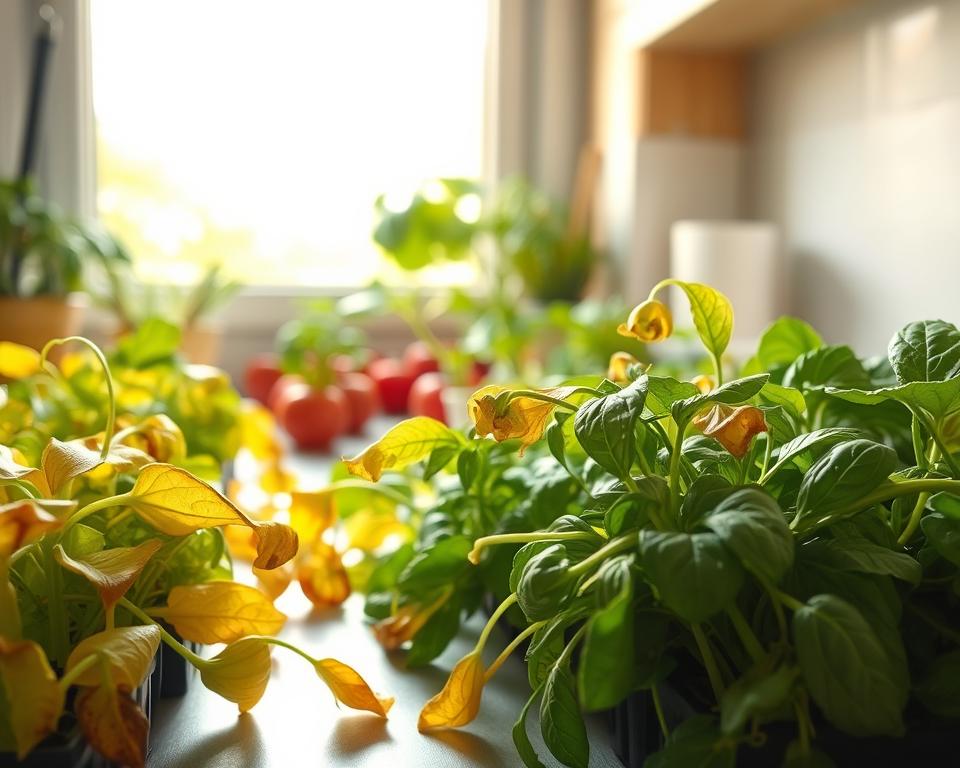
Wilting leaves are a clear sign of underwatering. Without enough water, leaves droop and lose color. The soil also cracks and dries out, showing plants lack moisture.
How to Identify Dry Conditions
Check soil moisture by sticking your finger in it up to the first knuckle. If it’s dry, your veggies need water. A light pot also means the soil is dry.
Adjusting your watering schedule helps avoid underwatering. Consider light and soil type too. These affect how fast soil dries. Paying attention to these signs helps your veggies grow well.
Use an indoor vegetable watering guide for more detailed advice. It helps tailor watering to your plants’ needs.
Choosing the Right Watering Schedule
Finding the perfect watering schedule for your indoor veggies is key to their health. A good watering plan makes sure your plants get the right moisture. This is essential for their growth.
Frequency Based on Plant Type
Each plant needs different amounts of water. For example, leafy greens like lettuce and spinach need water often because their roots are shallow. But plants like tomatoes and peppers do better with less water but deeper roots.
Seasonal Adjustments for Indoor Vegetables
The season and temperature also affect how often you should water. In warmer months, veggies need more water because they lose moisture faster. In cooler months, they need less water as they grow slower.
| Plant Type | Watering Frequency | Seasonal Adjustment |
|---|---|---|
| Leafy Greens | Every 2-3 days | More frequent in summer |
| Tomatoes/Peppers | Every 4-5 days | Less frequent in winter |
| Herbs | Every 3-4 days | Adjust based on soil moisture |
Knowing what your indoor veggies need and adjusting your watering schedule can help them thrive. This way, you can enjoy a bountiful harvest.
Tools for Efficient Watering
The right tools are key for a healthy indoor vegetable garden. They help ensure your plants get the right water. This prevents too much or too little water.
Watering Cans vs. Misters
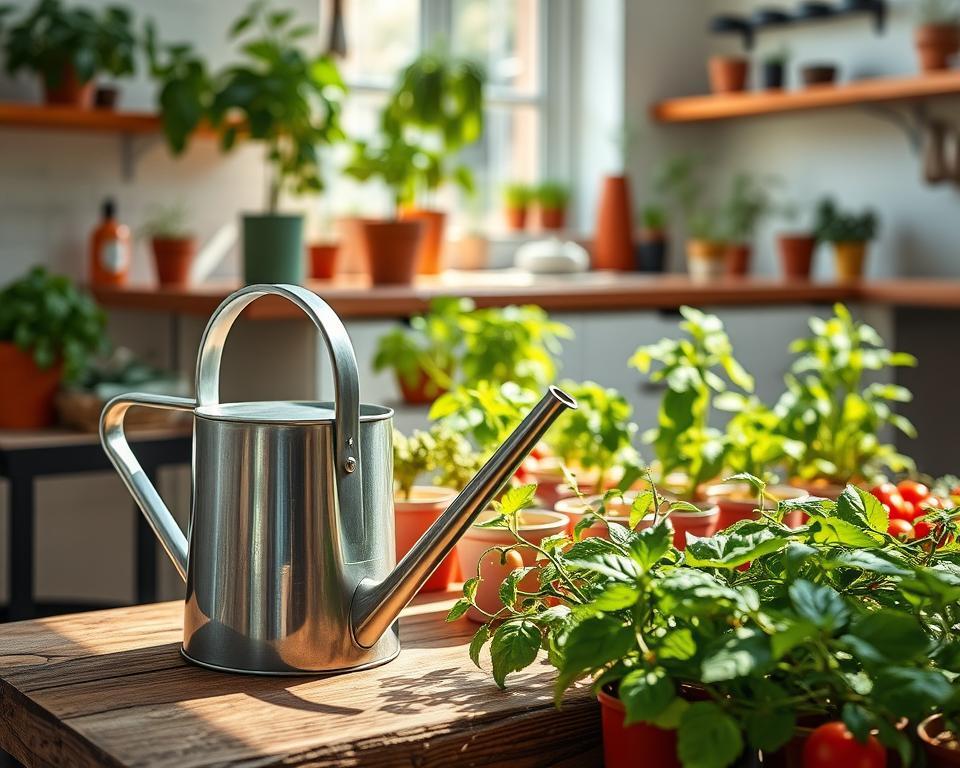
Watering cans and misters are popular for indoor veggies. Watering cans give a steady flow of water to the soil. This reduces waste and keeps the roots moist.
Misters are better for keeping humidity up. They give a fine mist that won’t harm tiny seeds or roots.
To learn more about watering cans, check out this guide on Epicurious.
Soil Moisture Meters
A soil moisture meter is also very useful. It shows the soil’s moisture level, so you know when to water. This is great for indoor veggies, as they need different amounts of water at different times.
Best Practices for Watering Methods
Learning the best ways to water indoor veggies can greatly improve their health. The way you water affects how well plants absorb nutrients and water. This, in turn, impacts their growth and how much they produce.
Deep Watering Techniques
Deep watering means soaking the soil well to encourage deep roots. This makes plants stronger and better at handling dry spells. To do deep watering, keep watering until you see water coming out of the pot’s bottom. This shows the soil is fully wet.
Benefits of Deep Watering:
- Promotes deep root growth, making plants more resilient
- Enhances nutrient uptake by thoroughly saturating the soil
- Reduces the frequency of watering needed
Surface Watering Considerations
Surface watering, by contrast, waters just the top of the soil without making it too wet. It’s good for plants that like drier soil or for young seedlings that can’t handle too much water. But, it’s important to keep the soil moist enough for the plants to grow well.
Key Considerations for Surface Watering:
- Monitor soil moisture closely to avoid underwatering
- Adjust watering frequency based on plant type and environmental conditions
- Be cautious not to overwater, which can lead to root rot and other issues
Choosing the right watering method can help your indoor veggies grow well and produce more. Whether you pick deep watering or surface watering, knowing what your plants need is essential for their success.
Temperature and Humidity Effects
Creating the perfect spot for your indoor veggies means watching temperature and humidity closely. These factors are key to your plants’ health and growth.
Ideal Conditions for Indoor Vegetables
Most veggies love daytime temps between 65°F to 75°F (18°C to 24°C). At night, they prefer it around 55°F to 65°F (13°C to 18°C). Keeping the temperature steady is important, as changes can stress them out. Experts say the best day temperature is about 70°F (21°C).
Humidity matters too. Your veggies like a relative humidity of 40% to 60%. You can boost humidity with a humidifier or by putting pots on a water tray with pebbles. If it’s too humid, better air flow can help.
How to Manage Indoor Climate
Effective indoor climate control means watching both temperature and humidity. Use thermostats or temperature controllers for temperature. Hygrometers help you keep an eye on humidity, so you can adjust as needed.
Tips for Managing Indoor Climate:
- Use thermostats to regulate temperature.
- Employ humidifiers or dehumidifiers as needed.
- Ensure good air circulation around your plants.
- Monitor your plants regularly for signs of stress due to temperature or humidity.
By controlling temperature and humidity, you can make a great spot for your indoor veggies. They’ll get the right water and grow well. Experts say, “managing the indoor climate is essential for indoor gardening success.”
“The key to successful indoor gardening is creating an environment that mimics the natural conditions under which plants thrive.” – Gardening Expert
Common Indoor Vegetable Varieties
Indoor vegetable gardening is easy with beginner-friendly varieties. These plants do well indoors and need little care. They’re great for those new to gardening.
Easy-to-Grow Options for Beginners
Beginners should start with easy-growing vegetables. Leafy greens like lettuce and spinach, cherry tomatoes, and herbs like basil and cilantro are good choices. These plants are resilient and forgiving, helping beginners learn and improve.
Growing these varieties indoors is rewarding. Leafy greens can be ready in 20 days, giving a quick win. Cherry tomatoes take longer but let you pick fresh tomatoes from your garden.
Watering Needs of Popular Choices
Knowing the watering needs of popular indoor vegetables is key. Leafy greens like consistent moisture, while cherry tomatoes need more water for fruit. Herbs like basil need well-draining soil to avoid root rot.
To check if it’s time to water, stick your finger into the soil up to the first knuckle. If it’s dry, water. Adjust your watering based on your plants’ needs for them to thrive.
By picking the right varieties and knowing their watering needs, you can have a thriving indoor garden. These tips are helpful for both new and experienced gardeners.
Troubleshooting Watering Issues
Indoor vegetable gardening needs careful watering to avoid plant damage. It’s important to know what each plant needs to survive.
Adjusting Techniques for Specific Plants
Each plant has its own watering needs. Leafy greens like lettuce and spinach like moist soil. On the other hand, tomatoes and peppers need more water but can handle some dryness.
When watering, think about the plant you’re caring for. Herbs such as basil and cilantro need steady moisture. But root vegetables like carrots and beets do better with a balanced watering schedule.
| Plant Type | Watering Frequency | Soil Preference |
|---|---|---|
| Leafy Greens | Frequent | Moist |
| Tomatoes/Peppers | Moderate to Frequent | Well-draining |
| Herbs (Basil, Cilantro) | Consistent | Moist but not waterlogged |
Common Mistakes to Avoid
One big mistake is overwatering. It can cause root rot and harm your plants. Make sure your pots have holes for drainage.
Underwatering is another issue. It stresses plants. A soil moisture meter can help you find the right watering time.
By watching out for these problems and adjusting your watering, you can make your indoor garden thrive.
Maintaining Healthy Indoor Vegetables
To keep your indoor vegetables healthy, you need a complete care plan. This includes the right watering, nutrients, and environment. By watering them well, you help your plants grow strong and productive.
Nutrient Management and Watering
Watering and nutrients go hand in hand for your plants. A balanced fertilizer gives them the nutrients they need. Adjust your watering schedule based on your plants’ nutrient needs.
Creating an Ideal Environment
Creating the perfect environment is key. This means managing light, temperature, and humidity. Adjust these to meet your plants’ needs for growth. A good watering schedule also considers these environmental factors.