

Growing strawberries at home can be very rewarding. With the right techniques, you can enjoy a lot of strawberries right in your home. Did you know strawberries are one of the most popular fruits to grow indoors? Many varieties do well in containers and controlled environments.
If you love indoor gardening, I’m excited to share my knowledge with you. I’ll help you start growing your own strawberries indoors. With the right guidance, you can enjoy fresh, juicy strawberries all year round.
Key Takeaways
- Choose the right variety of strawberries for indoor cultivation.
- Understand the basic requirements for growing strawberries indoors.
- Learn how to prepare the ideal soil and container for your strawberries.
- Discover tips for providing the right amount of light and temperature.
- Find out how to care for your strawberry plants to ensure a bountiful harvest.
Understanding Indoor Strawberry Cultivation
Indoor strawberry cultivation can be very rewarding, even in winter. It lets you control the environment, which is key for healthy growth.
Benefits of Growing Strawberries Indoors
Growing strawberries indoors means no pests or diseases. Hydroponic strawberries are perfect for indoor growing. They don’t need soil and can grow well with the right conditions.
Indoor growing lets you have strawberries all year. You can enjoy them even when they’re not in season outside. It’s also a fun hobby that brings nature indoors.
What You Need to Get Started
To grow strawberries indoors, you need a few things. You’ll need containers, a good potting mix, and a grow light. For hydroponic strawberries, you’ll need a system made for them.
Important strawberry growing tips include the right temperature and humidity. Strawberries like daytime temperatures of 65-75°F (18-24°C) and cooler nights. Good air circulation helps prevent diseases.
Choosing the Right Strawberry Varieties
Finding the right strawberry variety is key to a great indoor harvest. There are many types out there. Knowing what each one offers is important for growing strawberries indoors.
Everbearing vs. June-Bearing Strains
Strawberries come in two main types: everbearing and June-bearing. Everbearing strawberries grow fruit all season, in spring, summer, and fall. They’re perfect for indoor growing because they keep producing.
June-bearing strawberries give one big crop in spring. They’re better for outdoor growing or if you want one big harvest.
Everbearing varieties are best for indoor growing because they keep producing. But, some June-bearing types can also grow well indoors if you want a single big harvest.
Recommended Varieties for Indoor Growing
For indoor growing, pick compact or dwarf varieties made for containers. Some top picks include:
- ‘Albion’: Known for its high yield and disease resistance.
- ‘Seascape’: A popular everbearing variety that thrives in containers.
- ‘Camarosa’: A June-bearing variety that can do well indoors with proper care.
These varieties are small, taste great, and grow well indoors. When picking, think about disease resistance and the indoor growing conditions you can offer.
Essential Equipment for Indoor Cultivation
For a thriving indoor strawberry garden, the right equipment is key. You need several important pieces to create a perfect growing space. These items help strawberries grow well, just like in nature.
Grow Lights: Which to Choose?
Grow lights are vital for indoor strawberry growing. Strawberries need lots of light to grow and produce fruit. LED grow lights are a great choice because they’re energy-saving and don’t get too hot.
The best lighting for indoor strawberries is full-spectrum LED lights. They give the right spectrum and intensity for strawberries to thrive. Make sure to pick LED grow lights made for fruiting plants like strawberries.
Containers and Soil Requirements
The right containers and soil are also key for indoor strawberry growing. Choose containers that drain well to avoid waterlogged soil and root rot. You can use plastic or clay pots, or even vertical systems for growing multiple plants in a small space.
The soil should be made for strawberries, keeping moisture but draining well. A good potting mix with compost adds the nutrients strawberries need for growth.
Nutrient Solutions for Success
Nutrient solutions are also important for healthy strawberry growth and fruit. Strawberries need a balanced fertilizer with nitrogen, phosphorus, and potassium.
You can use a water-soluble fertilizer or a slow-release one. Water-soluble fertilizers need to be diluted as per the instructions. Slow-release fertilizers give nutrients over time, reducing how often you need to fertilize. This ensures your strawberries get nutrients consistently.
Setting Up Your Indoor Garden
Creating the perfect environment for your indoor strawberry garden is key for a great harvest. Several factors are important to make sure your strawberries grow well.
Ideal Location and Environment
The spot for your indoor garden matters a lot. Pick a place that’s well-ventilated and gets lots of light, like near a window or under grow lights. Strawberries need bright conditions to grow well, so they must get enough light.
Temperature and Humidity Control
Temperature and humidity are very important for growing strawberries indoors. Strawberries like daytime temperatures between 65-75°F (18-24°C) and cooler nights around 55-65°F (13-18°C). Keeping the humidity at 50-60% helps them grow healthy too.
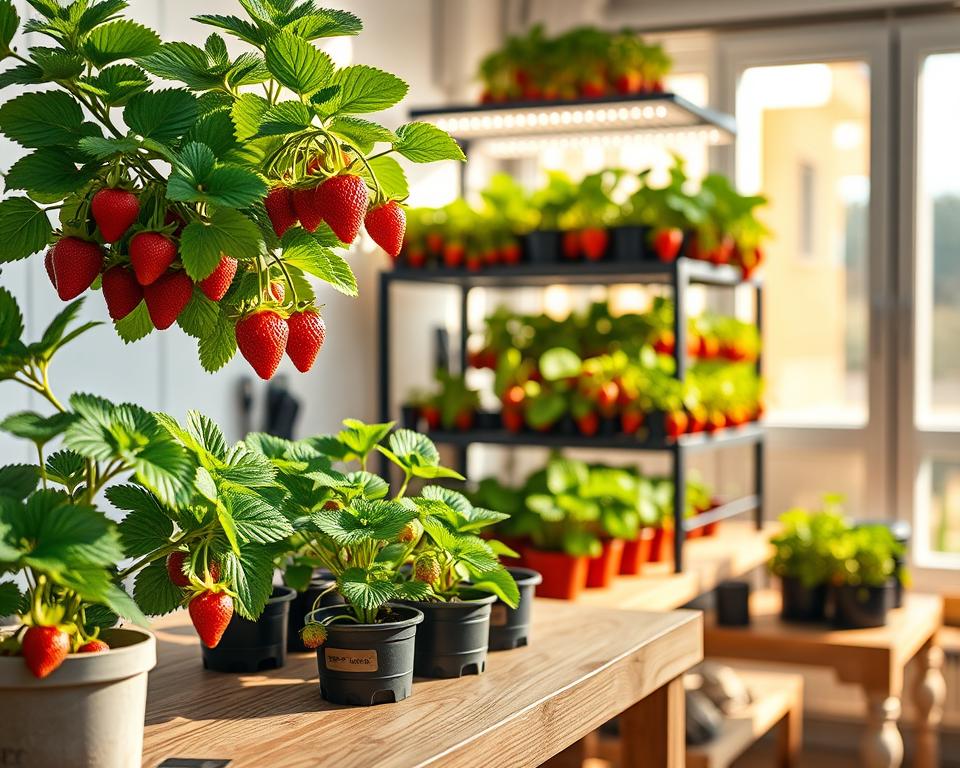
By managing these factors, you can make a perfect spot for your strawberries. This will lead to a successful and fruitful harvest.
Planting Strawberries Indoors
To enjoy a bountiful harvest of strawberries indoors, it’s key to start with proper planting. Whether using traditional soil or a hydroponic system, the initial steps are vital. They ensure your plants’ health and productivity.
Preparing the Soil
Before planting strawberries, mix a balanced fertilizer into the soil. This step gives your strawberries the nutrients they need to grow. For soil-based cultivation, a mix with a balanced NPK ratio (e.g., 10-10-10) is best. If using a hydroponic system, follow the manufacturer’s guidelines for nutrient solutions.
Tip: Make sure the soil or growing medium is moist but not too wet. This can cause root rot. For hydroponic strawberries, keeping the right nutrient balance is essential.
Planting Techniques and Densities
When planting strawberries indoors, the planting density is key. Overcrowding can reduce yields and increase disease risk. Plant most varieties 6-8 inches apart. Arrange plants in a pattern that allows for good air circulation around each plant.
For hydroponic systems: Follow the specific instructions provided with your system for planting densities and techniques. Generally, hydroponic strawberries are planted to maximize space while ensuring each plant gets enough nutrients.
By following these strawberry growing tips, you’ll be well on your way to enjoying a healthy and productive indoor strawberry crop.
Watering and Fertilization Tips
Watering and fertilizing your indoor strawberries right is key to a great harvest. Knowing what your plants need is essential.
Understanding Strawberry Water Needs
Strawberries need steady moisture, more so when they’re fruiting. But too much water can harm them, causing root rot. Water them when the top inch of soil feels dry to the touch. Make sure your pot has holes for drainage to avoid soggy soil.
Here are some tips for watering your indoor strawberries well:
- Water your strawberries in the morning so they can soak up the water all day.
- Don’t splash water on the leaves to avoid fungal diseases. Water at the soil level instead.
- Use water that’s room temperature. Cold water can shock the roots.
Best Fertilizers for Indoor Strawberries
Fertilizing is vital for your strawberries’ health and fruit production. A balanced fertilizer with nitrogen, phosphorus, and potassium (NPK) is best. You might also want to use a strawberry-specific fertilizer for extra nutrients.
When picking a fertilizer, consider these points:
- Choose a fertilizer with a balanced NPK ratio, like 10-10-10.
- Think about your strawberries’ growth stage. More phosphorus helps with fruiting.
- Always follow the fertilizer’s instructions to avoid overdoing it.
By following these tips, you’ll get a rich harvest of tasty strawberries from your indoor garden.
Pest and Disease Management
To grow healthy indoor strawberries, managing pests and diseases is key. Indoor strawberry plants face many pests and diseases. But, with the right steps, you can keep your plants safe and enjoy a great harvest.
Common Pests to Watch For
Indoor strawberry plants often get attacked by aphids, spider mites, and mealybugs. These pests can harm your plants, leading to less fruit and poor health.
- Aphids: Small, soft-bodied insects that feed on plant sap, causing curled or distorted leaves.
- Spider Mites: Tiny, spider-like insects that cause yellowing or bronzing of leaves.
- Mealybugs: Small, white, cottony insects that feed on plant sap, causing stunted growth.
Natural Remedies and Preventative Measures
Checking your plants often is key to catching pests early. Natural solutions like neem oil or insecticidal soap can fight infestations. Also, good air flow and enough light help prevent diseases.
| Pest/Disease | Symptoms | Remedy |
|---|---|---|
| Aphids | Curled or distorted leaves | Neem oil or insecticidal soap |
| Spider Mites | Yellowing or bronzing of leaves | Insecticidal soap or miticide |
| Mealybugs | Stunted growth, white cottony patches | Neem oil or insecticidal soap |
As one expert notes,
“Prevention is always better than cure when it comes to managing pests and diseases in indoor strawberry cultivation.”
Being proactive and taking steps to prevent pests and diseases can greatly reduce risks.
For the best care of indoor strawberries, ensure they get the right light. Good lighting promotes healthy growth and can keep pests away.
Maintaining Your Indoor Strawberry Plants
Indoor strawberry plants need careful care to grow well. Knowing how to maintain them is key to a good harvest. It’s important to understand the basics of keeping your plants healthy.
Pruning and Training for Better Growth
Pruning is vital for your indoor strawberries. It helps the plant grow strong and produce more fruit. It also keeps diseases away and improves air flow.
Training your plants means trimming runners to make them bushy. This is great for small spaces. It helps the plant focus on growing more fruiting branches.
Pruning and Training Tips:
- Remove weak or damaged leaves to stop disease.
- Trim runners for bushy growth and more fruit.
- Use clean tools to avoid spreading diseases.
Pollination Techniques in an Indoor Setting
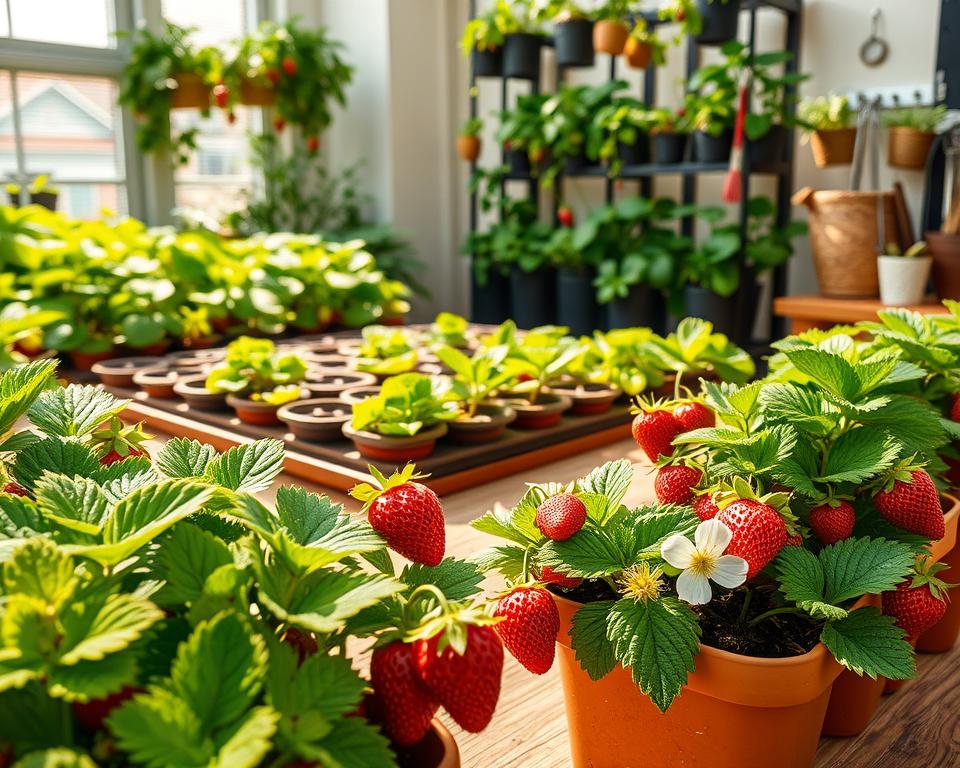
In indoor settings, strawberries need manual pollination. You can use a soft-bristled brush to move pollen. This helps the plant make fruit.
Another way is to vibrate the plants. Lightly tapping them or using a vibrating tool helps pollen spread. This boosts fruit production.
| Method | Description | Benefits |
|---|---|---|
| Brush Pollination | Using a small brush to transfer pollen | Precise control over pollination |
| Vibrating Plants | Gently vibrating plants to distribute pollen | Effective for improving fruit set |
Using these care methods can greatly improve your indoor strawberry plants. Regular pruning, training, and pollination lead to a rich harvest. Your indoor strawberry garden will thrive.
Harvesting Your Strawberries
Harvesting strawberries indoors is a rewarding experience. With the right techniques, you can enjoy a bountiful yield. Knowing when your strawberries are ripe and how to pick them without damage is key.
Signs of Ripeness to Look For
Strawberries are ready when they turn bright red and are slightly soft. It’s important to check your plants often. Strawberries are highly perishable and their quality can drop quickly if not picked at the right time.
Visual Inspection: Look for strawberries that have turned a uniform red color. Don’t pick strawberries that are white or green, as they won’t ripen off the plant.
Gentle Touch: Ripe strawberries will be slightly soft but firm enough to hold their shape. If they’re too soft, they may be overripe.
Best Practices for Harvesting
To enjoy your strawberries at their best, follow these best practices:
- Harvest strawberries gently to avoid bruising or damaging the fruit.
- Pick strawberries in the morning, after the dew has dried but before the heat of the day.
- Use scissors to cut the stem about 1/4 inch from the fruit to avoid pulling on the plant.
| Harvesting Technique | Description | Benefit |
|---|---|---|
| Gentle Handling | Handle strawberries with care to avoid bruising. | Preserves fruit quality |
| Morning Harvest | Pick strawberries in the morning. | Reduces heat stress on the fruit |
| Cutting the Stem | Use scissors to cut the stem. | Avoids damaging the plant |
For more detailed information on growing strawberries, visit the University of Minnesota Extension page on the topic.
Troubleshooting Common Issues
When growing strawberries indoors, it’s important to spot and fix problems early. This ensures a healthy crop. Even with good care, indoor strawberry plants can face issues that affect their growth and yield.
Poor Growth Factors and Solutions
Poor growth in indoor strawberry plants can stem from inadequate light, insufficient nutrients, or pests. To tackle these problems, adjusting your care routine is key.
- Make sure your plants get enough light; use grow lights if natural light is scarce.
- Verify your nutrient solution is balanced and suitable for strawberries. For more tips, check out articles on indoor strawberry cultivation.
- Regularly check your plants for pests and act fast if you find any.
Addressing Nutritional Deficiencies
Nutritional deficiencies can harm your indoor strawberry plants’ health and productivity. A hydroponic system helps control nutrients precisely, ensuring your plants get what they need.
Common deficiencies include a lack of nitrogen, potassium, or magnesium. To fix these, adjust your nutrient solution. For example, if leaves turn yellow due to nitrogen deficiency, up the nitrogen in your solution.
| Nutrient | Signs of Deficiency | Solution |
|---|---|---|
| Nitrogen | Yellowing leaves | Increase nitrogen in nutrient solution |
| Potassium | Weakened stems | Adjust potassium levels |
| Magnesium | Interveinal chlorosis | Supplement with magnesium |
Creative Ways to Enjoy Your Indoor Harvest
Enjoying your indoor strawberry harvest is a treat. You can make many tasty dishes, like fresh salads and sweet desserts. All of these can feature the delicious taste of your strawberries.
Delicious Recipes to Try
Try adding fresh strawberries to your breakfast. They’re great in oatmeal or yogurt parfaits. You can also blend them into smoothies or top pancakes and waffles.
For a special dessert, make strawberry shortcake or sorbet. It’s a delicious way to enjoy your harvest.
Preserving Your Harvest for Year-Round Enjoyment
Preserve your strawberries to enjoy them all year. You can can them or freeze them. Canning keeps them fresh for months, while freezing saves their taste and nutrients.
By using indoor strawberry care and vertical farming, you can have a steady harvest. This makes the most of your gardening space.