

Did you know pests cause about $5 billion in damages each year in the U.S.? Exploring biological pest control shows many benefits of natural pest management. Releasing beneficial insects is a green way to fight pests without harsh chemicals.
I’ll show you how to do indoor beneficial insect release. We’ll look at the best ways and why it’s good for the planet. This natural method helps control pests without harming the environment.
Key Takeaways
- Biological pest control is a better choice than chemical pesticides.
- Releasing beneficial insects indoors can greatly lower pest numbers.
- This green method cuts down on environmental harm and supports sustainability.
- Indoor beneficial insect release is easy and affordable.
- Using this method keeps your home safe and helps the planet.
Introduction to Indoor Beneficial Insects
Beneficial insects are the unsung heroes of indoor pest control. They offer a natural and effective way to manage pests. As I explore indoor gardening, it’s clear they play a key role in keeping ecosystems balanced.
What Are Beneficial Insects?
Beneficial insects have a positive impact on the environment, controlling pest populations. They are nature’s pest controllers, eating harmful insects that damage plants. Examples include ladybugs, lacewings, and praying mantids, known for their hunting skills.
Importance in Indoor Pest Control
The role of beneficial insects in indoor pest control is huge. They offer a biological control method that’s both effective and eco-friendly. By adding these insects to indoor gardens, we can cut down on chemical pesticides.
| Beneficial Insect | Pest Controlled | Benefits |
|---|---|---|
| Ladybugs | Aphids, Whiteflies | Efficient predators, easy to introduce |
| Lacewings | Aphids, Spider Mites | Voracious appetite, effective in controlling a wide range of pests |
| Praying Mantids | Flies, Bees, Wasps | Stealthy hunters, beneficial for controlling larger pests |
Understanding beneficial insects’ role helps us use their power to manage pests. This creates a healthier indoor environment.
Common Types of Beneficial Insects
Looking to control pests in your indoor garden naturally? Beneficial insects are a smart choice. They are effective and eco-friendly, avoiding the need for harsh chemicals.
Ladybugs: Nature’s Pest Controllers
Ladybugs are well-known for eating aphids and other pests. They are simple to add to your indoor garden. For tips on using ladybugs, check out Nature’s Good Guys.
Praying Mantids: Fascinating Predators
Praying mantids are great for indoor pest control. They eat many pests, including flies and bees. Their size and hunting skills make them very useful.
Lacewings: Tiny but Mighty Allies
Lacewings are small but powerful against pests. Their young eat aphids and mealybugs. They are good for controlling pests that other methods can’t handle.
In summary, ladybugs, praying mantids, and lacewings are key beneficial insects for indoor gardens. Knowing their strengths helps you pick the right ones for your plants. This way, you can have a healthy, pest-free garden.
How Beneficial Insects Work
It’s key to know how beneficial insects work for organic indoor insect control. They’re not just random visitors. They play a role in keeping the ecosystem balanced and healthy.
These insects have special traits that help them control pests. For example, ladybugs eat a lot of aphids. Lacewings eat soft-bodied pests.
Natural Pest Control Mechanisms
Beneficial insects use different ways to control pests. Ladybugs and lacewings eat pests. Wasps lay eggs inside pests, killing them.
Predation and parasitism are their main strategies. Predators hunt and eat pests. Parasitoids use hosts to raise their young, killing the host in the process.
| Beneficial Insect | Pest Controlled | Control Mechanism |
|---|---|---|
| Ladybugs | Aphids, Scale Insects | Predation |
| Lacewings | Aphids, Whiteflies, Thrips | Predation |
| Parasitoid Wasps | Aphids, Caterpillars | Parasitism |
Interactions with Indoor Ecosystems
Beneficial insects have complex interactions with indoor ecosystems. They affect pest populations and plant health. By adding them to a greenhouse, you can manage pests naturally.
The success of beneficial insects depends on several factors. These include the type of insect, the pest problem, and the ecosystem’s health.
Understanding these interactions helps create a better indoor environment. This leads to a healthier and more balanced space.
Benefits of Releasing Beneficial Insects Indoors
Using beneficial insects indoors has many benefits. It changes how we deal with pests at home and work. It makes our spaces healthier and more eco-friendly.
Eco-Friendly Approach
Releasing beneficial insects is good for the planet. It’s better than using harmful chemicals. It’s great for those who care about the environment.
Key advantages of this eco-friendly approach include:
- Reduced environmental pollution
- Minimal impact on non-target species
- A sustainable solution for long-term pest control
Reducing Chemical Pesticide Use
Using beneficial insects cuts down on chemical pesticides. Chemicals can harm our air and health. Beneficial insects help us use fewer chemicals.
The benefits of reducing chemical pesticide use include:
- Improved indoor air quality
- Reduced health risks associated with chemical exposure
- A decrease in the development of pesticide-resistant pests
Enhancing Indoor Plant Health
Beneficial insects help plants grow strong. They keep pests away and make plants healthier. Healthy plants fight off diseases better.
The overall effect is a more robust and resilient indoor ecosystem. Plants and beneficial insects work together for a balanced space.
Selecting the Right Beneficial Insects
Choosing the right beneficial insects for your indoor space is essential for natural pest control. Before introducing beneficial insects into my home or office, I consider several key factors. This ensures the success of the natural pest management.
Factors to Consider
- The type of pest I’m trying to control is critical. Different beneficial insects target different pests.
- The size of my indoor space matters. It determines how many beneficial insects I need to release.
- Environmental conditions like temperature, humidity, and light exposure are important. They can affect the effectiveness and survival of the beneficial insects.
Ladybugs are great for controlling aphids but may struggle in cold temperatures. Lacewings, on the other hand, can handle various conditions and fight a wide range of pests.
Ideal Insects for Common Indoor Pests
Different beneficial insects are better suited for different indoor pests. Here’s a list of common indoor pests and the beneficial insects that can control them:
| Pest Type | Beneficial Insect | Effectiveness |
|---|---|---|
| Aphids | Ladybugs, Lacewings | High |
| Spider Mites | Predatory Mites | High |
| Whiteflies | Encarsia Formosa | Medium to High |
By knowing the specific pest control needs of my indoor space and choosing the right beneficial insects, I can create a balanced ecosystem. This ecosystem is less dependent on chemical pesticides.
How to Release Beneficial Insects
Releasing beneficial insects indoors is easy with a few steps. It’s key to keep your indoor garden healthy. This way, you can enjoy a pest-free space.
Best Practices for Release
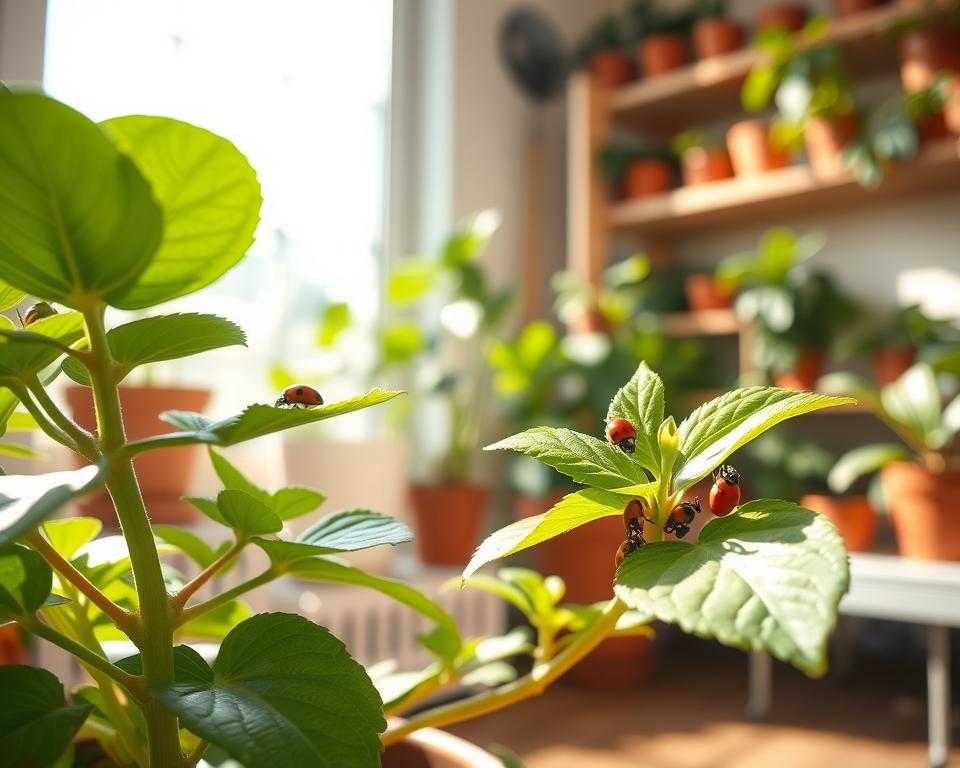
Here are the best ways to release beneficial insects:
- Choose the Right Time: Release them in the early morning or late evening. This reduces stress on the insects.
- Prepare the Environment: Make sure your garden is free from harmful chemicals before releasing the insects.
- Release Near Infested Areas: Place the insects near where pests are most active. This boosts their effectiveness.
By following these steps, you create a space where beneficial insects can thrive. They will help control indoor pests effectively.
Tips for Ensuring Success
Here are some tips to make your beneficial insect release even more successful:
- Monitor the Environment: Watch the temperature and humidity levels. These affect the insects’ performance and survival.
- Maintain Plant Health: Healthy plants resist pests better. Keep your plants well-watered and fertilized.
- Be Patient: It takes time for the insects to control pests. Be patient and let them do their job.
Gardening experts say, “The secret to successful biological control is a balanced ecosystem.” By following these tips, you can have a pest-free garden. It’s a sustainable and eco-friendly way to garden.
“Using beneficial insects is not just about controlling pests; it’s about creating a healthy ecosystem in your home or garden.”
Maintaining a Thriving Indoor Environment
To keep your indoor space thriving, it’s key to balance the environment. This balance supports the beneficial insects you’ve introduced. It involves monitoring pests and creating a habitat for these insects to grow.
Monitoring Pest Populations
Regularly checking pest populations is vital. It shows if the beneficial insects are working well. It also helps spot any problems early.
Look for eggs, larvae, or pests on your plants. This lets you know if the beneficial insects are doing their job. You can then make any needed changes.
Creating an Insect-Friendly Habitat
It’s important to create a habitat that supports beneficial insects. This means providing the right temperature, humidity, and food. Many beneficial insects need nectar or pollen, so plants that offer these can help.
Also, using fewer chemical pesticides is key. These can harm beneficial insects. By using organic indoor insect control, you make a safer space for them. This supports their health and a healthier indoor ecosystem.
These ideas also apply to greenhouse pest management. Greenhouses, with their controlled environments, are perfect for beneficial insects. By managing the greenhouse conditions well, you can create a great place for them to control pests.
Challenges of Indoor Beneficial Insect Release
Indoor beneficial insect release has many benefits, but it also faces challenges. The success of this method depends on several factors. These include the type of beneficial insects, the indoor environment, and the pests being targeted.
Potential Risks and Mitigation
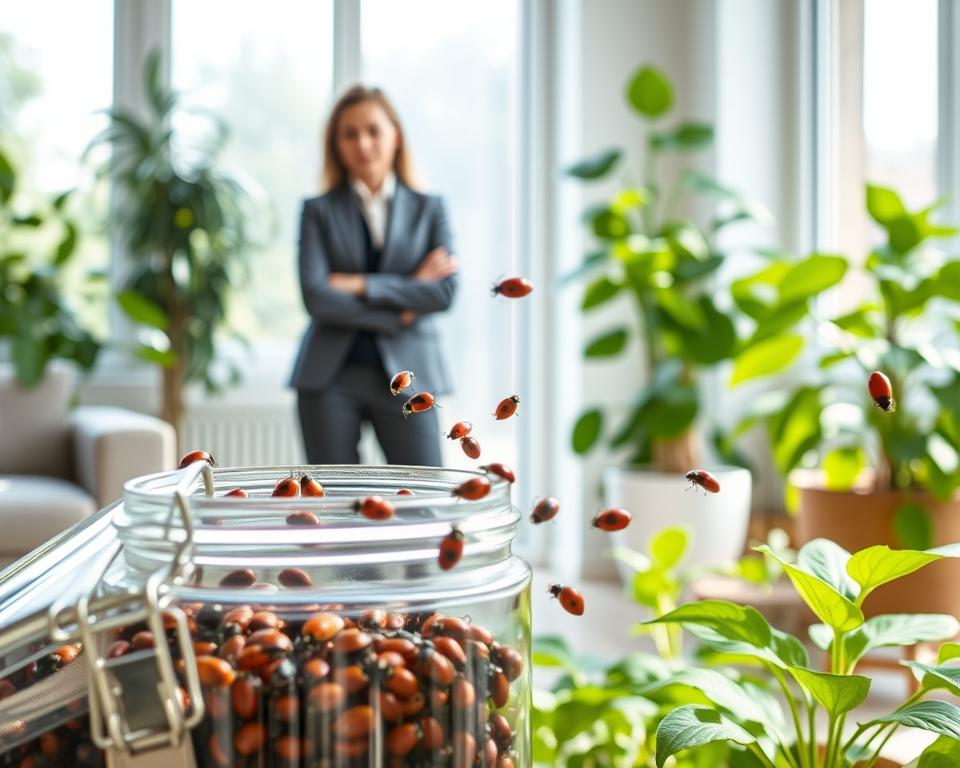
Ensuring beneficial insects survive indoors is a big challenge. Temperature, humidity, and pesticides can affect their survival. Creating a friendly habitat and monitoring conditions closely is key to overcoming these risks.
There’s also a risk of beneficial insects becoming a nuisance. Some might sting or cause allergic reactions. Choosing the right species and educating household members about these insects is important to avoid these issues.
Managing Expectations
Managing expectations is vital for indoor beneficial insect release. This method may not work right away. It’s a gradual process. Setting realistic expectations and being patient is important for success.
It’s also important to use this method with other pest control strategies. This could include physical barriers, good hygiene, and less chemical pesticides. A holistic approach can make beneficial insect release more effective and sustainable.
By understanding and addressing the challenges of indoor beneficial insect release, you can make the most of this eco-friendly method. This approach can help create a healthier indoor environment.
Case Studies and Success Stories
Beneficial insects are changing the game in indoor pest control. Many case studies show their power. They use indoor insect predators to control pests without chemicals.
In homes and businesses, these insects have made a big difference. They help keep places pest-free and healthier. Many have seen fewer pest problems.
Homes That Benefited from Insect Releases
Homeowners in California and New York have seen great results. A California homeowner used ladybugs to fight aphids on plants. This greatly reduced aphid numbers.
In New York, a family used lacewings to tackle spider mites on plants. The lacewings worked well, and the family cut down on chemical use.
| Location | Beneficial Insect Used | Pest Controlled | Outcome |
|---|---|---|---|
| California | Ladybugs | Aphids | Significant reduction in aphid population |
| New York | Lacewings | Spider mites | Effective control of spider mites |
Commercial Spaces Using Beneficial Insects
Offices and greenhouses are also benefiting. A Florida greenhouse used praying mantids to fight pests. This led to healthier plants and less pesticide use.
These stories show how indoor pest control methods with beneficial insects work. As more seek green solutions, using these insects will grow.
Conclusion: The Future of Indoor Pest Control
Natural pest management is a bright spot for controlling indoor pests. It uses biological methods to cut down on chemical pesticides. This makes our homes and workspaces healthier.
Embracing a Greener Approach
Choosing natural pest control helps our homes and businesses. It also supports a greener future. By using biological methods, we lessen the harm to our environment.
Fostering Eco-Conscious Practices
We need to promote practices that help natural pest control. By using beneficial insects and biological methods, we can balance our ecosystems. This reduces the need for harsh chemicals.