
As someone who loves indoor gardening, I’ve found that energy-efficient plant lights are game-changers. They let you grow plants indoors all year round, no matter where you live. The right light can even boost your harvest by up to 20%.
Indoor gardening lights have changed how we grow plants indoors. By picking the right grow lights and stands, you can create a lush garden indoors. It doesn’t matter if you’re new to gardening or have years of experience. The right light makes all the difference.
Key Takeaways
- Boost crop yields with the correct light spectrum and intensity
- Choose from a variety of grow light formats, including stackable stands and tabletop configurations
- LED grow lights offer extended longevity and energy efficiency
- Proper maintenance can extend the life of your grow lights
- A well-balanced spectrum can mimic natural sunlight for optimal plant growth
Understanding High-Efficiency Grow Lights
To grow a healthy indoor garden, knowing about high-efficiency grow lights is key. These lights give plants the right light and intensity for growth. They also use less energy.
These grow lights help plants grow by supporting photosynthesis. They send out light that boosts growth and increases yields. This also cuts down on energy bills.
What Are High-Efficiency Grow Lights?
High-efficiency grow lights use new tech to give plants the best light for growth. They are made to save energy, which is good for the planet and your wallet.
Some main features of these lights are:
- Energy Efficiency: They use less power but give plants the light they need.
- Spectrum Control: They can send out specific light types that help plants at different growth stages.
- Intensity Adjustment: Many can change how bright the light is, fitting different plants and growth needs.
Benefits of Using High-Efficiency Grow Lights
Using high-efficiency grow lights has many benefits. Some big ones are:
- Increased Plant Growth Rates: These lights help plants grow faster and stronger.
- Improved Crop Yields: They make crops better and more plentiful, great for both home and business gardens.
- Reduced Energy Costs: These lights are made to save energy, lowering your garden’s running costs.
Learning about high-efficiency grow lights and their benefits helps gardeners choose the best lights for their needs.
Types of High-Efficiency Grow Lights
To grow plants well indoors, it’s key to know about the different grow lights. These lights give plants the light they need to grow well.
There are many types of grow lights, each with its own benefits. Let’s look at some popular ones:
LED Grow Lights
LED grow lights are very energy-efficient and can be set to different light spectrums. They’re loved by gardeners for their ability to match the light needs of plants. A study found that LED lights can make crops 20% more than old lighting methods.
If you’re thinking about getting LED grow lights, check out well-known brands. For more info, visit Voltgrow’s learning center.
“LEDs are not just for lighting; they’re for growing.”
CFL or Compact Fluorescent Lights
CFLs are a budget-friendly choice for small indoor gardens. They use less energy and don’t get too hot, perfect for tight spaces.
HPS or High-Pressure Sodium Lights
HPS lights are used in big commercial gardens because they’re very bright. They help plants grow fruit and flowers well.
| Type of Grow Light | Energy Efficiency | Cost-Effectiveness | Ideal Use |
|---|---|---|---|
| LED Grow Lights | High | Medium to High | Customizable spectrum for various plant types |
| CFL Grow Lights | Medium | High | Small to medium-sized indoor gardens |
| HPS Grow Lights | Medium | Low to Medium | Commercial grow operations, flowering stage |
Key Features to Look For
When picking out grow lights, look for certain key features. These features are important for your plants’ health and growth. They also affect how much you spend on electricity.
Lumens and Watts
Lumens show how much light a grow light gives off. Watts tell you how much energy it uses. Choose grow lights with a high lumen output per watt. This means they use less energy and can save you money.
LED grow lights are great because they have a high lumen output per watt. When you’re shopping, check the lumens and watts to find the best deal.
Key considerations:
- Lumen output: Make sure it’s enough for your plants.
- Wattage: Lower wattage means less energy use.
- Lumens per watt ratio: A higher ratio means better efficiency.
Color Spectrum
Plants need different light colors to grow well. The color spectrum of a grow light is very important.
Some grow lights have a fixed spectrum. Others let you change it for different growth stages. For example, blue light helps leaves grow, and red light helps with flowering.
Consider the following:
- Fixed spectrum: Good for plants with simple needs.
- Adjustable spectrum: Great for plants at different growth stages.
Heat Output and Management
Too much heat from grow lights can harm plants and raise your energy bills. It’s important to manage heat well for a healthy garden.
LED grow lights, for example, don’t give off as much heat as HPS lights. Good ventilation and cooling systems help control heat too.
Heat management tips:
- Choose grow lights with built-in cooling systems.
- Make sure your grow area has good ventilation.
- Keep an eye on the temperature to avoid overheating.
By looking at these key features, you can find grow lights that are efficient and meet your plants’ needs.
How High-Efficiency Grow Lights Work
To fully grasp the benefits of high-efficiency grow lights, it’s important to know how they work. These lights are made to help plants grow by giving them the right light spectrum and intensity for photosynthesis.
Photosynthesis Basics
Photosynthesis is how plants turn light into energy. They use light to change carbon dioxide and water into glucose and oxygen. High-efficiency grow lights are designed to give the best light for this process.
The success of photosynthesis depends on light intensity and spectrum. Plants need a mix of blue, red, and green light. Blue light helps leaves grow, while red light helps with flowers and fruits.
The Role of Light in Plant Growth
Light is key for plant growth and health. It drives photosynthesis and affects other growth processes like seed germination and root development. The amount and type of light plants get can greatly affect their health and how well they grow.
High-efficiency grow lights aim to give plants the best light for growth. They mimic natural daylight and adjust the light spectrum and intensity for each plant’s needs. This can really boost growth rates and yields.
| Light Spectrum | Effect on Plants |
|---|---|
| Blue Light (400-500 nm) | Promotes leaf growth and development |
| Red Light (600-700 nm) | Encourages flowering and fruiting |
| Green Light (500-600 nm) | Penetrates deeper into the plant canopy, promoting overall growth |
Knowing how light affects plant growth and the benefits of high-efficiency grow lights helps you choose the right lighting for your indoor garden. Whether you’re growing leafy greens or flowering plants, the right light can significantly improve growth and health.
Setting Up Your Grow Lights
Setting up your grow lights right is key for a great indoor garden. A good setup can really help your plants grow strong and healthy.
Ideal Height and Distance
The right distance between your grow lights and plants is important. Too close and it can get too hot and hurt your plants. Too far and it won’t give enough light for photosynthesis.
- LED Grow Lights: LED lights should be 12 to 24 inches above your plants. This can change based on the light’s power and your plants’ needs.
- CFL or Compact Fluorescent Lights: CFLs work best 6 to 12 inches from plants. They don’t get as hot as other lights, so they’re safe closer to plants.
- HPS or High-Pressure Sodium Lights: HPS lights get very hot and should be 24 to 36 inches from plants.
Light Timing and Duration
How long and when you give your plants light is very important. Each plant needs different amounts of light.
- Seedlings: Seedlings need 18-24 hours of light a day for good growth.
- Vegetative Growth: Plants in the growing stage need 12-18 hours of light a day.
- Flowering Stage: Plants in the flowering stage need 10-12 hours of light a day. This mimics outdoor light.
Using a timer for your grow lights helps keep the light schedule steady. This is important for healthy growth and high yields.
Knowing how to set up your grow lights right is essential. It includes the right height and distance and the right light timing. This creates the best environment for your indoor garden.
Maximizing Light Efficiency
Exploring indoor gardening, I’ve learned that light efficiency is key. To boost this, it’s vital to know the tools and methods for better grow light performance.
Reflectors and Enhancements
Reflectors are a great way to boost light efficiency. Reflectors can greatly increase the light your plants get by bouncing stray light back. This boosts light intensity and cuts down energy use.
There are many reflector types, like:
- Mylar reflectors, known for their high reflectivity
- White paint reflectors, a more budget-friendly option
- Specular reflectors, which focus light better
Other tools, like light-mixing chambers, can also improve light distribution. This ensures even light for your plants.
Smart Control Systems
Smart control systems are also key for better light efficiency. They let you control light timing, duration, and spectrum. This ensures your plants get the best light for growth.
Smart control systems offer many benefits, such as:
- Improved energy use by optimizing light
- Better plant growth with tailored light
- Less work with automated light adjustments
A comparison of smart control systems is shown in the table below:
| Feature | Basic System | Advanced System |
|---|---|---|
| Light Spectrum Control | Limited | Full Spectrum |
| Automation | Basic Timer | Advanced Scheduling |
| Energy Monitoring | No | Yes |
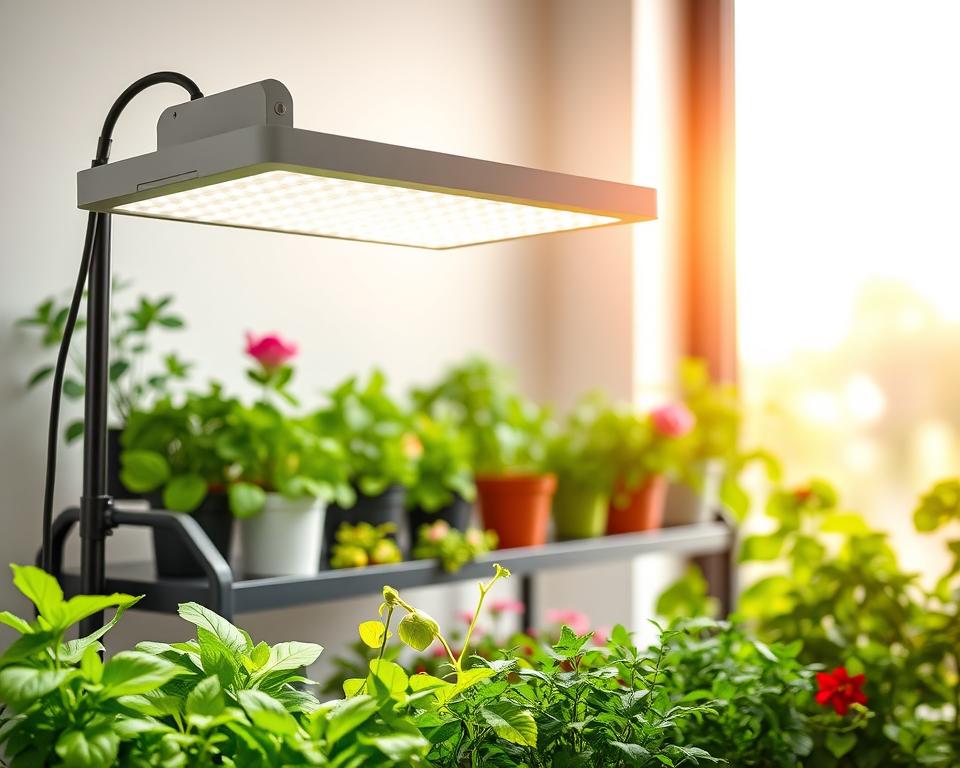
Using reflectors, enhancements, and smart control systems can greatly enhance grow light efficiency. This benefits your plants and supports sustainable gardening.
Troubleshooting Common Issues
High-efficiency grow lights can sometimes cause problems like light burn or under-lighting. It’s important to know about these issues to keep your indoor garden healthy.
Light Burn and Damage
Light burn happens when plants get too much light. This can damage leaves and slow down growth. Symptoms include bleached or yellowed leaves, and in severe cases, scorched or burned leaf tips.
To prevent light burn, make sure:
- The grow light is at the right distance from the plants.
- The light intensity matches the plant’s needs.
- You check the plants often for signs of stress.
Under-lighting Problems
Under-lighting can make plants grow weak and spindly. They might not get enough light for photosynthesis. Signs include leggy stems and pale leaves.
To fix under-lighting, try:
- Lighting the plants for longer periods, matching their needs.
- Increasing the light intensity by adjusting the grow light or using a stronger one.
- Positioning the grow light to cover more area.
Knowing about these common issues and taking steps to fix them can help your grow lights make your indoor garden thrive. Keep an eye on things and make changes as needed for the best results.
Real-Life Experiences with Grow Lights
Reflecting on my indoor gardening journey, I see how high-efficiency grow lights changed the game. Starting out was tough, but the right grow light system made a huge difference.
My First Indoor Garden Journey
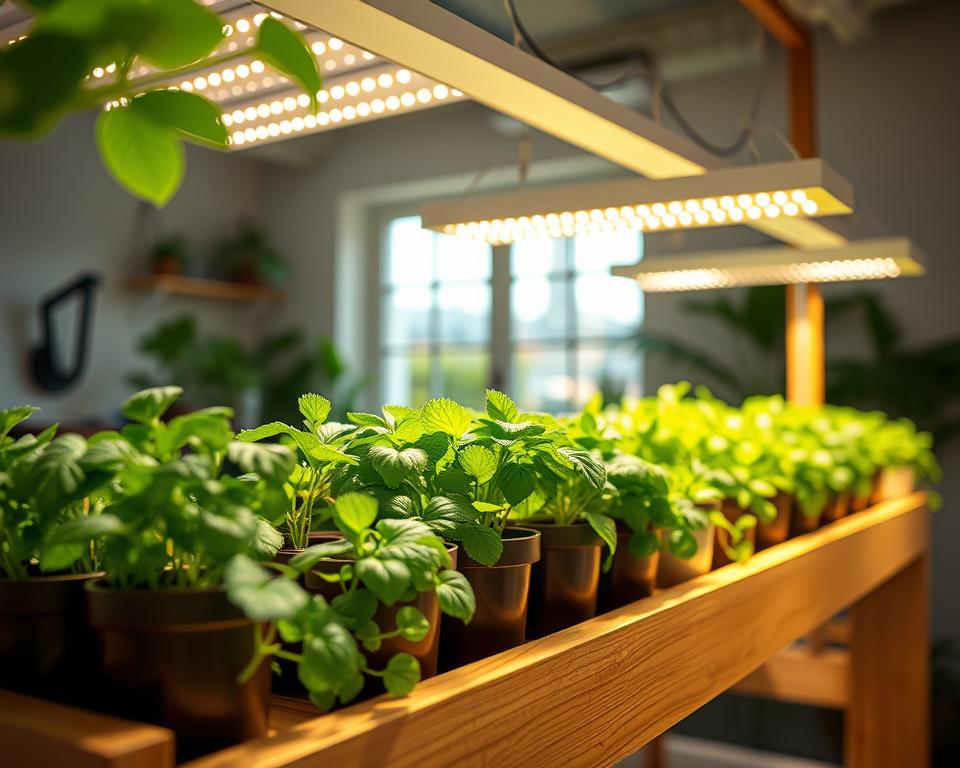
I began with a small setup and LED grow lights for indoor gardening. The results were amazing; my plants grew fast, and I harvested crops sooner than expected.
“The difference between using high-efficiency grow lights and traditional lighting is like night and day,” a fellow grower said. “It’s a total game-changer for indoor gardening.”
As I grew my garden, I tried different grow light systems, like CFL and HPS lights. But LED lights stayed the most efficient and effective for me.
Success Stories from Other Growers
I’ve met many indoor gardeners who’ve seen great success with high-efficiency grow lights. One grower saw a significant increase in yield with LED lights. Another grower cut their electricity bills with a more energy-efficient grow light system.
- A hobbyist grower used a smart control system with their grow lights. This allowed them to automate lighting schedules, leading to healthier plants and more consistent harvests.
- Another grower talked about the importance of reflectors and enhancements to boost light efficiency. They said these additions greatly improved their grow light system’s performance.
These stories show the power of high-efficiency grow lights in indoor gardening. By picking the right grow light system and optimizing it, growers can achieve amazing results.
In conclusion, my journey and others show that high-efficiency grow lights are key to successful indoor gardening. As technology advances, we’ll see even more innovative solutions.
Conclusion: Choosing the Right Grow Light for Your Needs
High-efficiency grow lights have changed indoor gardening a lot. They help us grow plants better. Knowing about different grow lights and their features lets you make a great indoor garden.
Efficient Lighting for a Brighter Future
The future of growing plants indoors is looking good. New grow lights will help us grow more and use less energy.
Think about what you need and the plants you want to grow. The right grow light will help you get a big harvest and beautiful plants all year.
New technology will bring even better grow lights. This will shape the future of growing plants indoors.