
Growing peppers indoors can be a rewarding experience. It brings fresh produce right to your home. With the right varieties and techniques, you can enjoy delicious peppers all year.
As an indoor gardener, I’ve found some pepper varieties do great indoors. They add a sweet or spicy flavor to any dish. In this guide, I’ll share my top picks for indoor pepper gardening. I’ll also cover the basics of getting started.
Key Takeaways
- Top pepper varieties for indoor gardening
- Essential tips for successful indoor pepper cultivation
- How to choose the right container for your peppers
- Common mistakes to avoid in indoor pepper gardening
- Benefits of growing peppers indoors
Why Choose Indoor Peppers for Your Garden?
Indoor pepper gardening has many perks, like saving space and having peppers all year. It lets you control the growing conditions better. This leads to healthier plants and more peppers.
Benefits of Growing Peppers Indoors
Indoor pepper plants face fewer pests and diseases than outdoor ones. Plus, you can grow peppers year-round, no matter the season.
Experts at Creative Vegetable Gardener say starting peppers indoors can give you a jumpstart. This means a bigger harvest.
Space-Saving Solutions
Indoor pepper gardening is great for small spaces. You can use containers and vertical gardening to grow many plants in tiny homes.
Year-Round Harvest
With the right care, indoor pepper plants can keep producing peppers all year. This is perfect for those who love fresh peppers but have little outdoor space.
By knowing the benefits and using the right methods, you can have a lot of delicious peppers at home.
Factors to Consider When Growing Indoor Peppers
To grow great indoor peppers, you need to know about light, temperature, and soil. These are key factors that affect your plants’ health and how well they grow.
Light Requirements for Peppers
Peppers need lots of light to thrive. When growing peppers indoors, giving them enough light is very important. Most pepper types need 6 hours of direct sunlight or 12-14 hours of artificial light daily.
If you use grow lights, make sure they’re placed right to avoid burning the leaves.
In the winter or when it’s dark, peppers need extra light. LED grow lights are great for indoor gardening. They’re energy-saving and help plants grow well.
Optimal Temperature and Humidity Levels
Peppers love warm weather, best between 65°F to 85°F (18°C to 30°C). Keeping the temperature steady is key. Avoid placing pepper plants near drafty windows or air conditioning vents to prevent sudden drops in temperature.
Peppers also like high humidity, over 50%. You can raise the humidity around your plants with a humidifier. Or, put the pot on a tray with water and pebbles.
Soil and Container Selection
The right soil and container are vital for your indoor peppers. Use a well-draining potting mix made for indoor plants. Don’t use outdoor garden soil, as it can compact and block drainage.
Choose big containers, at least 5-gallons for each pepper plant. This gives roots enough room to grow. Make sure the containers have adequate drainage holes to prevent waterlogged soil and root rot.
Top Pepper Varieties for Indoor Growth
Growing peppers indoors can be very rewarding. The right varieties are key. Look for compact, productive peppers that do well indoors.
Bell Peppers: A Classic Choice
Bell peppers are great for indoor gardens. They’re versatile and sweet. They come in colors like green, red, yellow, and orange, brightening your space.
To grow bell peppers indoors, they need enough light and a steady temperature.
- Provide at least 6 hours of direct sunlight or use grow lights.
- Keep the soil consistently moist but not waterlogged.
- Fertilize regularly for optimal growth.
Jalapeños: Spicy and Flavorful
Jalapeños are perfect for indoor gardens. They’re compact and grow well in containers. They add spice and vitamins to your meals.
Tips for Growing Jalapeños Indoors:
- Use well-draining soil to prevent root rot.
- Maintain a warm temperature between 65-75°F (18-24°C).
- Prune the plant to encourage bushy growth and more fruit.
Thai Chilis: Compact and Productive
Thai chilies are great for small indoor spaces. They’re easy to care for and add heat to your food.
To maximize your Thai chili harvest:
- Provide bright, indirect light or supplemental lighting.
- Water regularly, but avoid overwatering.
- Harvest frequently to encourage the plant to produce more chilies.
Choosing the right pepper variety and following care tips can lead to a great harvest. Enjoy delicious peppers right at home.
Best Practices for Indoor Pepper Care
To get a good harvest of indoor peppers, it’s important to know and follow the best care tips. Taking care of indoor peppers means focusing on a few key areas. These areas help the plants grow well and produce lots of peppers.
Watering Techniques for Healthy Growth
Watering indoor peppers right is key. Too much water can cause root rot, while too little can stress the plant. Check the soil moisture by feeling it with your finger. If it’s dry up to the first knuckle, it’s time to water.
Use water that’s the same temperature as the room to avoid shocking the roots. Watering in the morning helps the plants dry out a bit during the day. This reduces the chance of getting fungal diseases.
Fertilization Tips for Indoor Peppers
Fertilizing indoor peppers is important for their growth and fruit. Use a balanced, water-soluble fertilizer (20-20-20) for the nutrients they need.
- Dilute the fertilizer to half the recommended strength to avoid burning the roots.
- Fertilize every 2-3 weeks during the growing season (spring and summer).
- Reduce fertilization during the fall and winter months when the plant’s growth slows down.
Pruning and Harvesting for Maximum Yield
Pruning and harvesting are key for bushy growth and more peppers. Prune the plants by pinching off the tips of the stems. This encourages more branches.
Harvest peppers often to make the plant produce more. Use scissors or a sharp knife to cut the peppers. Leave a small piece of stem attached.
| Care Practice | Frequency | Benefits |
|---|---|---|
| Watering | When soil feels dry | Prevents overwatering and underwatering |
| Fertilization | Every 2-3 weeks | Provides essential nutrients for growth and fruiting |
| Pruning | As needed | Encourages bushy growth and more fruit production |
Common Challenges When Growing Peppers Indoors
Starting an indoor pepper garden can be exciting. But, you might face some common challenges that affect your plants’ health and growth.
Pests that Affect Indoor Peppers
Indoor pepper gardens often deal with pests like aphids, spider mites, and mealybugs. These pests can harm your plants, lowering yields and affecting their health.
It’s important to watch your plants closely and act fast if you see pests. Using natural pest control methods is best. It keeps your plants and the environment safe.
| Pest | Symptoms | Control Method |
|---|---|---|
| Aphids | Curled or distorted leaves | Neem oil or insecticidal soap |
| Spider Mites | Fine webbing on plants | Miticide or neem oil |
| Mealybugs | White, cottony patches | Insecticidal soap or horticultural oil |
Overcoming Light Limitations
Light is a big challenge in indoor pepper gardening. Peppers need lots of light to grow well.
Grow lights can help by adding extra light. Make sure to place them right and adjust their time to help your plants thrive.
Managing Diseases in Indoor Gardens
Diseases can spread fast in indoor gardens if not controlled. Fungal diseases, bacterial leaf spot, and root rot are common problems for indoor pepper plants.
To fight diseases, keep the air moving, water carefully, and remove sick plants or debris. Using clean tools and soil helps prevent disease spread.
Knowing these challenges and taking steps to prevent them can help you have a successful indoor pepper garden.
Tools and Equipment for Indoor Pepper Gardening
Indoor pepper gardening needs the right tools for a good harvest. You’ll learn how the right tools help your indoor pepper plants grow well.
Recommended Grow Lights for Optimal Growth
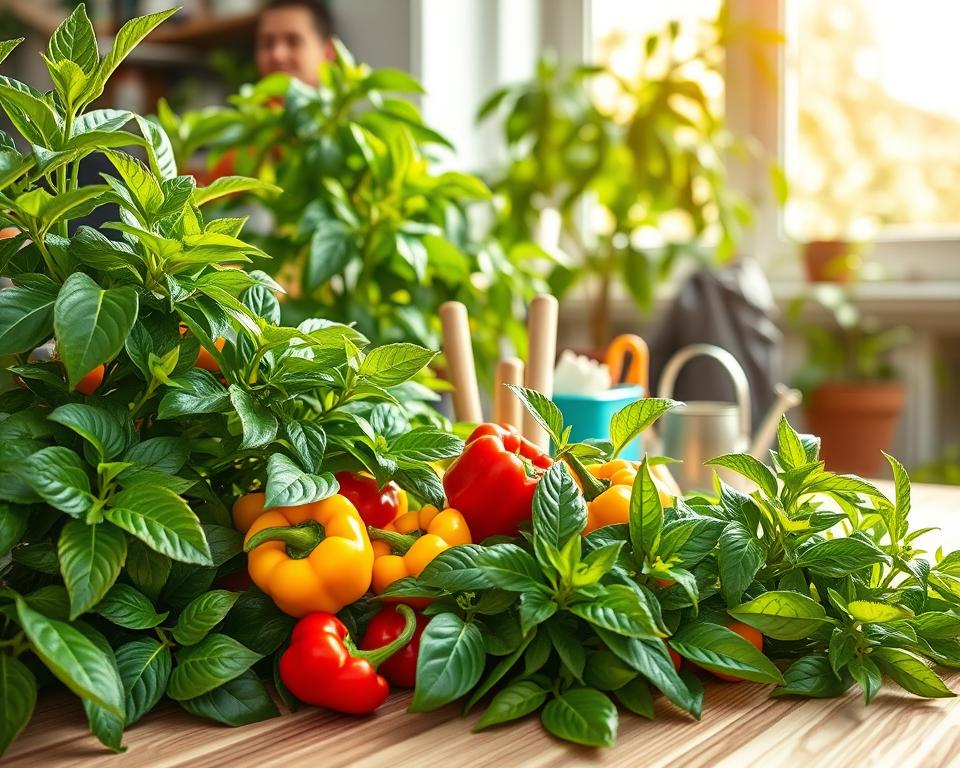
Lighting is key for indoor gardening. Peppers need lots of light to grow. LED grow lights are a top choice because they save energy and give the right light for peppers.
When picking grow lights, think about the size of your space and how much light your peppers need.
Preferred Soil Options for Peppers
The soil you choose is very important for pepper growth. I suggest a potting mix that drains well and is made for indoor plants. Organic potting mixes are good because they don’t have harmful chemicals. They help your plants grow strong roots.
Essential Gardening Tools for Indoor Care
Good tools are important too. You’ll need a watering can with a long spout, a pruning shear, and a fertilizer spreader. These tools help you take care of your indoor pepper garden well.
Even though good equipment costs more at first, it’s worth it. It helps your plants grow healthy and gives you a bigger harvest. With the right tools, your indoor pepper plants will do great.
Indoor Gardening Tips for Beginners
Starting with indoor pepper gardening is a great choice for beginners. It lets you enjoy fresh peppers all year, even without outdoor space.
Starting from Seeds vs. Transplants
Beginners have two main choices: seeds or transplants. Seeds give you control over growing conditions and are cheaper. But, they need careful care to grow well.
Transplants, on the other hand, are already growing. They’re easier to care for at first but might cost more.
Creating a Pepper-Friendly Growing Environment
To grow peppers indoors, mimic their natural conditions. They need lots of light, so a sunny window or grow lights are key. They also prefer warm temperatures and high humidity.
Tips for a Pepper-Friendly Environment:
- Use well-draining soil to prevent waterlogged soil conditions.
- Maintain a consistent temperature to promote healthy growth.
- Increase humidity around your plants by using a humidifier or placing the pot on a tray filled with water and pebbles.
Timing Your Planting for Indoor Success
Timing is key in indoor pepper gardening. Peppers take 70 to 90 days to mature. To keep a steady harvest, plant new seeds or transplants every few weeks.
Consider the following when planning your planting schedule:
- Check the specific variety’s days to maturity.
- Plan around your personal harvest schedule.
- Be prepared to adjust based on the performance of your plants.
DIY Indoor Pepper Gardening Setup
Creating a pepper paradise indoors is easy with a bit of creativity. It’s not just about putting pots on a shelf. It’s about making a space that helps plants grow well and is easy to take care of.
Designing Your Indoor Garden Space
Think about the look you want for your indoor garden. Consider the space, light, and how to use it best for your pepper plants. Using corners and walls can make your space feel bigger.
Selecting Containers for Optimal Growth
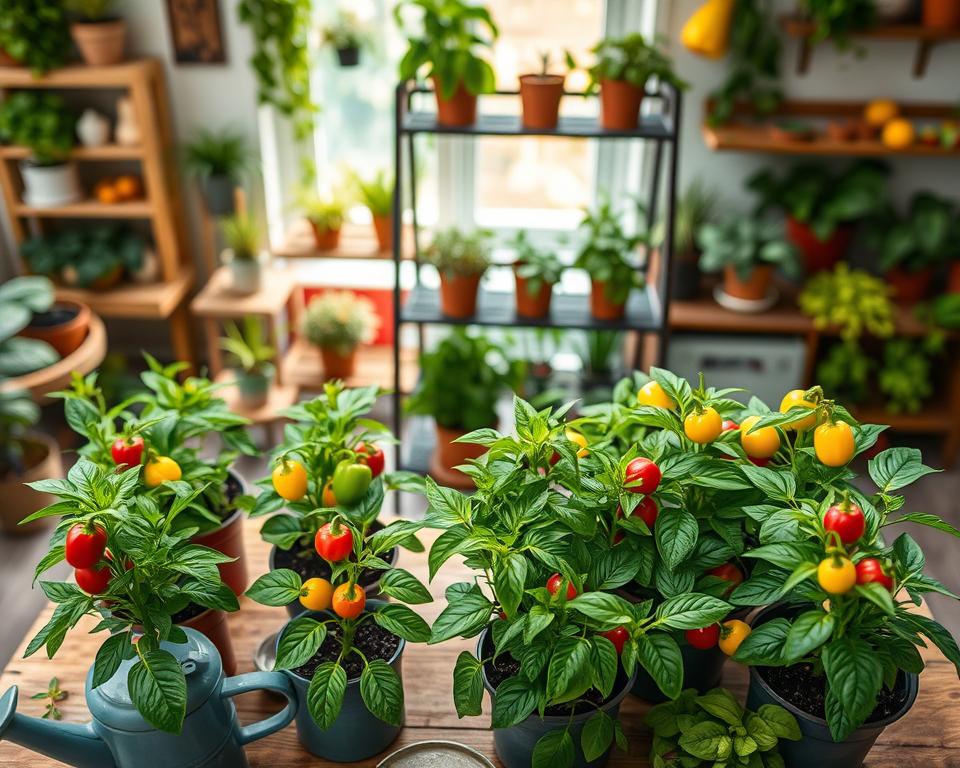
The right container is key for healthy pepper plants. Choose ones that are at least 5-gallons to give roots room to grow. Make sure they have holes for drainage to avoid soggy soil.
Utilizing Vertical Space for More Plants
Using vertical space is a smart way to save room. Try wall-mounted planters or trellises for your peppers. This saves floor space and makes your garden look good.
For the best care, remember that indoor pepper care means the right light, water, and temperature. Check on your plants often and adjust your care as needed for their success.
Inspiring Success Stories from Indoor Pepper Growers
Growing peppers indoors can be very rewarding. Many indoor gardeners have found joy in this hobby. They have shared their tips and techniques for growing great peppers indoors.
Lessons from Experienced Growers
One grower has been growing peppers indoors for years. They stressed the need for the right light. They use high-quality grow lights to help during winter.
Creative Indoor Garden Designs
There are also cool indoor garden designs out there. Using vertical planters and trellises can boost yields. This is great for small spaces, perfect for indoor pepper gardens.
Learning from others can help you grow delicious peppers indoors. Whether you’re new or experienced, give it a try. Share your own success stories with others.