
Did you know a 5°F (2.8°C) temperature difference can greatly affect your indoor farm’s yield? Keeping the right temperature is key for crop growth. As an indoor farmer, it’s vital to maintain the perfect temperature to maximize your harvest.
Most fast-growing annuals do best in temperatures between 70-80°F (21.1-26.6°C). But, the best temperature can change based on the crop type. For example, some plants love 78°F (25.5°C), while others prefer 80-84°F. To find the best temperature for your indoor grow room, check out iGrow Preowned’s guide for more details.
Key Takeaways
- Maintain a temperature range of 70-80°F (21.1-26.6°C) for most crops.
- Some varieties thrive at 78°F (25.5°C), while others prefer 80-84°F.
- Seed germination typically requires temperatures above 60-70°F (15.5-21.1°C).
- A 10-15°F (5-7°C) drop in temperature at night can help prevent pathogens.
- CO2 enrichment allows for higher operating temperatures, up to 80-90°F (26.6-32.2°C).
Understanding the Basics of Indoor Farming
Indoor farming means growing crops inside where you can control things like temperature, humidity, and light. This way, you can make the perfect growing space for each crop.
It’s not just about growing crops inside. It’s about using technology and science to grow more while being kind to the environment. Learning about indoor farming is key for anyone interested in this green way of farming.
What Is Indoor Farming?
Indoor farming is growing crops in places like warehouses, greenhouses, or vertical farms. It lets farmers control the growing conditions. This means crops get the right amount of light, water, and nutrients.
This method has many benefits. It can improve crop yields, use less water, and let farmers grow crops all year, no matter the weather outside.
Benefits of Controlled Environments
One big plus of indoor farming is being able to control the growing environment. This control helps in many ways:
- Optimized Growing Conditions: Farmers can adjust temperature, humidity, and light to create the best conditions for their crops.
- Reduced Water Consumption: Indoor farming often uses systems like hydroponics or aeroponics, which use much less water.
- Increased Crop Yields: With precise control, crops can be grown more densely and with better yields.
Key Factors in Indoor Farming
Several important factors are key for indoor farming success. These include temperature, humidity, light, and how nutrients are delivered. Knowing and managing these factors is vital for a great indoor farming setup.
| Factor | Description | Importance |
|---|---|---|
| Temperature | The degree of heat in the growing environment. | High: Affects plant metabolism and growth. |
| Humidity | The amount of moisture in the air. | High: Influences transpiration and nutrient uptake. |
| Light | The intensity and spectrum of light provided. | High: Essential for photosynthesis. |
| Nutrient Delivery | The method by which nutrients are supplied to plants. | High: Critical for plant nutrition and growth. |
By controlling these factors, indoor farmers can create the best climate for their crops. This leads to healthier plants and more crops. Finding the best temperature for indoor agriculture is very important. It directly affects how plants grow and develop.
Importance of Temperature in Plant Growth
Temperature is key for plant growth, even more so in indoor farms. It affects many important processes in plants.
How Temperature Affects Plant Metabolism
Temperature greatly impacts how plants work, like photosynthesis and nutrient use. The right temperature helps plants grow well. For example, tomatoes grow better at 65°F to 75°F (18°C to 24°C).
“The optimal temperature range for plant growth varies among species, but generally falls between 65°F to 85°F (18°C to 30°C) for most crops.” – Expert in Indoor Agriculture
Each plant needs a specific temperature to grow. Leafy greens like lettuce do well in cooler temps. Tomatoes and peppers need it warmer.
Impact on Germination Rates
Temperature also affects how seeds sprout. Each seed type needs a certain temperature to germinate. Lettuce seeds sprout best at 40°F to 70°F (4°C to 21°C). Okra seeds need it warmer, above 70°F (21°C).
| Crop | Optimal Germination Temperature (°F) | Optimal Growth Temperature (°F) |
|---|---|---|
| Lettuce | 40-70 | 60-70 |
| Tomatoes | 70-85 | 65-75 |
| Peppers | 75-85 | 70-80 |
By managing temperature, indoor farmers can boost seed sprouting and crop yield. This makes temperature control vital for indoor farming.
Optimal Temperature Ranges for Common Crops
Indoor farmers need to know the exact temperature needs of their crops. This knowledge is key to growing them well. It helps in getting the best yields and keeping the plants healthy.
Leafy Greens and Herbs
Leafy greens like lettuce, kale, and spinach do best in cooler air. They like temperatures between 65°F to 75°F (18°C to 24°C). Herbs such as basil, cilantro, and parsley also prefer cooler air. Keeping the temperature in this range helps the leaves grow well and prevents them from growing too fast.
Fruits and Vegetables
Fruits and vegetables need warmer air than leafy greens. Tomatoes, peppers, and cucumbers grow well in temperatures between 75°F to 85°F (24°C to 29°C). Keeping the temperature steady in this range helps them produce fruit and stay healthy.
Flowers and Ornamentals
Flowers and ornamentals need different temperatures. For example, African violets and begonias like warmer air around 75°F to 80°F (24°C to 27°C). Orchids might need cooler or warmer air, depending on the type. It’s important to research the exact temperature needs of your flowers and ornamentals.
Knowing and meeting the optimal temperature ranges for your crops can greatly improve their growth. This, along with controlling humidity and light, helps create ideal indoor growing conditions. You can grow a wide variety of crops successfully.
Seasonal Temperature Considerations
Seasonal changes can greatly affect indoor farming. It’s key to adjust your climate control as the seasons shift. This ensures the right temperature for your crops to grow well.
Adjusting for Seasonal Changes
Indoor farmers must adjust to external seasonal changes. In cold months, using heaters is essential to keep the temperature right. In hot months, coolers help avoid overheating.
Key strategies for adjusting to seasonal changes include:
- Monitoring external temperatures to anticipate and prepare for changes.
- Using insulation to maintain a stable internal temperature.
- Implementing shading techniques to reduce heat gain during warmer months.
Experts say, “The ability to control temperature is key in indoor farming. Small changes can hurt crop health and productivity.” (
This shows why a strong temperature management system is vital.
)
Indoor Heating and Cooling Solutions
Keeping the right temperature is critical. HVAC systems are often used for heating and cooling. Specialized systems like radiant heating or cooling also work well.
| Season | Temperature Challenge | Solution |
|---|---|---|
| Winter | Cold Temperatures | HVAC Heating, Insulation |
| Summer | High Temperatures | HVAC Cooling, Shading |
By understanding and adapting to seasonal temperature changes, indoor farmers can keep the best conditions for their crops.
Tools for Measuring and Controlling Temperature
To grow crops well indoors, knowing the exact temperature is key. Keeping the temperature right is essential for healthy plants. I use a mix of old and new tools to get it right.
Thermometers and Hygrometers
Thermometers are basic but very important for checking temperature. I prefer digital thermometers for their accuracy and simplicity.
Hygrometers measure humidity, which is tied to temperature. These tools work together to keep the indoor air balanced.
Automated Climate Control Systems
For better control over temperature and humidity, I use automated systems. These systems watch and change temperature, humidity, and light levels as needed. This keeps the indoor space perfect for growing crops.
They are very precise and can be set to fit the needs of different plants.
Using these tools together helps me create a controlled and productive indoor farm. This boosts crop yield and keeps plants healthy by avoiding temperature stress.
The Role of Humidity in Temperature Regulation
Humidity and temperature work together to create the perfect indoor farm. As we dive into indoor agriculture, we see how important humidity management is for growing crops well.
Relationship Between Temperature and Humidity
In indoor farming, temperature and humidity are closely connected. When it’s hot, more water evaporates, changing the humidity. On the other hand, high humidity can slow down plant transpiration, affecting temperature.
This shows we need to balance both temperature and humidity.
Here’s a table showing the best humidity levels for different crops at various temperatures:
| Crop | Optimal Temperature (°F) | Optimal Humidity (%) |
|---|---|---|
| Leafy Greens | 65-75 | 40-60 |
| Fruits and Vegetables | 70-85 | 50-70 |
| Flowers and Ornamentals | 60-80 | 30-50 |
Best Humidity Levels for Indoor Crops
Each crop needs a certain humidity level. Leafy greens like it humid, while flowers and ornamentals prefer it drier. Keeping the right humidity helps plants grow well and stay disease-free.
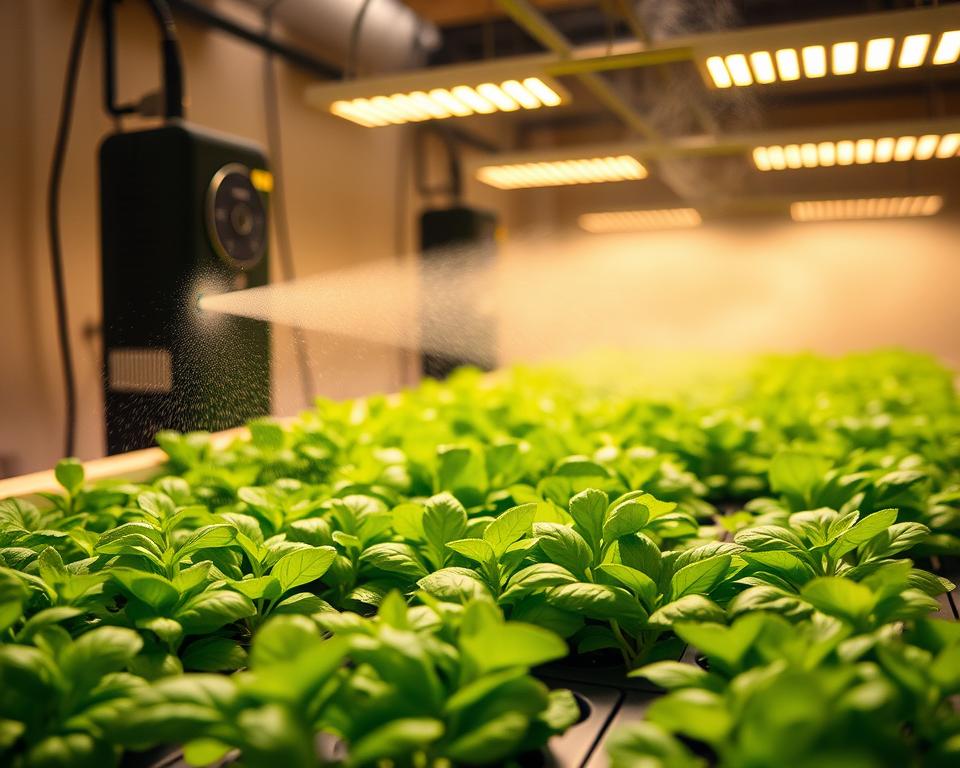
Knowing the best humidity for your crops and using hygrometers to check and adjust it helps. This way, you can create the optimal climate for indoor crops. It boosts growth and makes your indoor farm more efficient.
In summary, managing humidity is key to controlling temperature in indoor farming. By finding the right balance, you can get the best temperature for indoor agriculture. This leads to healthy and productive crops.
Tips for Maintaining Ideal Indoor Temperatures
Keeping the right temperature is key for indoor farmers to get the best from their crops. It takes careful planning and attention to keep the temperature just right.
Insulation and Ventilation Strategies
Good insulation keeps the temperature steady in the indoor farm. This means you don’t have to use as much heat or air conditioning. Effective insulation materials include foam boards, reflective insulation, and thermal mass materials.
Ventilation is also important. It helps get rid of extra heat and moisture. Strategically placed vents improve air flow. This helps prevent diseases and promotes healthy plants.
- Use fans to circulate air and reduce temperature gradients.
- Install vents or louvers to control airflow and exchange.
- Consider using evaporative cooling systems to lower temperatures during hot periods.
Positioning Plants for Optimal Temperature
Where you place plants in the indoor farm affects their temperature. Plants near heating or cooling sources need extra watch to avoid extreme temperatures.
Knowing what temperature each crop needs helps farmers place them right. This way, they can grow better and produce more.
| Crop | Optimal Temperature Range |
|---|---|
| Leafy Greens | 65-75°F (18-24°C) |
| Fruits and Vegetables | 70-85°F (21-29°C) |
Troubleshooting Temperature Fluctuations
Temperature changes can be a big problem for indoor farmers. They can harm crop health and reduce yields. Keeping ideal indoor growing conditions means watching and managing the temperature closely.
Identifying Common Issues
Many things can cause temperature changes in indoor farms. These include:
- Equipment malfunctions, such as heating or cooling system failures
- Inadequate insulation, leading to heat loss or gain
- Poor ventilation, causing uneven temperature distribution
- External weather conditions affecting the indoor environment
Regular checks and upkeep of equipment can spot problems early.
Solutions for Temperature Stability
To follow indoor farming temperature guidelines, several steps can be taken:
- Install backup systems for critical temperature control equipment
- Use temperature monitoring systems to track fluctuations in real-time
- Improve insulation and ventilation to maintain a stable temperature
- Utilize climate control systems that can adjust to external weather conditions
By using these methods, indoor farmers can keep a steady temperature. This helps crops grow well and increases yields.
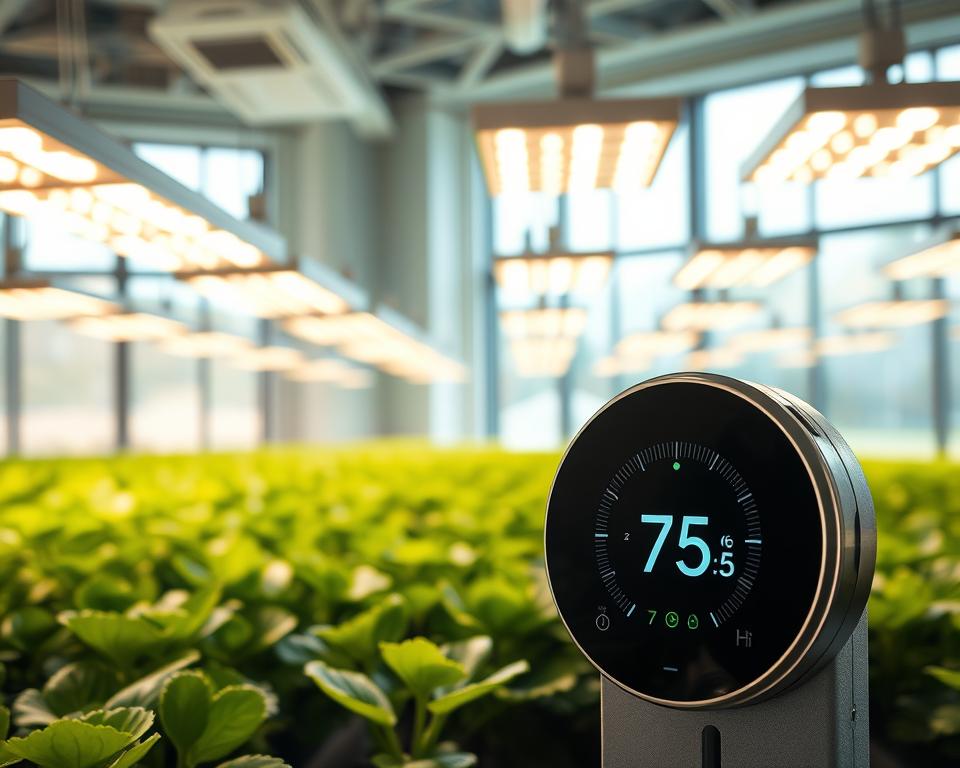
Experts say, “Keeping a stable temperature is key for indoor crops’ health and productivity.” Making sure the temperature stays steady is vital for indoor farming success.
The Future of Temperature Control in Indoor Farming
Indoor farming is getting better, and so is temperature control. This is key for better crop growth, less energy use, and more efficient farms.
Emerging Technologies in Climate Control
New tech like AI, IoT, and machine learning is changing climate control in indoor farming. These tools help with real-time monitoring and adjustments, keeping temperatures stable.
AI systems can forecast temperature changes and adjust heating or cooling automatically. This boosts crop yields and cuts down on environmental harm.
Innovations in Vertical Farming
Vertical farming is also seeing big improvements in temperature control. Layered farming systems now have specific temperature settings for each layer, based on what crops need.
Thanks to better insulation, ventilation, and climate control, vertical farms can grow more types of crops. This increases their productivity.
Also, data analytics in vertical farming helps improve temperature control over time. It uses past data and crop results to make better decisions.
Conclusion: Crafting Your Ideal Indoor Farming Environment
To make your indoor farm thrive, knowing the right temperature is key. You’ve learned how temperature affects plants and what temperatures are best for different crops. It’s important to balance insulation, ventilation, and humidity to get it just right.
Key Takeaways
Keeping the right temperature is essential for plants to grow well. Each crop has its own temperature needs. Using tools like thermometers and automated systems helps create a stable space for growth.
Experiment and Refine
Keep trying different temperatures and see how your crops do. By making small changes and watching the results, you’ll get better at growing crops indoors. Soon, you’ll be able to produce top-quality crops in your own space.