
Growing your own food is easier than ever, even with little garden space. I found out that over 40% of urban homes in the U.S. try to grow edible plants. Many use hanging basket gardening as a creative way to do so.
Hanging baskets are a great way to use space. They can go on balconies, patios, or even indoors. This method makes outdoor spaces look good and helps grow delicious and fresh produce.
Key Takeaways
- Utilize hanging baskets to maximize limited garden space.
- Growing edible plants in hanging baskets adds beauty and functionality.
- Hanging baskets can be placed in various locations, including balconies and indoors.
- A variety of edible plants can thrive in hanging baskets.
- Hanging basket gardening is a great option for gardeners of all levels.
Benefits of Growing Edible Plants in Hanging Baskets
For those with little gardening space, hanging baskets are a great solution. They let you use your space well.
Maximizing Space in Small Gardens
Hanging baskets are perfect for small gardens or tight spots. They hang from hooks or trellises, using vertical space. This way, you get the most sunlight.
These baskets can go anywhere, from balconies to backyards. They make sure every sun spot is used.
Key benefits include:
- Increased gardening space
- Better utilization of sunlight
- Flexibility in placement
Aesthetic Appeal for Outdoor Areas
Hanging baskets are not just useful; they also look great. A full basket of greenery and colorful fruits or flowers can be a garden’s centerpiece.
Gardening expert says, “Hanging baskets can turn an ordinary outdoor space into an extraordinary one.”
Promoting Fresh and Healthy Eating
Having fresh produce nearby makes me eat healthier. It boosts the taste and nutrition of my meals.
With hanging baskets, grabbing ingredients for a recipe is easy. It makes cooking healthy food simple.
“Gardening is not a hobby, it’s a lifestyle that promotes well-being and healthy living.”
Top Edible Plants for Hanging Baskets
Edible plants in hanging baskets make your outdoor space beautiful and useful. They add beauty and give you fresh ingredients right there. It’s a win-win!
Choosing the right edible plants for hanging baskets is key. Let’s look at some top picks that do well in hanging baskets.
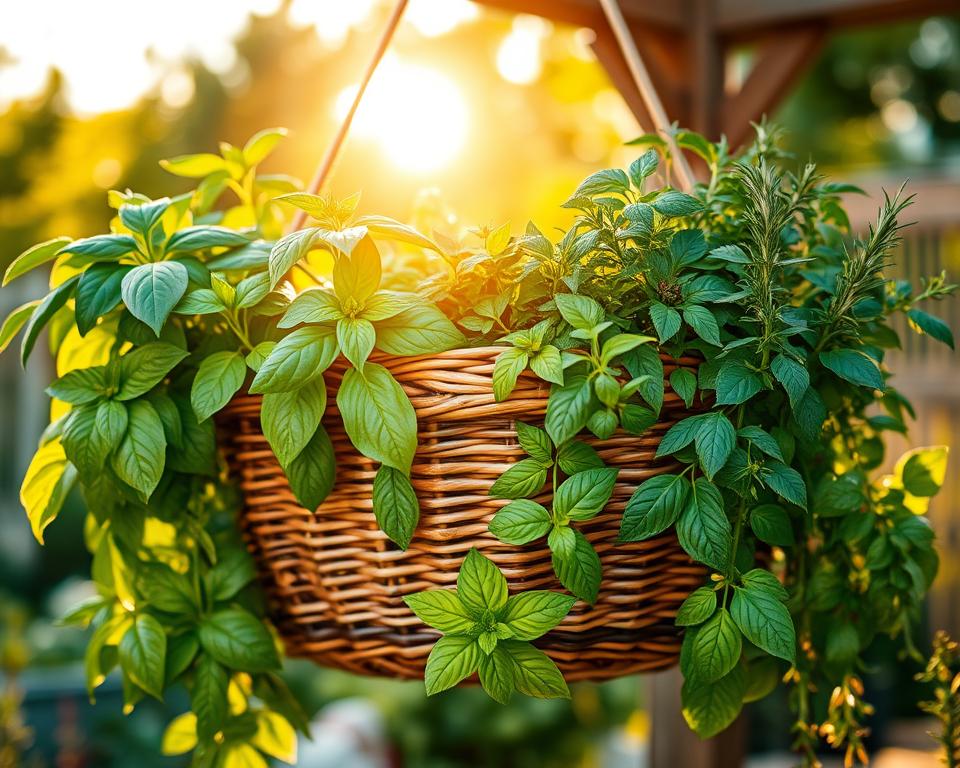
Herbs: Flavoring Your Dishes
Herbs are great for hanging baskets because they’re easy to grow. They add fresh taste to many dishes. My favorites are basil, mint, and cilantro. They also attract good bugs to your garden.
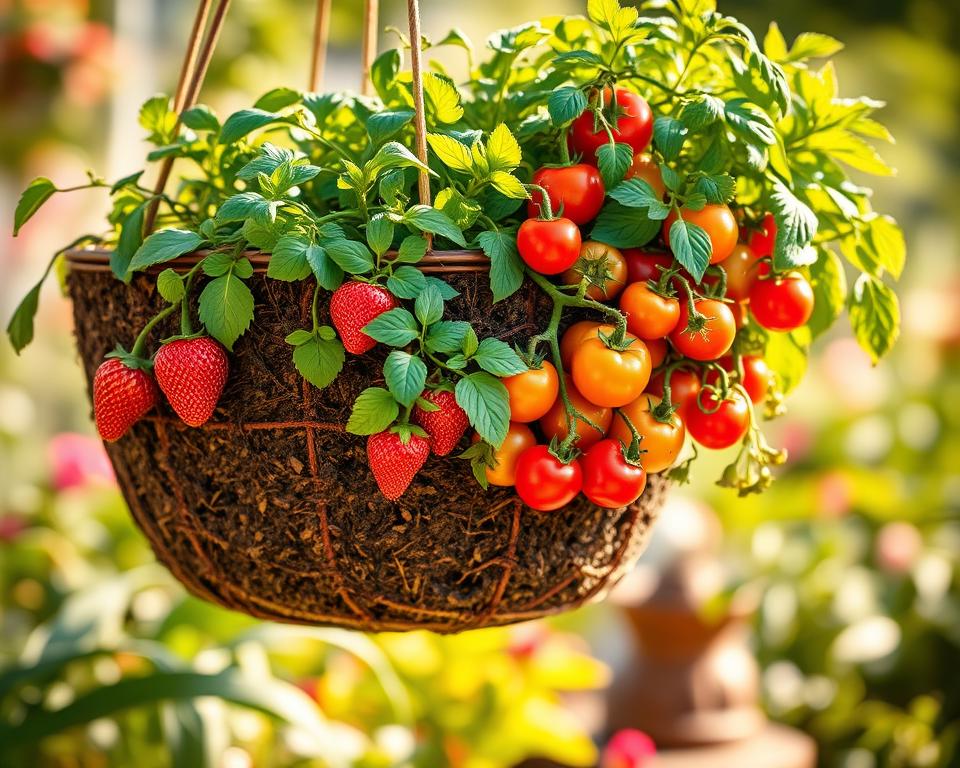
Strawberries: Sweetness at Your Fingertips
Strawberries are a favorite for hanging baskets. They give you sweet fruit for snacks or desserts. They’re easy to care for and grow well in hanging baskets. Having strawberries nearby is a big plus for me.
Cherry Tomatoes: A Burst of Flavor
Cherry tomatoes are loved in hanging baskets. They add juicy flavor to salads or snacks. They grow well and produce a lot, making them perfect for hanging baskets.
Adding these edible plants to your hanging baskets makes gardening more fun. They give you fresh, healthy food. Whether you’re new to gardening or experienced, these plants will make your outdoor space happier.
Choosing the Right Hanging Basket
To make your hanging basket garden a success, picking the right basket is key.
When picking a basket, think about the material and size. The material affects your plants’ health and growth.
Material Options: Wire, Plastic, and More
Hanging baskets are made from different materials, each with its own benefits and drawbacks. Wire baskets are great because they let air and water reach the roots. This helps prevent root rot and encourages healthy growth. But, you might need to line them to stop soil from falling out.
Plastic baskets hold moisture well, which is good for plants that like it wet. But, they can dry out quickly, so you’ll need to water them often.
Size Matters: Finding the Perfect Fit
The size of the basket is also important. A small basket can’t give enough room for roots to grow. This can stunt plant growth or make them unhealthy.
| Basket Size | Plant Capacity | Watering Needs |
|---|---|---|
| Small (8-10 inches) | 1-2 plants | Frequent watering |
| Medium (12-14 inches) | 2-3 plants | Moderate watering |
| Large (16-18 inches) | 3-4 plants | Less frequent watering |
In summary, picking the right hanging basket means looking at both material and size. This ensures your plants have the best chance to grow well.
Best Soil and Fertilizer for Edible Plants
The health and productivity of edible plants in hanging baskets depend on the soil and fertilizer quality. I’ve learned that the right mix can greatly impact my harvest success.
Choosing the right potting mix is key. It should hold moisture but also drain excess water to prevent root rot. It must also be well-aerated for healthy root growth.
Importance of Quality Potting Mix
A quality potting mix is essential for good drainage and aeration. It prevents waterlogged soil that can cause root rot. Look for a mix designed for containers and hanging baskets. These are made to hold moisture but also drain well.
Good potting mix characteristics include:
- Good moisture retention
- Adequate drainage
- Aeration to promote root health
- A balanced pH suitable for the plants being grown
Organic Fertilizers for Healthy Growth
Organic fertilizers are also vital for healthy growth. They release nutrients slowly, providing a steady supply without over-fertilizing. Compost tea and fish emulsion are great options, giving plants a balanced diet.
Organic fertilizers have many benefits:
- They promote healthy microbial activity in the soil.
- They release nutrients slowly, reducing the risk of over-fertilization.
- They are environmentally friendly and sustainable.
By using a quality potting mix and organic fertilizers, you can create the best environment for your edible plants. This ensures a healthy and productive harvest from your hanging baskets.
Sunlight Requirements for Edible Plants
To make your edible hanging baskets thrive, knowing the sunlight needs of your plants is key. Each plant has its own sunlight needs. Meeting these needs is vital for their success.
Understanding Light Needs for Different Plants
Leafy greens and herbs can do well in partial shade. This makes them perfect for spots that don’t get direct sunlight all day. But, plants like tomatoes and strawberries need full sun to grow well. “Most fruiting plants need at least 6 hours of direct sunlight per day,” a guide on how to plant up an edible hanging basket notes.
Knowing what plants need helps you pick the right ones for your hanging baskets. For sunny spots, choose fruiting plants. For shadier areas, go for leafy greens and herbs.
Positioning Your Baskets for Maximum Sunlight
After picking the right plants, placing them right is important. You might need to move the baskets to catch the sun or pick a spot that gets the right sunlight.
For full sun plants, put your baskets in a south-facing spot. This way, they get the most sunlight. Sunlight is a critical factor in the success of edible plants, so getting this right is important.
By understanding and meeting your plants’ sunlight needs, you can enjoy a healthy harvest from your hanging baskets.
Watering Tips for Hanging Baskets
To keep your edible hanging plants healthy, it’s key to know how to water them right. Watering is vital for the growth and productivity of edible plants in hanging baskets.
First, check if the soil is dry. Stick your finger into the soil up to the first knuckle. If it’s dry, it’s time to water. This method helps avoid both underwatering and overwatering.
Signs of Underwatering and Overwatering
Underwatering makes leaves wilt and soil dry and cracked. Overwatering causes root rot and other serious issues. Root rot happens when roots decay from too much water, harming the plant’s nutrient absorption.
Signs of overwatering include yellow leaves and a soft, mushy stem. Seeing these signs means you need to change your watering schedule fast.
Best Practices for Keeping Soil Moist
Water your plants in the morning to reduce evaporation. This ensures they have water all day. Also, use a well-draining potting mix to prevent waterlogged soil and overwatering.
Here are some best practices to follow:
- Water your plants when the top inch of soil feels dry.
- Avoid getting water on the leaves to prevent fungal diseases.
- Use a saucer or tray under the basket to catch excess water.
To show the importance of proper watering, consider this comparison:
| Watering Practice | Effect on Plants |
|---|---|
| Watering in the morning | Reduces evaporation, ensuring plants have water throughout the day |
| Using a well-draining potting mix | Prevents waterlogged soil, reducing the risk of root rot |
| Checking soil moisture regularly | Helps determine the right time to water, preventing underwatering and overwatering |
Common Pests and Diseases
When I grow my favorite edible plants in hanging baskets, I watch for pests and diseases. These can harm the plants, just like in traditional gardens.
Recognizing the Issues
Aphids, whiteflies, and spider mites are common pests. They weaken plants, reducing yield and making them disease-prone.
- Aphids are small, soft-bodied insects that feed on plant sap.
- Whiteflies are tiny, winged insects that also feed on sap and can transmit diseases.
- Spider mites are tiny, spider-like insects that cause yellowing or bronzing of leaves.
Diseases include fungal infections and bacterial spot. Fungal infections show visible growth, while bacterial spot causes lesions on leaves.
Organic Solutions for a Healthy Crop
To tackle these problems, organic solutions are key. Neem oil fights off many pests, like aphids and spider mites. For diseases, copper-based fungicides help control fungal infections and bacterial spot.
- Regularly check your plants for pests or diseases.
- Use neem oil or insecticidal soap to control pests.
- Apply copper-based fungicides to fight diseases.
- Keep your garden clean by removing infected plants or debris.
By being proactive and using these organic methods, you can keep your hanging basket plants healthy. This way, you’ll enjoy a bountiful harvest.
Seasonal Considerations for Edible Plants
Knowing how seasons affect edible plants is key for a great hanging basket garden. As a gardener, knowing seasonal impacts helps make smart choices for a healthy harvest.
Planting in Spring vs. Fall
In temperate climates, spring and fall are prime times for planting edible plants in hanging baskets. Spring planting gives plants a long season to grow and produce well. Fall planting can give a harvest before the first frost and sometimes a second harvest if winter is mild.
Choosing between spring and fall planting depends on the plants’ needs. For example, herbs like basil and mint love spring’s warmth. Plants like spinach and kale prefer fall’s cooler weather.
How to Extend Your Harvest Season
To get more from your harvest, try a few techniques to extend the growing season. Succession planting means planting a new crop right after the last one is picked. This keeps your produce fresh all season.
Using row covers or moving plants under cover in cold months also helps. Row covers protect from frost, letting you harvest into fall or winter. Moving containers to better spots based on the season can also improve growing conditions.
By understanding your plants’ seasonal needs and using methods like succession planting and row covers, you can enjoy a longer, more fruitful harvest from your hanging baskets.
Creative Ways to Use Edible Plants
When you pick your edible plants from hanging baskets, you’ll find many ways to use them in cooking. These plants not only make your outdoor space look good but also give you fresh ingredients. This makes your meals even better.
Delicious Recipes to Try
Home cooks can use the fresh produce from hanging baskets in many dishes. Try using strawberries and cherry tomatoes in salads, sauces, main courses, and even desserts. Don’t forget to add herbs like basil and mint to bring out more flavors.
Edible Flowers: A Culinary Delight
Edible flowers like nasturtiums and violas can make your dishes colorful and tasty. Use them as garnishes or in salads for a special touch. With your fresh harvest, you can make healthy and tasty meals that highlight your hanging basket garden.