


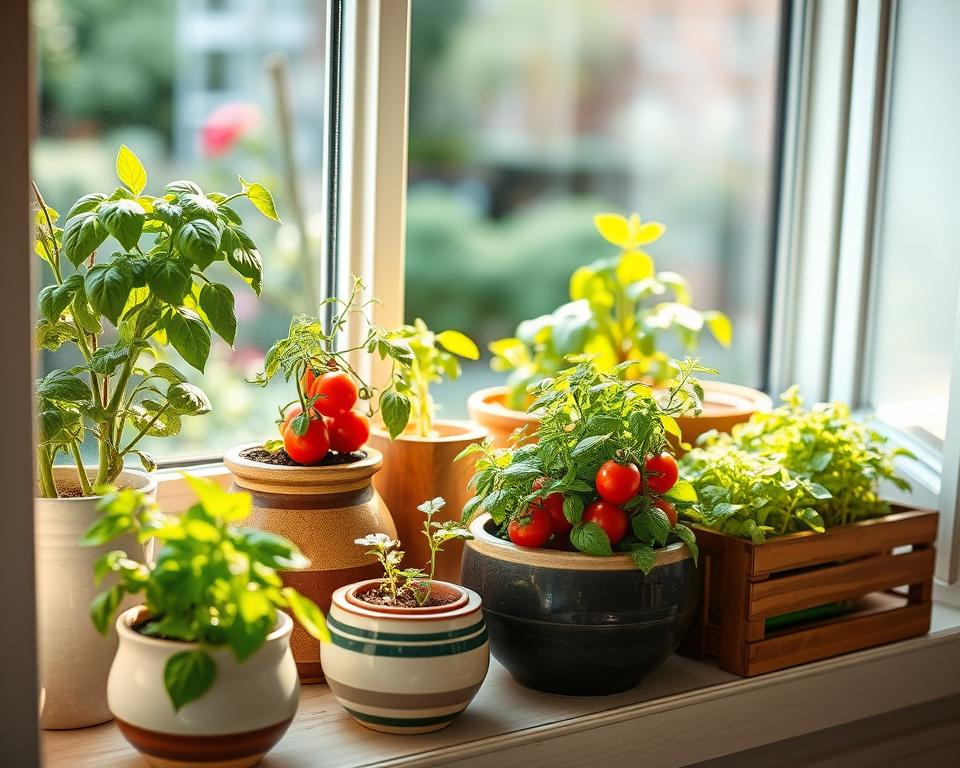
I recently found out that you can grow your own food even with little space. This made me curious about indoor gardening, focusing on windowsill planters.
Growing your own herbs and veggies indoors is rewarding. It gives you fresh food right in your kitchen. With the right planters, your windowsill can become a garden, no matter the weather outside.
Key Takeaways
- Compact planters enable indoor gardening even in limited spaces.
- Growing your own produce ensures a fresh supply of herbs and vegetables.
- Windowsill planters can be used to create a thriving indoor garden.
- Indoor gardening provides a sense of accomplishment and connection to nature.
- Using the right planters is key for successful indoor gardening.
What are Windowsill Vegetable Planters?
Windowsill vegetable planters are a mix of fun and function for small spaces. They fit on windowsills, letting you grow veggies indoors. The natural light from windows makes them perfect for plants to grow well.
Definition and Overview
These specialized containers are made for growing veggies indoors, mainly on windowsills. They come in many sizes and styles to fit your needs and taste. They’re small, so they work well in kitchens, living rooms, or any bright spot.
They often have special features like drainage to keep the soil right. This is key for plants to stay healthy. Plus, some look great, adding to your home’s style.
Benefits of Growing Vegetables Indoors
Using windowsill planters to grow veggies indoors has many perks. For one, you get fresh produce right at home. No more buying veggies that have traveled far and might not be as fresh.
Another big plus is year-round production. You can grow your favorite veggies anytime, no matter the season or weather outside. This is super helpful in cold winters or places where gardening outside is hard.
Also, indoor gardening with these planters can improve air quality in your home. Plants clean the air by removing bad stuff and adding oxygen. This makes your indoor space healthier.
Choosing the Right Planter for Your Space
Starting a windowsill vegetable garden is exciting. It all begins with picking the perfect planter. With so many urban gardening planters out there, knowing what to look for makes it easier.
Size Considerations
The size of your planter is key for your veggies to grow well. A planter that’s too small can restrict root growth. On the other hand, a too-large planter might take up too much space. Think about the mature size of your plants and pick a planter that fits.
Leafy greens do well in shallower planters, while root veggies need deeper ones. Here’s a quick guide to help you pick the right size:
| Vegetable Type | Recommended Planter Depth | Ideal Planter Width |
|---|---|---|
| Leafy Greens | 6-8 inches | 8-12 inches |
| Root Vegetables | 12-18 inches | 6-8 inches |
Material Options
The material of your apartment gardening containers affects your plants’ health. You can choose from plastic, clay, wood, or metal. Each has its own advantages and disadvantages:
- Plastic: It’s light and easy to clean but not as durable.
- Clay: It insulates well and breathes, but it’s heavy and can crack.
- Wood: It looks good and adds a natural touch, but needs upkeep to avoid rot.
- Metal: It’s modern and sleek, but can get too hot in sunlight.

Planting Depth Requirements
Vegetables need different depths to grow well. Make sure your planter meets these needs. For example, tomatoes and peppers need deeper soil for their roots. Herbs like basil and cilantro do well in shallower soil.
By thinking about size, material, and depth, you can create the best space for your veggies. Choosing the right urban gardening planters will lead to a successful harvest from your windowsill garden.
Best Vegetables for Windowsill Planting
Turning your windowsill into a garden is simple. Many vegetables grow well indoors. They are easy to care for and taste great.
Choosing the right vegetables for indoor gardens is key. Some grow better than others in indoor light. “Growing your own herbs and vegetables indoors not only provides fresh produce but also adds a touch of greenery to your home,” say many gardeners.
Herbs for Flavorful Cooking
Herbs are a top pick for indoor gardens. They need little space and add lots of flavor. Basil, mint, and parsley are great for indoor gardens. They’re easy to grow and perfect for many dishes.
Starting an indoor herb garden is easy with windowsill herb garden pots. These pots fit well on windowsills. They help herbs grow well indoors.
Leafy Greens for Fresh Salads
Leafy greens are perfect for indoor gardens. They’re nutritious and easy to grow. Lettuce, kale, and spinach are favorites. They love the cooler indoor air.
For a constant supply of greens, use indoor vegetable gardening planters. These have good drainage. This prevents waterlogged soil and root rot.
Smaller Root Vegetables
Radishes and carrots grow well on windowsills too. They need a bit more depth than herbs or greens. But, there are planters for them.
For root vegetables, pick compact or dwarf varieties. They’re made for container gardens. This helps them thrive in small spaces.
How to Get Started with Windowsill Gardening
To start windowsill gardening, you need to pick the right plants and supplies. It’s a great way to grow herbs and veggies, even in small spaces. Just follow a few simple steps to enjoy a harvest at home.
Selecting Seeds or Seedlings
First, choose the right seeds or seedlings. Starting with seedlings is easier, as they need less care at first. For compact planters for herbs, herbs like basil, mint, or cilantro work well indoors.
“Gardening is a love song, a duet between a human being and Mother Nature.” – Jeff Cox
For seeds, pick varieties made for indoor or container gardening. Leafy greens, cherry tomatoes, and small root veggies are good choices.
Gathering Necessary Supplies
After picking your seeds or seedlings, get the needed supplies. You’ll need compact planters that fit your windowsill. Make sure they have holes for drainage to avoid waterlogged soil.
- A well-draining potting mix
- Watering can or spray bottle
- Fertilizer (optional)
- Pruning scissors or clippers
| Supply | Description |
|---|---|
| Compact Planters | Designed for windowsills, these are smaller and drain well. |
| Potting Mix | It’s key to prevent waterlogged soil and root rot. |
| Fertilizer | Optional, but helps plants grow healthy. |
Initial Planting Techniques
Now, it’s time to plant. Fill your planters with potting mix, leaving space for seeds or seedlings. For seeds, follow the package for depth and spacing.
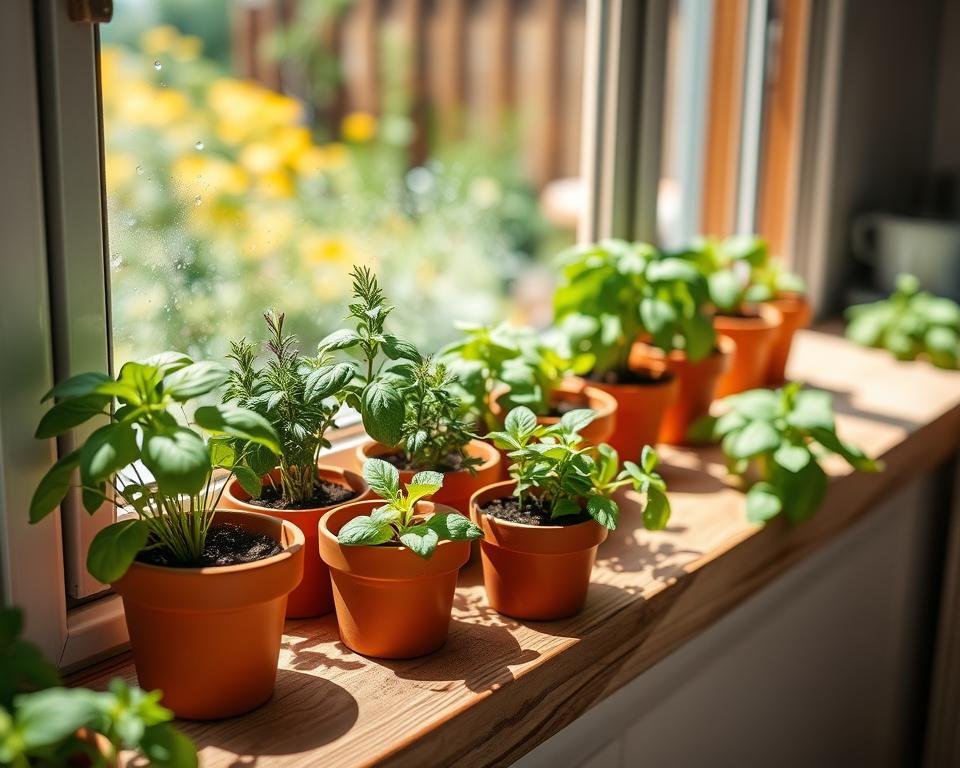
For seedlings, gently remove them and plant at the same depth. Water well after planting and keep the soil moist but not too wet.
By following these steps, you’ll have a thriving windowsill garden. Enjoy fresh herbs and veggies right at your fingertips.
Light Requirements for Indoor Vegetable Growth
To grow vegetables indoors, knowing their light needs is key. They need enough light to make food through photosynthesis. This is vital for their growth.
Natural Light versus Grow Lights
There are two main lighting options for indoor veggies: natural light and grow lights. Natural light is best because it offers a full spectrum that helps plants grow well. But, not all homes get enough natural light, like in winter or dark rooms.
Grow lights are a good alternative. They give a specific light spectrum that plants need. There are many types, like LED, fluorescent, and halogen, each with its own benefits and drawbacks.
| Light Type | Advantages | Disadvantages |
|---|---|---|
| Natural Light | Full spectrum, free, promotes healthy growth | Variable intensity and duration, limited availability |
| LED Grow Lights | Energy-efficient, long-lasting, customizable spectrum | Higher initial cost, requires electricity |
| Fluorescent Grow Lights | Less expensive upfront, good for seedlings | Less energy-efficient, may require frequent replacement |
Placement Tips for Maximum Sunlight
To make your indoor garden a success, maximize natural light. Here are some tips:
- Put your windowsill planter boxes near south-facing windows for the most sunlight.
- Keep windows clean to let more light in.
- Use mirrors or reflective surfaces to reflect light onto your plants if direct sunlight is scarce.
As a gardening expert says, “the key to a thriving indoor garden is understanding and meeting the light requirements of your plants.”
“Light is to plants what air is to humans; it’s essential for their survival and growth.”
By knowing your indoor veggies’ light needs and using natural light, grow lights, or both, you can have a thriving indoor garden. This garden will give you fresh produce all year.
Watering and Maintenance Tips
To keep your windowsill vegetable planters thriving, mastering watering and maintenance is key. Proper care keeps your plants healthy and productive. This ensures a steady supply of fresh produce.
Proper Watering Techniques
Watering is vital for small indoor gardening pots. Too much water can cause root rot, while too little can stress plants. Check soil moisture by feeling it with your finger. If it’s dry, it’s time to water.
- Water in the morning so plants can absorb it all day.
- Use room-temperature water to avoid shocking roots.
- Water at the soil level to avoid fungal diseases.
Fertilizing Your Windowsill Plants
Fertilization keeps your windowsill garden healthy and productive. Use a balanced, water-soluble fertilizer for essential nutrients.
| Type of Fertilizer | Application Frequency | Benefits |
|---|---|---|
| Balanced Fertilizer (20-20-20) | Every 1-2 weeks | Promotes overall plant health and development |
| High-Phosphorus Fertilizer (15-30-15) | Every 4-6 weeks | Encourages fruiting and flowering |
Pest Management Strategies
Pests can be a big problem in indoor gardens. Regularly check your plants for pests and act fast if you find any.
- Use neem oil or insecticidal soap for aphids, whiteflies, and spider mites.
- Isolate infested plants to stop pests from spreading.
- Keep your garden clean and remove dead plant material.
Follow these tips for a thriving windowsill garden, even in small indoor gardening pots. Regular care will maximize your indoor garden’s productivity.
Harvesting Your Homegrown Vegetables
As I sit on my windowsill, I’m excited to share the joy of harvesting homegrown vegetables. There’s a unique satisfaction in enjoying the fruits of your labor, literally. Harvesting at the right time is key to getting the best flavor and texture from your vegetables.
When to Harvest Different Crops
Different vegetables have different readiness times. Leafy greens like lettuce and spinach are ready when the leaves are large enough to eat. I usually check mine after about 2-3 weeks of growth. Tomatoes and peppers, on the other hand, take longer and are ready when they are fully colored and slightly soft to the touch.
Here are some general guidelines for harvesting common windowsill vegetables:
- Leafy Greens: Harvest when leaves are 2-3 inches tall.
- Cherry Tomatoes: Pick when fully colored and slightly soft.
- Herbs: Pinch off flower buds to encourage leaf growth, and harvest leaves as needed.
- Radishes: Harvest when roots are about 1 inch in diameter.
Techniques for Getting the Best Yield
To maximize your yield, it’s essential to use the right harvesting techniques. For leafy greens, I use a technique called “cut and come again.” This involves cutting the leaves about an inch above the soil line, allowing the plant to regrow new leaves. For herbs, regular pruning encourages bushy growth and prevents the plants from flowering.
Some other techniques include:
- Regular Harvesting: Regularly picking vegetables encourages the plants to produce more.
- Checking for Pests: Before harvesting, inspect your plants for pests to avoid consuming damaged produce.
- Using Clean Tools: Always use clean scissors or pruning shears to prevent spreading disease.
By following these guidelines and techniques, you can enjoy a continuous harvest from your indoor vegetable gardening planters. This provides you with fresh, healthy produce all year round.
Seasonal Considerations for Indoor Gardening
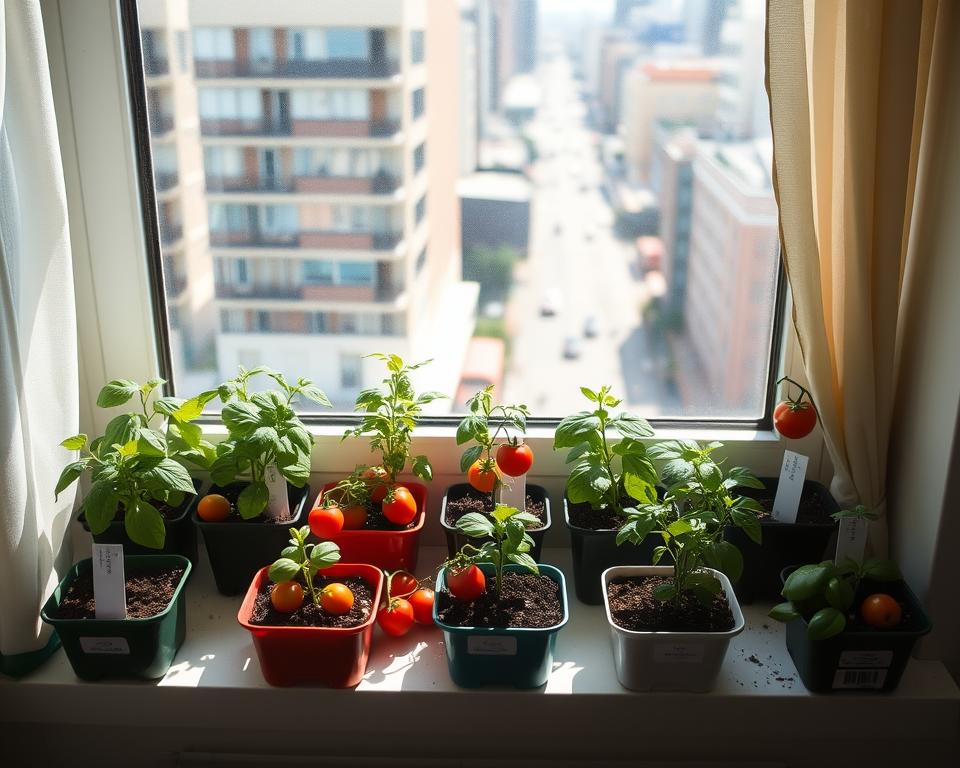
Seasonal changes affect indoor gardens, needing flexible care. Indoor gardens avoid harsh outdoor weather. Yet, temperature, humidity, and daylight hours influence plant growth.
Planting in Different Seasons
Each season requires unique planting plans. In spring, start seedlings for warm-weather plants like basil or tomatoes. Use urban gardening planters for good drainage and air.
In summer, choose plants that love long days and warmth, like leafy greens or herbs. For fall and winter, plant cool-season crops or force bulbs for early blooms.
Adapting Care for Temperature Changes
Temperature shifts impact indoor gardens. Most plants prefer daytime temps of 65-75°F (18-24°C) and cooler nights.
Adjust watering based on temperature. Plants need less water in cooler temps. Use thermal mass or other methods to keep soil temperatures stable for healthy roots.
By adjusting care for seasonal changes, you can keep your indoor garden thriving all year. Enjoy fresh produce from your urban gardening planters.
Troubleshooting Common Issues
Growing vegetables indoors can sometimes lead to common problems. Knowing how to fix these issues is key to a healthy garden. This knowledge helps keep your windowsill garden thriving.
Leaf Discoloration Causes
Leaf discoloration is a common problem in indoor gardens. It can be due to nutrient deficiencies, overwatering, or extreme temperatures. Finding the cause is the first step to fixing it.
For example, yellow leaves might mean your plants need more nitrogen. Too much water can cause root rot, also leading to discoloration. Adjusting your watering schedule and using balanced fertilizer can help solve these problems.
Dealing with Pests and Disease
Pests and diseases can also trouble indoor gardens. Common pests include aphids, whiteflies, and spider mites. Regular checks and good hygiene can prevent infestations.
If pests show up, use insecticidal soap or neem oil to treat them. For diseases, ensure good air flow and remove sick leaves to stop the spread.
For more tips on dealing with common garden problems, check out Gardening Know How. They offer expert advice.
| Issue | Cause | Solution |
|---|---|---|
| Leaf Discoloration | Nutrient deficiency, overwatering | Adjust watering, balanced fertilizer |
| Pests | Aphids, whiteflies, spider mites | Insecticidal soap, neem oil |
| Diseases | Poor air circulation, infected leaves | Improve air circulation, remove infected leaves |
Creative Ideas for Windowsill Planters
Get creative with indoor gardening by picking the right windowsill planters. With a bit of imagination, you can make your windowsill a lush garden. It will bring freshness and beauty to your home.
DIY Planter Ideas
Making your own planters is a fun DIY project. You can use wood, terracotta, or recycled plastic to make unique planters. They can match your style and fit your windowsill perfectly.
- Wooden Planters: Use reclaimed wood or wooden crates for rustic planters.
- Terracotta Planters: Paint or decorate terracotta pots for a personal touch.
- Recycled Plastic Planters: Turn old plastic containers into modern, eco-friendly planters.
Using Upcycled Containers
Upcycling old containers is a creative way to make unique kitchen herb containers. It gives new life to items you might throw away.
Some ideas for upcycled containers include:
- Old boots or shoes turned into quirky planters.
- Mason jars or old tin cans used as mini herb gardens.
- Wooden crates or drawers repurposed as planters.
Here’s a simple comparison of different materials for windowsill planters:
| Material | Durability | Aesthetic Appeal |
|---|---|---|
| Wood | High | Natural, rustic look |
| Terracotta | Medium | Classic, earthy appearance |
| Recycled Plastic | High | Modern, eco-friendly |
By being creative with your windowsill planters, you can improve your indoor gardening. You’ll enjoy a more bountiful harvest of fresh herbs and vegetables.
Encouraging Kids to Join in the Gardening Fun
Getting kids involved in indoor gardening is rewarding for everyone. With windowsill herb garden pots, they can learn about plant growth and develop a love for nature.
Gardening as a Learning Experience
Gardening teaches kids many things, like the life cycle of plants and nutrition. It also shows them the value of sustainability. Through gardening, children learn important skills like responsibility and patience.
Fun Ways to Engage Children
To make gardening fun for kids, create a mini-garden in windowsill herb garden pots. Let them help with planting seeds, watering, and harvesting. This hands-on approach sparks their curiosity and encourages learning about nature.