


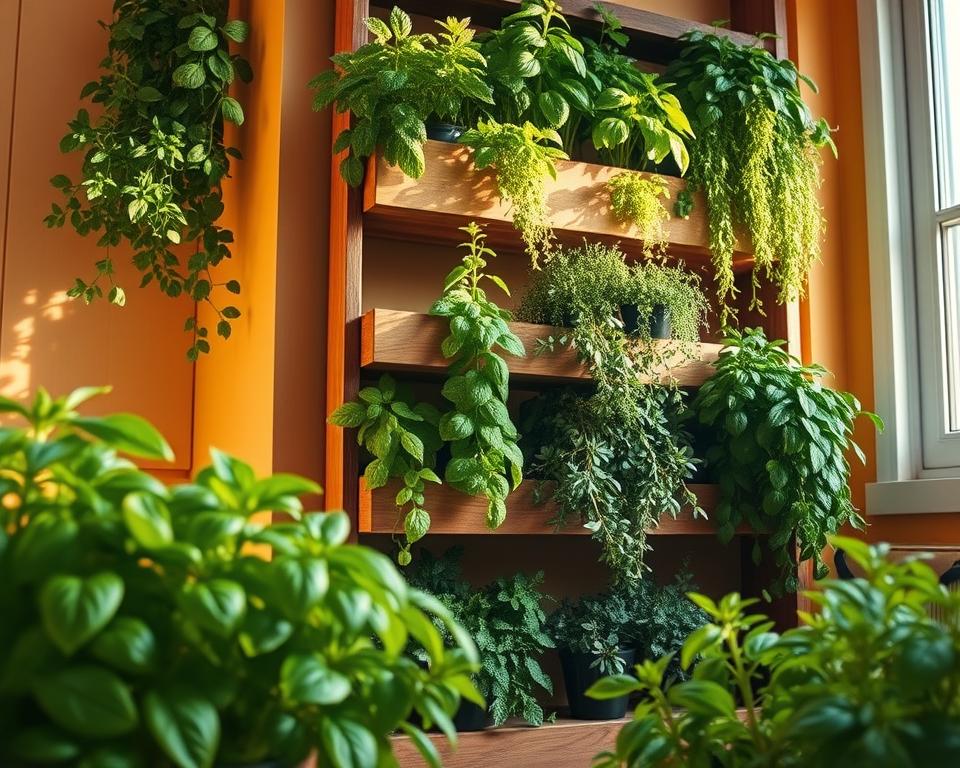
Did you know an indoor herb garden can make your kitchen fresher and tastier? Elevating your herbs saves space and adds greenery to your kitchen. I’ve enjoyed having fresh herbs right at my fingertips, and I’m eager to share my tips with you.
Setting up a kitchen herb garden ideas is simpler than you might think. With a few easy steps, you can turn your kitchen into a place of fresh flavors. We’ll cover the basics of a vertical herb garden kitchen and how it can improve your cooking.
Key Takeaways
- Learn how to create a space-saving indoor herb garden
- Discover the benefits of having fresh herbs in your kitchen
- Explore simple and creative kitchen herb garden ideas
- Understand how a vertical herb garden kitchen can enhance your cooking
- Get tips on maintaining your herb garden for maximum flavor
What is a Vertical Herb Garden?
Growing herbs vertically is a smart way to garden. It lets you grow many herbs in a small space. This is perfect for tiny kitchens or for those who love indoor gardening.
A vertical herb garden hangs on a wall or fits in a corner. It’s a great way to use space well. You get fresh herbs and a clean kitchen.
Definition and Key Features
A DIY vertical herb garden is small and easy to care for. It has:
- Space-saving design
- Can grow many herbs at once
- Easy to water and prune
- Makes your kitchen look nice
Gardening expert says, “Vertical gardens are not just a trend; they’re a practical solution for urban gardeners.”
“The beauty of vertical gardening lies in its ability to bring greenery into small spaces, improving air quality and aesthetic appeal.”
| Key Feature | Description | Benefit |
|---|---|---|
| Compact Design | Fits in small spaces | Ideal for urban kitchens |
| Multi-Herb Capability | Grow various herbs | Diverse herb selection |
| Ease of Maintenance | Simple watering and pruning | Reduces gardening time |
Popular Herb Choices
Choosing herbs for a herb garden wall planter is fun. Some top picks are:
- Basil
- Mint
- Rosemary
- Thyme
- Cilantro
These herbs are easy to grow and taste great in many dishes. For a small space herb garden, pick herbs that like the same conditions. This makes caring for them easier.
Benefits of Growing Herbs Vertically
Vertical herb gardens offer many benefits, from practical to beautiful. They help you use your kitchen space well. Plus, they keep your herbs healthy and growing strong.
Space-Saving Solutions
A vertical herb garden design saves a lot of space. In small kitchens, counters and tables can get messy with pots. A vertical garden clears up space for cooking.
For example, a wall-mounted planter or a freestanding tower can hold many herbs. This keeps them organized and easy to get to. It’s great for urban apartments or homes with little kitchen space.
Improved Air Circulation
Vertical gardens also improve air flow. When herbs are packed too tight, air can’t move well. This leads to diseases and pests. A hanging herb garden or stacked planter lets air move freely, helping plants grow better.
“Good air circulation is key to keeping herbs healthy. By giving each plant room, you cut down on disease risk.”
Aesthetic Appeal
A indoor herb garden also makes your kitchen look good. There are many planters and designs to choose from. You can find one that matches your kitchen’s style, whether it’s modern or rustic.
| Benefit | Description |
|---|---|
| Space-Saving | Frees up countertop and table space |
| Improved Air Circulation | Reduces risk of fungal diseases and pest infestations |
| Aesthetic Appeal | Adds a decorative element to your kitchen |
For more info on vertical gardening, check out this article. It gives a detailed look at the benefits and things to consider.

Choosing the Right Location in Your Kitchen
A well-placed vertical herb garden can change your kitchen. But, picking the right spot is key. The right location helps your herbs grow well, making your garden easy to care for.
Bright Spots for Growth
Most herbs love sunlight to grow. Put your vertical herb garden near a window or under a skylight for the best light. If your kitchen is dark, grow lights can help.
Utilizing Wall Space
Vertical herb gardens are great for small kitchens. They use wall space, freeing up counters. This way, you can enjoy fresh herbs without cluttering your kitchen.
Near Kitchen Appliances
Place your garden near the stove or fridge for easy access. This makes it simple to grab fresh herbs while cooking. It adds convenience to your kitchen routine.
Here’s a comparison of different locations for your vertical herb garden:
| Location | Benefits | Considerations |
|---|---|---|
| Near a Window | Provides natural light | May require curtain adjustments |
| Wall-Mounted | Saves counter space | Requires sturdy mounting |
| Near Kitchen Appliances | Enhances cooking convenience | May be exposed to heat or moisture |
Think about these points and pick the best spot. This way, you’ll have a thriving vertical herb garden that makes your kitchen better.
Types of Vertical Herb Garden Systems
There are many ways to create a vertical herb garden. Think about the space in your kitchen, how much upkeep you can handle, and the look you want. These factors help choose the right system for you.
Wall-Mounted Planters
Wall-mounted planters are great for DIY vertical herb gardens. They’re perfect for small kitchens because they use wall space. You can find them in many styles, from simple to fancy with irrigation.
Freestanding Towers
Freestanding towers are another good option. They can sit on counters or floors, and some roll around. They’re great for adding a vertical herb garden kit as a kitchen centerpiece.
Hanging Gardens
Hanging gardens are a lovely addition to your kitchen. They hang from ceilings or walls, adding beauty and keeping herbs handy. You can make them from materials like macramé, metal, or baskets.
| Type of System | Space Requirement | Maintenance Level |
|---|---|---|
| Wall-Mounted Planters | Low | Moderate |
| Freestanding Towers | Moderate to High | High |
| Hanging Gardens | Low to Moderate | Moderate |
Each system has its own perks. Pick one that fits your needs and style. Knowing what each offers helps you enjoy fresh herbs in your kitchen.
Best Herbs to Grow in Your Vertical Garden
Choosing the right herbs for your vertical garden is key. They can boost your cooking, offer health benefits, and fill your kitchen with scent.
Culinary Favorites
Culinary herbs are essential in any kitchen. Basil is great for pasta sauces and salads. It grows well in a vertical garden. Other top picks are rosemary and thyme, perfect for soups and roasted dishes.
Medicinal Herbs
Medicinal herbs bring health benefits to your garden. Chamomile helps calm you down, and calendula soothes skin. Adding these herbs improves your health and adds variety to your garden.
Aromatic Plants
Aromatic plants like lavender and mint make your kitchen smell amazing. Lavender relaxes, and mint refreshes. These plants are easy to care for in a vertical garden.
By mixing culinary, medicinal, and aromatic herbs, you’ll have a vibrant indoor garden. It will meet your kitchen needs and improve your cooking and health.
Essential Tools and Supplies Needed
Starting a vertical herb garden needs the right tools and supplies. This ensures your herbs grow well and produce plenty. You’ll need a few key items to create a garden that thrives.
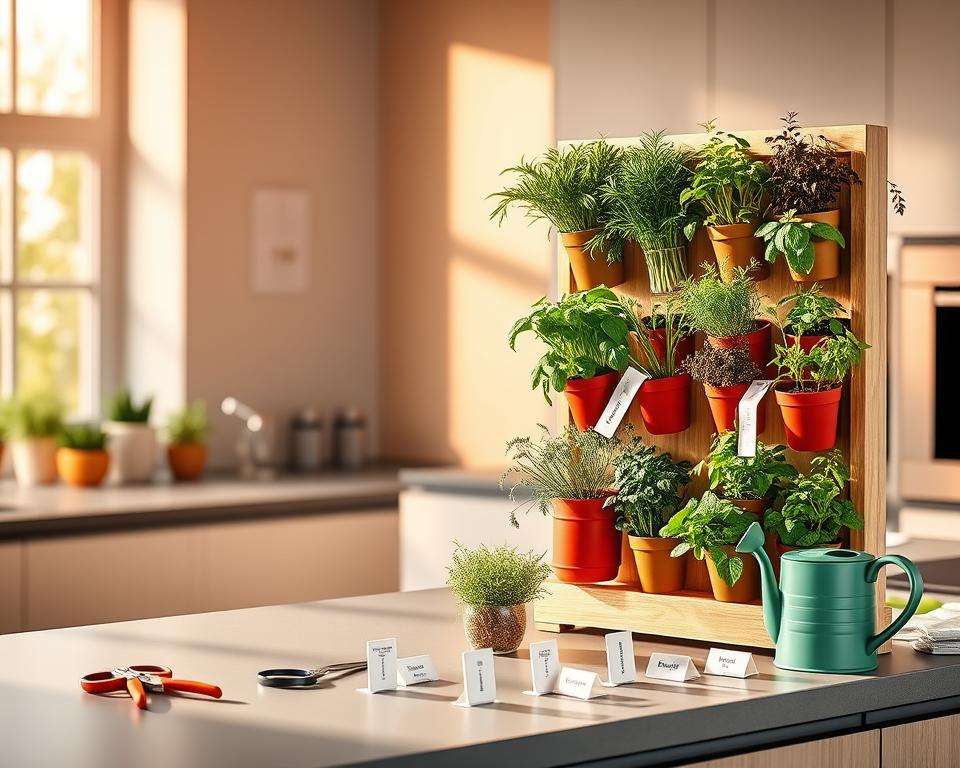
Planters and Pots
Choosing the right planters and pots is the first step. You can pick a herb garden wall planter made for vertical gardening. These have pockets or tiers for many herbs in a small space. Or, use individual pots on a wall or frame.
Look for planters that are breathable and look good. Make sure they have holes for water to drain. This prevents the soil from getting too wet.
Soil and Nutrients
Good soil and nutrients are key for your herbs to grow. Use a high-quality potting mix for indoor or outdoor gardens. Adding compost can make the soil even better.
Herbs also need nutrients to grow. Use a balanced fertilizer that’s safe for herbs. Organic or slow-release fertilizers are good for steady nutrition.
Watering Tools
Watering is very important for your garden. You’ll need a way to water all parts of your garden. For big gardens, a drip irrigation system or soaker hoses work well.
A long-spouted watering can is great for tight spaces. Watering regularly is key, but don’t overdo it. Too much water can harm your plants.
With the right planters, soil, nutrients, and watering tools, you can make a great vertical herb garden kit. It will give you fresh herbs all year. Whether you’re new to gardening or experienced, a vertical herb garden is a fun and rewarding project.
Setting Up Your Vertical Herb Garden
Setting up a vertical herb garden in your kitchen is simple with the right help. This guide will show you how to do it, from start to finish. You’ll make sure your garden grows well.
Step-by-Step Guide
To start your indoor herb garden, first get all the things you need. This includes planters, soil, and the herbs you want. Here’s how to do it step by step:
- Find a spot in your kitchen that gets enough light for your herbs.
- Follow the instructions to set up your vertical garden system.
- Put your herbs in the planters, but don’t overcrowd them.
- Water your herbs well after planting and keep up with regular watering.
Planting Techniques
The way you plant your kitchen herb garden ideas is key to success. Make sure the soil drains well and plant your herbs at the right depth. For most herbs, this means planting them a bit deeper than in their pots.
Organizing Your Herbs
It’s important to organize your herbs well for a vertical herb garden that looks good and works well. Group herbs that need the same amount of water together. Place the herbs you use most at eye level for easy reach.
By following these steps and tips, you can make a beautiful and useful vertical herb garden. It will make your kitchen look better and give you fresh herbs all year.
Maintaining Your Vertical Herb Garden
The success of a vertical herb garden depends on its care. This includes watering, pruning, and controlling pests. A well-kept garden gives you fresh herbs and makes your kitchen look great.
Regular Watering Tips
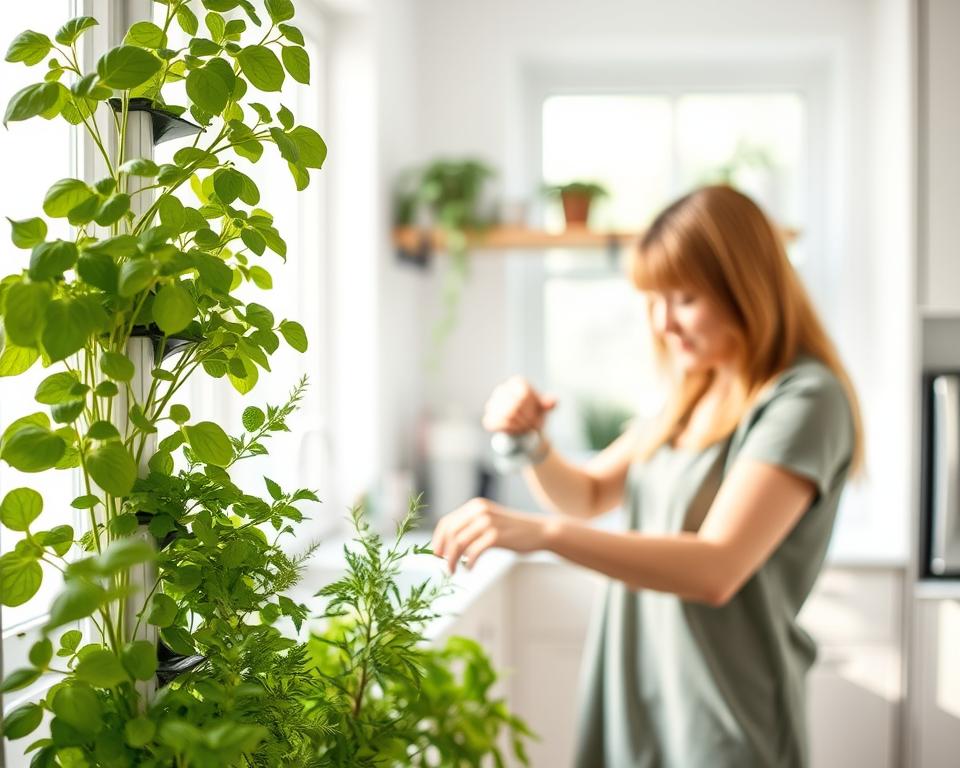
Watering is key for your vertical herb garden. Herbs need steady moisture, more so in a vertical setup. Check the soil every day and water when it’s dry about an inch down.
Make sure your watering system works well. A drip irrigation system or soaker hose is good. They save water by delivering it right to the roots.
Pruning and Harvesting
Pruning and harvesting keep your herbs healthy and productive. Prune to keep them bushy and prevent flowering. Harvesting often encourages new growth and stops plants from getting too long.
For basil and mint, remove flower buds to focus on leaf growth. For rosemary and thyme, trim stems after harvesting to keep their shape.
Pest Control Strategies
Pests can trouble any garden, including small space herb gardens and hanging herb gardens. Watch for aphids, spider mites, and mealybugs. Use natural pest control like neem oil or insecticidal soap.
Check your plants often and separate any with pests to stop disease spread. Good air flow around your plants also helps fight pests.
By following these tips, your DIY vertical herb garden will thrive. It will give you fresh herbs all year.
Creative Design Ideas for Your Kitchen
Make your kitchen look amazing with a stylish vertical herb garden. A well-designed garden brings greenery and boosts your kitchen’s look.
There are many creative ideas for your vertical herb garden. Here are a few to start with:
Color Coordination
It’s key to pick colors that match your kitchen. Think about your walls, cabinets, and countertops when picking planters and herbs.
Tips for Color Coordination:
- Choose herbs with different leaf colors for depth.
- Match or contrast planters with your kitchen’s colors.
- Go for a single color for a unified look.
Theme Inspiration
Let your kitchen’s theme guide your garden’s design. Whether it’s modern, rustic, or minimalist, your garden can fit right in.
Theme Ideas:
- Modern kitchens look great with sleek, metallic planters.
- Rustic kitchens love natural materials like wood.
- Simple, white planters work well in minimalist kitchens.
Incorporating Art and Decor
Your herb garden can be more than just a place for plants. It can also be a decorative piece. Add decorative elements or art around it.
Ideas for Incorporating Art and Decor:
| Element | Description |
|---|---|
| Decorative Planters | Choose planters with unique designs or patterns. |
| Art Pieces | Hang art or sculptures near your garden. |
| Lighting | Add LED or fairy lights to show off your garden. |
With these creative ideas, your vertical herb garden can become a stunning kitchen feature.
Common Challenges and Solutions
Creating a lush vertical herb garden is more than just setting it up. It needs ongoing care and solving problems. You might face challenges even with the best setup.
Dealing with Plant Diseases
Plant diseases can be a big problem in indoor herb gardens. To stop disease, make sure plants have good air flow and don’t get too wet. If you see disease signs like yellow leaves or black spots, act fast.
- Check your plants often for disease signs.
- Take out any sick leaves or stems to stop disease spread.
- Try organic fungicides if disease keeps coming back.
Managing Light Levels
Light is key for your herbs’ health and growth. Most herbs need 4-6 hours of direct sunlight daily. If you’re growing indoors, place your garden near a sunny window or use grow lights.
Tips for managing light levels:
- Rotate your plants to get even light.
- Use mirrors or reflective surfaces to add light to dark spots.
- Get a grow light if natural light isn’t enough.
Troubleshooting Growth Issues
If your herbs aren’t growing right, many things could be wrong. Check the soil moisture, nutrient levels, and temperature to find the problem.
- Slow growth: Make sure your herbs get enough light and nutrients.
- Wilting: Your plants might be too wet or too dry.
- Leggy growth: Prune your herbs often to help them grow bushy.
Enjoying the Fruits of Your Labor
Now that your vertical herb garden is thriving, it’s time to reap the rewards. With a steady supply of fresh herbs, you can elevate your cooking. You can also add a personal touch to your kitchen.
Fresh from the Garden
Cooking with fresh herbs from your DIY vertical herb garden is a delight. Add basil to your pasta sauce, sprinkle rosemary on roasted vegetables, or infuse your favorite dishes with the fragrance of thyme. Explore new kitchen herb garden ideas and get creative with your recipes.
Preserving the Harvest
When your hanging herb garden produces an abundance of herbs, consider preserving them for later use. Dry or freeze your herbs to enjoy them throughout the year. This way, you can continue to enhance your cooking even when your garden is dormant.
Spreading the Joy
Share your harvest with friends and family, or use your fresh herbs as a thoughtful gift. A bouquet of fresh herbs or a jar of homemade herb-infused oil makes a lovely present. By sharing the fruits of your labor, you can inspire others to start their own vertical herb garden.