


If you love indoor plants, you’re always searching for ways to help them grow. Foliar feeding is a popular method. It involves adding nutrients directly to the leaves of your plants.
This method helps plants absorb nutrients better. It boosts their growth and health. By giving nutrients to the leaves, you help your plants thrive.
Key Takeaways
- Understand the benefits of foliar feeding for indoor plants
- Learn how to apply nutrients directly to plant leaves
- Discover best practices for foliar feeding
- Improve your indoor plant care routine
- Promote healthy growth and development in your plants
What is Foliar Feeding?
Foliar feeding lets plants soak up nutrients through their leaves. It involves spraying plants with a nutrient-rich solution. This helps them grow healthy and strong.
Definition and Overview
Foliar feeding is a targeted nutrition delivery method that skips the soil. It ensures plants get the nutrients they need. By using a foliar spray, you can fix nutrient gaps and boost plant health.
It’s easy to do: just spray a nutrient-rich solution on the leaves. The leaves absorb it through tiny openings called stomata. This way, plants quickly get the nutrients they need.
Benefits for Indoor Plants
Foliar feeding has many benefits for indoor plants. Some key advantages include:
- Enhanced growth rates: Foliar feeding can speed up plant growth by giving them the nutrients they need.
- Improved leaf health: It can make leaves look better, feel better, and be healthier overall.
- Increased resistance to pests and diseases: By feeding plants well, foliar feeding can help them fight off pests and diseases better.
Adding foliar feeding to your plant care routine can make your indoor plants healthier and more resilient. It’s a great technique for both experienced gardeners and beginners.
The Science Behind Foliar Feeding
Exploring the science of foliar feeding uncovers how to boost nutrient uptake in indoor plants. This method sprays nutrients directly onto leaves, helping plants grow strong and healthy.

How Plants Absorb Nutrients
Plants take in nutrients through their leaves, a process called foliar absorption. When nutrient solution touches the leaf, the plant absorbs what it needs.
The speed of absorption varies based on several things. These include the nutrient type, solution concentration, and leaf size. Knowing these factors helps with better foliar feeding.
Importance of Leaf Surface Area
The size of a plant’s leaves is key in foliar feeding. Larger leaves can soak up more nutrients, making foliar feeding more effective.
To get the most from foliar feeding, consider your plants’ leaf sizes. You might need to adjust the nutrient solution’s strength or how often you apply it.
Understanding how plants absorb nutrients and the role of leaf size helps in optimizing foliar feeding. This approach ensures your indoor plants get the nutrients for healthy growth. Good foliar feeding can improve plant health, increase yields, and boost overall performance.
When to Use Foliar Feeding
Knowing when to use foliar feeding is key for your indoor plants’ health. It’s not a one-size-fits-all solution. Its success depends on the plant’s growth stage and the season.
Optimal Timing for Indoor Plants
The growing season, spring and summer, is the best time for foliar feeding. Plants grow fast and need more nutrients then. Using foliar fertilizers during this time boosts plant health by giving them the nutrients they need.
Think about what your plants need. Plants making flowers or new leaves might do well with foliar feeding. For more info, check out this foliar fertilizers guide.
Seasonal Considerations
Seasonal changes affect indoor plants’ health and growth. In fall and winter, plants need less nutrients. But, some plants might need foliar feeding if they’re growing.
Watch how your plants react to foliar feeding and adjust your schedule. This way, you can make sure your plants get what they need for the best health and growth.
Best Nutrients for Foliar Feeding
To get the most out of foliar feeding, knowing the best nutrients for your indoor plants is key. Foliar feeding gives essential nutrients directly to the leaves. This promotes healthy growth and development.
Essential Macronutrients
Macronutrients are vital for the health and growth of indoor plants. The three main macronutrients are nitrogen (N), phosphorus (P), and potassium (K). Nitrogen helps with leaf growth and chlorophyll production.
Phosphorus supports root development and flower production. Potassium helps with overall plant health and resistance to disease.
When making a foliar feed, balancing these macronutrients is essential. A balanced fertilizer with an N-P-K ratio of around 20-20-20 is often recommended for foliar feeding.
Micronutrients to Consider
Micronutrients also play a big role in plant health. Key micronutrients include iron, zinc, and boron. Iron is vital for chlorophyll production and preventing leaf chlorosis.
Zinc supports enzyme function and growth regulation. Boron is involved in cell wall development and sugar translocation.
Using a foliar feed with these micronutrients can help prevent deficiencies. It also promotes overall plant health. Remember, different plants have different needs.
Tips for Effective Foliar Feeding
The secret to great foliar feeding is in the details. From getting ready to how you apply it, knowing the best ways is key. This ensures your indoor plants get the nutrients they need.
Dilution Ratios and Mixture Preparation
Getting the nutrient solution right is essential. The strength of the solution matters a lot. Too strong can harm leaves, while too weak doesn’t give enough nutrients. Start with a 1:100 to 1:200 ratio and adjust as needed.
Make sure the nutrients dissolve fully in the solution. Use clean water that’s not too hot or cold for your plants.
| Nutrient Type | Recommended Dilution | Application Frequency |
|---|---|---|
| Macronutrients | 1:100 | Weekly |
| Micronutrients | 1:200 | Bi-Weekly |
Spray Techniques and Equipment
How you apply foliar feeding matters a lot. A fine spray nozzle helps spread the solution evenly. Make sure to spray both sides of leaves, as plants absorb nutrients from both.
Choose a sprayer that’s precise and adjustable. This lets you customize for your plants’ needs.
By following these tips, you can make foliar feeding work best for your indoor plants. This will help them stay healthy and look great.
Common Mistakes in Foliar Feeding
Foliar feeding can be tricky, even with good intentions. It’s a precise process that needs care to avoid harming your plants. Knowing the common mistakes can help you do it right.
Over-Fertilization Risks
One big risk is over-fertilizing. Nutrient burn can damage leaves and even kill plants if too much is used. Always stick to the recommended amounts to avoid this.
Signs of too much fertilizer include:
- Yellowing or browning of leaves
- Crispy or burnt leaf edges
- Wilting or droopy leaves
To avoid these problems, start with a small amount and see how your plants react.
Improper Application Methods
Using the wrong way to apply fertilizer can also cause issues. For example, spraying on stressed leaves can make things worse. Using the right tools, like a fine spray nozzle, helps spread the solution evenly.
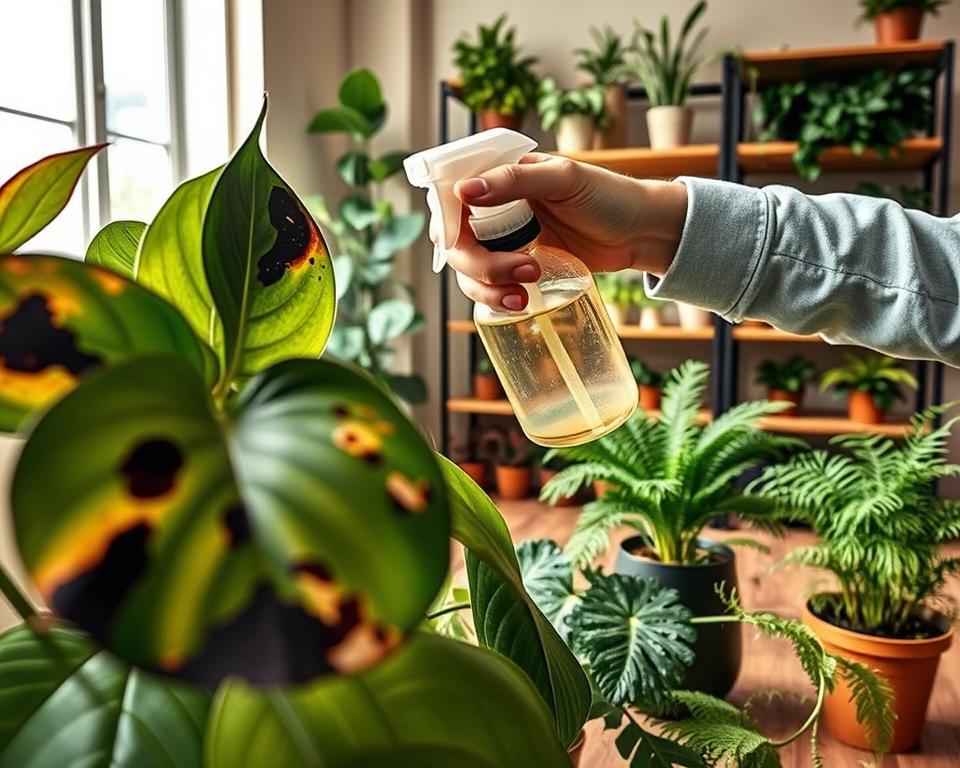
- Spraying during the cooler part of the day to prevent burning the leaves
- Avoiding spraying on plants that are under stress or have damaged leaves
- Ensuring the spray nozzle is clean and not clogged
By being careful and avoiding these mistakes, you can help your indoor plants thrive through foliar feeding.
Foliar Feeding Techniques for Specific Plants
To get the most out of foliar feeding, you need to know what each plant needs. This includes leafy greens and flowering houseplants. Each type of plant has its own special needs that affect how well it grows and stays healthy.
Fertilizing Leafy Greens
Leafy greens like lettuce and kale do well with regular foliar feeding. They need a balanced fertilizer with the right nutrients. For more tips, check out our guide to foliar feeding options.
Boosting Flowering Houseplants
Flowering houseplants need special nutrients to bloom well. A fertilizer with more phosphorus helps them produce more flowers. Knowing the foliar spray benefits helps you care for your plants better.
Adjusting your foliar feeding to fit your plants’ needs can greatly improve their health and growth. Whether you’re growing leafy greens or flowering houseplants, the right foliar feeding can be a game-changer.
Assessing the Results of Foliar Feeding
When you use foliar feeding on indoor plants, you’ll see them get healthier and stronger. I noticed big changes in my plants’ health and growth.
Signs of Improvement
Signs of Improvement in Plant Health
Foliar feeding brings many benefits to your plants. You’ll see:
- Enhanced Leaf Color: Leaves turn greener and more vibrant, showing better nutrient absorption.
- Increased Growth: Plants grow faster and stronger, with bigger stems and leaves.
- Improved Resistance: Plants fight off pests and diseases better, needing less pesticides.
Horticulture experts say foliar feeding boosts plant health by giving nutrients directly to leaves.
“Foliar application of nutrients can be very helpful during times of high demand or when soil nutrients are low.”
Troubleshooting Common Issues
But, foliar feeding can sometimes cause problems. Here are common issues and how to fix them:
| Issue | Cause | Solution |
|---|---|---|
| Nutrient Deficiency | Insufficient nutrient concentration | Adjust the dilution ratio or increase application frequency |
| Over-Fertilization | Excessive nutrient application | Reduce the frequency or concentration of foliar feeding |
| Leaf Damage | Incorrect spray technique or equipment | Adjust spray nozzle or technique to avoid damaging leaves |
By watching how your plants react to foliar feeding and making changes, you can make it work best for them. 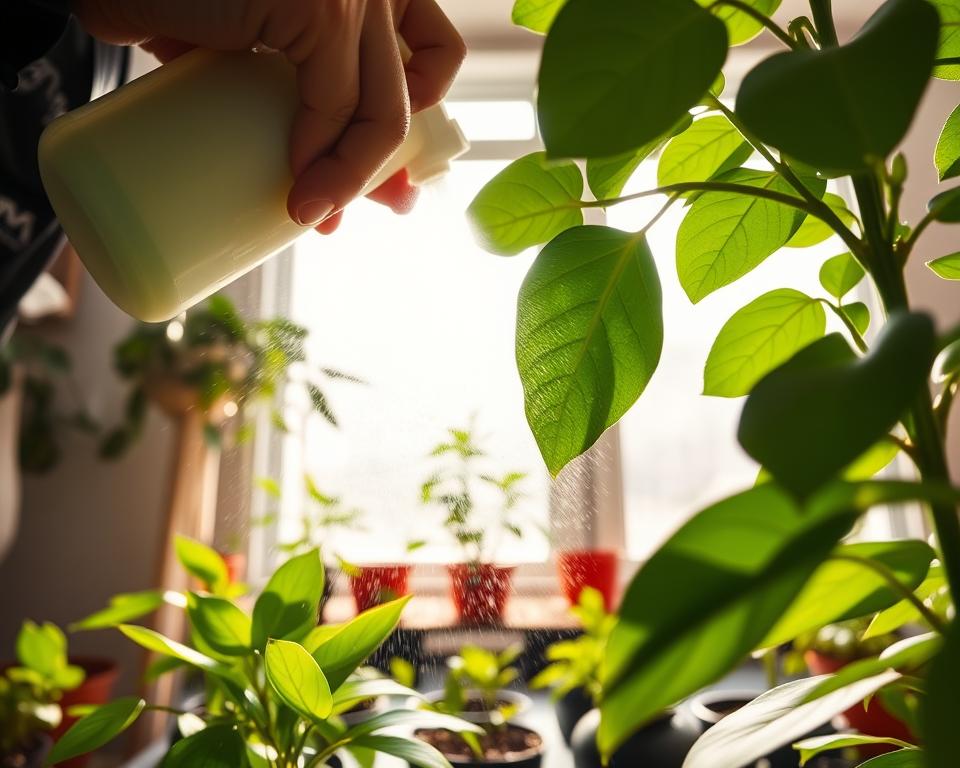
Alternative Nutrient Delivery Methods
There are many ways to give nutrients to indoor plants, not just foliar feeding. Each method has its own benefits. Knowing these options can help you pick the best one for your plants.
Comparing Foliar Feeding with Soil Feeding
Foliar feeding and soil feeding are two different ways to give plants nutrients. Foliar feeding means spraying nutrients on the leaves, which plants absorb quickly. Soil feeding, on the other hand, uses the roots to get nutrients from the soil.
Soil feeding is a classic method that’s easy to do. You just fertilize the soil when you water. But it might not give plants the quick boost that foliar feeding does. Foliar feeding is great for plants that are growing fast or under stress.
Other Innovative Techniques
There are also new ways to give plants nutrients. Hydroponics and aeroponics are methods that don’t use soil. Hydroponics suspends roots in a nutrient solution. Aeroponics uses a fine mist to deliver nutrients, which might help plants absorb more.
These methods are good for plants that need exact nutrients or for saving water. But they need special equipment and knowledge, unlike soil or foliar feeding.
- Hydroponics: Nutrient-rich solution for root absorption
- Aeroponics: Nutrient delivery through a fine mist
- Foliar feeding: Direct leaf spraying for quick absorption
- Soil feeding: Traditional method relying on root absorption
Learning about different ways to give plants nutrients helps you choose the best care for your indoor plants.
Conclusion: Embrace Foliar Feeding for Thriving Indoor Plants
Foliar feeding is a powerful way to make your indoor plants healthier and more vibrant. It delivers nutrients directly to the leaves. This boosts growth and makes your plants look more alive.
Key Benefits
Foliar feeding has many advantages for indoor plants. It targets nutrients to the leaves, reducing waste. This ensures your plants get exactly what they need.
Regular use can improve plant health and make them more resistant to pests and diseases. It also strengthens the root system.
Start Experimenting with Foliar Feeding
I encourage you to try foliar feeding and see its benefits for yourself. With a bit of practice and patience, you can make your indoor plants thrive. Enjoy a lush and vibrant indoor garden.