
Growing your own vegetables indoors can change your life. It lets you enjoy fresh, healthy food all year. Indoor gardens can produce up to 30% more than outdoor ones. This is because they’re not affected by seasons or weather.
Starting an indoor vegetable garden is easy, even for beginners. With the right beginner-friendly indoor vegetables, you can harvest plenty from home.
Key Takeaways
- Discover the top vegetables that thrive in indoor conditions.
- Learn the benefits of growing vegetables indoors.
- Understand the basics of setting up an indoor vegetable garden.
- Get tips on how to care for your indoor vegetables.
- Explore the advantages of having a year-round harvest.
Why Grow Vegetables Indoors?
Growing vegetables indoors is easy and very beneficial. It lets me have fresh produce all year. Plus, it’s very calming to do.
Benefits of Indoor Gardening
Indoor gardening has many perks. First, it gives you fresh produce right in your home. This means you don’t have to rely on supermarkets. You get to enjoy vegetables at their best, tasting better and being more nutritious.
Another big plus is the therapeutic effect of gardening. Taking care of plants can be very calming. It’s a great hobby for anyone wanting to reduce stress.
- Year-round production of vegetables
- Reduced reliance on external food sources
- Enhanced mental well-being through gardening
Space and Resource Considerations
Many people worry about needing space and resources for indoor gardening. But, with smart strategies, you can grow veggies even in small spaces or with little resources.
| Resource | Tips for Optimization |
|---|---|
| Space | Use vertical gardening techniques or compact containers |
| Lighting | Utilize LED grow lights for efficient lighting |
| Water | Implement a watering schedule to avoid overwatering |
By thinking about these things, you can make a great indoor vegetable garden. It can fit your lifestyle and what you have available.
Choosing the Right Containers for Indoor Vegetables
Starting your indoor garden is all about picking the right containers. Containers are more than just a place for your plants. They are the base of your garden’s health and success.
Types of Containers to Use
There are many types of containers to choose from. Each material has its own benefits and drawbacks.
- Plastic Containers: They are light and cheap, but not very durable.
- Clay or Terracotta Containers: They let air and water out, but are heavy and can break.
- Wooden Containers: They look natural and keep heat in, but need more care.
- Self-Watering Containers: Great for those who don’t have time, as they keep the soil moist.
Each container has its own good points. You can pick one based on what your plants need and what you like.
Drainage and Soil Requirements
Good drainage and soil are key for your indoor veggies.
Drainage stops the soil from getting too wet. This can hurt your plants. Make sure your containers have holes for water to drain.
“The key to successful indoor gardening lies in understanding the delicate balance between water and soil.”
For soil, use a good potting mix. It should drain well and have lots of organic stuff for your plants to grow.
- Get a potting mix made for indoor plants.
- Don’t use outdoor garden soil, as it can make the soil too dense.
- Adding organic fertilizers can make the soil even better.
By picking the right containers and making sure they drain well and have good soil, you’re on your way to a successful indoor garden. It will be easy and fun to watch your veggies grow.
The Top 5 Easiest Vegetables to Grow Indoors
Starting with the easiest vegetables to grow indoors is a smart move for beginners. Indoor gardening is both fun and rewarding. You can harvest plenty of fresh produce, even in tiny spaces.
1. Lettuce
Lettuce is a top pick for indoor gardening. It needs little space and grows well in different light conditions. Make sure it gets 4 hours of direct sunlight or 12 hours of artificial light daily.
Lettuce loves cooler temperatures, between 40°F and 75°F (4°C and 24°C). This makes it perfect for indoor growing.
2. Radishes
Radishes are great for beginners. They grow fast, usually in 3 weeks, and need shallow containers. They prefer well-drained soil and partial shade, fitting well indoors.
“Radishes are one of the fastest-growing vegetables, and their fast growth rate makes them ideal for indoor gardening.”
3. Herbs
Herbs like basil, mint, and cilantro are easy to grow indoors. They add fresh flavor to your meals. Most herbs need bright, indirect light and consistent watering.
They thrive in pots or containers on sunny windowsills or under grow lights.
4. Tomatoes
While tomatoes can be tricky indoors, some varieties are bred for indoor growing. These are more compact and produce fruit quickly. Tomatoes need lots of light, so a south-facing window or grow lights are key.
They also prefer warmer temperatures, between 65°F and 70°F (18°C and 21°C), to grow well.
In conclusion, these top 5 easiest vegetables to grow indoors are perfect for beginners. With the right care, you can enjoy a steady supply of fresh produce right at home.
How to Start Seeds Indoors
Starting seeds indoors is a rewarding journey in indoor gardening. It gives you a head start on the growing season. Plus, it lets you care for your plants from the start.
Timing for Planting
Knowing when to start seeds indoors is key for indoor gardening success. Each vegetable has its own needs. Check the seed package or talk to a gardening expert to find the right time for your plants.
For example, lettuce and radishes can start indoors 4-6 weeks before the last frost. Tomatoes need 6-8 weeks. Here’s a quick guide to get you started:
- Lettuce: 4-6 weeks before last frost
- Radishes: 4-6 weeks before last frost
- Tomatoes: 6-8 weeks before last frost
- Herbs: 4-6 weeks before last frost
Best Practices for Seed Starting
To help your seeds grow into healthy plants, follow these tips:
- Soil Preparation: Use a quality seed starting mix for the best germination.
- Sowing Depth: Plant seeds 2-3 times deeper than their width.
- Moisture and Temperature: Keep the soil moist but not too wet. Seeds germinate best at 65-75°F (18-24°C).
- Light: After germination, give them enough light. A sunny window is perfect if you don’t have grow lights.
By following these tips, you’ll start seeds indoors successfully. You’ll enjoy a harvest of easy-to-grow indoor vegetables.
Light Requirements for Indoor Vegetables
Indoor vegetables need the right amount of light to thrive. Light is key for photosynthesis, helping plants grow. Without enough light, they may become weak or fail to produce fruit.
Types of Grow Lights
For indoor gardening, there are many grow light options. Each has its own benefits. Here are the most common types:
- LED Grow Lights: LEDs are energy-efficient and last long. They come in different spectrums, some better for leaf growth or fruiting.
- Fluorescent Grow Lights: Great for seedlings and leafy greens. They’re less intense but provide a good spectrum for growth.
- High-Intensity Discharge (HID) Grow Lights: HID lights, like metal halide and high-pressure sodium, are very intense. They’re often used for bigger plants or in commercial settings.
Gardening expert says,
“The right grow light can make all the difference in indoor gardening success.”
The right grow light depends on the vegetables, space, and budget.
| Type of Grow Light | Energy Efficiency | Cost |
|---|---|---|
| LED | High | Moderate to High |
| Fluorescent | Moderate | Low to Moderate |
| HID | Low | High |
Natural Light Sources and Their Limits
Natural light is the simplest and cheapest way to light indoor vegetables. But, the amount of natural light changes a lot by location and season.
To get the most natural light, it’s key to:
- Put plants near south-facing windows, which get the most sunlight.
- Use mirrors or reflective surfaces to bounce light onto plants.
- Keep windows clean to let light through better.
Even with these tips, natural light might not be enough, like in winter or rooms with little sunlight. That’s when grow lights are really helpful for a healthy indoor garden.
Watering Techniques for Indoor Plants
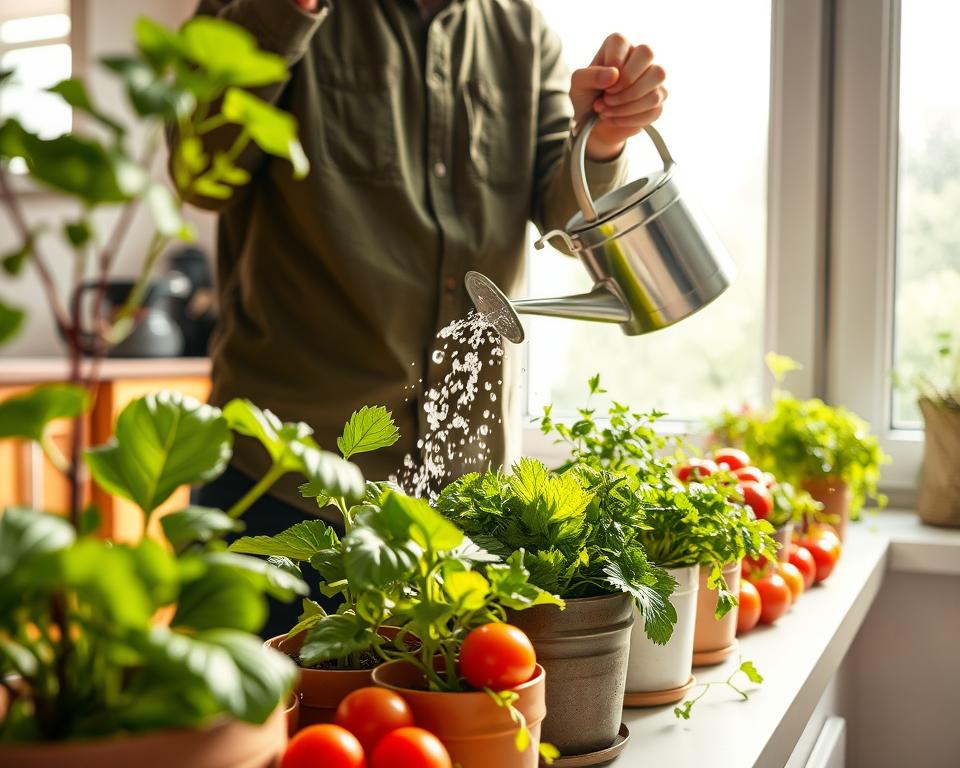
To keep your indoor vegetable garden healthy, it’s key to understand how to water right. Watering is a big part of indoor gardening. Getting it right can make a huge difference in your plants’ health.
Signs of Overwatering
Many indoor gardeners make the mistake of watering too much. Signs of overwatering include yellowing leaves, soft stems, and a decline in plant health. If your plants show these signs, you’re probably watering them too often.
As I always say, “A key to successful indoor gardening is observing your plants’ responses to watering.” If you’re not sure if you’re overwatering, check the soil moisture. Stick your finger into the soil up to the first knuckle. If it feels wet, you need to water less.
“The key to keeping your plants alive is not just watering them, but doing so in a way that mimics their natural habitat as closely as possible.”
Ideal Watering Schedule
Finding the right watering schedule depends on several things. These include the type of plants, container size, and your indoor garden’s temperature and humidity. It’s better to underwater than to overwater, as most indoor vegetables prefer dry conditions.
For plants like lettuce and herbs, start by watering when the top inch of soil feels dry. For beginners’ favorites like tomatoes, keep the soil moist but not too wet. Adjust your schedule based on your plants’ needs and your garden’s conditions.
By watching your plants and adjusting your watering, you can enjoy a great harvest of home-grown veggies. All from the comfort of your own home.
Fertilizing Indoor Vegetables
Fertilizing is key in indoor gardening. It helps your plants grow strong and healthy. They need a balanced diet of nutrients to thrive.
Choosing the right fertilizer is important. It should match your plants’ needs. The right mix promotes healthy growth and fruit.
Types of Fertilizers to Use
Fertilizers come in organic and synthetic types. Organic fertilizers come from natural sources like compost. They release nutrients slowly and improve soil health. Synthetic fertilizers are made in labs and give nutrients quickly. But, they can harm soil if used too much.
A balanced fertilizer with equal parts nitrogen, phosphorus, and potassium is best. It supports all aspects of plant health.
Frequency of Feeding Plants
How often to fertilize depends on the fertilizer type and plant needs. Organic fertilizers are used less often because they release nutrients slowly. For most plants, once a month is enough. But, this can change based on the plant’s growth and the fertilizer’s instructions.
Watch how your plants react to fertilizers. If they show signs of nutrient lack, like yellow leaves, you might need to adjust your schedule.
By picking the right fertilizer and using it correctly, your indoor veggies will get the nutrients they need. This care will lead to healthier plants and a more fruitful garden.
Creating the Ideal Indoor Environment
To grow vegetables indoors, you need to mimic their outdoor home. This means getting the temperature, humidity, and air right.
Optimal Temperature and Humidity
Vegetables love daytime temps of 65-75°F (18-24°C) and cooler nights of 55-65°F (13-18°C). The humidity should be between 40-60%. You can use a humidifier or a water tray with pebbles to keep it right.
Temperature Tolerance of Common Indoor Vegetables:
| Vegetable | Ideal Temperature Range (°F) | Humidity Preference |
|---|---|---|
| Lettuce | 60-70 | High |
| Radishes | 65-75 | Medium |
| Tomatoes | 70-80 | Medium |
Air Circulation Tips
Good air flow is key for healthy plants and to avoid diseases. Use fans to move the air gently. Make sure plants have enough room for air to flow.
For more tips on growing food indoors, check out Real Simple.
Additional Tips:
- Keep your indoor garden away from drafts and extreme temperatures.
- Watch your plants for signs of stress from bad air or wrong climate.
- Use a thermometer and hygrometer to check temperature and humidity.
By focusing on these details, you can make a perfect indoor space for growing veggies. This makes effortless indoor vegetable growing possible. Whether you’re new or experienced, knowing these tips will help you grow great veggies indoors.
Common Indoor Gardening Challenges
Indoor gardening is more than just caring for plants. It’s also about facing challenges that come with it. It’s rewarding, but knowing the obstacles is key.
Pests to Watch Out For
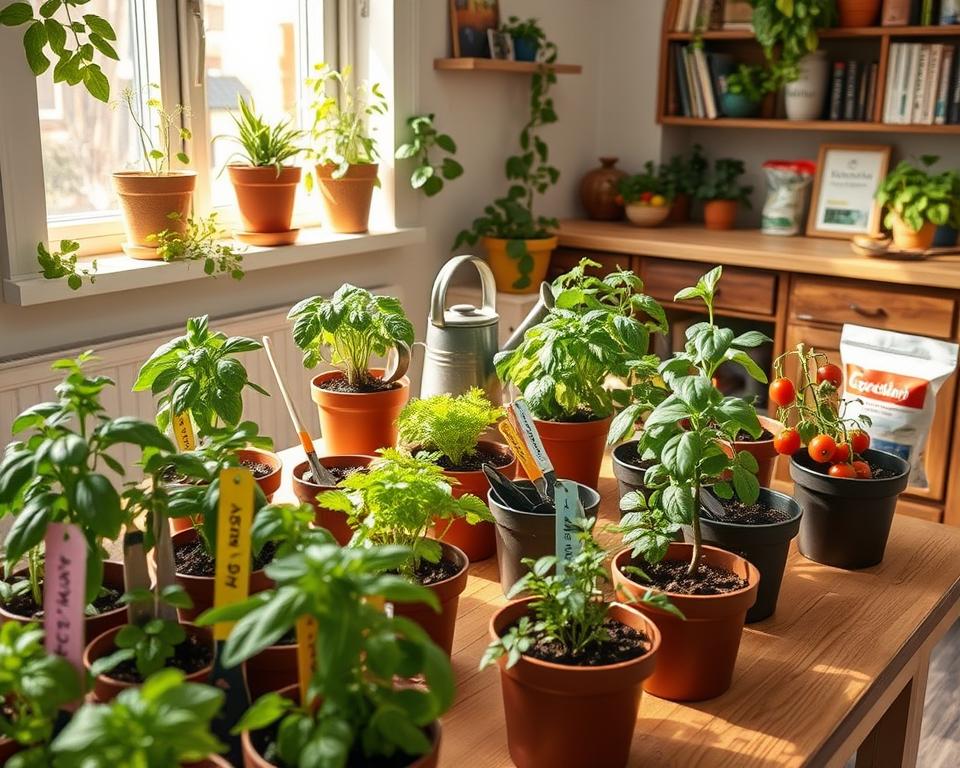
Indoor gardens face pests that can harm plants if not dealt with. Common pests include aphids, spider mites, and mealybugs. Regular inspection of your plants is vital to catch these pests early.
- Aphids: These small, sap-sucking insects can cause curled or distorted leaves.
- Spider mites: These tiny, spider-like insects can cause yellowing or bronzing of leaves.
- Mealybugs: These small, white, cottony insects can cause stunted growth and yellowing leaves.
“The key to managing pests is early detection and intervention.” Organic pest control methods, like neem oil or insecticidal soap, work well against infestations.
Diseases That Affect Indoor Plants
Indoor plants can get sick too. Diseases like root rot, leaf spot, and powdery mildew can harm them. Good hygiene practices, like removing infected plants or debris, can stop disease spread.
“Prevention is the best medicine when it comes to indoor plant diseases.”
Good air circulation and avoiding too much water can also prevent disease. If disease shows up, fungicides or removing affected areas can help control it.
Harvesting Your Indoor Vegetables
There’s nothing quite like the joy of picking fresh veggies from your indoor garden. Knowing when to harvest and how to care for your plants is key. This way, you can enjoy the fruits of your labor.
Best Times to Harvest
Each vegetable has its own signal for being ready. For example, lettuce and leafy greens are ready when they’re fully colored and big enough to eat. Radishes are ready in about 20-25 days, when their roots are about 1 inch thick.
Tomatoes and other fruiting plants are ready when their fruits are fully colored and slightly soft. Harvesting at the right time is important to get the most from your garden.
Here’s a simple table to help you know when to harvest some common indoor veggies:
| Vegetable | Average Days to Harvest |
|---|---|
| Lettuce | 40-50 days |
| Radishes | 20-25 days |
| Tomatoes | 60-90 days |
Post-Harvest Tips
After you harvest, it’s important to store your veggies right to keep them fresh. Leafy greens like lettuce can go in a sealed container in the fridge. Tomatoes should be kept at room temperature, away from sunlight.
To keep your plants producing, follow these tips:
- Regularly pick mature veggies to make the plant produce more.
- Keep your plants well-watered and fertilized.
- Watch for pests or diseases on your plants.
By following these tips, you can enjoy a lot of harvest from your indoor garden. Happy gardening!
Maintaining Indoor Vegetable Gardens Year-Round
To keep your indoor vegetable garden thriving all year, you need to make seasonal changes. This means adjusting how you care for your plants as the seasons shift.
Seasonal Adjustments
As the seasons change, so do your plants’ needs. In spring and summer, they need more light and water. This is because of the longer days and warmer weather. But in fall and winter, they need less light and water. This is because of the shorter days and cooler temperatures.
Key seasonal adjustments include:
- Adjusting the lighting to compensate for shorter winter days
- Regulating temperature to mimic the natural outdoor environment
- Modifying watering schedules according to the plant’s reduced needs in winter
Keeping Plants Healthy in Winter
Winter can be tough for indoor gardens because of less natural light and cooler temperatures. To keep your plants healthy, place them in the brightest spots in your home. You might also need to use grow lights.
Some additional tips for winter care include:
- Monitoring humidity levels to prevent dryness
- Reducing fertilization, as plant growth slows down
- Pruning plants to maintain shape and promote healthy growth
By making these seasonal changes and giving extra care in winter, you can keep your indoor garden thriving all year.
Conclusion: Enjoying Home-Grown Produce Indoors
Growing your own veggies indoors is very rewarding. You get fresh, healthy food right at home. Plus, you enjoy watching your plants grow from seed to harvest.
Reflections on Indoor Gardening
Starting with easy veggies like lettuce and radishes is a good first step. You can have a big harvest even in winter. As you get better, try new plants and methods. Indoor gardening becomes a fun hobby.
Starting Your Indoor Gardening Journey
If you’re new to indoor gardening, give it a shot. Start with simple plants and don’t worry about small setbacks. With practice and patience, you’ll soon have your own home-grown food. It’s worth the effort for the delicious rewards.