


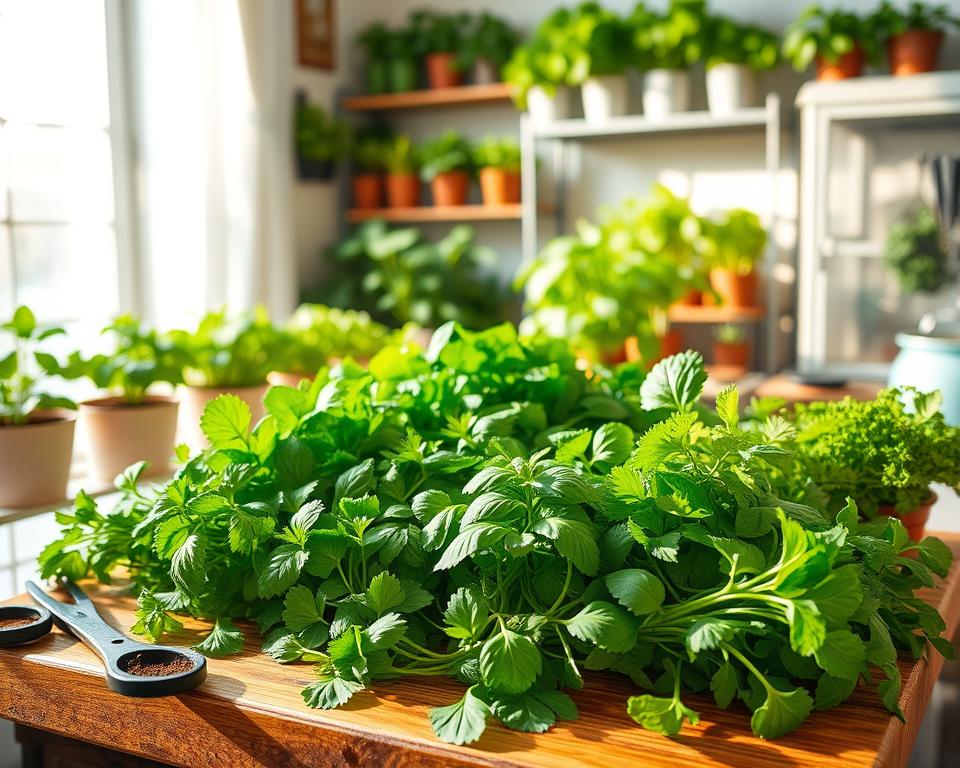
Growing indoor greens is rewarding, but timing is key for flavor and nutrition. Harvesting at the right time greatly improves the quality of your greens.
If you’re an indoor gardener, you want to enjoy your hard work. Knowing when to pick your greens is important. In this article, I’ll share tips on finding the best harvest time for your indoor greens.
Key Takeaways
- Understanding the growth cycle of your indoor greens is key for a good harvest.
- Harvesting at the right time ensures maximum flavor and nutrition.
- Different types of greens have varying harvest times.
- Monitoring your plants’ progress is essential.
- Adjusting your harvest time based on weather conditions can improve yield.
Understanding Indoor Greens and Their Growth Cycle
Starting with indoor gardening? Knowing the basics of indoor greens is key. These leafy greens grow well inside, giving you fresh produce all year.
Definition of Indoor Greens
Indoor greens are leafy plants that grow well indoors. Think lettuce, spinach, and kale. They’re perfect for indoor gardening because they’re hardy and need little space.
Benefits of Growing Indoors
Indoor greens have many perks. They grow all year, use less water, and avoid pests and diseases. Plus, they thrive in low-light areas, great for city folks.
- Year-round production regardless of the season
- Water conservation due to controlled environment
- Less exposure to pests and diseases
Common Types of Indoor Greens
Common indoor greens include lettuce, spinach, kale, and arugula. Each has its own growth cycle and needs.
| Type of Green | Growth Cycle | Optimal Conditions |
|---|---|---|
| Lettuce | 20-40 days | Partial shade, consistent moisture |
| Spinach | 20-30 days | Full shade to partial shade, moist soil |
| Kale | 50-60 days | Partial shade to full sun, well-drained soil |
Knowing these basics helps you pick the right time to harvest. Choose the right green and provide the best conditions. Then, enjoy a fresh, healthy harvest right at home.
Signs That Your Greens Are Ready to Harvest
To enjoy your indoor greens at their best, knowing when to pick them is key. Picking at the right time boosts flavor and nutritional value. It’s all about getting the most from your crop.
Leaf Color and Size Indicators
Color and size are key signs your greens are ready. Lettuce leaves are ready when they’re 4 to 6 inches and bright green. Spinach is ready when its leaves are broad and deep green, in about 3 to 4 weeks.
Watch for color changes, as greens turn yellow or dark when overripe. Leaves should match the expected size for their variety. Too big, and they might be bitter or tough.

Texture and Firmness Guidelines
Texture and firmness are also important. Mature greens should feel firm. For example, kale leaves are ready when firm and slightly crunchy. Arugula should be peppery and tender.
To check firmness, just touch the leaves. If they’re soft or limp, wait a bit longer. If too hard or fibrous, they’re past prime.
Timing: From Seed to Harvest
Knowing how long it takes for your greens to grow is key. Most indoor greens are ready in a few weeks. For instance, lettuce and spinach can be ready in 2 to 3 weeks. Kale takes a bit longer, around 3 to 4 weeks.
Track the days from sowing and know when your variety is ready. This helps plan and ensures you pick at the best time.
Best Practices for Harvesting Indoor Greens
To enjoy your indoor greens at their best, know when and how to harvest them. Harvesting at the right time and using the right techniques can greatly improve their flavor, texture, and nutritional value.
Tools You’ll Need for Harvesting
You’ll need a few simple tools to harvest your indoor greens effectively. A sharp pair of scissors or garden shears is key for clean cuts without harming the plants. For delicate greens, precision tweezers can help pluck individual leaves.
Techniques for Clean Cuts
Clean cuts are vital for promoting regrowth and keeping your plants healthy. When you harvest, cut the leaves at the stem base with your scissors or shears. This method encourages new growth and keeps the plant healthy.
- Cut just above a node to promote new growth.
- Avoid pulling or tearing the leaves to prevent damage.
- Use a gentle touch to handle the plants.
When to Harvest for Maximum Flavor
The timing of your harvest greatly affects the flavor of your indoor greens. Harvesting in the morning, after a night’s rest, often yields the best taste. Also, consider the maturity of the leaves and harvest when they’re at their peak freshness.
For many indoor greens, the best time to harvest is when the leaves are young and tender. Regular harvesting encourages the plants to keep producing new, flavorful leaves.
Harvesting Specific Types of Greens
To get the most flavor and nutrients from your indoor greens, harvest them at the right time. Each type of green has its own needs. Knowing these can greatly improve your harvest’s quality.
Lettuce: The Right Time to Pick
Lettuce is a favorite for indoor gardens. The time to harvest depends on the type. For loose-leaf lettuce, pick leaves when they’re big enough. For heading types, wait until the head is firm and leaves are full.
- Check for size and color: Lettuce leaves should be vibrant and reach a decent size.
- Avoid bolting: Harvest before the plant starts to bolt, or go to seed.
Spinach: Identifying Peak Freshness
Spinach is a hit with indoor gardeners. It’s ready to pick when leaves are big enough, usually a few weeks after sowing. You can pick leaves one by one or cut the whole plant at the base.
Key signs of readiness include:
- Leaf size: Spinach leaves should be large enough to be worth eating.
- Color: Deep green color indicates freshness and nutritional value.
Kale: Knowing When to Cut
Kale is packed with nutrients and can be picked over and over. Start by taking the biggest leaves from the bottom, then move up. This helps the plant keep growing new leaves.
“Kale is at its best when the leaves are tender and have a deep green color. Avoid leaves that are too old or have begun to yellow.”
Knowing when to harvest lettuce, spinach, kale, and other greens means you can have fresh, healthy food at home all the time.
Importance of Timing and Frequency
Harvesting indoor greens often helps them grow and taste better. It’s key to know when and how often to pick them. This is important for anyone growing plants indoors.
How Often to Harvest Indoor Greens
The timing of harvesting depends on the greens you grow and your taste. For lettuce and spinach, pick them when they’re big enough. A good start is harvesting every 1-3 weeks.
Watch your plants to adjust this schedule. For cut-and-come-again greens, like lettuce, you can pick them more often. Try every 7-10 days. This keeps your greens fresh and encourages more growth.
Impact on Flavor and Nutritional Value
When you pick your greens, it affects their taste and health. Picking them at their freshest makes them taste better and be more nutritious. Experts say picking at the right time is key.
By picking often, you get new leaves that are more nutritious and tasty. This way, you always have fresh, healthy greens at home.
- Harvest regularly to encourage new growth.
- Monitor the size and tenderness of your greens to determine the best harvest time.
- Adjust your harvesting frequency based on the type of greens and your personal preferences.
Methods of Harvesting Greens
To get the most from your indoor garden, knowing how to harvest greens is key. It’s not just about picking leaves. It’s about doing it in a way that keeps your plants healthy and growing.
Snipping vs. Pulling
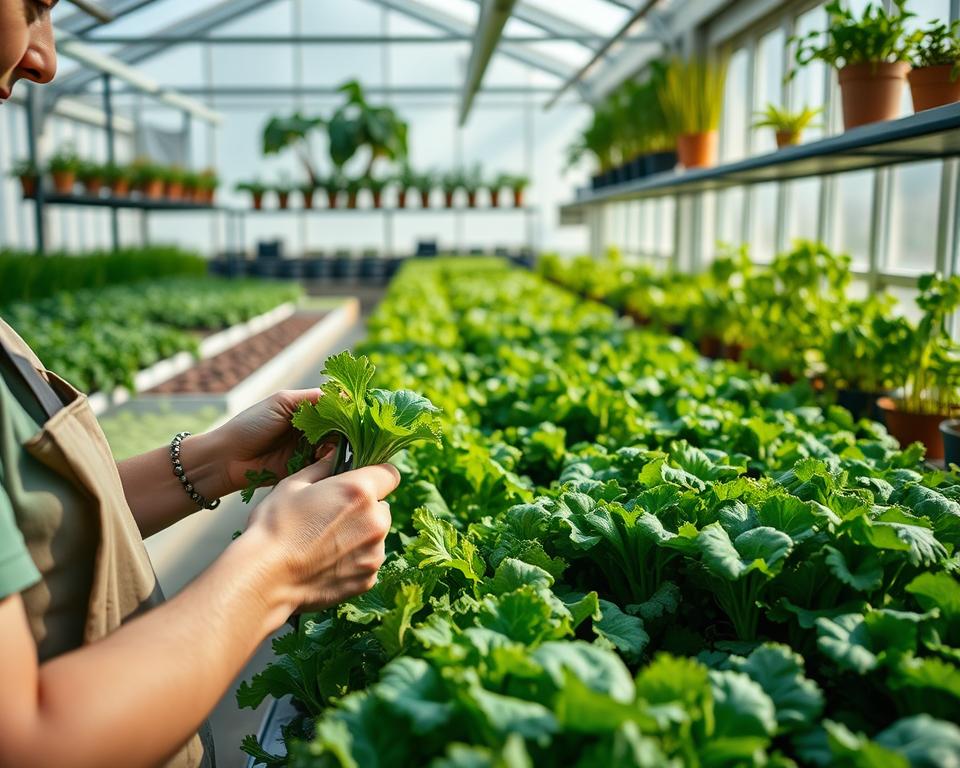
When you harvest, you’ll decide between snipping or pulling your greens. Snipping means cutting leaves off at the soil line with scissors or clippers. This method helps your plant keep growing. On the other hand, pulling can damage the roots or soil, making it hard for the plant to regrow.
For example, snipping is best for lettuce. It lets the plant grow new leaves. Gardening experts say, “The cut-and-come-again method is great for a continuous harvest from your indoor garden.” Learn more about harvesting leafy greens to find the best practices for your plants.
Cut-and-Come-Again Technique
The cut-and-come-again technique is loved by many indoor gardeners. It involves taking the outer leaves, letting the inner ones grow. This method makes your plant produce more leaves and gives you a steady harvest. For example, with kale and spinach, you can take the big outer leaves and the plant will grow new ones from the center.
Single Harvest vs. Continuous Harvesting
Another choice is whether to harvest once or keep going. Single harvesting means taking the whole plant at once, when it’s fully grown. This is simple but might not be the best for indoor gardens. Continuous harvesting means picking leaves or stems often, making the plant grow more and giving you more from one planting.
Using continuous harvesting, you can get more and longer harvests from your indoor garden. Gardening fans say, “The key to a successful indoor garden is not just in the initial planting, but in how you manage the harvest.”
“The way you harvest your greens can significantly impact their flavor and nutritional value. Regular harvesting encourages the plants to produce fresh, tender leaves.”
Knowing the different harvesting methods and picking the right one for your plants can greatly improve your indoor garden. By choosing wisely, you can have a more productive and sustainable garden.
Storing Your Harvested Greens
Storing your greens right is as important as growing them. It keeps them fresh and full of nutrients. After picking, handle your greens carefully to keep them in top shape.
Best Storage Practices
To keep your greens fresh, store them correctly. First, wash them gently in cold water to get rid of dirt. Then, dry them well with a salad spinner or towel. This step is key to avoid spoilage.
After drying, put your greens in a breathable container or bag. Use a container with a lid for airflow or a perforated plastic bag. This keeps the greens humid without getting soggy.
“The way you store your harvested greens can significantly impact their freshness and longevity. Proper storage is key to enjoying your greens for as long as possible.”
Ideal Temperature and Humidity
Keep your greens cool and humid for best storage. The ideal temperature is between 32°F and 40°F (0°C to 4°C). Store them in the fridge to keep them cool.
Right humidity is also key. You want it humid enough to prevent drying but not too humid for mold. Aim for a relative humidity of 70-80%.
| Storage Condition | Ideal Range |
|---|---|
| Temperature | 32°F – 40°F (0°C – 4°C) |
| Relative Humidity | 70-80% |
How Long Greens Last After Harvest
The shelf life of greens depends on type, storage, and handling. Leafy greens like lettuce and spinach can last up to a week in the fridge.
Regularly check your stored greens. Remove any bad leaves to keep the rest fresh.
By following these tips and keeping the right temperature and humidity, you can enjoy your greens longer. This makes your indoor gardening even more rewarding.
Troubleshooting Common Issues
Keeping your indoor garden healthy means solving common problems. Watch your indoor greens closely for issues that can affect their quality and timing.
Signs of Overripe Greens
Overripe greens can mean your harvest is late. They often taste bitter and feel tough. For example, lettuce leaves might taste bad and spinach can bolt.
Check your plants often to avoid overripe greens. Look for signs like:
- Yellowing or browning leaves
- Leaves getting too big or feeling tough
- Flowering or bolting, which means the plant is changing its focus
Managing Pests and Diseases
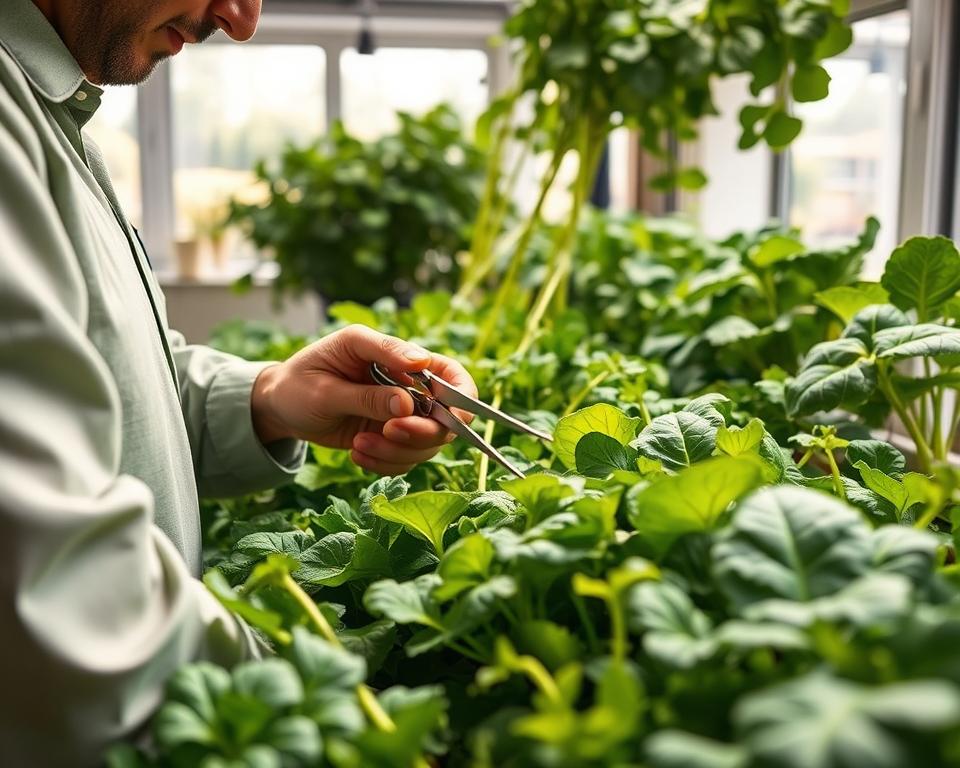
Pests and diseases can harm your indoor greens. Watch them closely to spot problems early. Common pests include:
| Pest/Disease | Symptoms | Management |
|---|---|---|
| Aphids | Small, soft-bodied insects on leaves | Use neem oil or insecticidal soap |
| Fungus gnats | Small flying insects around plants | Allow soil to dry slightly between waterings |
| Powdery mildew | White, powdery coating on leaves | Improve air circulation and remove infected leaves |
Keeping your growing area clean and well-ventilated helps prevent disease.
“Prevention is always better than cure when it comes to managing pests and diseases in your indoor garden.”
When to Replant for Continuous Growth
To keep growing and getting fresh greens, replant on time. Know your plants’ growth cycles and plan ahead.
For many greens, replant every 1-2 weeks for a steady harvest. Consider these tips:
- Watch how fast your current crop grows
- Get new seeds or seedlings ready
- Replant in a staggered way for a constant supply
By following these tips and staying proactive, you can have a thriving indoor garden.
Enhancing Yield Through Care
To get the most out of your indoor garden, it’s key to know how to care for it. The right care boosts your plants’ health and their productivity.
Nutrient and Water Management
Managing nutrients and water is essential for a thriving indoor garden. Balanced fertilizers give plants the nutrients they need for growth. It’s also important to watch the watering schedule to avoid harming your plants.
Check the soil moisture by feeling it with your finger. If it’s dry, it’s time to water. Also, use a well-draining potting mix to prevent waterlogged soil.
| Nutrient | Function | Deficiency Symptoms |
|---|---|---|
| Nitrogen (N) | Promotes leaf growth | Yellowing leaves, slow growth |
| Phosphorus (P) | Supports root development | Purple leaves, poor root growth |
| Potassium (K) | Enhances overall health | Leaf edges brown, weak stems |
Importance of Light Exposure
Light is vital for indoor greens to grow well. Most greens need 12-14 hours of light daily. If natural light is not enough, use grow lights to help.
Regular Maintenance Tips
Regular care is essential for a healthy indoor garden. This includes pruning for bushy growth, monitoring for pests, and ensuring good air flow to prevent diseases.
- Prune your plants regularly to encourage new growth.
- Inspect your plants frequently for signs of pests or disease.
- Keep the area around your plants clean and well-ventilated.
By following these care tips, you can greatly improve your indoor greens’ yield. Enjoy a more abundant and healthy harvest.
Final Thoughts on Indoor Green Harvesting
Timing is key when picking indoor greens. Knowing when they’re ready can make your harvest better and tastier.
Key Takeaways
We’ve talked about when to harvest indoor greens. Look at leaf color and texture, and learn how to store them well. These tips will help you get the most from your indoor garden.
A New Beginning for Indoor Gardeners
If you’re new to indoor gardening, start with confidence. Learn the right ways to grow and harvest your greens. There are many online resources, like guides from Bosch and Urban Organics, to help you.
Continuing Your Journey
Keep practicing as you grow and harvest your greens. Don’t worry about mistakes at first. With time, you’ll get better at picking the perfect time to harvest.