


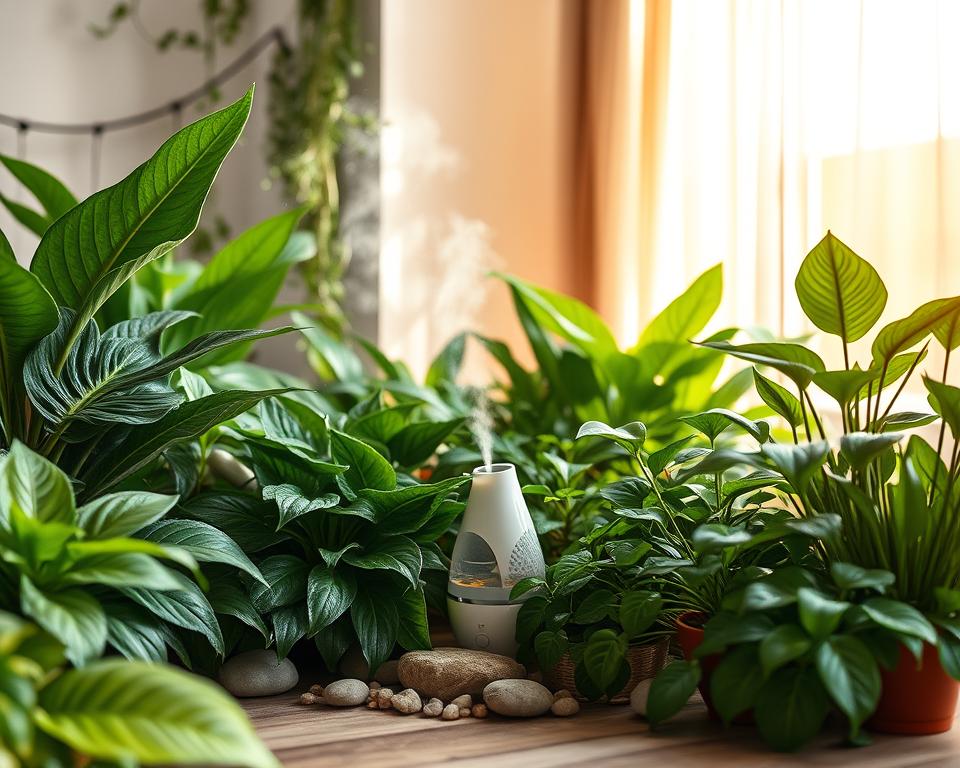
Did you know that nearly 70% of household plants struggle with stress from bad moisture levels in the air? As someone who loves to care for a indoor garden, I’ve learned how important humidity is for our plants.
Keeping the right moisture balance is key for their growth and survival. In this guide, I’ll share my knowledge on how to create a healthy environment. This will help your plants thrive.
Key Takeaways
- Understand the importance of optimal humidity levels for your plants
- Learn how to measure and adjust moisture levels in your home
- Discover simple techniques to maintain the ideal environment for your indoor garden
- Get tips on how to care for your plants in different humidity conditions
- Find out how to create a thriving indoor garden with the right humidity balance
Understanding Humidity and Its Importance for Indoor Plants
The health of your indoor plants depends a lot on the humidity in your home. As someone who loves plants, knowing how to manage humidity is key. It helps create the best environment for your plants to grow well.
What Is Humidity?
Humidity is the amount of moisture in the air. It’s very important for plants because it helps them breathe and manage water. Indoor plants usually need a humidity level between 40% to 60%. This is higher than the usual indoor humidity, which is often around 30% because of heating and cooling.
The Role of Humidity in Plant Health
Humidity is very important for plant health. It affects how plants breathe and release water vapor. If the air is too dry, plants can get dehydrated. But, if it’s too humid, plants can get sick with fungal diseases. Keeping the right balance is essential for your plants to stay healthy and grow well.
To control plant humidity well, you need to know how temperature and air movement affect it. By understanding this, you can make a more stable home for your indoor plants.
Signs Your Indoor Plants Need More Humidity
Low humidity can really hurt indoor plants. There are clear signs to look out for. If the air is too dry, plants may struggle to grow well. It’s your job to spot the problem and fix it.
One key sign is the state of your plants’ leaves. Let’s dive into some common signs in more detail.
Wilting Leaves
Wilting leaves often mean your plants need more humidity. Dry air causes plants to lose moisture fast, making leaves droop or wilt. Check the soil moisture and adjust your watering schedule if needed. But if the soil is moist and leaves wilt, it’s likely humidity is too low.
Browning Tips
Browning tips on leaves also point to low humidity. Dry air can dry out leaf tips, turning them brown. This is common in plants like ferns and peace lilies. To stop this, increase the humidity around your plants with a few easy methods.
Frequent Pest Problems
Dry air can also attract pests like spider mites and mealybugs. If you see pests, it’s probably because the humidity is too low. Increasing the humidity can help keep pests away and your plants healthy.
Here’s a quick reference table to help you identify the signs and take corrective action:
| Signs | Possible Cause | Corrective Action |
|---|---|---|
| Wilting Leaves | Low Humidity | Increase Humidity |
| Browning Tips | Dry Air | Use Humidifier |
| Frequent Pest Problems | Low Humidity | Increase Humidity, Inspect Plants Regularly |

Ideal Humidity Levels for Common Indoor Plants
To keep your indoor plants happy, knowing their humidity needs is key. Plants from different places have different humidity needs.
Tropical Plants
Tropical plants like Monstera deliciosa and Philodendron come from humid places. They need humidity between 50% to 70%. You can use a humidifier or group plants to make a humid spot.
“Tropical plants love humidity, so if you’re growing these indoors, consider using a humidifier to mimic their natural habitat.”
Succulents and Cacti
Succulents and cacti like dry air, needing humidity between 20% to 40%. Too much humidity can harm them. Make sure they have good air flow to avoid moisture problems.
Ferns and Orchids
Ferns and orchids prefer moist air, needing 60% to 80% humidity. To help them, place them on a water-filled tray or near a humidifier.
| Plant Type | Ideal Humidity Level |
|---|---|
| Tropical Plants | 50% – 70% |
| Succulents and Cacti | 20% – 40% |
| Ferns and Orchids | 60% – 80% |
Meeting your plants’ humidity needs helps them grow well. This makes your indoor garden healthier.
Practical Techniques to Increase Humidity
There are several easy ways to boost humidity for your plants. As someone who loves indoor plants, I’ve learned a few tricks. These methods can really help your plants stay healthy and strong.
Use of Humidifiers
An indoor plant humidifier is a top choice for keeping humidity up. It sprays mist into the air, keeping humidity steady. When picking a humidifier, think about the size of your space and the plants you have.
- Cool mist humidifiers work well in warm places or summer.
- Warm mist humidifiers are best for cold places or winter.
Grouping Plants Together
Grouping your plants is another easy trick. It makes a small area around them more humid. This method is natural and doesn’t cost much.
Pebble Trays and Water Bowls
Pebble trays or water bowls are creative ways to add humidity. Putting plants on trays with water and pebbles makes the air more humid. Water bowls near plants also help keep humidity up.
- Fill a tray with pebbles and water, but not too high.
- Put your plant pot on the pebbles.
- The water evaporating will make the air more humid.
Using these simple methods can help you manage humidity for your indoor plants. This ensures they grow well in their environment.
Tips for Maintaining Optimal Humidity Levels
Keeping the right humidity is key for indoor plants to stay healthy. It’s important to check the humidity often and adjust as needed, with the seasons changing.
Regularly Monitor Humidity
Watching the humidity closely is vital for your plants. A hygrometer can accurately measure the humidity in your home. For more on humidity, check Atami’s blog on humidity and temperature.
It’s a good idea to check humidity every day, more so when the weather is extreme. This way, you can spot any changes that might harm your plants.
| Device | Accuracy | Ease of Use |
|---|---|---|
| Hygrometer | High | Easy |
| Smart Thermometer | Medium | Moderate |
| Humidity Tracker App | Variable | Easy |
Adjusting Based on Seasonal Changes
Seasons change, and so does the humidity. Winter air is drier because of heaters, while summer air is more humid. Changing how you manage humidity with the seasons is critical.
In winter, a humidifier might be needed to keep humidity up. But in summer, make sure there’s good air flow to avoid too much moisture.
By adapting to these seasonal shifts, you can keep your plants in a stable, healthy environment all year.
Choosing the Right Location for Your Indoor Plants
Finding the perfect spot for your indoor plants is essential. It helps create a humid environment that encourages growth. I look at several factors to ensure my plants get the right humidity.
Bright vs. Shady Areas
Choosing between bright and shady spots for plants is a common debate. Most plants prefer bright, indirect light. But, some do well in shadier spots. For example, Chinese Evergreen and Pothos like the shade, while Succulents and Cacti need direct sunlight.
Understanding how light affects your plants is key to keeping humidity right. Plants in bright spots may need more water because they lose moisture faster. Plants in the shade might need less water but could benefit from more humidity to stay moist.
Near Heating/Cooling Vents
Heating and cooling vents can dry out the air around your plants. This can lower humidity levels. To avoid this, I keep plants away from vents.
If plants must be near vents, using a humidifier can help. You can also group plants together. This creates a humid microclimate that fights off dry air from vents.
By choosing the right spot for your plants, considering light and vent proximity, you can create a humid environment. This supports healthy plant growth. For more plant humidity tips, check out other parts of this guide.
DIY Solutions for Humidity Management
With a bit of creativity, you can manage humidity for your indoor plants without spending a lot. This method not only saves money but also makes caring for your plants more personal.
Creating a Humidity Dome
A humidity dome is a simple and effective way to keep humidity high around your plants. You can make one using a clear plastic container or a cloche. This is great for plants like ferns and orchids that love humid environments.
To make a humidity dome, put your plant in a pot and cover it with the plastic container. Make sure the container is clear so your plant gets sunlight. You can also add pebbles or small rocks at the bottom to help air move around.
Repurposing Household Items
You can also use household items to manage humidity for your plants. For instance, a tray filled with water and pebbles can create a humid spot. As the water evaporates, it makes the air around your plants more humid.
| Household Item | How to Repurpose | Benefit |
|---|---|---|
| Pebble Tray | Fill a tray with water and add pebbles | Increases humidity as water evaporates |
| Water Bowl | Place a bowl of water near plants | Evaporation increases humidity |
| Misting Bottle | Mist plants regularly | Directly increases humidity around plants |
By using these DIY solutions, you can manage humidity for your indoor plants well. This ensures they thrive in their environment.
When to Water: Understanding Moisture Needs
Learning to water your indoor plants is more than just following a schedule. It’s about knowing the humidity levels in your space. Humidity is key to plant health, and watering helps keep it right.
Soil Moisture Testing
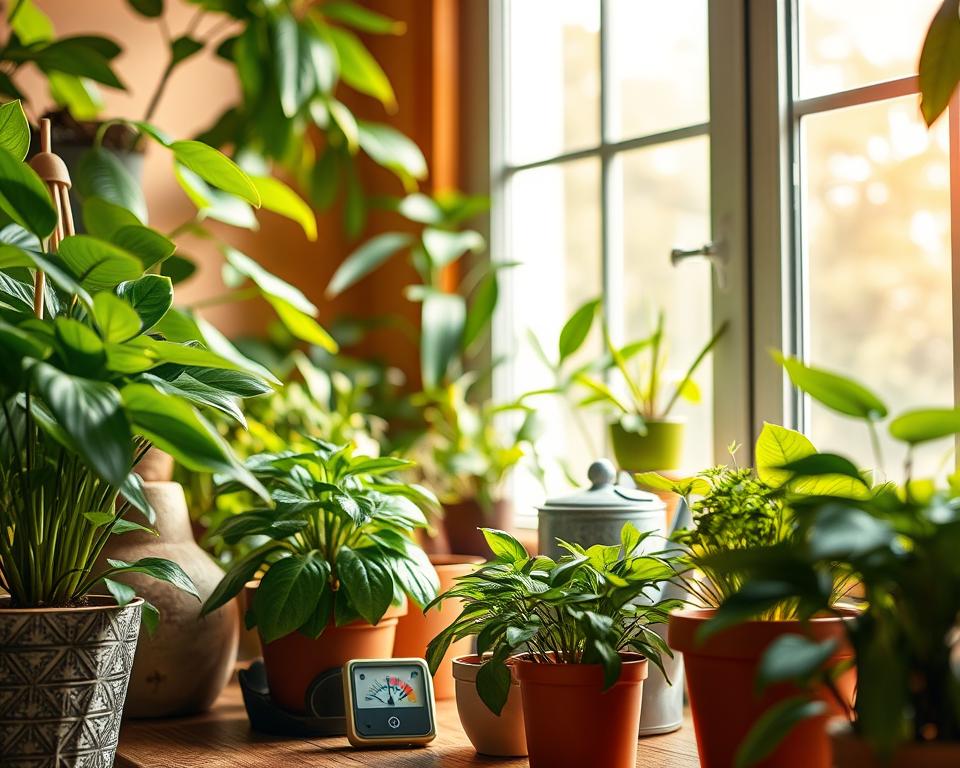
Testing the soil moisture is a great way to see if your plants need water. Stick your finger into the soil up to the first knuckle. If it’s dry, it’s time to water. If it’s moist, wait a day or two before watering again.
For a more exact measurement, use a soil moisture meter. These tools give a number that shows the soil’s moisture level. This helps you decide when to water.
Tips for Soil Moisture Testing:
- Check the soil moisture at the same time every day to establish a routine.
- Avoid getting the leaves wet when watering to prevent fungal diseases.
- Water your plants when the top inch of soil feels dry to the touch.
Watering Frequency Based on Humidity
Watering frequency changes with humidity levels in your home. In humid places, plants need less water because the air gives them moisture. In dry places, plants need more water because there’s less moisture.
“The key to successful watering is not just about the frequency but also understanding the environment your plants are in.” – Gardening Expert
In winter, when the air is dry from heating, plants may need more water. In summer, when it’s humid, you might water them less.
Adjusting Watering Frequency:
- Monitor the humidity levels in your home using a hygrometer.
- Adjust your watering schedule based on seasonal changes in humidity.
- Observe your plants for signs of stress, such as wilting or browning leaves, which can indicate a need to adjust your watering frequency.
Troubleshooting Humidity-Related Problems
Indoor plants often face humidity-related issues. But, there are ways to address them. Keeping the right humidity level is key for your plants’ health.
Overcoming Leaf Drop
Leaf drop is common when humidity is off. To fix this, make sure your plants are in a spot with stable humidity levels. You can use a humidifier or group plants together to create a microclimate.
For more tips on increasing humidity, check out this resource on how to boost humidity for your houseplants.
Managing Mold and Mildew Issues
Mold and mildew love humid places. To keep them away, make sure there’s good air circulation around your plants. You can also use fungicides made for indoor plants.
| Issue | Cause | Solution |
|---|---|---|
| Leaf Drop | Low Humidity | Use Humidifier or Group Plants |
| Mold and Mildew | High Humidity & Poor Air Circulation | Improve Air Circulation, Use Fungicides |
Understanding and tackling these humidity problems can make your indoor plants healthier. Regular checks and tweaks will keep your plants in their best condition.
Sustainable Practices for Humidity Management
Creating a thriving indoor garden is all about adopting sustainable practices. These practices benefit our plants and the environment. By using eco-friendly methods and products, we can keep humidity levels just right while being kind to the planet.
Natural Methods for Humidity Control
Using natural methods is a great way to manage humidity. Grouping plants together can create a humid microclimate. I also suggest using pebble trays or water bowls. These help increase humidity as the water evaporates.
Eco-Friendly Products for Humidity Management
There are many eco-friendly humidifiers out there. Look for ones made from sustainable materials or that save energy. An indoor plant humidifier that’s good for the planet can help keep your plants happy. By following these tips, you can make your indoor garden healthier and more sustainable.