


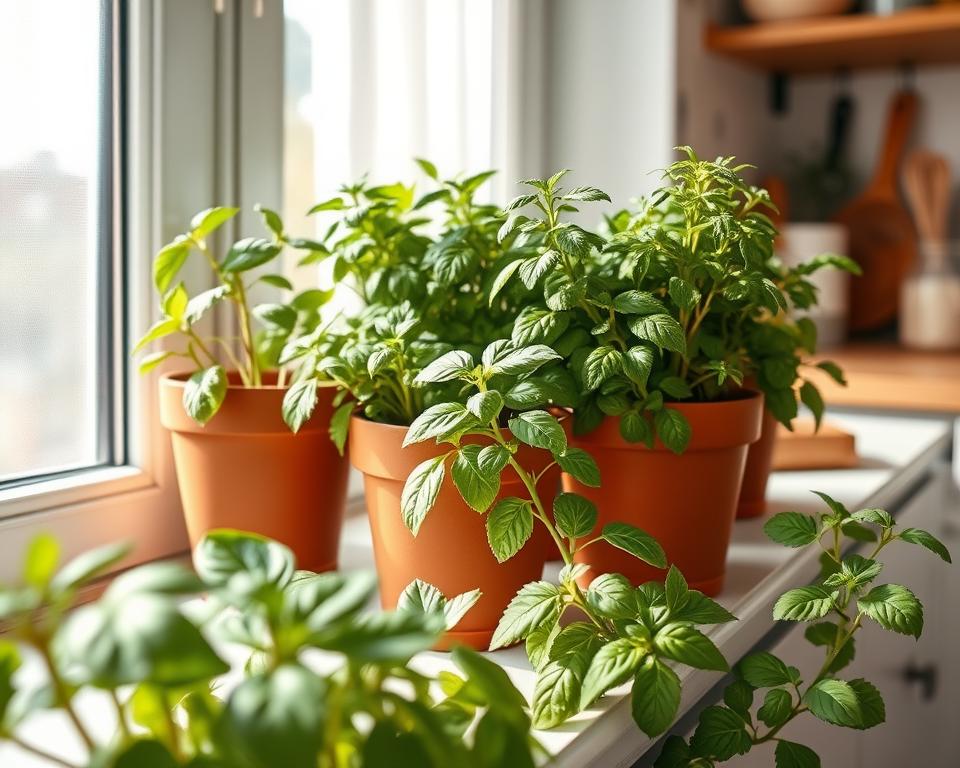
Growing your own indoor herb garden can change your cooking and health game. Having fresh herbs always ready can make any meal better and give you a sense of pride.
Imagine always having fragrant basil, rosemary, and thyme on your windowsill. This guide will show you how to make and keep your own lush herb garden. It’s easy, even if you’ve never gardened before.
Key Takeaways
- Create a thriving indoor herb garden with minimal maintenance.
- Choose the right herbs for your cooking needs and lighting conditions.
- Learn simple tips for keeping your herbs healthy and pest-free.
- Discover how to use your homegrown herbs in a variety of dishes.
- Enjoy the benefits of having fresh herbs year-round.
Why I Love Having a Kitchen Windowsill Herb Garden
Having a kitchen windowsill herb garden is a joy. It’s a small way to enjoy urban gardening. It brings nature indoors and makes cooking better.
Fresh herbs change cooking for the better. They add amazing flavor and aroma. For example, basil makes pasta dishes pop, and cilantro adds depth to salads.
The Benefits of Fresh Herbs
Fresh herbs do more than taste great. They’re also good for you. Herbs like rosemary boost brain power, and thyme fights off bacteria.
| Herb | Health Benefits | Culinary Uses |
|---|---|---|
| Basil | Rich in antioxidants | Pesto, pasta dishes, salads |
| Rosemary | Cognitive benefits, anti-inflammatory | Roasted meats, vegetables, bread |
| Thyme | Antibacterial properties | Soups, stews, marinades |
Enhancing My Cooking Experience
My herb garden makes cooking fun. It inspires me to try new recipes. I can grab herbs easily, saving time.
Bringing Nature Indoors
My herb garden also makes my kitchen feel cozy. It’s a small part of small space gardening. It changes my kitchen’s vibe.
In short, my kitchen herb garden is special. It offers fresh flavors, health perks, and a nature connection. All from my kitchen.
Choosing the Right Herbs for My Garden
Starting a kitchen windowsill herb garden is exciting. The first step is picking the right herbs. With many options, it might seem hard. But, by thinking about a few things, you can make a garden that looks good and is useful.
Popular Herbs for Beginners
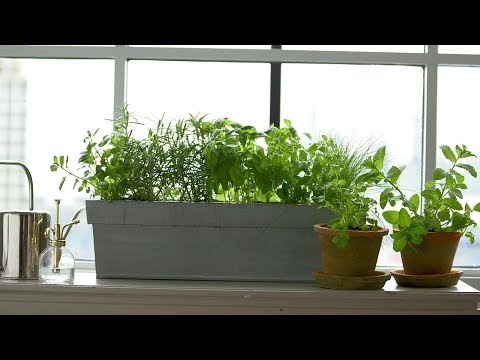
For beginners, start with easy herbs like basil, mint, and parsley. These herbs are easy to care for. They’re also great in many dishes.
Seasonal Considerations
Think about the season when picking herbs. Some herbs like cooler weather, while others need the summer heat. For example, cilantro and parsley do well in cooler months. Basil and dill prefer warmer weather.
| Herb | Season | Care Tip |
|---|---|---|
| Basil | Summer | Pinch off flower buds to encourage leaf growth |
| Cilantro | Spring/Fall | Keep soil moist to prevent bolting |
| Mint | Spring/Summer | Prune regularly to control spread |
Personal Favorites
Over time, I’ve grown to love certain herbs. Rosemary is one; it’s fragrant and great in roasted dishes. I also like thyme for soups and stews.
By thinking about these points and picking the right herbs, you’ll enjoy fresh herbs all year.
Selecting the Perfect Containers
The right containers are key to a vibrant herb garden on my kitchen windowsill. Choosing the right ones is important for my herbs’ health and look.
Materials to Consider
I have many materials to choose from for my herb garden. Terracotta pots are breathable, helping roots grow well. But, they dry out fast.
Plastic containers keep moisture better but don’t breathe as well.
- Terracotta: Good for root aeration, but may dry out quickly.
- Plastic: Retains moisture, but may lack aeration.
- Ceramic: Aesthetically pleasing, durable, and can be glazed for moisture retention.
- Wood: Can add a natural touch, but may require more maintenance.
Size and Drainage Factors
The container size is vital for herb growth. Deeper pots are better for herbs with long roots. Wider pots can hold more plants.
Drainage is also important. Containers need holes to prevent waterlogged soil.
| Container Size | Herb Type | Drainage Needs |
|---|---|---|
| Small (6-8 inches) | Basil, Chives | Moderate drainage |
| Medium (8-12 inches) | Mint, Parsley | Good drainage |
| Large (12+ inches) | Rosemary, Thyme | Excellent drainage |
Decorating My Herb Pots
Decorating my herb pots adds a personal touch. I can use paint, stickers, or labels for a unique look. Matching containers to my kitchen decor or using vertical herb garden kits can also enhance the look.
By choosing the right containers and paying attention to details, I can create a beautiful kitchen herb garden kit. It brings freshness and joy to my cooking.
Ideal Location for My Herb Garden
Finding the perfect spot for my herb garden is key to its success. I must think about the conditions that will help my herbs grow well. This is important when deciding where to put my indoor herb garden.
Sunlight Requirements
Most herbs need lots of sunlight to grow well. I should place my herb garden in a spot with 4-6 hours of direct sunlight daily. If direct sunlight is not possible, grow lights can help.
Some herbs, like mint and parsley, can handle partial shade. But most herbs need full sun to grow lots of foliage.
Temperature and Humidity
Herbs like daytime temperatures between 65-75°F (18-24°C) and nighttime temperatures around 55-65°F (13-18°C). Keeping humidity low, around 40-50%, helps prevent fungal diseases. I can use a thermometer and hygrometer to check these conditions.
Protecting My Herbs
To keep my herbs safe, I need to watch out for a few things. Drafts can stress the plants, so I should avoid drafty spots. I also need to check for pests like spider mites, mealybugs, and aphids. If I see any, I should act fast.
| Herb | Sunlight Requirement | Temperature Preference |
|---|---|---|
| Basil | Full sun (6+ hours) | 65-75°F (18-24°C) |
| Mint | Partial shade | 60-70°F (15-21°C) |
| Rosemary | Full sun (6+ hours) | 65-75°F (18-24°C) |
By considering these factors and choosing the right spot, I can make a thriving indoor herb garden. This garden will give me fresh herbs all year.
Planting My Herbs
Planting my herbs is a key step in making a great kitchen windowsill garden. It’s where all my planning and prep come to life.
Soil Recommendations
The right soil is key for growing herbs indoors. I choose a potting mix made for indoor plants. It keeps moisture but stops waterlogged soil, which can harm roots.
Look for potting mixes with peat moss or coconut coir for moisture. Perlite or vermiculite improve drainage. Don’t use outdoor garden soil, as it can block drainage.
Sowing Seeds vs. Buying Seedlings
Starting my herb plants for kitchen can be done two ways: sowing seeds or buying seedlings. Sowing seeds is cheaper and lets me control growing conditions. But, it takes more time and patience.
Buying seedlings is quicker. They’re a few weeks old, so I can enjoy my herbs sooner. This is great for beginners or those wanting a quick harvest.
- Pros of sowing seeds: Cost-effective, control over growing conditions.
- Cons of sowing seeds: Time-consuming, requires patience.
- Pros of buying seedlings: Faster results, less effort.
- Cons of buying seedlings: More expensive, less control.
How to Arrange My Herbs
Arranging my herbs is important for a beautiful and useful kitchen windowsill garden. I think about each herb’s size and leave space for air.
- Put taller herbs like rosemary or thyme in the back or center.
- Place smaller herbs like basil or mint at the front or edges.
- Group herbs with similar watering needs together.
By following these steps, I can make a beautiful and thriving herb garden. It adds freshness and beauty to my kitchen.
Caring for My Kitchen Herb Garden
My kitchen herb garden is thriving thanks to a consistent care routine. This includes watering, fertilizing, and pest management. I’ve learned a few essential tips and tricks to keep my herbs healthy and productive.
Watering Tips
Proper watering is key for my herb garden’s health. Overwatering can cause root rot, while underwatering stresses the plants. I check soil moisture by inserting my finger up to the first knuckle. If it’s dry, it’s time to water.
- Water my herbs in the morning for better absorption.
- Use room temperature water to avoid shocking the roots.
- Avoid getting water on leaves to prevent fungal diseases; water at the base instead.
Fertilizing My Herbs
Fertilizing is vital for a healthy and productive herb garden. I choose organic fertilizers for sustainable gardening.
Some of my favorite fertilizers include:
- Compost tea, rich in nutrients and beneficial microbes.
- Fish emulsion, a liquid fertilizer that boosts nitrogen.
- Balanced, water-soluble fertilizers for a broad spectrum of nutrients.
Common Pest Management
Pests can be a big problem in indoor gardens. But there are effective ways to manage them. I regularly inspect my plants for pests and act quickly if I find any.
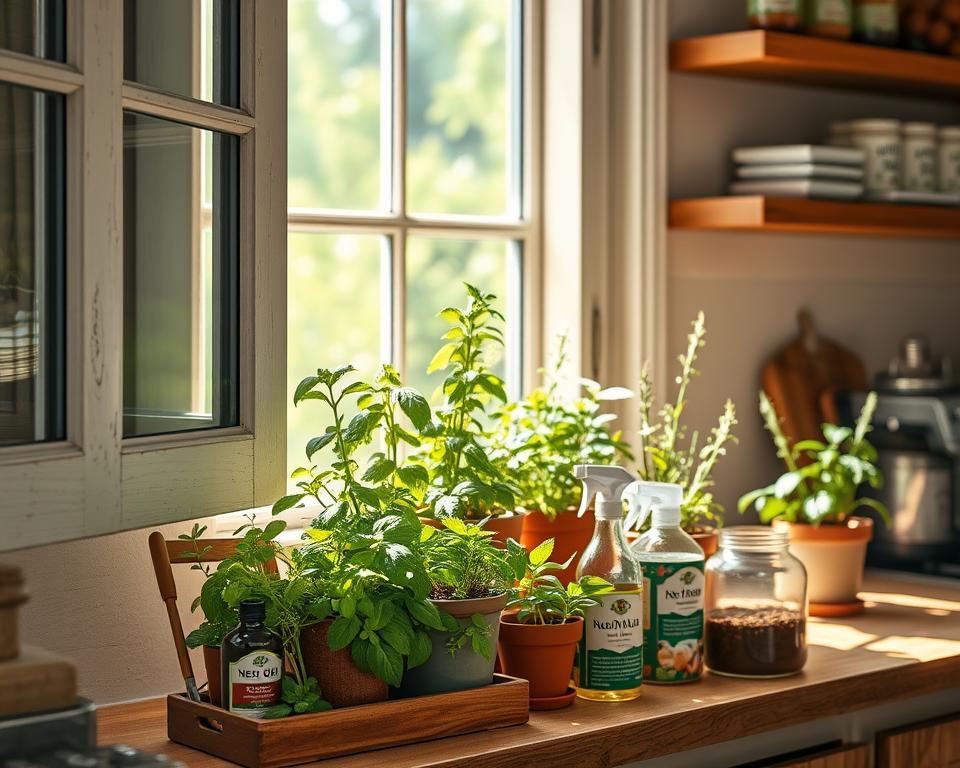
- Aphids can be controlled with neem oil or insecticidal soap.
- Spider mites are managed by increasing humidity and using miticides.
- Whiteflies are trapped with sticky traps or controlled with systemic insecticides.
By following these care tips, I enjoy a lush and productive kitchen herb garden. It enhances my cooking and adds beauty to my home.
Harvesting My Herbs
After weeks of care, my kitchen windowsill herb garden is ready for its first harvest. Harvesting herbs is a key step to keep them healthy and productive.
When to Harvest
The best time to harvest herbs varies by type and use. Generally, herbs are ready when they’re big enough and growing well.
- Mint and lemongrass can be harvested all season long.
- Basil and cilantro should be picked before they flower to keep leaves coming.
- Rosemary and thyme are best in summer for the best flavor.
Best Practices for Cutting
Using the right cutting techniques is key to encourage growth and avoid harming the plants.
- Use clean, sharp scissors or pruning shears to avoid spreading diseases.
- Cut just above a node (where a leaf meets the stem) to help new growth.
- Harvest in the morning, after the dew has dried but before it gets hot.
Storing Fresh Herbs
Proper storage is vital to keep the flavor and aroma of fresh herbs.
- Keep herbs in a cool, dry spot away from sunlight.
- Wrap herbs in a damp paper towel and put them in a sealed container or plastic bag.
- For longer storage, freeze or dry herbs to keep their flavor.
By following these tips, I can enjoy a rich harvest from my kitchen windowsill herb garden. It will make my cooking better and add freshness to my small space.
Using My Fresh Herbs in Recipes
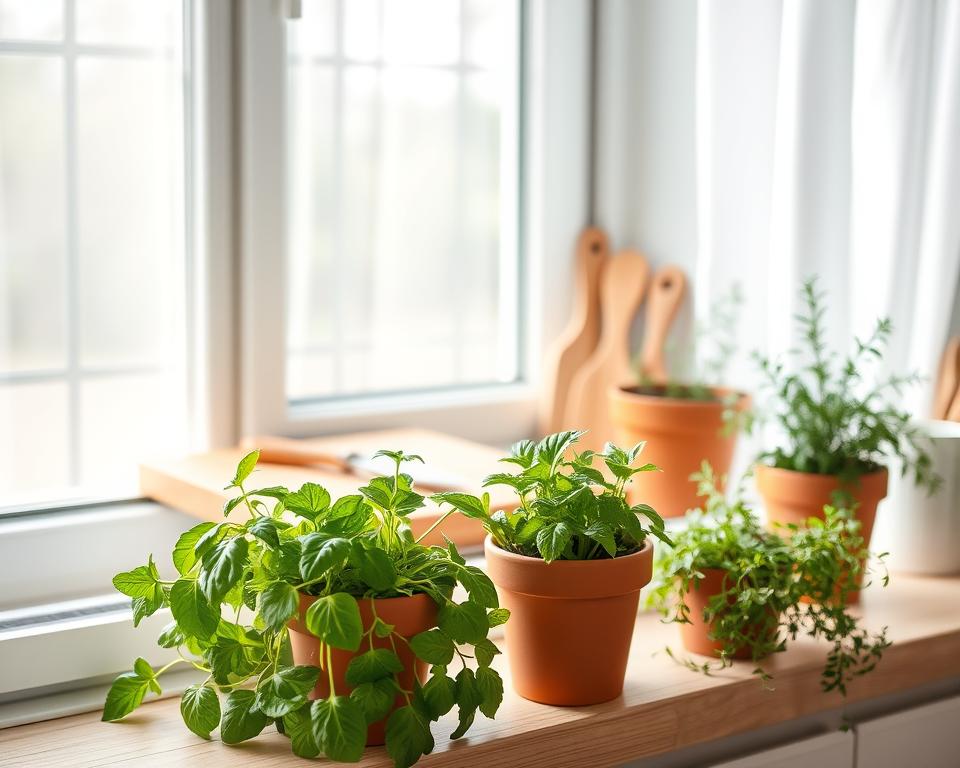
My herb plants are now thriving, and I’m excited to share how I use them. Having fresh herbs from my indoor herb garden has opened up new culinary possibilities.
Simple Dishes to Try
Using fresh herbs in simple dishes is a favorite of mine. For example, adding fresh basil to a Caprese salad is a classic Italian delight. Sprinkling chopped cilantro over tacos or grilled corn also boosts flavors.
As Epicurious suggests, fresh herbs can make ordinary dishes special. A sprinkle of fresh parsley can brighten soups, salads, and sauces.
Flavor Pairings
Knowing the right flavor pairings is key to using your herb plants for kitchen effectively. Some herbs go better with certain ingredients. For instance, rosemary pairs well with lamb and potatoes, while thyme is great in soups and stews.
“The art of cooking is not just about following a recipe; it’s about understanding the harmony of flavors and textures.”
Trying different herb combinations can lead to exciting discoveries. Mixing mint and lemon creates a refreshing flavor perfect for salads or drinks.
Creative Uses Beyond Cooking
Fresh herbs aren’t just for cooking; they have many creative uses. You can make herbal teas by steeping fresh leaves in hot water. Or, use herbs like mint and lemongrass to flavor water or cocktails.
Herbs can also be used as garnishes to add elegance to your dishes. A sprig of rosemary or a few leaves of basil can greatly enhance your dishes’ presentation.
Troubleshooting Common Issues
As I care for my kitchen windowsill herb garden, I’ve learned to spot and fix common problems. A healthy herb garden needs careful attention and quick action to solve issues.
Identifying Plant Stress Signs
Spotting plant stress signs is key to fixing problems. Look out for yellowing leaves, droopy stems, or slow growth. Knowing these signs helps you fix your herbs quickly.
- Check for pests or diseases
- Adjust watering and fertilization
- Ensure adequate sunlight and air circulation
Solutions for Droopy Leaves
Droopy leaves often mean your plants need more water or less. To fix this, check the soil moisture by feeling it with your finger. If it’s dry, water your plants. If it’s too wet, repott your herbs in drier soil.
Coping with Overgrowth
Overgrowth is a good sign, showing your plants are doing well. To handle it, prune your herbs regularly to keep them bushy. You can also use the cut herbs in your cooking, making the most of your garden.
Knowing how to handle common issues helps keep your herb garden healthy and productive. This is true whether you’re growing herbs indoors or using a vertical garden.
Inspiring Others to Start Their Own Herb Gardens
Thinking about my kitchen windowsill herb garden makes me want to share my story. Starting your own herb garden is a fun DIY project. It also brings the joy of urban gardening right into your home.
Growing Together
Being part of a community of herb lovers can be very helpful. Look for online forums and local gardening groups that share your interest. Many gardening stores also offer workshops and classes on urban gardening and DIY herb garden projects.
Exploring Resources
If you’re new to gardening, a kitchen herb garden kit can be a great start. There are also online tutorials and gardening books to help you grow a beautiful herb garden.