


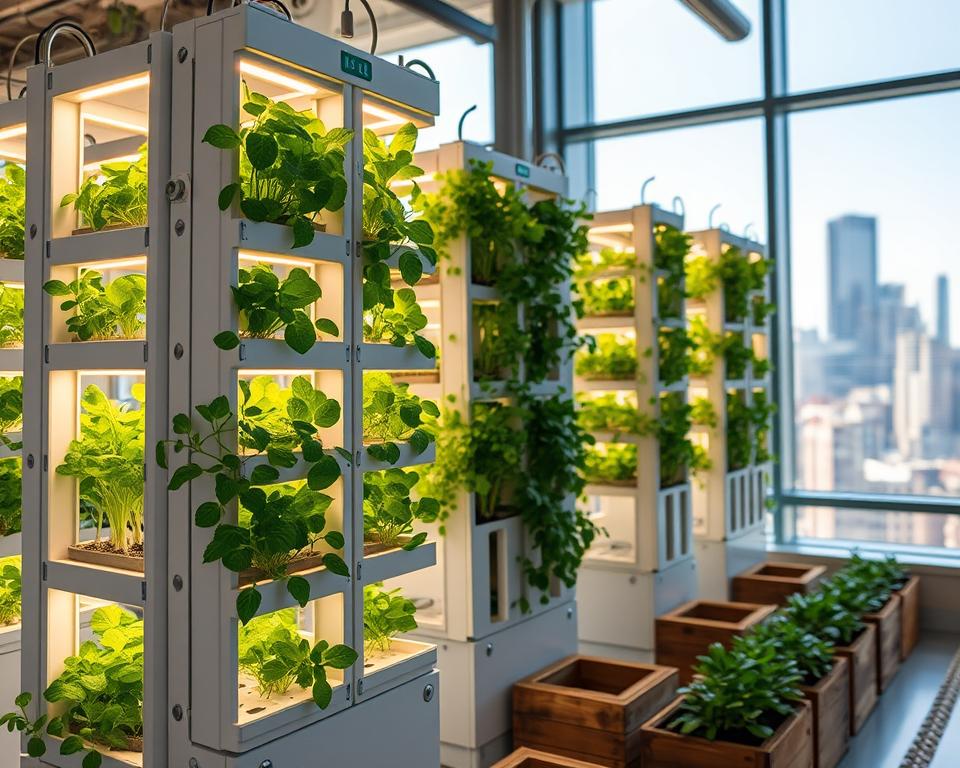
Did you know that cities produce nearly 70% of global greenhouse gas emissions? This is mainly because food is often transported from rural to urban areas. Compact indoor farming units are changing this by letting people grow food right in the city.
These systems are a sustainable solution for growing food in cities. With modular indoor farming units, people can grow many types of crops. This cuts down on the need for industrial farming and its big carbon footprint.
Key Takeaways
- Increased food security in urban areas through local production.
- Reduced carbon footprint by minimizing transportation needs.
- Year-round production capability regardless of external weather conditions.
- Water conservation through efficient irrigation systems.
- Potential for increased crop yields due to controlled growing conditions.
What Are Modular Indoor Farming Units?
Modular indoor farming units are changing urban agriculture. They offer a green and efficient way to grow food indoors. These systems use space well, perfect for cities where land is hard to find.
Definition and Purpose
Modular indoor farming units are self-contained systems for growing crops indoors. They aim to protect plants from weather, pests, and diseases. Using hydroponic grow systems and other tech, they boost crop yields and reduce environmental harm.
Key Components of Modular Systems
The main parts of these units are grow modules, climate control, and hydroponic or aeroponic systems. Together, they create the best growing space. For example, climate control systems manage temperature, humidity, and light. Hydroponic systems feed plants nutrients directly, helping them grow well.
- Grow modules that can be stacked or arranged to maximize space.
- Climate control systems that regulate temperature, humidity, and light.
- Hydroponic or aeroponic systems for efficient nutrient delivery.
Applications in Urban Environments
Modular indoor farming units fit well in urban areas with little space. They can go in homes, offices, old warehouses, or rooftops. By using indoor agriculture technologies, cities can grow more food. This reduces dependence on big farms and brings fresh produce to locals.
In summary, modular indoor farming units are a big step forward in urban agriculture. They offer a green, efficient, and productive way to grow food indoors. As cities grow, so will the need for these systems, helping make food production more sustainable.
Benefits of Modular Indoor Farming
Modular indoor farming is a green way to grow food in cities. These units use space well and are good for the planet. They are perfect for city areas where space is limited.
Space Efficiency and Utilization
Modular indoor farming is great at using space. It grows a lot of food in a small area. For example, it can grow more food than traditional farming in less space.
| Farming Method | Space Required | Yield per Square Foot |
|---|---|---|
| Traditional Farming | 1 acre | Average yield: 20,000 lbs |
| Modular Indoor Farming | 1,000 sq ft | Average yield: 10,000 lbs |
This shows that modular farming uses space better. It grows more food in less space than traditional farming.
Year-Round Crop Production
Modular indoor farming grows food all year. It doesn’t matter what the weather is outside. This means people always have fresh food.
With high-tech indoor farming solutions, farmers can control everything. They can make sure the plants grow the best they can.

Reduction of Carbon Footprint
Modular indoor farming cuts down on carbon emissions. It grows food close to where people live. This means less need for long trips to get food.
These farms also use green energy. A study found they can cut carbon emissions by up to 50%.
Types of Modular Indoor Farming Units
Modular indoor farming units come in many types, perfect for urban agriculture. As cities grow, we need farming that’s efficient and green.
Container Farms
Container farms are a hit for indoor farming. They use shipping containers to grow crops. This setup is great for moving around in cities.
- Utilize shipping containers for a compact growing space
- Can be easily transported to different locations
- Often equipped with climate control and irrigation systems
Vertical Gardening Systems
Vertical gardening systems use walls to grow more crops. They’re perfect for cities where space is tight. This way, farmers can grow more without taking up more space.
- Maximize space by growing crops vertically
- Can be integrated into building designs
- Often incorporate hydroponic or aeroponic systems
Hydroponic and Aquaponic Units
Hydroponic and aquaponic units grow plants without soil. They use nutrient-rich solutions. These systems are efficient and can grow many types of crops.
- Use nutrient-rich solutions instead of soil
- Can be highly automated for efficient crop management
- Support a wide range of crop varieties
In conclusion, there are many types of modular indoor farming units. Whether you choose container farms, vertical systems, or hydroponic/aquaponic, there’s a customizable farming module for you.
How to Choose the Right System
Starting your indoor farming journey means picking the right modular system. There are many options, so think about what you need. This will help you pick the best system for you.
Assessing Space and Resources
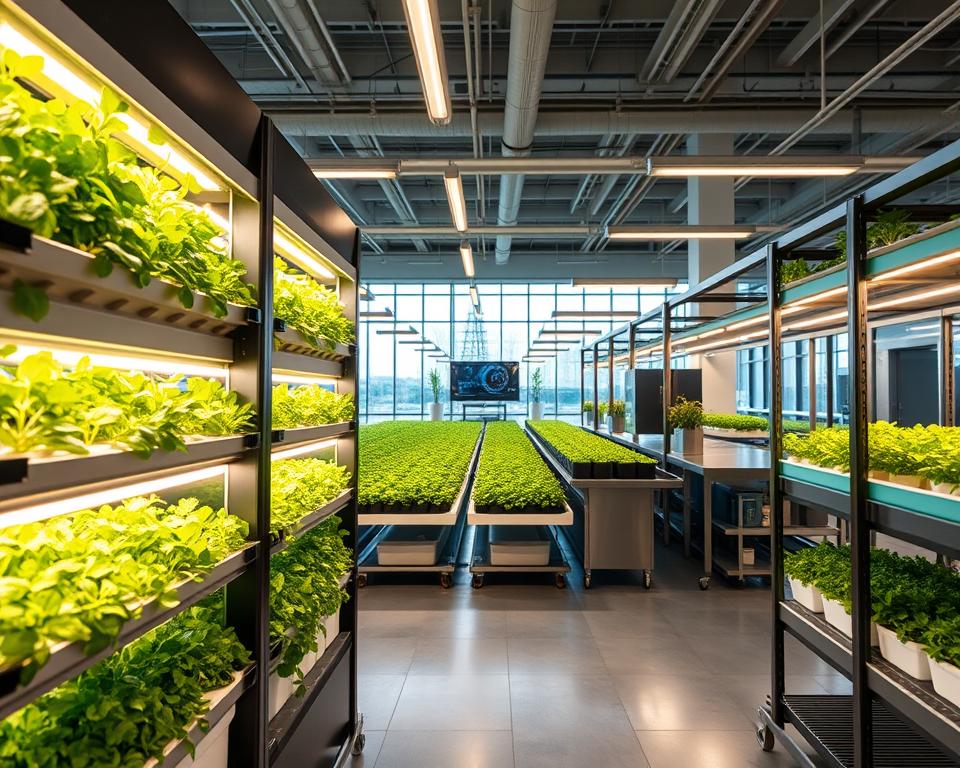
First, check the space for your indoor farm. Look at the size, light, and air flow. For example, a container farm fits well in big, open spaces. But, a vertical gardening system is better for small areas with little floor space.
Also, think about what resources you have. This includes water, nutrients, and energy. Knowing what you have will help you pick a system that works well with what you have.
Understanding Crop Requirements
Each crop needs different things like light, temperature, and nutrients. For instance, leafy greens like lettuce need less light than fruiting plants like tomatoes. Knowing what your crops need will help you pick the right system.
Think about how much space and light your crops need. Some, like strawberries, do well in vertical systems. Others, like herbs, grow well in hydroponic systems.
Budget Considerations
Money is a big factor in choosing a modular indoor farming system. Prices vary based on technology, size, and features. Set a budget and find systems that fit within it.
Don’t just look at the upfront cost. Think about ongoing expenses like energy, maintenance, and supplies. A system that saves money in the long run might cost more at first.
By looking at your space, resources, crop needs, and budget, you can find the perfect system. This will make your indoor farming journey successful and sustainable.
Technology in Modular Indoor Farming
The heart of modular indoor farming is its advanced technology. It changes how we grow food in cities. These new tools are key for making indoor farming better and more productive.
Automation and Monitoring Systems
Automation is a big deal in indoor farming. Automation and monitoring systems let farmers control growing conditions exactly. They watch temperature, humidity, and light, making changes as needed.
This helps crops grow better and cuts down on manual work. For example, The Growcer leads in using these technologies. They help urban farmers keep their crops in top shape with real-time monitoring.
LED Lighting Solutions
LED lighting solutions are vital for indoor farming. LEDs give the right light for plants to grow. They let farmers adjust light for each crop, improving quality and saving energy.
Climate Control Technologies
Keeping the right climate is essential for plants. Climate control technologies manage temperature and humidity. This creates a stable place for plants to grow well.
By using these technologies together, indoor farming makes a big step forward. As it keeps growing, we’ll see even better ways to farm indoors.
Eco-Friendly Practices in Modular Farming
In the world of modular indoor farming, we’re seeing more eco-friendly steps to lessen harm to the environment. These steps are key for making urban farming sustainable.
Water Conservation Techniques play a big role in eco-friendly farming. Using recirculating systems cuts down water waste by reusing it for plants. This saves water and lowers the farm’s water use.
Water Conservation Techniques
Rainwater harvesting is another way to save water in modular farming. It collects and stores rainwater, reducing the need for city water. This cuts costs and environmental harm.
- Recirculating irrigation systems
- Rainwater harvesting
- Drip irrigation systems
Organic Growing Methods
Organic farming is a big part of eco-friendly farming. It avoids harmful chemicals, growing healthier crops and environments. This is good for both the consumer and the planet.
Using natural pest control like beneficial insects is common in organic farming. It cuts down on chemical use, making a safer space for crops and nature.
Waste Management Strategies
Good waste management is essential in modular farming. Composting and recycling lower the farm’s environmental impact. It follows the circular economy, reducing waste.
Many farms now aim for a zero-waste policy. They recycle all organic waste, using it as compost or feed. This makes farming more sustainable.
Business Opportunities with Modular Units
As cities grow, people want fresh, local food more than ever. Modular indoor farming is a smart business move. It lets entrepreneurs start farming with little money down.
Starting Your Own Farm
Starting a modular indoor farm is a great idea. It taps into the need for sustainable and locally grown produce. First, figure out your space and what you can grow.
Initial steps include picking the right system, setting up climate control and LED lights, and a good watering system. Also, make a business plan. It should cover your market, costs, and how you’ll make money.
Partnerships with Local Businesses
Working with local businesses is smart for indoor farmers. Restaurants and stores want locally sourced produce. This can help you sell more.
- Find local businesses to partner with.
- Make a proposal showing why they should work with you.
- Set fair prices for your produce.
Grant and Funding Options
There are grants and funds for new farming ideas like modular indoor farming. Governments, non-profits, and investors support sustainable agriculture.
To get this money, look for programs, write a strong proposal, and apply. Some good places to start include:
| Funding Source | Description | Eligibility |
|---|---|---|
| Government Grants | Funds for sustainable agriculture projects | Farmers, researchers, and businesses |
| Private Investors | Investment in innovative farming projects | Startups and established businesses |
| Non-Profit Organizations | Grants for sustainable farming practices | Farmers and community groups |
By looking into these opportunities and using the resources available, you can start a successful modular indoor farm. It will meet the growing demand for fresh, sustainable food.
Success Stories in Modular Indoor Farming
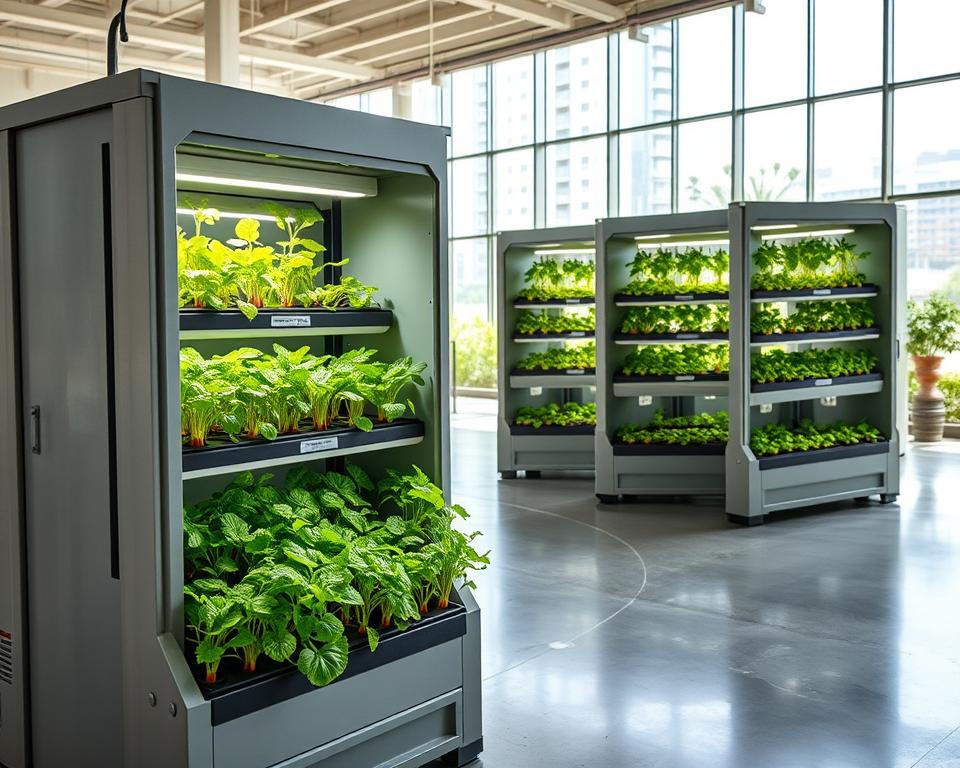
Urban farms with customizable farming modules are changing lives across the country. These units boost food production and help local communities thrive.
Urban Farms Making a Difference
Many urban farms have adopted hydroponic grow systems. They grow different crops. For example, a farm in New York City grows leafy greens. They supply local restaurants and stores.
- Increased crop yield through optimized growing conditions
- Reduced water usage with efficient hydroponic systems
- Enhanced community engagement through educational programs
Innovative Startups to Watch
Startups are key in pushing modular indoor farming forward. Companies like Bright Agrotech and Urban Crops are creating new tech. This includes LED lights and climate control for customizable farming modules.
- Integration of AI and IoT for optimized crop management
- Development of sustainable and energy-efficient systems
- Expansion of modular farming into new markets
Community Impact and Engagement
Modular indoor farming is more than just growing food. It’s about connecting communities. Urban farms host workshops, offer volunteer chances, and teach about sustainability.
The growth of modular indoor farming shows its big impact. It’s changing urban agriculture and community life for the better.
Future Trends in Modular Farming
The future of modular indoor farming is bright, thanks to new indoor agriculture technologies and sustainable practices. We’ll see big changes that make farming more efficient and productive. These changes will help grow more food in less space.
Advancements in Technology
New tech is driving growth in modular farming. Automation and monitoring systems help farmers work smarter and save money. Better LED lighting and climate control technologies also improve crop quality and yield.
Consumer Demand for Locally Grown Produce
People want locally grown produce more than ever. They want food that’s fresh, sustainable, and responsibly made. Modular farming meets this need by growing food in cities, cutting down on costs and environmental harm. As people care more about the planet, demand for local food will keep rising.
Sustainable Practices Going Mainstream
Sustainable indoor farming units are leading the way in green farming. As we all care more about the environment, green farming is becoming the norm. Modular farming is a key player, using less water and land than old farming ways. We’ll see even more green farming ideas as the industry grows.
Getting Started with Your Own Modular Indoor Farm
Starting your modular indoor farm needs careful planning and the right tools. First, think about your space’s layout and how to make it best for growing crops. Use high-tech indoor farming solutions to optimize your space. Pick the best compact indoor farming units for your needs.
Space Planning and Optimization
Start by checking your available space and figuring out the best way to use it. Think about ventilation, power outlets, and natural light. These will help you create a perfect spot for your crops.
Selecting the Right Crops and Equipment
Each plant has its own needs, so pick ones that grow well indoors. Also, choose the right equipment like LED grow lights and hydroponic systems. This is key for a good harvest.
Joining a Community of Indoor Farmers
Connecting with other indoor farmers can be very helpful. Joining a community lets you share knowledge, learn from others, and keep up with new farming tech.
By following these steps and using high-tech solutions, you can have a great harvest at home. Use compact indoor farming units wisely.