


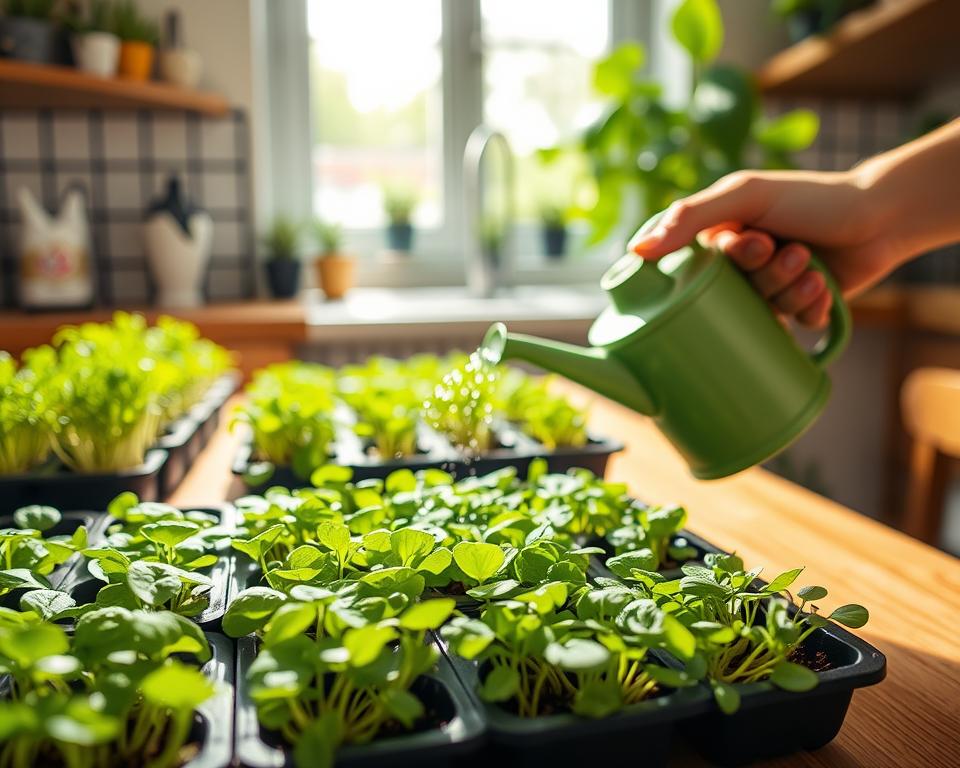
Microgreens have become very popular in cooking. They are young, full of nutrients, and easy to grow indoors.
Nutritional powerhouses, microgreens are packed with vitamins and minerals. Growing them indoors is simple and rewarding.
Starting with microgreens is a great way to begin gardening, even with little space. With the right tips, you can have a steady supply of fresh greens at home.
Key Takeaways
- Microgreens are young, nutrient-dense greens that are easy to grow indoors.
- They are rich in vitamins and minerals, making them a great addition to any meal.
- Growing microgreens requires minimal space and equipment.
- Microgreens can be harvested in as little as 1-3 weeks.
- They come in a variety of flavors and textures, opening up endless culinary possibilities.
What Are Microgreens and Why Grow Them?
Microgreens are young, packed with nutrients versions of leafy greens and veggies. They’re loved by health fans and foodies for their strong tastes and health benefits.
Understanding Microgreens
Microgreens are picked in 1-3 weeks after they start growing. This early pick keeps them full of vitamins, minerals, and antioxidants. They are not just baby greens; they include many plants, like lettuces, kales, and herbs like basil and cilantro.
Nutritional Benefits
Microgreens are packed with nutrients. They have up to 40 times more nutrients than full-grown greens. They’re full of vitamins C, E, and K, and have lots of dietary fiber. Adding microgreens to your meals can boost your health.
Culinary Uses
Microgreens are not just healthy; they’re also versatile in cooking. Use them as a garnish, in salads, sandwiches, and soups, or in smoothies. The flavor profiles range from spicy (radish, arugula) to mild and sweet (lettuce, pea shoots). They’re perfect for adding flavor to many dishes. I like adding them to omelets or as a fresh topping for soups.
Learning about microgreens and their benefits encourages you to grow them at home. With the right tips, you can have a steady supply of these greens all year.
Choosing the Right Microgreens for Your Garden
Starting your microgreens journey at home means picking the right type. With many choices, it might feel hard. But knowing what you like and your growing space can help.
Popular Varieties to Consider
Radish, pea shoots, and salad mix are top picks for growing. They’re easy to care for and full of nutrients. Radish adds a spicy taste, while pea shoots are sweet and tender.
Basil and cilantro are also great for indoor gardens. They do well indoors with proper care. One gardener loves growing basil indoors for its fresh taste.

Factors Influencing Your Choice
Several things affect your microgreens choice. Your climate and available space are key. For example, cold climates do well with broccoli or kale.
Your taste preferences matter too. If you like spicy, try radish or arugula. For milder tastes, pea shoots or lettuce are better.
“The beauty of microgreens lies in their versatility and the ease with which they can be grown indoors, making them perfect for urban gardeners.” –
Finding the right microgreens for your garden is about balance. Think about your growing conditions, space, and taste. This way, you’ll pick varieties that grow well and give you a steady supply.
Essential Supplies for Growing Microgreens at Home
Starting to grow microgreens at home requires the right supplies. You’ll need a few basic items that are easy to find and won’t cost much.
Containers and Soil
You’ll first need a container for your microgreens. A shallow tray or container with drainage holes is best. This prevents waterlogged soil. You can choose from plastic, wood, or recycled containers.
For soil, pick a high-quality potting mix made for microgreens. Look for one that holds water well and is free of contaminants. Brands like Miracle-Gro and Pro-Mix are good choices. You can also use soilless mix or coconut coir.
Seeds and Tools Needed
Next, choose the right seeds for your microgreens. Broccoli, kale, and radish are great for beginners. Make sure the seeds are labeled as “microgreen” or “sprouting” for the best flavor and nutrition.
You’ll also need some basic tools. A watering can or spray bottle, a measuring cup or scale, and a tray to catch water are essential. Consider a grow light for extra light.
With these supplies, you’re ready to start growing microgreens at home. A bit of practice and patience will have you harvesting your own in no time.
Preparing Your Growing Space
A well-prepared growing space is key for a successful microgreen harvest. To grow microgreens at home, you need to create an environment that meets their specific needs.
Selecting the Right Location
When choosing a location for growing microgreens, consider the lighting. Microgreens need enough light but direct sunlight can be too strong. East- or west-facing windows are ideal as they provide gentle, indirect light. If you’re using grow lights, make sure they’re not too close to the microgreens to avoid overheating.
Temperature is also very important. Most microgreens prefer daytime temperatures between 65-75°F (18-24°C) and slightly cooler temperatures at night. Avoid placing your growing area near heating or cooling vents, fireplaces, or drafty windows.
Setting Up Your Growing Area
Once you’ve picked the right location, it’s time to set up your growing area. Start by cleaning the space thoroughly to prevent any contamination. Use a clean container or tray with drainage holes to prevent waterlogged soil. Good hygiene practices are very important to prevent the spread of diseases.
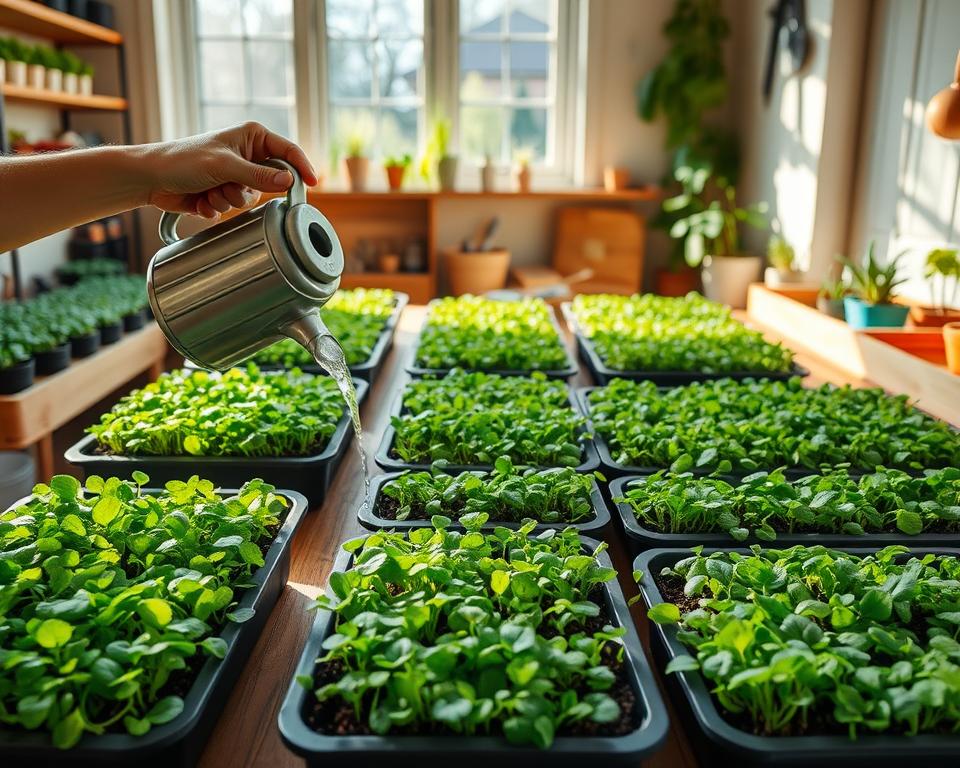
As expert growers say, “Maintaining cleanliness and controlling the environment are key to successful microgreen cultivation.” This means regularly checking the temperature, humidity, and light exposure to ensure optimal growing conditions.
- Use a good quality potting mix designed for microgreens.
- Ensure your growing containers are clean and have adequate drainage.
- Keep the growing area away from pets and children to minimize disturbance.
The Step-by-Step Process of Planting Microgreens
Planting microgreens requires several steps. You need to prepare the soil and ensure it gets the right amount of light. By following these steps, you can grow delicious and nutritious microgreens.
Sowing the Seeds
The first step is to sow the microgreen seeds. Choose a container with good drainage and fill it with soil. Use a microgreen-specific soil mix for the best results.
Spread the seeds evenly over the soil. The seed density varies by type, but aim for a fairly dense layer.
Press the seeds gently into the soil. This helps them make good contact with the soil, promoting germination. Mist the soil with water to keep it moist.
Watering Techniques
Watering is key for microgreens’ growth. Keep the soil moist but not waterlogged. Use a spray bottle to mist the soil gently.
As the microgreens grow, water them regularly. Water when the top soil feels dry. Avoid overwatering to prevent mold and poor growth.
“The key to successful microgreen cultivation is maintaining the right balance of moisture and air circulation.”
Light Requirements
Microgreens need enough light to grow well. Most need indirect light, avoiding direct sunlight in warm climates. Place them near a sunny window or under grow lights.
The light needs vary by microgreen type. Some greens need more light than others. Research the specific needs of your variety for the best results.
| Microgreen Variety | Light Requirement | Watering Frequency |
|---|---|---|
| Pea Shoots | Indirect Light | Daily |
| Radish | Partial Shade | Every Other Day |
| Cilantro | Full Sun to Partial Shade | Daily |
By following these steps and understanding your microgreens’ needs, you’ll have a successful harvest. Growing microgreens can be rewarding and fun, whether for personal use or to share with others.
Caring for Your Microgreens as They Grow
Growing microgreens needs careful attention. They need the right water, light, and air as they grow.
Monitoring Growth Conditions
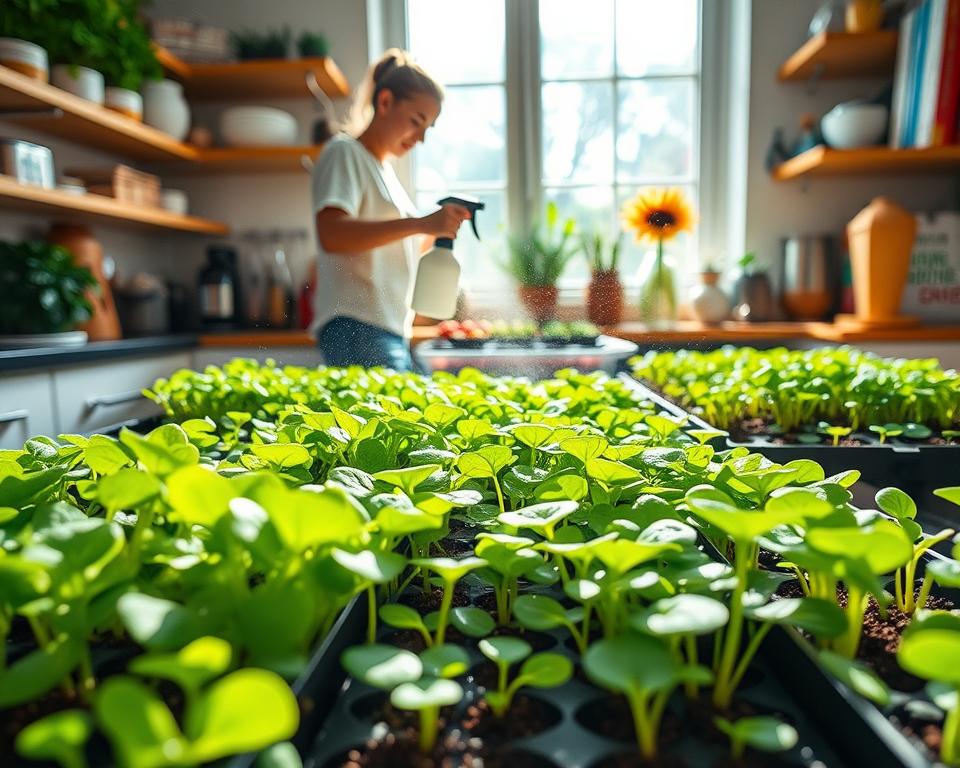
Keep a close eye on your microgreens’ growth. Check the soil moisture and air circulation.
- Check the soil daily to ensure it’s not too dry or too wet.
- Ensure good air circulation to prevent fungal diseases.
- Keep the growing area clean to prevent pests.
Common Issues and Solutions
Even with care, problems can happen. Here are some common issues and how to fix them:
- Overwatering: Too much water can cause mold and root rot. Solution: Water less often.
- Underwatering: Too little water stresses microgreens. Solution: Water more, but don’t overdo it.
- Insufficient Light: Microgreens need enough light. Solution: Move them to a brighter spot or use grow lights.
By following these tips, you can grow healthy microgreens. Some best microgreens for beginners are pea shoots, sunflower greens, and radish greens. They’re easy to grow and need little care.
Harvesting Your Microgreens
The moment of truth arrives when it’s time to harvest your microgreens. I’m here to guide you through it. Harvesting microgreens is a straightforward process. It requires some precision to ensure you get the best flavor and texture.
When to Harvest
Knowing when to harvest your microgreens is key. Generally, microgreens are ready in 7-14 days after sowing. This depends on the variety. You’ll know they’re ready when they’ve developed their first set of true leaves and are young and tender.
To determine the optimal harvest time, check your microgreens daily. Look for the color, size, and the development of the leaves. Most microgreens are at their peak flavor and texture just before they start to bolt or produce flowers.
How to Properly Cut Microgreens
Cutting your microgreens correctly is essential. Use clean scissors or a sharp knife to cut the stems just above the soil level. This method helps prevent pulling out the roots or damaging the surrounding microgreens.
After cutting, gently rinse your microgreens with cold water. This removes any soil or debris. Pat them dry with a paper towel to remove excess moisture. This step helps keep your microgreens fresh for a longer period.
Here’s a simple guide to help you understand the harvesting process better:
| Microgreen Variety | Days to Harvest | Harvesting Tip |
|---|---|---|
| Pea Shoots | 7-10 days | Cut just above the soil |
| Radish | 8-12 days | Harvest when leaves are tender |
| Cilantro | 10-14 days | Cut before bolting |
By following these guidelines, you’ll be able to enjoy your homegrown microgreens at their best. They add a burst of flavor and nutrition to your meals.
Storing and Using Your Microgreens
Growing microgreens at home is just the start. Learning how to store and use them is key. Proper storage keeps them fresh and full of nutrients.
Best Practices for Storage
To keep your microgreens fresh, follow these tips:
- Store microgreens in a sealed container to keep humidity in and prevent drying.
- Keep them in the fridge at a temperature below 40°F (4°C).
- Use a paper towel to soak up extra moisture and stop sogginess.
- Don’t wash microgreens before storing. Instead, wash them just before you use them.
By following these steps, you can enjoy your microgreens longer. This way, you keep their flavor and nutrients.
Delicious Ways to Incorporate Them into Meals
Microgreens are not only healthy but also versatile in cooking. Here are some tasty ways to add them to your meals:
- Add them to salads for a burst of flavor and color.
- Use them as a garnish for soups and sandwiches.
- Blend them into smoothies for an extra nutritional boost.
- Incorporate them into omelets and other egg dishes.
As The Spruce Eats says, “Microgreens can make any dish better with their intense flavors and vibrant colors.” Try different microgreens to find new favorite recipes.
In conclusion, storing and using microgreens right can make your cooking better. By following storage tips and adding microgreens to various dishes, you can enjoy the benefits of growing them at home.
Troubleshooting Common Issues in Microgreen Cultivation
Growing microgreens can be rewarding but comes with challenges. Problems like uneven seeding, low germination, mold, and uneven watering can harm your crop.
To fix these issues, understanding their causes is key. Uneven seeding can be solved by making the planting surface even and firm. A mesh tray helps achieve this. Low germination rates can be boosted by using high-quality seeds and checking their germination rate. For more help, check out this microgreens growing guide.
Pest Control and Disease Prevention
Pests and diseases can harm your microgreens. Keeping the growing area clean, ensuring good airflow, and regular monitoring can prevent these problems. For larger seeds, soaking them properly can stop mold.
Adjusting Light and Water Levels
Light and water are vital for microgreens. Adjusting them based on your microgreens’ needs can solve common issues. Make sure your trays are level and water reaches all corners to avoid uneven watering.
Being proactive and aware of issues can lead to a healthy microgreen crop. With the right techniques and practice, you’ll grow microgreens like a pro soon.