


Basil is the herb most people want on the windowsill, and it is also the one that most often dies there. It wilts, drops leaves, turns woody or bolts into flowers within a few weeks. The good news is that basil is not a fussy plant. It simply has a short list of non-negotiable needs, and indoor conditions break almost all of them by default.
This guide walks through those needs one by one: how to start basil indoors, how much light it really wants, how to water and feed it, and how to prune it so a single pot keeps producing for months instead of a few weeks. At the end you will find a simple weekly routine and a list of the most common mistakes.
Why basil struggles indoors
Basil is a warm-season annual from the tropics. Outdoors in summer it gets long days of strong sun, warm nights and moving air. A typical kitchen in autumn or winter offers the opposite: short days, weak light filtered through glass, cool drafts near the window at night and still, dry air from the heating system.
Most indoor basil problems trace back to one of three things:
- Not enough light, which causes thin, pale stems that stretch toward the window and leaves that drop easily.
- Cold, which slows growth and can blacken leaves if they touch a cold pane or sit in a draft below about 50°F (10°C).
- Wrong watering, usually too much in a pot without drainage, which rots the roots.
Once you correct those three, basil becomes one of the easiest and most rewarding edibles you can grow inside.
Choosing the right basil and how to start it
Sweet Genovese basil is the classic choice for pesto and tomato dishes, but it grows tall and needs regular pruning. If space is tight, compact types such as globe or bush basil (often sold as ‘Spicy Globe’ or ‘Greek’ basil) form small, dense mounds with tiny leaves and fit easily on a narrow sill. Thai basil handles slightly cooler rooms a bit better and has a sturdier stem, and lemon basil is a nice option if you cook a lot of fish or salads.
From seed
Seed is cheap and gives you the healthiest plants. Sow four to six seeds on the surface of a moist seed-starting mix, press them in lightly and cover with a thin layer of mix, about 1/4 inch (6 mm). Keep the pot somewhere warm, ideally 70 to 80°F (21 to 27°C), and cover it loosely with a clear lid or plastic bag until the seedlings appear, usually within a week. Remove the cover as soon as they sprout and move the pot to your brightest spot or under a light. When the seedlings have two sets of true leaves, thin them to the three strongest plants per 6-inch pot.
From a supermarket pot
The living basil sold in grocery stores is actually a crowd of 20 or more seedlings packed into one small pot. They compete for light and water and usually collapse within two weeks. To rescue one, gently tip the root ball out, tease it into three or four clumps and replant each clump in its own pot with fresh potting mix. Water well and keep the new pots out of direct hot sun for two or three days while the roots recover.
From cuttings
Basil roots very easily in water. Take a 4-inch (10 cm) stem tip just above a leaf pair, strip the lower leaves and place the stem in a glass of water on a bright sill. Roots appear in about a week; once they are an inch long, pot the cutting up. This is a great way to multiply a plant you already like.
Light: the factor that decides everything
If you only fix one thing, fix the light. Basil wants at least six hours of direct sun, and indoors even a south-facing window (north-facing in the Southern Hemisphere) often falls short in winter because the sun is low and the days are short.
Signs your basil needs more light:
- Long gaps between leaf pairs on the stem.
- Stems leaning hard toward the glass.
- Small, pale or thin leaves, and lower leaves yellowing and dropping.
- Very slow regrowth after you harvest.
A simple LED grow light solves this almost completely. A full-spectrum light hung about 6 to 12 inches (15 to 30 cm) above the leaves, running 12 to 14 hours a day on a timer, will give you compact, dark green plants even in a room with no window. Follow the distance the manufacturer recommends for your model, and raise the light as the plants grow. If you rely on a window, rotate the pot a quarter turn every few days so the plant grows evenly, and keep the leaves from touching the cold glass at night.
Soil, pots and watering
Use a light, fast-draining potting mix, not garden soil, and a pot with drainage holes. A 6- to 8-inch (15 to 20 cm) pot is a good size for one to three plants; larger pots hold more water and stay wet longer, which is risky in a cool room.
Basil likes evenly moist soil, never soggy and never bone dry. The easiest test is your finger: push it about an inch into the mix and water when that depth feels dry. In a warm, bright spot under a light that might mean every two or three days; on a cool windowsill in winter it can be once a week. Water thoroughly until a little runs out the bottom, then empty the saucer after 15 minutes so the roots are not sitting in water.
A few practical tips:
- Water the soil, not the leaves, and do it in the morning so any splashes dry quickly.
- Use room-temperature water; cold water straight from the tap can shock warm roots.
- If the plant wilts even though the soil is wet, the roots may be rotting. Check for a sour smell and brown, mushy roots, and repot into fresh mix if you find them.
Feeding and temperature
Basil grown for leaves does best with a gentle, steady supply of nutrients rather than big doses. A balanced liquid fertilizer, or one slightly higher in nitrogen, diluted to half the label strength and applied every two to three weeks while the plant is actively growing is plenty. Too much fertilizer produces fast, soft growth with less flavor, and salt can build up in the pot. If you see a white crust on the soil surface, flush the pot by running plain water through it several times.
Keep the room between roughly 65 and 80°F (18 and 27°C). Basil sulks below 60°F (16°C) and is damaged by temperatures near 50°F (10°C). In winter, the windowsill itself can be several degrees colder than the rest of the room at night, so pull the pot back from the glass after sunset or place a folded towel between the pot and the pane. Avoid spots directly above radiators or in the path of a heating vent, which dry the plant out quickly. A small fan running on low for part of the day strengthens stems and helps prevent mildew.
Pruning and harvesting for a bushy plant
This is where most indoor gardeners hold back too much. Basil wants to be cut. Each time you snip a stem just above a pair of leaves, the plant sends out two new shoots from that point, so regular harvesting turns one tall stem into a bushy plant with many tips.
How to do it:
- Start pruning when the plant is about 6 inches (15 cm) tall and has at least three sets of leaves.
- Cut the main stem just above the second or third leaf pair from the bottom, leaving the small side buds in place.
- After that, harvest from the top of each stem, always cutting just above a leaf pair.
- Never remove more than about one third of the plant at one time, so it has enough leaves left to keep growing.
- Pinch off flower buds as soon as you see them. Once basil flowers, it puts its energy into seeds, the leaves become smaller and the flavor turns more bitter.
Harvesting a little every week is better than a big cut once a month. If you need a large amount for pesto, take it from several plants rather than stripping one.
Common problems and quick fixes
- Black or dark spots on leaves: often cold damage from touching the window or a draft. Move the plant and remove damaged leaves.
- Yellow lower leaves: usually overwatering or poor drainage, sometimes a need for a light feeding. Check the soil moisture first.
- Wilting in the afternoon: the pot dried out or the spot is too hot. Water and move it slightly away from direct midday sun behind the glass.
- Tiny flies around the soil: fungus gnats, a sign the mix stays too wet. Let the top inch dry between waterings and use yellow sticky traps.
- Sticky leaves or small green insects: aphids. Rinse the plant in the sink and wipe the undersides of the leaves; repeat every few days.
- Woody, tall plant with few leaves: it was not pruned or it already flowered. Take cuttings from the soft tips and start fresh plants.
Even well-grown basil slows down after a few months indoors. Starting a new pot from seed or cuttings every six to eight weeks keeps a steady supply going.
A simple weekly basil routine
- Every day: glance at the leaves and the soil; rotate the pot if it is on a windowsill.
- Two or three times a week: check soil moisture with your finger and water only when the top inch is dry.
- Once a week: harvest the top few inches of each stem above a leaf pair and pinch any flower buds.
- Every two to three weeks: feed with a half-strength liquid fertilizer.
- Every six to eight weeks: start a new pot so you always have young plants coming.
Summary
Basil grows well indoors when you give it what it would have in a summer garden. Provide strong light, at least six hours of direct sun or 12 to 14 hours under a grow light. Keep it warm and away from cold glass and drafts. Use a draining mix and water only when the top inch is dry. Feed lightly, prune often just above a leaf pair and remove flowers early. Split crowded supermarket pots, start new plants from cuttings and keep the routine simple. Do that and one small pot can supply fresh leaves for your cooking all year long.
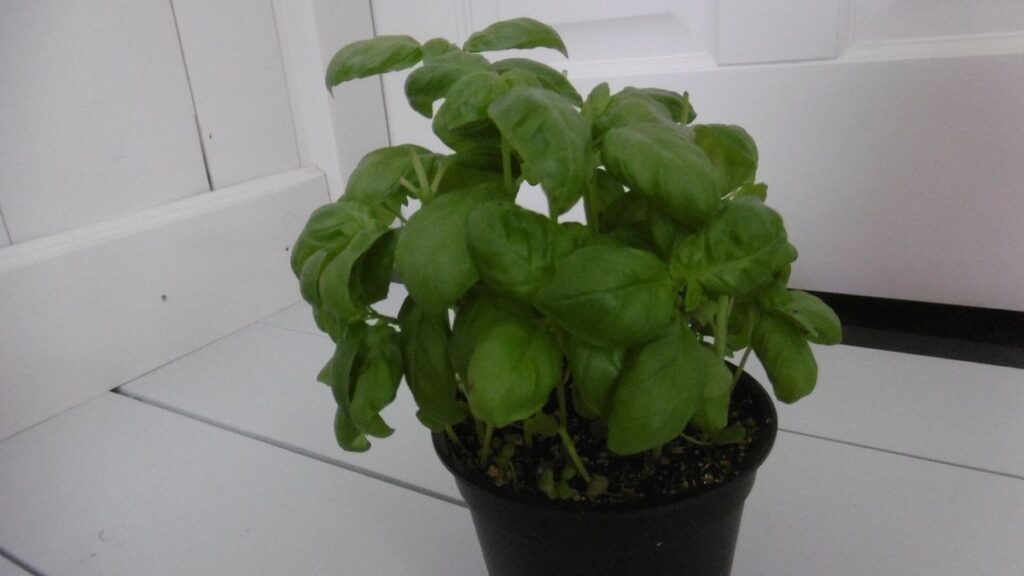
Photo: Basil plant in pot 2, by NeoMeesje, license CC BY-SA 4.0, via Wikimedia Commons. Cropped.