

Did you know a single cutting can grow into a new plant? This cuts down on the need to buy new seeds or seedlings. It’s a simple, cost-effective way to share plants with others.
Propagating edible plants is easy and doesn’t need much gear. It’s perfect for gardeners of all levels. By the end of this guide, you’ll know how to grow your own food from cuttings. You’ll see the benefits and the simple steps to follow.
Key Takeaways
- Learn the simple steps involved in propagating edible plants.
- Discover the benefits of growing your own food from cuttings.
- Understand the minimal equipment required for successful propagation.
- Explore tips for ensuring the health and vitality of your new plants.
- Get started with the most suitable edible plants for beginners.
What Are Cuttings and Why Use Them?
Using cuttings to grow new plants is both cost-effective and ensures genetic consistency. This method of plant propagation lets gardeners reproduce their favorite edible plants. They don’t need seeds, which can be unpredictable.
Cuttings involve taking a part of a plant, like a stem or leaf, and making it grow into a new plant. This is great for edible plants. It allows for quick production of new plants that are just like the parent plant.
Definition of Cuttings
Cuttings are parts of a plant used to grow new ones. These parts can be stems, leaves, or roots, depending on the plant. For edible plants, stem cuttings are often used because they root easily and grow fast.
To take cuttings, you need to pick a healthy part of the plant, cut it, and give it the right conditions to grow. You can do this in water or soil, depending on your preference.
Benefits of Propagating Edible Plants
Propagating edible plants from cuttings has many benefits. It’s a cost-effective way to grow lots of plants. By using cuttings, gardeners save money on seeds or seedlings, which is good for expanding an edible garden.
- Rapid Production: Cuttings let gardeners quickly grow new plants. This means they can always have their favorite herbs, vegetables, and fruits on hand.
- Genetic Consistency: Plants from cuttings are the same as the parent plant. This means the new plants will have the same good traits as the original.
- Increased Yield: By growing plants from cuttings, gardeners can get more without buying more seeds or seedlings.
In summary, using cuttings for plant propagation is a simple, effective, and efficient way to grow many edible plants. It’s great for both experienced gardeners and beginners. This technique helps expand your garden and ensures a big harvest.
Best Edible Plants for Propagation from Cuttings
I’ve found that some herbs, vegetables, and fruits are great for growing from cuttings. This method is fun and rewarding, letting you grow more plants without spending a lot.
Herbs: Basil, Mint, and More
Herbs are easy to grow from cuttings. Basil and mint do well when grown this way. To start, just cut a healthy stem, remove leaves at the bottom, and plant it in water or soil. Here are more herbs you can grow from cuttings:
- Cilantro
- Parsley
- Chives
- Dill
Vegetables: Tomatoes, Peppers, and Others
Not all veggies can be grown from cuttings, but some can. Tomatoes and peppers are good examples, but they need a little extra care. You can also grow lettuce and spinach from cuttings.
- Choose healthy, disease-free plants for cuttings.
- Prepare the cuttings by removing lower leaves and trimming the stem.
- Plant the cuttings in a tray or pot with a mix that drains well.
Fruits: Blackberries, Strawberries, and Grapes
Fruits like blackberries, strawberries, and grapes can also be grown from cuttings. For blackberries and raspberries, use cuttings from new growth tips. Strawberries can be divided or grown from stem cuttings. Grapes are usually grown from hardwood cuttings in the dormant season.
Choosing the right plants for cutting propagation can lead to a big harvest with little work. Whether you’re new to gardening or have been doing it for years, growing your own plants from cuttings is a great experience.
Preparing Your Cuttings for Successful Growth
The art of growing fruit trees from cuttings starts with careful preparation. To make sure your plants grow well, follow a few important steps.
Choosing the Right Time
Timing is key when taking cuttings. For many plants, the best time is during their dormant season or just before new growth starts. For example, fruit trees like apple and pear are best propagated in late winter. On the other hand, herbs like basil and mint can be propagated throughout the growing season.
It’s important to know what your plants need. Research the best time to take cuttings for your specific plants. This will help you succeed.
Using Clean Tools
Clean tools are not just about hygiene; they’re essential to prevent disease spread. Diseases can quickly spread through contaminated tools, harming your cuttings and possibly your whole garden. To prevent this, always sterilize your tools before taking cuttings.
One way to sterilize tools is by mixing water with bleach or heating them. This step gives your cuttings the best start.
Selecting Healthy Parent Plants
The health of your parent plants affects your cuttings’ success. Choose plants that are free from diseases and pests, and have the traits you want in your new plants.
Examine your parent plants closely. Look for any signs of stress or disease. By picking healthy parent plants, you’re setting your cuttings up for success.
“The key to successful propagation lies in the details of preparation.”
By focusing on the right timing, using clean tools, and selecting healthy parent plants, you’re well on your way to successfully growing edible plants from cuttings.
The Ideal Conditions for Rooting Cuttings
To grow edible plants from cuttings, knowing the right conditions is key. The success of root cutting propagation depends on the environment for the cuttings to grow.
Light Requirements
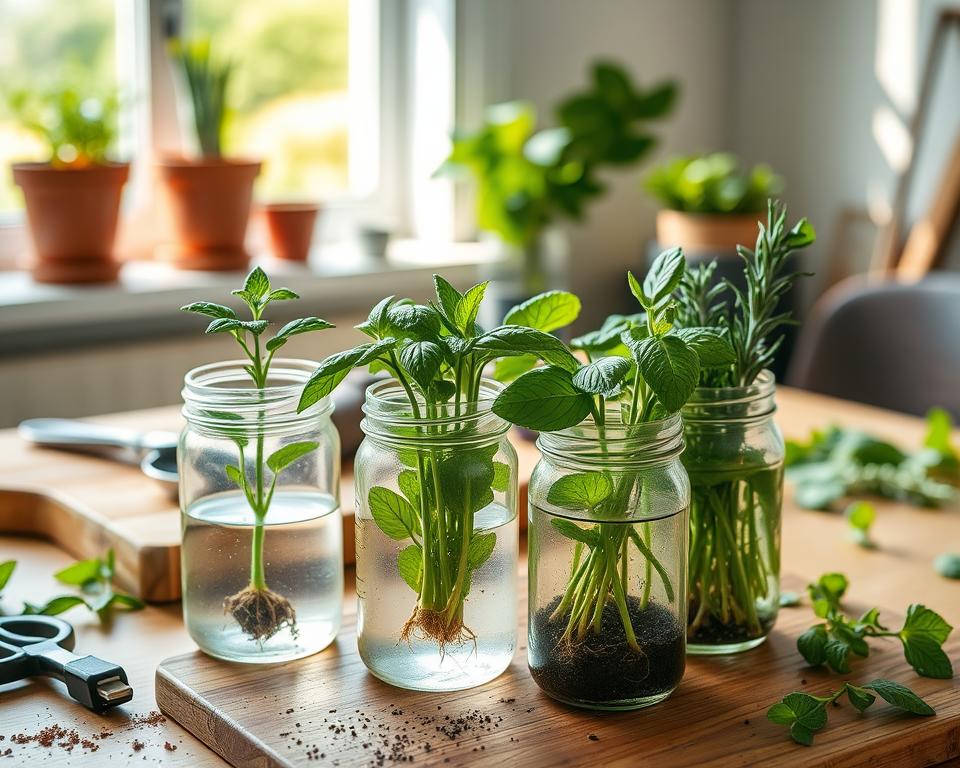
Light is very important for growing edible plants from cuttings. Most cuttings need bright, indirect light to grow roots. Direct sunlight can dry out the cutting.
Basil cuttings do best in partial shade until they have strong roots. Some plants, like mint, can grow in lower light. But, most need bright, indirect light. You can use a north or east window or grow lights.
Temperature and Humidity
Temperature and humidity are also key for root cutting propagation. Most plants root best in temperatures between 65°F to 75°F (18°C to 24°C). Keep cuttings away from drafts and extreme temperatures.
Right humidity is also important. Covering cuttings with a clear plastic bag or cloche helps. It keeps moisture in and helps roots grow.
“The key to successful propagation is to mimic the natural conditions that favor root growth.” – Expert Gardener
Soil Selection
Choosing the right soil is critical for rooting cuttings. A well-draining potting mix prevents waterlogged soil and root rot. For propagating plants by cuttings, a mix for seed starting or cuttings is best.
- Use a mix with peat moss or coconut coir for moisture.
- Add perlite or vermiculite for better drainage.
- Avoid regular garden soil, as it’s too dense and may have pests or diseases.
By giving the right conditions for rooting cuttings, you can boost your chances of successful edible plant propagation.
Different Methods of Propagating Cuttings
To grow edible plants from cuttings, knowing different propagation techniques is key. There are many methods, each with its own benefits and challenges. We’ll look at the most common ways to propagate edible plants.
Water Propagation
Water propagation is a favorite for rooting cuttings. It involves putting the cut ends in a water-filled container. This method works well for plants like mint and basil that root easily in water.
Water propagation has several advantages:
- It’s easy to see how roots are growing.
- There’s less chance of damaging roots when transplanting.
- It’s simple and doesn’t cost much.
But, not all plants do well with water propagation. Cuttings might rot if the water isn’t changed often.
Soil Propagation
Soil propagation means planting cuttings directly in soil. This method is good for plants that prefer dry conditions or are hard to root in water.
Soil propagation has its benefits:
- Cuttings grow roots in their final home.
- There’s less shock when transplanting.
- It’s better for plants that don’t like wet conditions.
Using a well-draining soil mix is key to avoid waterlogged soil and root rot.
Advanced Techniques: Air Layering
Air layering is an advanced technique for rooting cuttings while they’re attached to the parent plant. It’s great for plants that are hard to root or have woody stems.
The air layering process includes:
- Making a small cut in the stem.
- Wrapping the area in moist sphagnum moss.
- Covering it with plastic wrap to keep it moist.
Air layering helps develop strong roots before the cutting is separated. This increases the chances of successful propagation.
Step-by-Step Guide to Water Propagation
Water propagation is a simple way to grow edible plants from cuttings. It’s great because you can see your plants grow roots easily.
Collecting and Preparing Cuttings
Start by picking healthy stems from your edible plants. Cut them just above a node with clean scissors or pruning shears. Then, remove leaves that will be in water to prevent rot.
For more tips on preparing cuttings, check out this guide on water propagating indoor plants. It has more advice on choosing the right cuttings.
Placing Cuttings in Water
Put your cuttings in a clean glass or jar filled with water. Make sure the node is fully submerged. Place them in a bright, indirectly lit area, but avoid direct sunlight.
Monitoring Growth and Changing Water
Check your cuttings often for root growth. Change the water every few days to stop bacteria. Roots should appear in a few weeks, depending on the plant and conditions.
Once roots are about an inch long, you can move them to soil or keep them in water. Keep the water clean and well-oxygenated. Watch for rot or decay and remove any affected cuttings to stop disease spread.
Step-by-Step Guide to Soil Propagation
Soil propagation is a great way to grow many edible plants from cuttings. It lets you grow cuttings directly into full plants, skipping the water stage.
Preparing the Soil Mix
To grow cuttings in soil, you need the right soil mix. A mix that drains well is key to avoid root rot. I suggest a mix of peat moss, perlite, and vermiculite for the best results.
Key Components of a Good Soil Mix:
- Peat Moss: Keeps moisture and adds acidity.
- Perlite: Helps with drainage and prevents soil from getting too dense.
- Vermiculite: Boosts soil aeration and holds onto nutrients.
Planting Cuttings in Soil
With your soil mix ready, it’s time to plant the cuttings. Make sure the cuttings are fresh and have at least two nodes. Plant the cutting in the mix, covering it up to the node. Gently press the soil around the cutting to hold it in place.
Tips for Planting:
- Be gentle with the cuttings to avoid damage.
- Water the soil well after planting.
Watering and Care Tips
After planting, the cutting needs the right conditions to root. Keep the soil moist but not too wet. Watch for signs of new growth to know if the cutting is rooting well.
| Care Tip | Description |
|---|---|
| Watering | Water when the top inch of soil feels dry. |
| Humidity | Keep the area humid to help with rooting. |
| Temperature | Keep the soil between 65-75°F (18-24°C). |
By following these steps and tips, you can grow edible plants from cuttings in soil. This method works well for tomatoes, peppers, and many herbs.
Common Challenges and How to Overcome Them
Starting to grow edible plants from cuttings can face several hurdles. Yet, knowing these challenges can help you overcome them. Propagating plants is rewarding, but it’s good to be ready for any problems.
Dealing with Mold and Rot
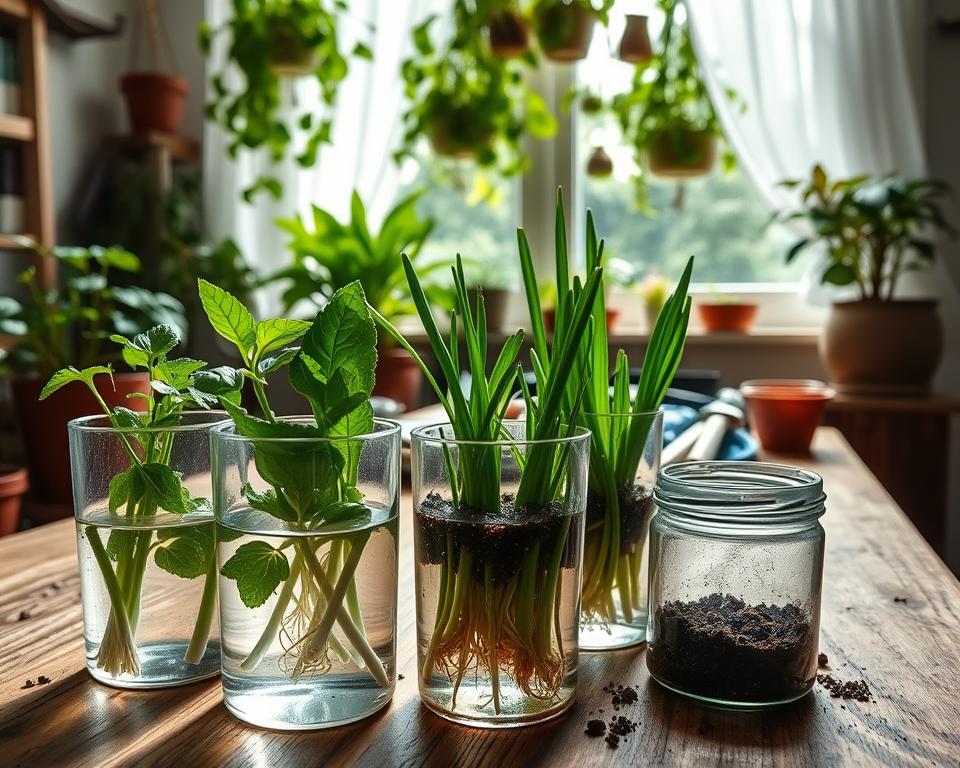
Mold and rot often happen when propagating edible plants in damp places. To avoid these, make sure your cuttings have good air flow. Also, don’t water them too much. If you see mold or rot, take out the bad cuttings right away to stop it from spreading.
Experts say keeping things clean and watching your plants closely can lower mold and rot risks. This way, you save time and effort later on.
Signs of Overwatering or Underwatering
Too much or too little water can harm your cuttings. Overwatering makes leaves turn yellow and stems soft. Underwatering causes leaves to wilt and turn brown.
- Check the soil moisture often.
- Change your watering based on your plants’ needs.
- Make sure the soil drains well to avoid waterlogging.
Pests to Look Out For
Pests like aphids, spider mites, and mealybugs can be a big problem with root cutting propagation. Look for white powdery patches or actual pests on your plants.
To fight pests, try organic methods like neem oil or insecticidal soap. These are safe for your edible plants.
Knowing these common issues and how to fix them can boost your success in growing edible plants. With the right knowledge and practice, you’ll soon enjoy the fruits of your labor.
Transitioning Your Cuttings to the Outdoors
Now that your cuttings have strong roots, they’re ready for the outdoors. Moving them outside is a big step. It needs careful planning to help them grow well.
Timing for Transplanting
The right time to move cuttings outside depends on the weather and plant type. Wait until the frost is gone and the soil is warm. For most edible plants, this is late spring or early summer. Always check the specific needs of each plant for the best start.
Hardening Off Process
Before moving cuttings outside, they need to harden off. This means slowly getting them used to outdoor conditions over 7-10 days. Start in a shaded area for a few hours, then increase the time and sunlight.
Watch your cuttings for signs of stress like wilting or color change. If you see these, reduce their outdoor time until they get better.
Ideal Planting Locations
Choosing the right spot for your cuttings is key. Most edible plants need full sun to grow well. Pick a spot that gets at least 6 hours of direct sunlight a day. Also, make sure the area drains well to avoid waterlogged soil.
By timing the transplant right, hardening off your cuttings, and picking the best spot, you’ll help your plants thrive. This careful step is important for successful propagating herbs from cuttings and edible plant propagation tips.
Maintaining Your Newly Propagated Plants
Now that you’ve grown your edible plants, it’s time to care for them. Keeping your plants healthy is key for a good harvest. It involves a few important steps.
Fertilization Tips
Fertilizing your plants is vital for their growth. Use a balanced fertilizer that’s full of nutrients. Avoid over-fertilizing to prevent root damage.
A fertilizer with an NPK ratio of 10-10-10 works well for most plants. Organic options like compost or manure tea are also good. They give nutrients slowly and gently.
Pruning for Growth
Pruning helps your plants grow bushy and produce more. Trimming back the tips encourages more branches. This means more fruit or leaves for you.
Pruning also removes dead or sick parts. This stops diseases from spreading and helps your plants grow strong.
Pest and Disease Management
Watch for pests and diseases to keep your plants healthy. Look for signs like holes in leaves or white patches on stems.
If you find any problems, act fast. Use organic pest control like neem oil or insecticidal soap. This helps protect good bugs too.
Conclusion: Enjoying the Fruits of Your Labor
Learning to grow plants from cuttings is rewarding. You can now easily grow your favorite herbs, veggies, and fruits. This guide has shown you how to grow new plants, cutting down on seed and nursery needs.
Key Takeaways
We’ve covered the main points. You know the benefits of using cuttings and the best plants to grow. You’ve also learned how to root plants in water and soil, and how to solve common problems.
Exploring New Varieties
Now you can try growing different plants. Start with herbs like basil or mint. Or, try growing fruits like strawberries or grapes. With practice, you’ll grow your garden and share your harvest with friends and family.