


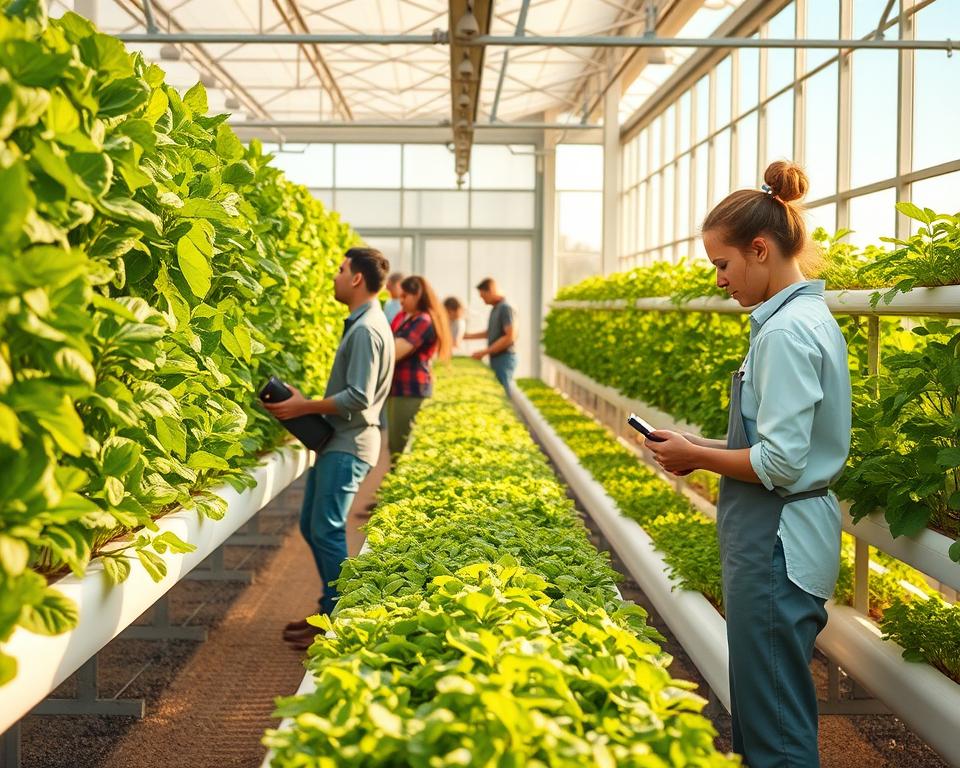
Did you know that Controlled Environment Agriculture (CEA) can boost crop yields by up to 30%? It also cuts water use by 90%. My adventure into CEA started with a simple dream: to grow fresh food anywhere, no matter the weather or season.
My journey with sustainable agriculture has shown me CEA’s huge promise. It’s changing how we grow food. In this piece, I’ll share my knowledge and tips on using CEA for a greener future.
Key Takeaways
- Understanding the basics of Controlled Environment Agriculture
- Benefits of CEA in increasing crop yields and reducing water consumption
- Tips for implementing CEA in different climates and settings
- The role of technology in improving CEA practices
- Future prospects of sustainable agriculture through CEA
What is Controlled Environment Agriculture?
Controlled Environment Agriculture (CEA) changes how we grow crops. It involves growing plants in places like greenhouses or indoor facilities. Here, factors like temperature, humidity, and light are carefully managed.
Definition of Controlled Environment Agriculture
CEA is a type of indoor farming that uses advanced tech for the best growing conditions. By controlling the environment, farmers can increase crop yields. They also use less pesticides and chemicals.
This method lets farmers use precision agriculture techniques. This ensures crops get exactly what they need to grow well.
Key Benefits of CEA
One big plus of CEA is it helps conserve water. Using hydroponics or aeroponics, farmers use much less water than traditional farming.
Also, CEA leads to increased crop yields because of the perfect growing conditions. This means more food is available for people to eat, helping to feed a growing population.
- Improved crop quality
- Reduced environmental impact
- Increased food safety
In summary, Controlled Environment Agriculture is a hopeful future for farming. It brings many benefits for farmers and those who eat the food.
The Basics of Setting Up Your Space
Creating a great environment for your crops is key to a successful CEA operation. When I started in vertical farming, I learned that setting up well is essential.
First, think about where to put your CEA facility. It’s not just about picking a spot. It’s about making sure it’s good for your crops.
Choosing the Right Location
The location of your CEA facility is very important, even more so in urban agriculture. You need a place that’s easy to get to and has what you need for your operation.
- Proximity to markets and resources
- Adequate space for expansion
- Accessibility for maintenance and monitoring
When looking at locations, keep these points in mind. This way, your CEA operation will have a strong start.
Essential Equipment You’ll Need
After finding a good location, it’s time to get your CEA facility ready. You’ll need:

- Grow lights tailored to your crop’s needs
- Climate control systems for temperature and humidity management
- Irrigation systems designed for efficient water use
- Monitoring equipment for continuous observation of your crops’ health
Getting the right equipment is important. It helps create a controlled environment for healthy growth and high yields.
Light and Energy Considerations
Getting light and energy right is key for success in Controlled Environment Agriculture. As we explore CEA, it’s clear that light is a big deal for plant growth and energy use.
Types of Grow Lights
There are many grow light options for CEA, each with its own pluses and minuses. Here are a few:
- LED Grow Lights: LEDs are energy-smart and last a long time, making them a top pick for CEA folks.
- HPS (High Pressure Sodium) Grow Lights: HPS lights are very bright and help plants flower, but they use a lot of energy and get hot.
- Fluorescent Grow Lights: These lights are not as strong as HPS but use less energy and don’t get as hot.
When picking a grow light, think about what your plants need and how energy-efficient the light is.
Energy Efficiency Strategies
To cut down on energy use in CEA, try these tips:
- Optimize Lighting Schedules: Adjusting when lights are on to match plant growth can save a lot of energy.
- Use Energy-Efficient Equipment: Choosing LED grow lights and other energy-saving gear can lower energy use.
- Implement Hydroponics: Hydroponics can be more energy-efficient than growing in soil, and it works well with climate control systems.
Using these strategies can help CEA operators use less energy while keeping or even boosting crop yields.
In my own CEA setup, using energy-saving lights with hydroponics has been a big win. It lets me grow many different crops while keeping energy costs down.
Managing Temperature and Humidity
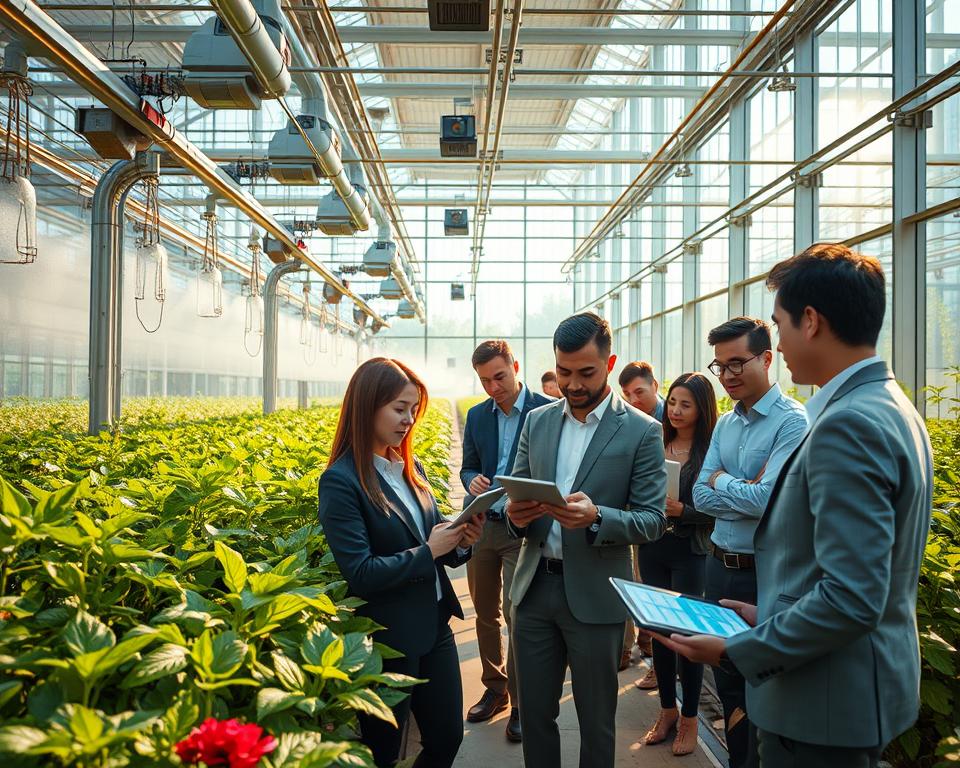
In CEA, controlling temperature and humidity is vital. These factors greatly affect crop health and yield.
Ideal Conditions for Different Crops
Each crop has its own needs for temperature and humidity. For example, lettuce and spinach do best in cooler temperatures, between 65°F to 75°F (18°C to 24°C). On the other hand, tomatoes and peppers need warmer temperatures, from 75°F to 85°F (24°C to 29°C).
Keeping humidity levels right is also key. Too much humidity can cause fungal diseases, while too little can stress plants. Most crops prefer a relative humidity of 40% to 60%.
Tools for Monitoring Climate
To keep your CEA facility in top shape, you need to monitor the climate. Use tools like thermometers, hygrometers, and climate control systems. Some systems even let you check and adjust things remotely, ensuring your crops stay in perfect conditions.
Aquaponics, which combines fish farming with hydroponics, can also help. The water in aquaponics systems can stabilize temperature, creating a better growing environment.
By managing temperature and humidity well, and using tools like aquaponics, you can boost your CEA’s productivity and health.
Watering Techniques in CEA
Getting the right amount of water is key to success in Controlled Environment Agriculture (CEA). It’s not just about giving plants water. It’s about giving it when and how they need it.
In CEA, plants grow without soil. This means we need new ways to water them. These methods help plants grow well while saving water.
Hydroponics vs. Aeroponics
Hydroponics grows plants in a nutrient-rich solution, not soil. This method lets us control what nutrients plants get. It can make plants grow faster and produce more.
Aeroponics suspends roots in the air and sprays them with nutrient solution. It’s even more water-efficient than hydroponics. It can give similar results with less water.
| Technique | Water Usage | Nutrient Control |
|---|---|---|
| Hydroponics | Moderate | High |
| Aeroponics | Low | High |
Optimal Watering Schedules
Creating the best watering schedule is vital for CEA crops. We must think about the plant type, its growth stage, and the environment. This includes temperature and humidity.
Seedlings need more water than mature plants. Plants in hot, dry places need more water than those in cooler, wetter places.
Monitoring plant response to the watering schedule is important. Adjusting as needed helps crops perform their best.
Soil vs. Soilless Growing Media
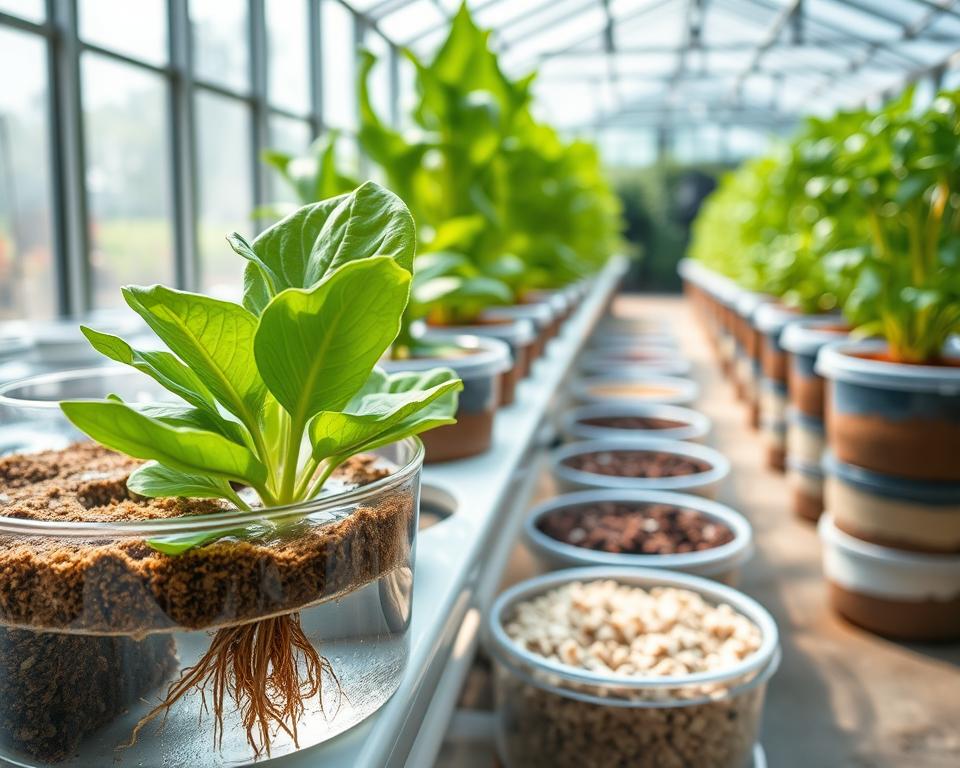
Choosing between soil and soilless growing media is a key decision in controlled environment agriculture. This choice greatly affects your crops’ health and productivity.
Soil has long been used for growing plants, creating a natural environment for them. Yet, hydroponics and aeroponics, types of soilless media, are also effective in controlled settings.
Pros and Cons of Different Media
Soil is good at holding water and air, and it’s often cheaper. But, it can harbor pests and diseases if not managed well. Soilless media, like hydroponics, offer better control over nutrients and lower disease risks.
Comparison of Soil and Soilless Media
| Characteristics | Soil | Soilless Media |
|---|---|---|
| Cost | Generally lower initial cost | Higher initial investment |
| Nutrient Control | Less control over nutrient delivery | Precise control over nutrients |
| Pest and Disease Risk | Higher risk if not managed properly | Lower risk of soil-borne issues |
| Water Usage | Can be water-intensive | Often more water-efficient |
How to Choose the Right Growing Medium
Choosing the right growing medium depends on several factors. These include the crop type, budget, and experience level. For instance, leafy greens might do well in hydroponics, while tomatoes might prefer soil.
Consider the following when making your decision:
- The specific needs of your crop
- Your budget for initial setup and ongoing maintenance
- Your ability to manage and monitor the growing conditions
By carefully evaluating these factors and understanding the pros and cons of different growing media, you can make an informed decision. This supports the success of your controlled environment agriculture operation.
Choosing the Right Crops
Choosing the right crops is key in controlled environment farming. Success depends on picking crops that grow well in these environments and meet market needs.
Best Vegetables for Controlled Environments
Some vegetables are better for controlled environment agriculture (CEA) than others. Leafy greens like lettuce, kale, and spinach are popular. They grow fast and are in high demand. Other great choices include tomatoes, cucumbers, and bell peppers. These can be grown using hydroponic or aeroponic systems.
- Lettuce and other leafy greens
- Tomatoes for high-value production
- Cucumbers for vertical farming
- Bell peppers for diverse markets
These crops grow well in controlled conditions. They also allow for quick harvests all year round.
Seasonal Considerations for Crop Selection
Even with controlled environments, seasons can affect crop selection and prices. For example, high-value crops like strawberries and herbs can be more profitable in certain seasons. This is when they are less available in outdoor farming.
Precision agriculture helps growers optimize growing conditions for their crops, no matter the season. This improves yields and makes resource use more efficient.
Understanding market trends and using precision agriculture helps make smart crop choices. This maximizes your investment returns.
Nutrient Management in CEA
Nutrient management is key in CEA, affecting crop yield and quality. In controlled environments, plants depend on growers for nutrients. It’s vital to know what nutrients are needed and when.
Understanding Plant Nutrient Needs
Plants need different nutrients, split into macronutrients and micronutrients. Macronutrients like nitrogen, phosphorus, and potassium are needed in large amounts. Micronutrients, such as iron and zinc, are needed in smaller amounts but are just as important for plant health.
The nutrient needs change based on the crop, its growth stage, and the environment. For example, leafy greens need more nitrogen for leaf growth. Fruit plants need more potassium for fruit production.
Creating a Fertilization Schedule
Creating a fertilization schedule means knowing what nutrients are needed at each growth stage. Start by picking a balanced fertilizer with the right macronutrients and micronutrients.
Keep an eye on your plants to adjust the fertilization plan as needed. Key indicators include leaf color, growth rate, and signs of nutrient deficiencies. For instance, yellow leaves might mean a nitrogen shortage, while purple leaves could point to a phosphorus issue.
- Determine the nutrient needs based on crop type and growth stage.
- Choose a fertilizer that matches these needs.
- Adjust the fertilization schedule based on plant response and environmental conditions.
By understanding plant nutrient needs and creating a good fertilization schedule, you can improve nutrient management in your CEA. This leads to healthier plants and better yields.
Pest and Disease Control
Keeping crops healthy is key in indoor farming. Without proper pest control, indoor farms face a big risk of infestations.
Common Pests in Controlled Environments
Indoor farms often deal with pests like aphids, spider mites, and whiteflies. These pests can harm crops if not caught early.
Signs of pests include eggs, actual pests, yellow leaves, and slow growth. It’s important to watch for these signs often.
Organic Solutions for Pest Management
Organic pest control is good for the planet and people’s health. Integrated Pest Management (IPM) uses many methods to fight pests.
Using beneficial insects and natural products like neem oil can help. Keeping the area clean and well-ventilated also helps prevent pests.
By using these methods, indoor farmers can keep pests away. This ensures healthy crops. Regular checks and quick action are vital for success in indoor farming.
Scaling Your CEA Operation
Scaling in CEA means more than just growing bigger. It’s about using resources wisely and working more efficiently. I focus on growing my space and improving the systems that support it.
Expanding Your Grow
Expanding a CEA operation requires smart strategies. One great way is to use vertical farming. This method stacks crops in layers, boosting production without needing more space.
Benefits of Vertical Farming
Vertical farming brings many advantages, including:
- More crops per square foot
- Better use of resources
- Better monitoring and management of crops
| Criteria | Traditional Farming | Vertical Farming |
|---|---|---|
| Space Utilization | 2D, limited by land area | 3D, maximizes vertical space |
| Water Usage | Often higher due to soil saturation | More efficient, recirculates water |
| Crop Yield | Limited by soil quality and climate | Can be higher due to controlled conditions |
Financial Considerations
Scaling a CEA operation needs careful financial planning. I must think about the costs of new infrastructure, more energy use, and possibly hiring more people.
“Vertical farming is not just about growing food; it’s about creating a sustainable ecosystem within an urban environment.” – Dickson Despommier
Financial planning includes:
- Costs for new equipment and infrastructure
- Regular expenses like energy and labor
- Expected gains from increased production
By planning well, I can make my CEA operation more efficient, productive, and sustainable.
The Future of Controlled Environment Agriculture
Looking ahead, I’m excited about the future of Controlled Environment Agriculture (CEA). With the world’s population set to hit 9.7 billion by 2050, we need new ways to grow food. Urban agriculture is key in this effort.
Emerging Trends
Advanced tech like AI, robotics, and data analytics will soon change CEA. These tools will help farmers grow more food with less waste. They’ll make decisions based on data, boosting yields and protecting the environment.
Technology’s Role in CEA
Technology is changing how we farm, from precision agriculture to vertical farming. As CEA grows, we’ll see even more tech solutions. These will make farming more efficient and green.
The future of CEA looks bright, with urban agriculture leading the way. It will bring fresh food to cities and help make our food system sustainable.