

Did you know over 50% of the world’s population lives in cities? Yet, many struggle to find space for a garden. That’s where urban gardening solutions come in. They help anyone grow a lush garden, even in tiny spots.
I’ll share small space gardening hacks to turn any small area into a garden. You’ll learn about indoor garden design and creative outdoor space uses. This article will show you how to create your own garden oasis.
Key Takeaways
- Discover creative ways to utilize limited areas for gardening.
- Learn about the best plants for indoor and outdoor small space gardens.
- Explore innovative urban gardening solutions for urban dwellers.
- Understand the basics of indoor garden design for a lush indoor garden.
- Get tips on maintaining your garden in small areas.
Understanding Small Space Gardening
Small space gardening is more than a hobby. It’s a way to bring nature into our busy lives. As cities grow, we face the challenge of gardening in small areas. Whether it’s a balcony, a tiny backyard, or just windowsills, you can create a lush garden.
What is Small Space Gardening?
Small space gardening means growing plants in tight spots. It needs careful planning and creativity. You use containers and vertical gardens to make the most of your space.
Choosing the right plants is key. Not all plants fit well in small spaces. Look for compact, leafy plants or those that grow up instead of out.
Benefits of Gardening in Limited Areas
Gardening in small spaces has many benefits. It lets you grow your own food and enjoy gardening’s calm. It also improves air quality, reduces stress, and makes your space look better.
Key Benefits:
- Improved air quality
- Stress relief
- Aesthetic enhancement
- Opportunity to grow your own food
To show the benefits and challenges of small space gardening, let’s compare different methods:
| Gardening Method | Space Requirement | Maintenance Level | Yield Potentia |
|---|---|---|---|
| Container Gardening | Low | Medium | High |
| Vertical Gardening | Very Low | High | Medium |
| Traditional Gardening | High | Medium | Very High |
By understanding small space gardening, you can make a beautiful garden in tight spots. Choose the right methods and plants to succeed.
Choosing the Right Plants for Small Spaces
To make a lush garden in a small area, pick plants that fit your space well. The right plants can grow well in small areas, giving you a lot of harvest or stunning flowers.
Best Vegetables for Container Gardening
Container gardening is perfect for growing veggies in tight spots. Leafy greens like lettuce and kale grow fast and can be ready in 20 days. Cherry tomatoes also do well, producing fruit all summer. Other good choices include radishes, carrots, and herbs like basil and mint.
| Vegetable | Container Size | Sunlight Requirements |
|---|---|---|
| Lettuce | 6-8 inches deep | Partial shade |
| Cherry Tomatoes | 12-18 inches deep | Full sun |
| Radishes | 6-8 inches deep | Partial shade |
Beautiful Flowers That Thrive in Small Areas
Flowers can also make your small garden look great. Petunias, geraniums, and begonias are great for containers and can handle different light levels. For something unique, try orchids or African violets, which love bright, indirect light.
When picking flowers for your small garden, think about how much sun it gets. With the right plants, you can have a stunning garden, even in the smallest spots.
Creative Container Gardening Ideas
When gardening in small spaces, being creative is essential. Using containers in new ways can greatly increase your gardening area.
Vertical Gardens: Grow Up, Not Out
Vertical gardening is a great way to use your space wisely. It lets you grow more plants without taking up more room. Vertical gardens can be made with trellises, wall planters, or DIY pallet gardens.
- Increased space for planting
- Improved air circulation around plants
- Aesthetic appeal, adding a unique element to your home decor
Repurposed Containers: Eco-Friendly Options
Using old containers for gardening is good for the planet and adds a personal touch. Old boots, wooden crates, and plastic bottles can become cute planters. It’s a fun way to reuse items.
Here are some popular repurposed container ideas:
| Container Type | Material | Plant Suggestion |
|---|---|---|
| Old Boots | Leather/Rubber | Herbs like Basil or Mint |
| Wooden Crates | Wood | Vegetables like Tomatoes or Peppers |
| Plastic Bottles | Plastic | Small Herbs or Succulents |
With these creative ideas, even the smallest spaces can become lush gardens. Whether you choose vertical gardens or repurposed containers, your space can flourish.
Maximizing Your Available Space
To make a lush garden in a small area, you need to use your space well. This means being creative and smart about where and how you garden.
Utilizing Window Boxes and Balconies
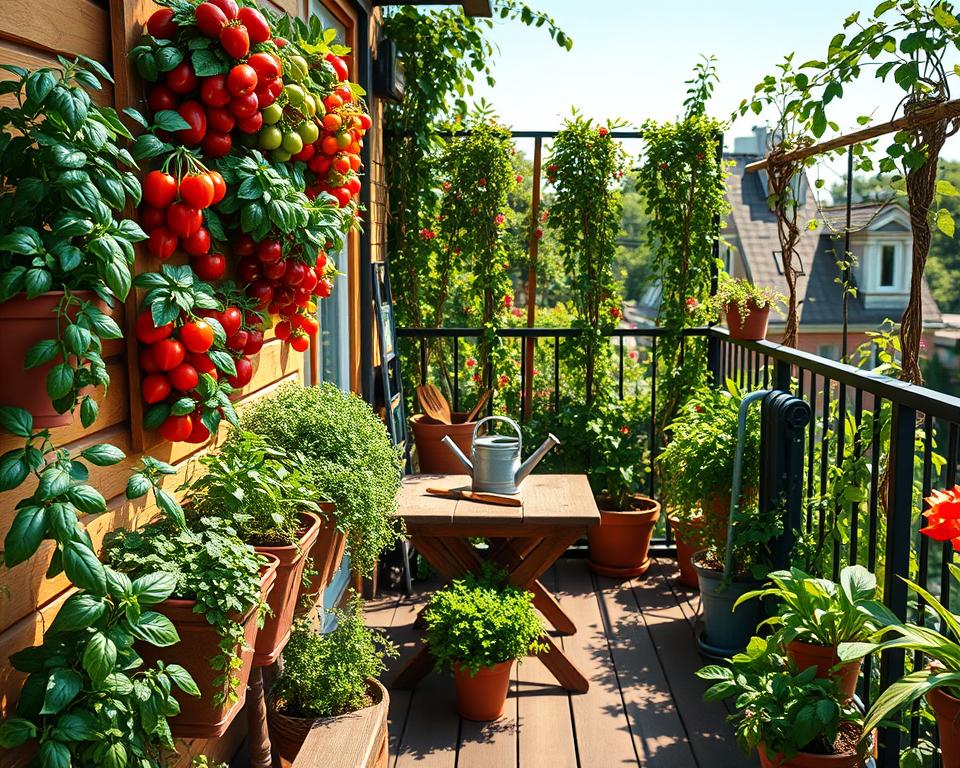
Window boxes and balconies are great for gardens but often go unused. You can turn them into lively gardens with the right plants. For window boxes, grow herbs or flowers right outside your window. Balconies can become mini-gardens with containers and planters.
When picking plants, think about the sunlight they need. Choose plants that match the light your space gets.
Tips for Window Boxes:
- Choose shallow boxes to avoid blocking the window.
- Use a well-draining potting mix to keep soil dry.
- Pick plants that do well in your window’s sunlight.
Hanging Gardens: A Novel Approach
Hanging gardens are a cool way to add greenery without using floor or shelf space. You can use hanging baskets, macramé, or even old boots. The trick is to pick plants that like hanging spots and make sure they get enough water and sunlight.
Benefits of Hanging Gardens:
| Benefit | Description |
|---|---|
| Space-saving | Perfect for small spaces where floor area is limited. |
| Aesthetic appeal | They add visual interest and can be decorative. |
| Flexibility | Can be moved or rearranged as needed. |
By using these ideas, you can make the most of your space. You’ll have a thriving garden, even in the smallest areas.
Soil and Fertilization Hacks
For small space gardening, the right soil and fertilization are key. These elements are the foundation of a successful garden. They ensure your plants grow well.
Selecting the Right Soil Mix
The soil mix is vital for your garden. It gives plants the nutrients and support they need. For small spaces, choose a mix that drains well and is rich in organic matter.
Look for a mix made for container gardening. It will hold moisture but also drain excess water well.
Key characteristics of a good soil mix for small space gardening include:
- High organic content to retain nutrients and moisture
- Good drainage to prevent waterlogged soil
- A balanced pH suitable for the plants you’re growing
Organic Fertilizers for Smaller Gardens
Organic fertilizers are safe and effective for your plants. They avoid the risks of chemical fertilizers. For small gardens, compost or well-rotted manure are good choices.
They release nutrients slowly, helping plants grow healthy.
Some effective organic fertilizers for small space gardening include:
- Compost tea: A liquid solution made by steeping compost in water
- Fish emulsion: A liquid fertilizer made from fish waste
- Manure tea: Similar to compost tea, but made with manure
By choosing the right soil mix and organic fertilizers, you can have a thriving garden. These small space gardening hacks will help you get the most from your garden, even in urban areas.
Effective Watering Techniques
In small space gardening, it’s key to water plants right to keep them healthy. Proper watering also saves water, which is very important.
Conserving Water with Drip Irrigation
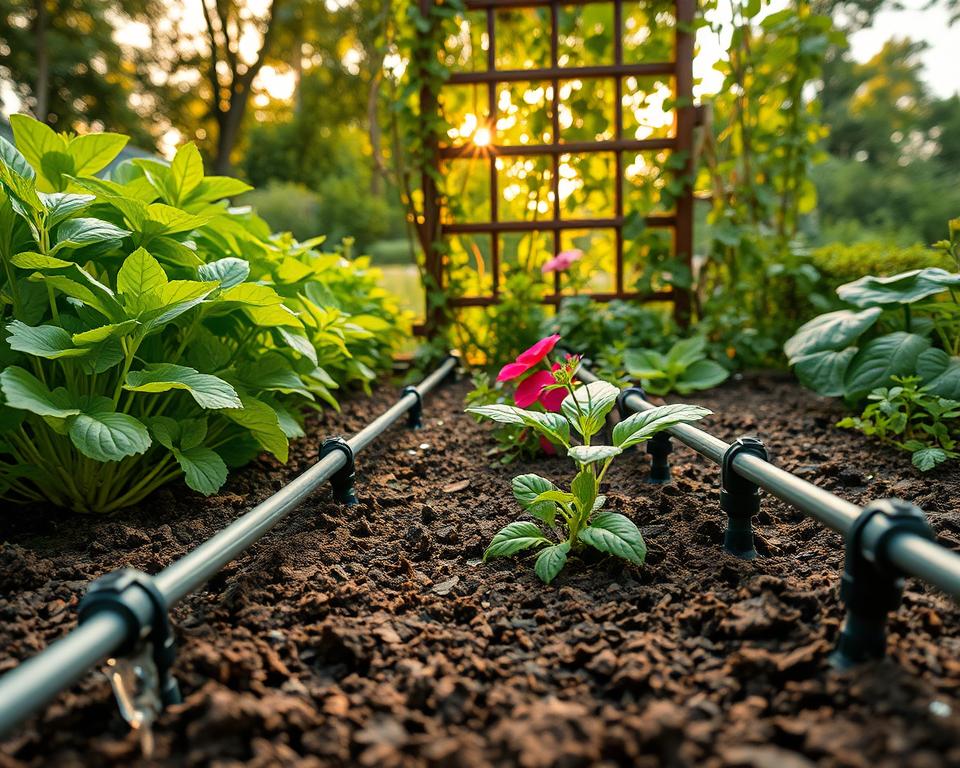
Drip irrigation is great for small gardens. It sends water straight to the roots, cutting down on evaporation and runoff. This is super helpful for indoor gardens where saving water is a big deal.
To set up drip irrigation, you need a water source, tubing, and emitters. Emitters go near the plants’ roots to give them the right water. This method cuts down on water waste and helps roots grow strong.
DIY Watering Systems for Containers
For container gardens, making your own watering system is fun and effective. You can use a plastic bottle as a self-watering container. Drill a hole in the cap and put it near the roots for a mini irrigation system.
Here’s how to make a simple DIY watering system:
- Choose a plastic bottle and clean it well.
- Drill a small hole in the bottle cap.
- Fill the bottle with water and put it near the plant.
- Let the water soak into the soil as it needs.
This trick is perfect for small gardens where every drop matters.
| Watering Technique | Benefits | Best For |
|---|---|---|
| Drip Irrigation | Conserves water, reduces waste | Small gardens, indoor plants |
| DIY Bottle System | Simple, cost-effective | Container gardens, small spaces |
Using these watering methods, you can have a lush garden in even the smallest spaces. Whether you choose drip irrigation or a DIY system, your plants will appreciate the extra care.
Pest Control in Small Spaces
When I started small space gardening, I quickly learned about the importance of pest control. Pests can quickly ruin a garden, so it’s key to have good pest management plans.
Natural Remedies for Common Pests
Small space gardening lets us use natural ways to fight pests. Neem oil is great for fighting many pests, like aphids and whiteflies. You can also use diatomaceous earth to keep slugs and snails away.
Companion Planting for Pest Management
Companion planting is another smart way to manage pests in small gardens. By planting certain plants together, you can keep pests away. For example, marigolds with tomatoes can fight nematodes, and basil keeps aphids off and makes veggies taste better.
Here are some more plants that help with pest control:
- Chives: Repel aphids and other pests
- Radish: Repels cucumber beetles
- Nasturtium: Repels aphids, whiteflies, and other pests
By using natural remedies and companion planting, you can keep your small garden healthy and pest-free without harsh chemicals.
Seasonal Gardening Tips
To get the most out of your small garden, knowing the seasons is key. This way, your garden stays lush and productive all year.
Planning Your Garden Around Seasons
Planning is essential for small gardens. I start by watching the sun and temperature changes. This helps me pick the best plants for each season.
In spring, I plant cool-season crops like lettuce and spinach. Summer is for warm-season veggies like tomatoes and peppers. In fall, I go back to cool-season crops. Winter, I use cold frames or indoor pots for herbs and greens.
By changing my crops with the seasons, my soil stays healthy. This also keeps pests and diseases away.
Extending Your Growing Season in Small Spaces
To grow longer in a small garden, I use smart tricks. Row covers protect plants from frost, letting me grow into fall or winter. Cold frames or mini-greenhouses trap warmth, making a microclimate for longer growing.
I also use season extension containers that move with the seasons. This ensures my plants get the right sunlight and weather protection. These methods let me enjoy fresh garden produce for longer.
Succession planting is another trick I use. It means planting small batches of seeds often. This way, I always have something ready to eat. It’s a simple trick to keep my garden productive.
- Use row covers to protect plants from frost.
- Utilize cold frames or mini-greenhouses.
- Implement succession planting for continuous harvests.
Embracing a Community Gardening Approach
Gardening in small spaces can be very rewarding. Taking it further by joining a community garden is even more enriching. Here, you can share knowledge, resources, and experiences with others. It creates a supportive network of gardeners who think alike.
Local Community Gardens
To find local community gardens, search online for “urban gardening solutions” or “community gardens” in your area. You can also ask local nurseries, gardening clubs, or community centers if they know of any. For example, Not So Big Community offers inspiration and guidance for your own backyard oasis.
Shared Gardening Benefits
Shared gardening spaces bring many benefits. You get access to different plants, tools, and expertise. They also offer chances to meet and connect with other gardeners, making the hobby more fun. Whether you have a small balcony or a tiny yard, using “balcony gardening ideas” and community gardening can help you grow a beautiful garden.