


Fungus gnats can be a big problem for people who grow plants indoors. They can harm your plants and make you frustrated. Did you know one wet plant can attract hundreds of these tiny bugs?
I’ve faced these pests myself and know how important it is to manage indoor plant pests well. Fungus gnats love damp places, so we need to find and fix the problem. In this article, I’ll show you how to get rid of fungus gnats from your home and garden.
Key Takeaways
- Understand the causes of fungus gnat infestations
- Learn effective methods to eliminate fungus gnats
- Discover strategies for preventing future infestations
- Implement indoor plant pest management techniques
- Keep your home and garden free from these pests
Understanding Fungus Gnats: What They Are
To fight fungus gnats, knowing what they are and how they live is key. Fungus gnats are small flying bugs in the Sciaridae family. They hang out near indoor plants and can be a big problem.
Life Cycle of Fungus Gnats
Fungus gnats have four life stages: egg, larva, pupa, and adult. The larval stage is the most damaging. Larvae eat fungi, algae, and plant roots, hurting the plant. Knowing this helps us control them better.
Adult gnats lay eggs in wet soil, which hatch into larvae in a few days. These larvae eat the soil’s organic matter and plant roots for about two weeks. Then, they pupate. After a week, adult gnats come out, starting the cycle again.
Common Habitats for Fungus Gnats
Fungus gnats live in wet plants, rotting organic matter, and damp soil. They love humid places with temperatures between 65°F to 75°F (18°C to 24°C). To stop fungus gnats, we must fix the conditions that help them grow.
| Habitat | Characteristics | Control Measures |
|---|---|---|
| Overwatered Plants | Moist soil, waterlogged roots | Allow soil to dry between waterings, improve drainage |
| Decaying Organic Matter | Presence of fungi, algae | Remove decaying matter, improve soil aeration |
| Moist Soil | High humidity, poor drainage | Use well-draining potting mix, reduce watering |
Why Fungus Gnats Are a Problem
Fungus gnats are more than just a nuisance. They can seriously harm your indoor plants. These tiny insects can weaken your plants, leading to a decline in health and even death if not treated.
Impact on Indoor Plants
Fungus gnats mainly harm indoor plants by damaging their roots. The larvae eat away at the roots, making them weak. This makes plants more likely to get sick and attract other pests.
Weak roots can also cause root rot, a deadly condition for plants. It’s important to catch this problem early to save your plants.
Signs of an Infestation
Spotting fungus gnat infestations early is key to saving your plants. Look for tiny flying insects, yellowing leaves, and a decline in plant health. You might also see tiny eggs or larvae in the soil or on the plant.
If you notice these signs, act fast. Understanding fungus gnats and their signs helps you protect your plants. This way, you can keep your indoor garden healthy and thriving.
Best Prevention Techniques
To get rid of fungus gnats, prevention is key. Simple strategies can help keep these pests away. It’s not just about killing gnats but also stopping them from coming back.
Maintaining Soil Health
Healthy soil is a great way to stop fungus gnats. Use a well-draining potting mix to help. Regular garden soil can be too dense and hold too much water.
Repotting your plants often refreshes the soil. It gets rid of old, decaying matter that gnats like.
| Soil Health Practices | Benefits |
|---|---|
| Using well-draining potting mix | Reduces moisture, making it less conducive for fungus gnats |
| Repotting plants periodically | Refreshes the soil and removes decaying matter |
| Avoiding overwatering | Prevents moisture buildup that attracts fungus gnats |
Proper Watering Practices
Right watering is key to stopping fungus gnats. Overwatering is a big mistake. Let the soil dry a bit before watering again. Also, avoid watering the leaves to stop fungal diseases.
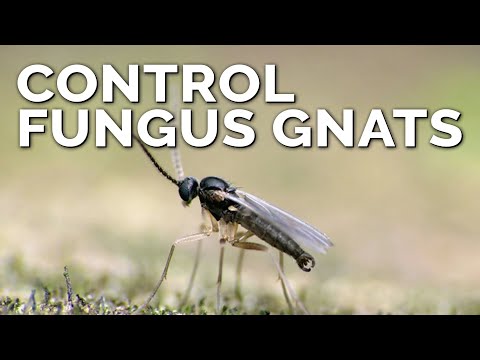
Cleaning Up Debris
Cleaning up around your plants is also important. Get rid of dead leaves or dying parts. This keeps gnats away. A clean area around your plants lowers the chance of infestation.
- Remove dead or dying plant parts regularly
- Keep the area around plants free of debris
- Dispose of any infested plants to prevent spread
Using these prevention methods can greatly lower the chance of fungus gnat problems. Your plants will stay healthy and pest-free.
DIY Remedies for Fungus Gnats
DIY remedies are a great way to fight fungus gnats without using harsh chemicals. These natural methods can be very effective. They are also easy to make using things you have at home.
Apple Cider Vinegar Traps
One popular DIY remedy is the apple cider vinegar trap. Fill a small container with apple cider vinegar and cover it with plastic wrap. Make a few small holes in the plastic so gnats can get in.
Gnats are drawn to the vinegar and get trapped. Putting these traps near your plants can help reduce adult gnats. But remember, this method only catches adult gnats, not the larvae.
Dish Soap Solution
Another good DIY remedy is the dish soap solution. Mix a few drops of dish soap with water in a spray bottle. Spray this solution on the soil to kill larvae.
The soap breaks the water’s surface tension, drowning the larvae. But be careful not to use too much soap. It can harm your plants. Start with a weak solution and watch how your plants react before using more.
Sand Top Dressing
Using a sand top dressing is another way to control fungus gnats. Covering the soil’s top layer with sand stops gnats from laying eggs. Sand also helps with drainage, which is good for your plants.
This method is effective because it stops new infestations and improves drainage. It’s good for your plants’ health.
| Method | Target | Effectiveness |
|---|---|---|
| Apple Cider Vinegar Trap | Adult Gnats | High |
| Dish Soap Solution | Larvae | Medium |
| Sand Top Dressing | Eggs | High |
Using these DIY remedies together can help control fungus gnats. It may take time to get rid of them all. But with patience and persistence, you can keep your plants safe.
Store-Bought Solutions
Dealing with fungus gnats can be tough. Sometimes, you need to use store-bought solutions to control them. These products help keep your indoor plants safe.
Insecticidal Soaps
Insecticidal soaps are a soft but strong way to fight fungus gnats. They break down the insect’s skin and dry them out. To use it, mix the soap with water as the label says and spray it on your plants. Always read the label carefully to use it right.
Pesticide Granules
Pesticide granules are another good choice for fungus gnat control. You sprinkle them on the soil and they kill gnat larvae. When using these granules, follow the instructions precisely to protect your plants and other good bugs.
Neem Oil Treatments
Neem oil comes from the neem tree and is a natural bug killer. It stops fungus gnats from reproducing. To use it, mix it with water as directed and spray it on your plants. Make sure to pick a neem oil made for indoor plants.
When using these products, always follow the instructions and be careful. Wear protective clothes and keep the products away from kids and pets. Using these solutions with good plant care can help you manage fungus gnats and keep your plants healthy.
Natural Predators to the Rescue
Introducing natural predators can change the game in getting rid of fungus gnats. This method not only kills the gnats but also stops them from coming back.
Beneficial nematodes are a top choice for fighting fungus gnats. These tiny worms attack and kill the larvae, making them a strong ally.
Beneficial Nematodes
Beneficial nematodes are a green way to control fungus gnat larvae. They infect the larvae with bacteria that kills them in a few days. To use them well, you need to:
- Choose the right species of nematodes for fungus gnat control.
- Apply them to the soil at the correct concentration.
- Keep the soil moist to help them work.
For more tips on using beneficial nematodes and other insects, check out Nature’s Good Guys. They offer insights on beneficial insects for houseplants.
Predatory Insects
Predatory insects like ladybugs and lacewings also fight fungus gnats. They target adult gnats, lowering their numbers.
Using predatory insects has many benefits:
- They focus on adult gnats, cutting down their numbers.
- They are natural, so you don’t need harsh chemicals.
- They work well with other natural methods for a full solution.
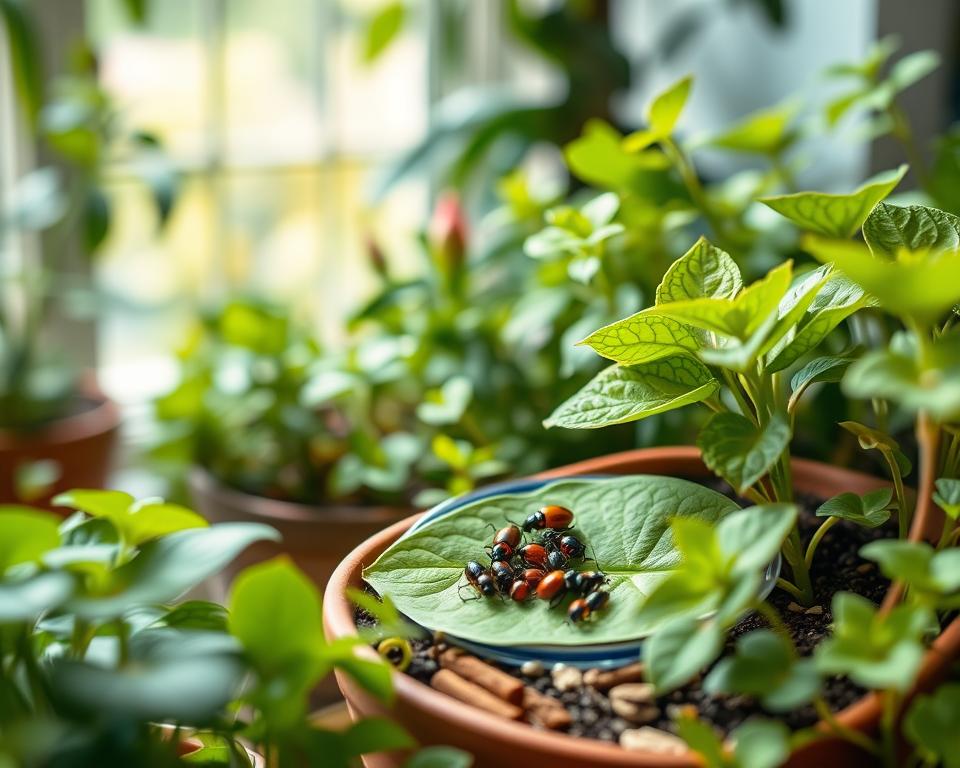
By adding these natural predators, you can balance your garden’s ecosystem. This, along with other natural methods, helps keep your indoor garden healthy and fungus gnat-free.
How to Effectively Monitor Infestations
Keeping an eye on your plants is key to spotting fungus gnat problems early. This way, I can catch issues before they get worse. Regular checks help me act fast, keeping my plants healthy and free from fungus gnats.
There are a few ways to watch for fungus gnats. Sticky traps and soil testing kits are my go-to tools.
Sticky Traps
Sticky traps are a simple yet effective way to catch adult fungus gnats. I place these traps near my plants to see how bad the problem is. The sticky surface traps the gnats, showing me how many there are.
Soil Testing Kits
Sticky traps show me adult gnats, but soil testing kits find larvae. These kits let me take a soil sample and check for larvae. This is key to preventing fungus gnat infestation, as it lets me treat the soil before damage happens.
Using both sticky traps and soil testing kits gives me a full picture of fungus gnats at home. This houseplant gnat prevention plan is vital for keeping plants healthy and avoiding infestation problems.
Regular monitoring also helps me manage pests better. By staying alert and using these tools, I can adjust my care to stop fungus gnats before they start.
Seasonal Considerations
As the seasons change, so do the ways to fight fungus gnats. It’s key to adjust your plant care with the seasons to stop fungus gnat problems.
Autumn and Winter Care
In autumn and winter, water your plants less and make sure air moves well around them. This stops moisture from building up. Not watering enough is a big mistake that can attract fungus gnats. Let the soil dry a bit before watering again to help get rid of fungus gnats.
- Water less because plants grow slower in cooler months.
- Make sure air moves well around plants to stop fungus.
- Watch how wet the soil is to avoid too much water.
Dr. Jane Smith, a famous horticulturist, said, “The secret to controlling fungus gnats is knowing where they live and changing how you care for your plants.” This is very true in autumn and winter when plants need less water.
Spring and Summer Vigilance
In spring and summer, fungus gnats are more active because it’s warmer and plants grow faster. It’s important to check your plants often to spot any fungus gnat problems early.
- Look at your plants often for fungus gnats, like tiny flying bugs near the soil.
- Use sticky traps to catch adult gnats and see if your control is working.
- Keep things clean, like removing dead plants and keeping the area around them tidy.
By being careful and changing your plant care with the seasons, you can get rid of fungus gnats and stop them from coming back. Remember, controlling fungus gnats is a year-round job that needs constant attention.
When to Seek Professional Help
If fungus gnats keep coming back, it might be time to get help from a pro. These pests can be hard to get rid of and might harm your plants. Knowing when you need expert help is key to solving the problem.
Dealing with fungus gnats can be really tough. But knowing when to call for help can save you time and prevent more damage.
Signs of Severe Infestation
A bad infestation means lots of gnats and damaged plants. Look out for these signs:
- Yellowing or wilting leaves despite proper care
- A large number of gnats flying around your plants
- Visible larvae in the soil
Keep a close eye on your plants and watch for any signs of a big problem.
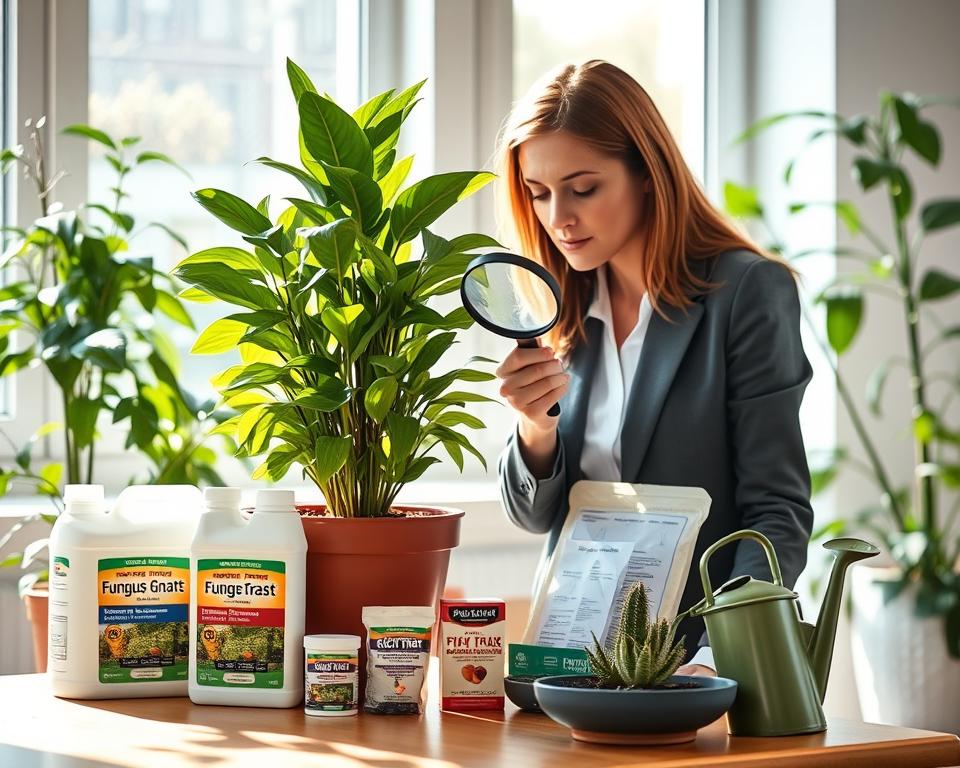
Pest Control Services Overview
Pest control services are experts at handling infestations, including fungus gnats. They can give you targeted treatments and advice on preventing future problems. When choosing a service, look for ones that use organic or integrated pest management. This keeps your plants safe.
As
“The best way to prevent future infestations is to understand the root cause of the problem and address it effectively,”
an expert says. This method not only gets rid of the current problem but also keeps your plants healthy.
By knowing when to get professional help and what to expect, you can manage fungus gnats better. This protects your indoor plants.
Fungus Gnat Myths Debunked
Fungus gnats are often misunderstood. Many think they’re harmless, but they can harm your plants. Knowing the truth helps you fight them effectively.
Common Misconceptions
Some believe fungus gnats mean your environment is healthy. But, they love moist, rich soil, often from too much water. They don’t bite or spread diseases, but their presence warns of problems.
Others think one treatment can get rid of them. But, it takes a mix of better soil, right watering, and natural or store-bought solutions.
Facts vs. Fiction
Here’s what’s real and what’s not about fungus gnats:
| Myth | Fact |
|---|---|
| Fungus gnats are harmless to plants. | Fungus gnats can spread disease and damage plant roots. |
| A single treatment can eliminate fungus gnats. | Getting rid of them needs a plan that includes better soil and watching them closely. |
| Fungus gnats are a sign of a healthy environment. | They prefer moist, rich soil, which is often from too much water. |
Knowing the truth helps you control fungus gnats. Use natural remedies for fungus gnats and take good care of your plants to keep them away.
Maintaining a Fungus Gnat-Free Home
Keeping your home fungus gnat-free is possible with regular care and prevention. Simple habits and proactive steps can help keep your plants healthy and free from gnats.
Regular Cleaning Routines
One key way to stop fungus gnats is to keep your plants’ area clean. This means:
- Removing any debris or dead plant matter from the soil surface.
- Dusting plant leaves and surrounding areas to reduce dust accumulation.
- Regularly vacuuming or sweeping floors, specially around plants.
Keeping your home clean makes it less likely for fungus gnats to thrive.
Long-Term Prevention Strategies
There are also long-term ways to prevent fungus gnats:
- Use Well-Draining Potting Mix: Don’t use regular garden soil in pots. It holds too much water and attracts gnats. Choose a well-draining potting mix instead.
- Avoid Overwatering: Fungus gnats love moist places. Let the soil dry a bit between waterings to stop gnat breeding.
- Monitor Humidity Levels: Watch the humidity in your home, more so in humid seasons. A dehumidifier can help keep it gnat-free.
Using these strategies can greatly lower the chance of fungus gnat infestations. This keeps your home pest-free.
For more on managing indoor plant pests, like fungus gnats, staying informed and proactive is key. Regular cleaning and long-term prevention can help your plants thrive without gnats.
The Importance of Patience and Persistence
Getting rid of fungus gnats takes time and effort. It’s not something you can do overnight. You might need to treat your plants more than once to get rid of them all.
Time Frame for Elimination
Knowing how long it takes to get rid of fungus gnats is key. You need to keep checking your plants and soil. It might take weeks, so stick to your treatment plan.
Staying Vigilant
To beat fungus gnats, you must stay alert. Check your plants often and keep the soil healthy. This way, you can enjoy a fungus gnat-free home and healthy plants. With the right steps, controlling fungus gnats is doable.