


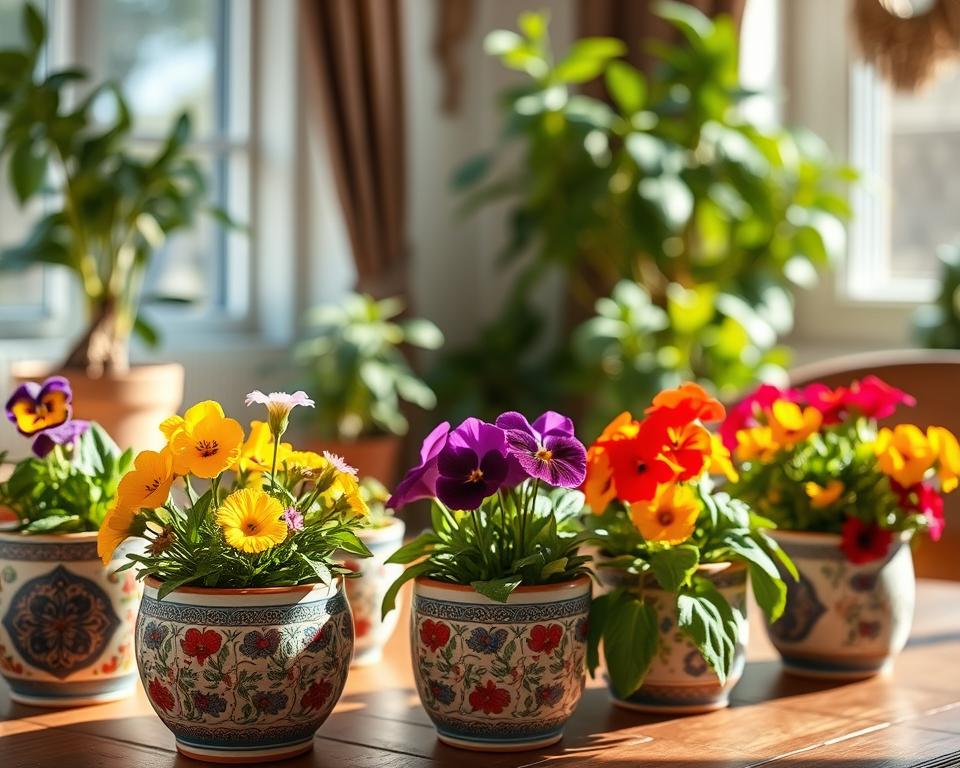
Growing your own edible flowers indoors can make your home fresher and more beautiful. Did you know that using edible flowers in cooking and decorating can make your meals better and feel rewarding? I’ve grown edible flowers indoors, and it’s truly joyful.
This guide will show you how to grow edible flowers in indoor pots. It will highlight the benefits and give you the basics to start.
Key Takeaways
- Learn how to choose the right edible flowers for indoor pots.
- Discover the benefits of growing edible flowers indoors.
- Understand the simple steps to grow edible flowers in pots.
- Get tips on how to care for your edible flowers.
- Explore creative ways to use edible flowers in your cooking and decorating.
Why Grow Edible Flowers Indoors?
Edible flowers make my indoor garden look and taste better. They add elegance to my home and give me fresh ingredients for cooking.
Benefits of Edible Flowers
Edible flowers bring many benefits indoors. They attract pollinators, add color, and give off a lovely scent. Plus, they make salads, desserts, and other dishes taste fresh and exciting.
Using edible flowers in cooking is a creative and healthy way to try new recipes. They can give traditional dishes a unique twist, making meals more fun.
Aesthetics and Flavor in Indoor Gardens
Edible flowers make indoor gardens look better and taste better too. Their bright colors and soft petals can be used as garnishes or in salads. This adds beauty and flavor to our meals.
Popular edible flowers for indoor gardens include violas, pansies, and nasturtiums. They are not only pretty but also easy to grow and care for.
Easy Access to Fresh Ingredients
Having edible flowers indoors means I always have immediate access to fresh ingredients. This makes it easy to try new recipes and flavors. It helps me eat a healthy and varied diet.
Growing edible flowers indoors is a simple and rewarding hobby. It makes my home look better and improves the taste of my cooking.
Choosing the Right Edible Flowers
Edible flowers add beauty to indoor gardens. Some are easy to grow and look great. When picking edible flowers for your pots, think about what will grow well and look good.
Popular Edible Flower Varieties
Violas, pansies, nasturtiums, and calendulas are favorites for indoor gardens. They’re pretty and easy to care for, perfect for beginners. Nasturtiums have a peppery taste that’s great in salads.
Roses, lavender, and chamomile are also good choices. They offer different tastes and smells. Roses are lovely in desserts and teas, adding romance to your cooking.
Considerations for Indoor Growth
Think about light, temperature, and water when picking edible flowers for indoors. Most like well-drained soil and some sun. Knowing this helps your flowers grow well.
“The right soil and adequate light are key for indoor edible flowers.”
Seasonal Availability in the US
Edible flowers are available at different times of the year, even indoors. In the US, spring and summer have more varieties. But, with the right care, you can grow them all year indoors.
| Edible Flower | Seasonal Availability | Light Requirements |
|---|---|---|
| Nasturtium | Spring – Fall | Full Sun |
| Viola | Spring – Summer | Partial Shade |
| Calendula | Year-Round (Indoors) | Full Sun |
Knowing what each edible flower needs helps you choose well for your indoor garden. This way, you’ll always have fresh, beautiful flowers.
Essential Potting Supplies for Edible Flowers
Choosing the right potting supplies is key for growing edible flowers indoors. I learned that the right supplies greatly impact their health and growth.
Containers: Choosing the Right Size and Type
Choosing the right container is the first step. Containers should be at least 6-8 inches deep for root growth. I use containers with drainage holes to avoid waterlogged soil.
For indoor edible flower varieties like violas and pansies, wider containers are better. They allow for more plants to grow together.

Material matters too. Clay pots breathe well, while plastic pots hold moisture better. For a sleek look, self-watering planters keep moisture consistent.
Soil and Drainage Needs
The soil mix is vital. Edible flowers need well-draining soil rich in organic matter. A mix for indoor plants, with perlite or sand, works well.
For more info, check out this guide on potting mix for edible flowers.
| Soil Component | Function | Benefit for Edible Flowers |
|---|---|---|
| Peat Moss | Retains Moisture | Keeps soil consistently moist |
| Perlite | Improves Drainage | Prevents waterlogged soil |
| Compost | Provides Nutrients | Promotes healthy growth and flowering |
Tools and Accessories for Successful Growth
Right tools make caring for edible flowers easier. You’ll need a watering can, a trowel, and pruning shears.
Also, a moisture meter and fertilizer for flowering plants are helpful. They ensure your plants get the nutrients they need.
Best Indoor Conditions for Edible Flowers
To grow edible flowers indoors, knowing their needs is essential. These flowers are picky about their environment. The right conditions are key for their growth and flavor.
Light Requirements for Different Types
Edible flowers need different amounts of light. For example, violas and pansies do well in partial shade. On the other hand, nasturtiums and calendulas need full sun to bloom.
- Low Light: Violas, pansies, and mint can grow well in low light conditions.
- Partial Shade: Flowers like nasturtiums and calendulas prefer partial shade to full sun.
- Full Sun: Sunflowers, roses, and lavender require full sun to thrive.
Temperature and Humidity Preferences
Most edible flowers like daytime temperatures between 65-75°F (18-24°C). Nighttime temperatures should be around 55-65°F (13-18°C). Humidity should be between 40-60% to avoid drying out or fungal growth.
“Maintaining the right temperature and humidity is vital for the health and vitality of edible flowers.”
Air Circulation and Ventilation Tips
Good air circulation is key to prevent fungal diseases and ensure healthy growth. Make sure to leave enough space between pots. Using fans can also help improve air circulation. Regularly opening windows keeps the air fresh and prevents stale air buildup.
- Ensure pots are not overcrowded.
- Use fans to circulate air.
- Open windows regularly for fresh air.
By focusing on these factors, you can create a perfect indoor space for your edible flowers to thrive, even in small areas.
Starting from Seeds vs. Transplants
Starting your indoor garden with edible flowers can begin in two ways: seeds or transplants. Each method has its own set of pros and cons. I’ll help you understand these to make the right choice.
Pros and Cons of Each Method
Seeds offer a wide range of edible flowers and can save money. But, they need careful attention and specific conditions to grow well.
Transplants, on the other hand, are already growing and can be easier for beginners. They adapt quickly to indoor settings. Yet, you might find fewer varieties at local nurseries.
“The art of growing edible flowers is not just about the end product; it’s about the journey, the nurturing, and the joy of watching something you planted flourish.”
Transplants can be quicker but might cost more. This is true if you’re looking for rare or specialty flowers.
Recommended Starter Plants for Beginners
Beginners should start with easy-to-grow varieties. Violas, pansies, and nasturtiums are great choices. They’re beautiful and easy to care for indoors.
- Violas: These colorful flowers come in a variety of shades and are perfect for adding a pop of color to salads or desserts.
- Pansies: With their large, showy petals, pansies are a favorite among gardeners and chefs alike.
- Nasturtiums: Their peppery flavor makes nasturtiums a great addition to many dishes, from salads to sandwiches.
How to Nurture Seedlings for Healthy Growth
Seedlings need careful attention and a gentle touch. Make sure they get enough light but avoid direct sun. Keep the soil moist but not too wet.
As seedlings grow, move them to bigger pots for their roots. This is called “pricking out.” Do it carefully to avoid harming the roots.
By following these tips, you can grow edible flowers indoors, whether from seeds or transplants. The key is patience, observing your plants, and enjoying the journey.
Watering and Nutrition for Indoor Edible Flowers
Growing edible flowers indoors needs the right water and nutrients. These plants, like any others, need the correct amount of water and food to thrive. This ensures they grow well and bloom brightly.
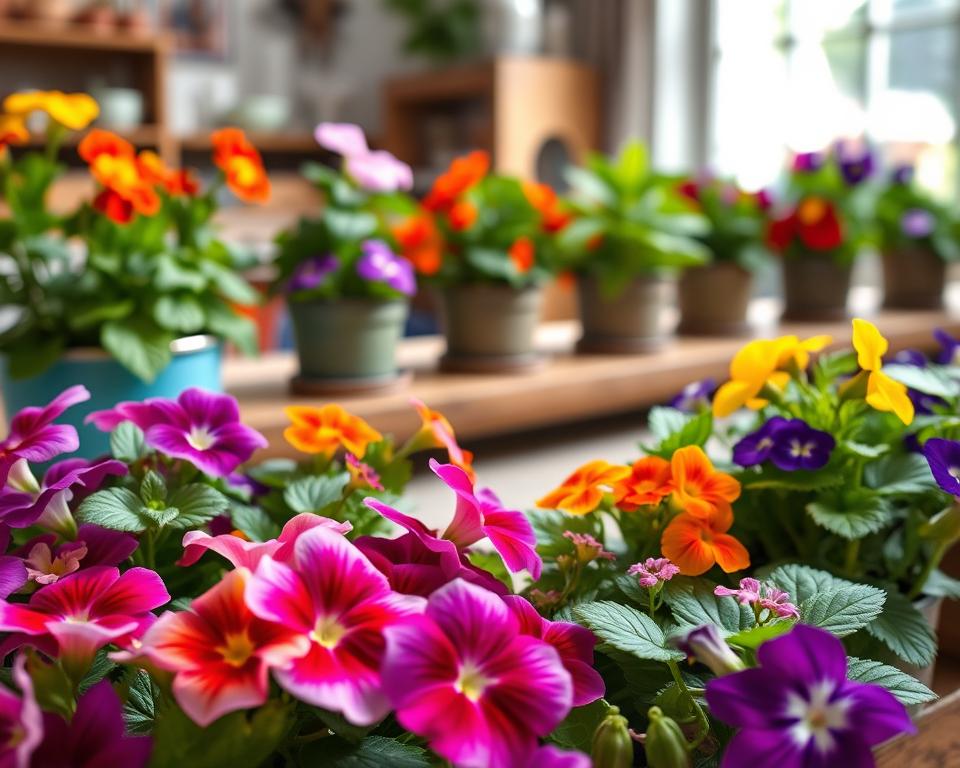
Understanding Watering Needs
The water needs of edible flowers change based on the flower type, pot size, and indoor conditions. It’s important to keep the soil moist but not too wet.
- Check the soil moisture by inserting your finger into the soil up to the first knuckle.
- Water your plants when the top inch of soil feels dry to the touch.
- Avoid getting water on the leaves to prevent fungal diseases; instead, water at the base of the plant.
Fertilization Tips for Optimal Growth
Fertilizing edible flowers indoors is key. The right fertilizer helps them grow, bloom, and taste better.
Tips for Fertilizing Edible Flowers:
- Use a balanced, water-soluble fertilizer (20-20-20) during the growing season.
- Dilute the fertilizer to half the recommended strength to avoid burning the roots.
- Fertilize your edible flowers once a month, unless specified by the fertilizer manufacturer.
Signs of Overwatering or Underwatering
Knowing the signs of too much or too little water is important. Overwatering can cause root rot, while underwatering can stress the plants and reduce blooms.
Look out for these signs:
- Yellowing leaves or droopy stems, which can indicate overwatering.
- Dry, crispy leaves or slow growth, which may signal underwatering.
By watching your plants closely and adjusting care as needed, you can have a successful indoor edible flower garden.
Common Pests and Diseases
Growing edible flowers indoors means watching out for pests and diseases. As you tend to your edible flowers for indoor gardening, spotting problems early is key. This keeps your garden healthy and thriving.
Identifying Pests That Target Edible Flowers
Indoor edible flowers face pests like aphids, spider mites, and mealybugs. Regular checks are essential to catch these pests early. Look for white powdery patches, sticky residue, or actual insects.
Preventive Measures to Keep Plants Healthy
To avoid pests, keep your garden clean and provide the right conditions for your edible flowers in containers. Good air flow and avoiding too much water help. Regular cleaning also stops diseases from spreading.
| Pest/Disease | Signs | Prevention |
|---|---|---|
| Aphids | Sticky residue, curled leaves | Spray with water, introduce natural predators |
| Spider Mites | Fine webbing, yellowing leaves | Increase humidity, use neem oil |
| Mealybugs | White cottony patches | Isolate plants, use insecticidal soap |
Natural Remedies for Pest Control
When pests show up, natural remedies can help. Neem oil fights many pests. Insecticidal soap is another safe choice for your edible flowers.
Stay ahead with these methods to safeguard your indoor garden. Enjoy a bountiful harvest of healthy edible flowers.
Harvesting Edible Flowers: When and How
Harvesting edible flowers indoors is an art. It needs the right timing and techniques. Knowing when and how to pick these flowers is key. It ensures they taste great, smell wonderful, and look beautiful.
Timing for the Best Flavor
The best time to pick edible flowers is early morning. This is after the dew has dried but before it gets hot. It keeps the petals delicate and the flowers at their best taste and smell.
Each type of flower has its own best time to pick. For example, violas and pansies are perfect when fully open. But nasturtiums and calendulas can be picked at different bloom stages.
Techniques for Safe Harvesting
To pick edible flowers safely, use clean scissors or your fingers. It’s important to be gentle. This prevents bruising or damaging the petals.
Safe Harvesting Tips:
- Use clean tools to prevent disease spread.
- Pick in the morning for the best flavor.
- Handle flowers gently to avoid damage.
Preserving Edible Flowers for Later Use
Want to enjoy your edible flowers later? Try preserving them. You can dry, freeze, or make syrups and sugars.
| Preservation Method | Description | Best for |
|---|---|---|
| Drying | Air dry or use a dehydrator to remove moisture. | Calendula, rose petals |
| Freezing | Chill flowers in ice cube trays with water or oil. | Violas, pansies |
| Making Syrups/Sugars | Infuse flowers in sugar or syrup to capture their flavor and aroma. | Nasturtiums, lavender |
Mastering harvesting and preserving edible flowers lets you enjoy your garden all year. It adds elegance and flavor to your cooking.
Culinary Uses for Edible Flowers
Adding edible flowers to your meals makes them look and taste better. You can use them in salads, soups, desserts, and even cocktails. They bring a creative twist to your cooking and wow your guests with their beauty and flavor.
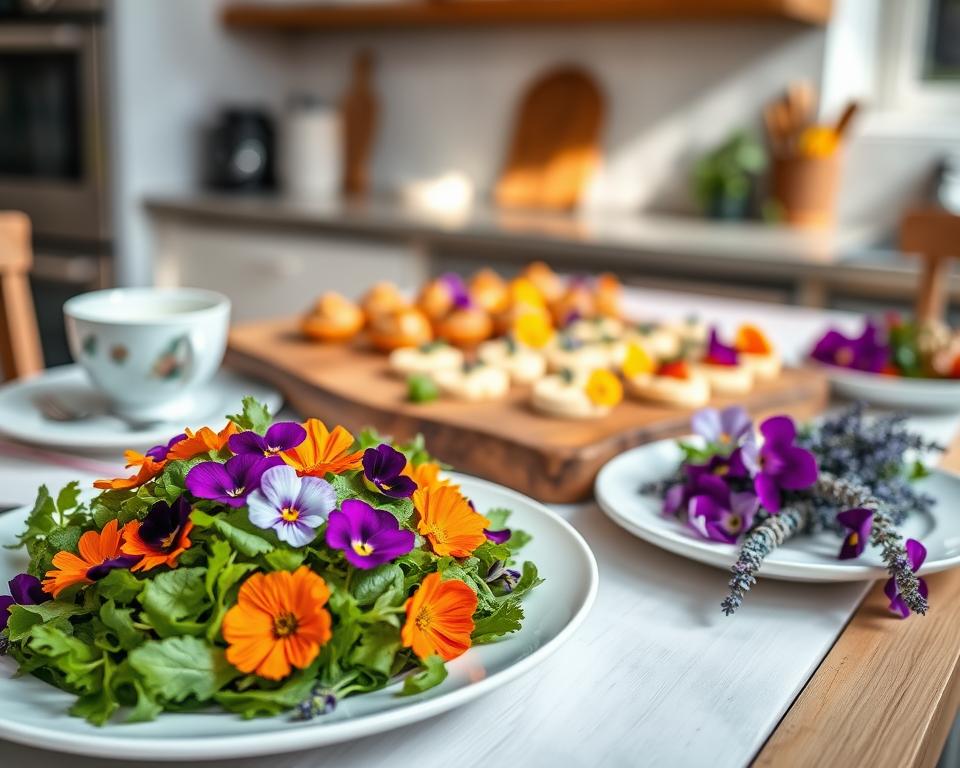
Creative Ways to Incorporate Flowers in Meals
Edible flowers can be used in many ways to add flavor and beauty to your dishes. You can garnish with them, add to salads, or infuse into oils and vinegars. Flowers like violas, pansies, and nasturtiums can give your dishes a peppery taste.
As chef Alice Waters once said,
“The beauty of edible flowers is not just in their taste, but in their ability to evoke emotions and create memorable dining experiences.”
This shows how important presentation and creativity are when using edible flowers.
Pairing Edible Flowers with Recipes
Choosing the right edible flowers can make your dishes stand out. For example, rose petals go well with Middle Eastern dishes, and lavender is great in desserts. It’s key to pick flowers that match the flavors of your recipes.
- Roses with lamb or rice dishes
- Lavender with shortbread or ice cream
- Nasturtiums with salads or as a garnish
Garnishing Tips to Impress Guests
Using edible flowers as garnishes can make your dishes look professional. Pick fresh, attractive flowers and use them sparingly. Think about the color and texture of the flowers when you pair them with your recipes.
For instance, a simple salad can get a boost from violas or pansies. They add color and sweetness. As you try different edible flowers, you’ll see they not only improve taste but also presentation.
Safety Guidelines for Consuming Edible Flowers
When you enjoy edible flowers, safety comes first. They can make any meal special, but knowing the risks is key.
Edible vs. Toxic Flowers: Know the Difference
Not all flowers are safe to eat. Some can be harmful. It’s important to know which edible varieties to pick. For example, violas, pansies, and nasturtiums are good choices. But stay away from lilies and oleander, as they are toxic.
As Mark Twain said, choosing the right word is critical. The same goes for edible flowers. Knowing the difference between safe and toxic flowers is essential for safety.
“The key to enjoying edible flowers lies in knowing exactly what you’re consuming.”
Allergies and Sensitivities to Consider
Edible flowers can cause allergies or sensitivities in some people. Always check for any allergies before eating them. If you’re trying edible flowers for the first time, start with a small amount to see how you react.
- Be aware of cross-reactivity with other allergies.
- Start with small amounts to test tolerance.
- Consult a healthcare professional if unsure.
Cleaning and Preparing Flowers for Consumption
Cleaning and preparing edible flowers is important for safety. Rinse them gently with clean water to remove dirt or pesticides. Also, take out the stamens and pistils, as they can be bitter or cause allergic reactions.
To enjoy the best edible flowers for indoor gardening, follow these steps. Being careful with the flowers you choose and how you prepare them ensures a safe and enjoyable experience.
Troubleshooting Common Growing Issues
When you grow indoor edible flowers, you might face some problems. Fixing these issues early can greatly help your plants stay healthy and productive.
Recognizing Growth Problems Early
It’s important to spot problems early. Watch for signs like yellow leaves, droopy stems, or pests. These signs mean your plants might not be getting what they need.
Common signs of trouble include:
- Wilting or discolored leaves
- Slow growth or failure to bloom
- Pest infestations
Solutions for Common Indoor Flower Challenges
When you find a problem, fix it quickly. For example, if your flowers lack light, move them to a brighter spot or use grow lights.
| Issue | Possible Cause | Solution |
|---|---|---|
| Yellowing leaves | Overwatering or nutrient deficiency | Adjust watering schedule or fertilize |
| Pest infestation | Presence of aphids, whiteflies, or spider mites | Use organic pest control methods |
| Slow growth | Insufficient light or poor soil quality | Improve lighting or repot with fresh soil |
Adjusting Conditions for Better Growth
Fixing problems might mean changing how you care for your plants. This could be about adjusting the temperature, humidity, or air flow.
For optimal growth, ensure:
- Adequate air circulation to prevent fungal diseases
- Proper temperature ranges for your specific flower varieties
- Balanced humidity levels to support healthy growth
By being proactive and attentive, you can solve common problems. This way, your indoor garden will thrive.
Encouraging a Successful Indoor Edible Flower Garden
Growing edible flowers indoors can be very rewarding. It adds beauty and flavor to your home. It’s important to have realistic expectations for a successful harvest.
Realistic Expectations for Beginners
It takes patience and practice to grow edible flowers indoors. Not all varieties will do well indoors. So, choose the right ones for your space.
Establishing a Care Routine
To keep your edible flowers healthy, you need a consistent care routine. This includes regular watering, fertilizing, and checking temperature and light. These steps are key to growing edible flowers indoors.
Community Support and Inspiration
Joining online communities or local gardening groups can be very helpful. They offer support and inspiration for your indoor edible flower garden. Sharing experiences and tips can help you overcome challenges and enjoy the benefits of growing edible flowers.