


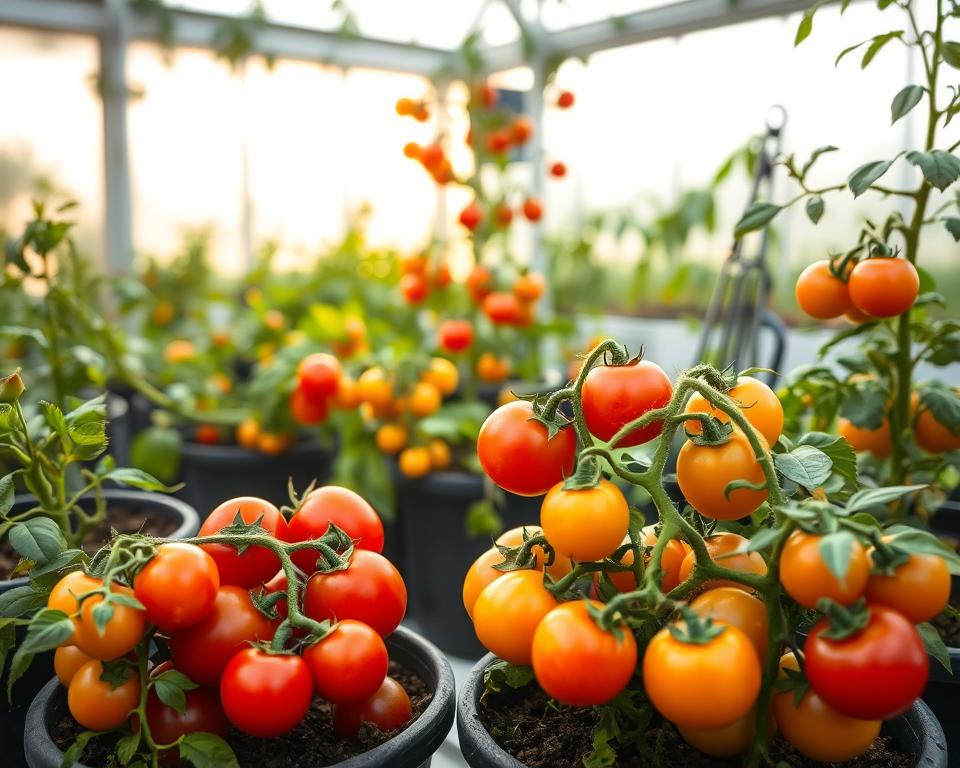
Growing cherry tomatoes indoors can be very rewarding. It lets you enjoy fresh, juicy tomatoes right at home. With the right variety and conditions, you can have tomatoes all year.
As someone who loves gardening, I’m excited to share the best indoor cherry tomato varieties for you to grow at home.
There are many cherry tomato varieties for indoor growing. Some are compact and others spread out. In this article, I’ll show you the best varieties and how to care for them.
Key Takeaways
- Top indoor cherry tomato varieties for home growers
- Essential growing conditions for a bountiful harvest
- Care tips to ensure a successful indoor crop
- Tips for managing pests and diseases indoors
- Best practices for fertilizing and pollinating indoor cherry tomatoes
Why Grow Cherry Tomatoes Indoors?
Growing cherry tomatoes indoors lets you enjoy fresh tomatoes all year. “Indoor gardening allows for year-round production, free from the constraints of seasonal changes,” say gardening experts. It brings fresh produce and greenery to your home.
Benefits of Indoor Gardening
Indoor gardening has many perks. It reduces soil erosion and protects plants from pests and diseases. You can control the environment for better growing conditions. This leads to healthier plants and more tomatoes.
It also lets you grow plants in small spaces. This is great for those with little room outside.
Choosing the Right Space
Choosing the right spot is key for indoor tomato gardening. Find a place with lots of natural light or use grow lights if needed. Good air flow is also important to avoid fungal diseases.
A well-ventilated area keeps your plants healthy.
Essential Tools for Indoor Gardening
Having the right tools is important for indoor gardening. You’ll need a good quality potting mix, containers with drainage holes, and fertilizers for indoor plants. Pruning shears and supports are also useful as your plants grow.
- A well-draining potting mix to prevent waterlogged soil
- Containers that are at least 5-gallon capacity to provide enough room for root growth
- Fertilizers that are high in phosphorus to promote fruiting
Top Indoor Cherry Tomato Varieties
Choosing the right cherry tomato variety for indoor growing is key. The right one can greatly impact your harvest’s yield, taste, and care needs. Let me introduce you to three top varieties that are sure to impress.
Tiny Tim: The Space-Saver
Tiny Tim is a great choice for small spaces. It’s known for its high yield and compact growth. This variety produces sweet and tangy fruit, perfect for snacking or salads.
Sweet 100: A Superstar
Sweet 100 is a favorite for indoor growing. It’s famous for its exceptional sweetness and produces hundreds of tomatoes. It’s a bit more vigorous, so pruning is needed to keep it in check.
Golden Nugget: A Touch of Sunshine
Golden Nugget cherry tomatoes add a burst of color to your indoor garden. They produce bright yellow, sweet fruits. This variety is compact and easy to care for, making it perfect for indoor gardeners.

| Variety | Compactness | Flavor Profile | Yield |
|---|---|---|---|
| Tiny Tim | High | Sweet & Tangy | High |
| Sweet 100 | Medium | Exceptionally Sweet | Very High |
| Golden Nugget | High | Sweet | High |
Tiny Tim, Sweet 100, and Golden Nugget are top picks for indoor cherry tomatoes. They offer compact growth, high yields, and delicious flavors. These varieties are sure to meet any indoor gardener’s needs.
Growing Conditions for Indoor Cherry Tomatoes
Indoor cherry tomato plants need the right conditions to grow well. I’ll help you understand the best light, temperature, and air conditions. These are key for healthy growth and a good harvest.
Optimal Light Conditions
Light is very important for indoor cherry tomatoes. They need lots of light to grow well. Place them in a sunny window or under grow lights.
A minimum of 6 hours of direct sunlight per day is recommended. More light is even better. If using grow lights, keep them on for 12-14 hours a day.
Ideal Temperature Ranges
Temperature is also key for indoor cherry tomatoes. The best daytime temperature is 65°F to 70°F (18°C to 21°C). Nighttime should be around 55°F to 60°F (13°C to 15°C).
Avoid placing your plants near heating or cooling vents, fireplaces, or drafty windows. Sudden temperature changes can stress the plants.
Humidity and Air Circulation
Right humidity and air circulation are important for healthy plants. Indoor cherry tomatoes prefer a humidity of 40-50%. Use a dehumidifier if your home is too humid.
Also, make sure there’s good air movement around your plants. Keep them at least 6-8 inches away from walls or other plants. This helps prevent fungal diseases that like stagnant air.
| Condition | Ideal Range |
|---|---|
| Light | 6+ hours direct sunlight or 12-14 hours under grow lights |
| Daytime Temperature | 65°F – 70°F (18°C – 21°C) |
| Nighttime Temperature | 55°F – 60°F (13°C – 15°C) |
| Humidity | 40-50% |
Soil and Fertilization Needs
Understanding the soil and fertilization needs is key for growing indoor cherry tomatoes. The right conditions are essential for a healthy and productive plant.
Best Potting Mix for Indoor Tomatoes
Choosing the right potting mix is vital for indoor cherry tomatoes. It should hold moisture but also drain excess water to avoid root rot. Opt for a mix made for tomatoes, with peat moss or coconut coir for moisture and perlite or vermiculite for drainage.
Key characteristics of a good potting mix include:
- Good moisture retention
- Adequate drainage
- pH between 6.0 and 6.8
- Presence of necessary nutrients
Nutrient Requirements
Indoor cherry tomatoes need a balanced diet of nutrients to thrive. The main nutrients are nitrogen (N), phosphorus (P), and potassium (K). Nitrogen helps with leaf growth, phosphorus aids in root development and fruiting, and potassium boosts overall health.
| Nutrient | Role | Deficiency Symptoms |
|---|---|---|
| Nitrogen (N) | Promotes leaf growth | Yellowing leaves |
| Phosphorus (P) | Root development and fruiting | Purple leaves |
| Potassium (K) | Overall plant health | Weak stems |
Organic vs. Synthetic Fertilizers
The debate between organic and synthetic fertilizers is ongoing. Organic fertilizers release nutrients slowly, supporting healthy soil microbes. Synthetic fertilizers provide quick nutrients but can harm soil microbes if used too much.
Consider the following when choosing between organic and synthetic fertilizers:
- Organic fertilizers: Slow release, promotes soil health
- Synthetic fertilizers: Quick release, risk of over-fertilization
Planting Techniques for Indoor Variety
To grow cherry tomatoes indoors, start with the right planting techniques. With the right steps, you can enjoy a year-round harvest of delicious tomatoes.
Starting Seeds Indoors
Starting seeds indoors is the first step. You need the right conditions for germination. Use a seed starting mix designed for seedlings.
Fill a small container with the mix. Plant seeds a quarter inch deep. Cover them lightly and water well. Keep the soil warm and provide enough light once they germinate.
“The key to successful seed starting is providing the right environment for germination. With the right temperature and light, your seeds will sprout in no time.” – Expert Gardener
Transplanting Seedlings
When seedlings have 2-3 sets of leaves, it’s time to transplant. This step helps the roots grow and keeps the plant healthy.
Remove the seedling carefully from its container. Place it in a larger pot with a well-draining mix. Water well after transplanting.
Container Sizing and Selection
Choosing the right container is key for your plants’ health. A 5-gallon container is recommended for each plant to support root growth.
| Container Size | Plant Capacity | Benefits |
|---|---|---|
| Small (1-2 gallons) | 1-2 plants | Ideal for small spaces, but may require more frequent watering. |
| Medium (3-5 gallons) | 2-3 plants | Provides a good balance between space and soil volume. |
| Large (5+ gallons) | 3+ plants | Offers ample room for root growth, reducing the need for frequent watering. |
By following these techniques, you’ll grow healthy cherry tomato plants indoors. Success comes from the right conditions and care from the start.
Pest Management in Indoor Gardening
Indoor gardening comes with its own set of challenges, like managing pests. These pests can harm your cherry tomato plants. It’s important to stay ahead of pests to enjoy a good harvest of indoor cherry tomato varieties.
Common Pests to Watch For
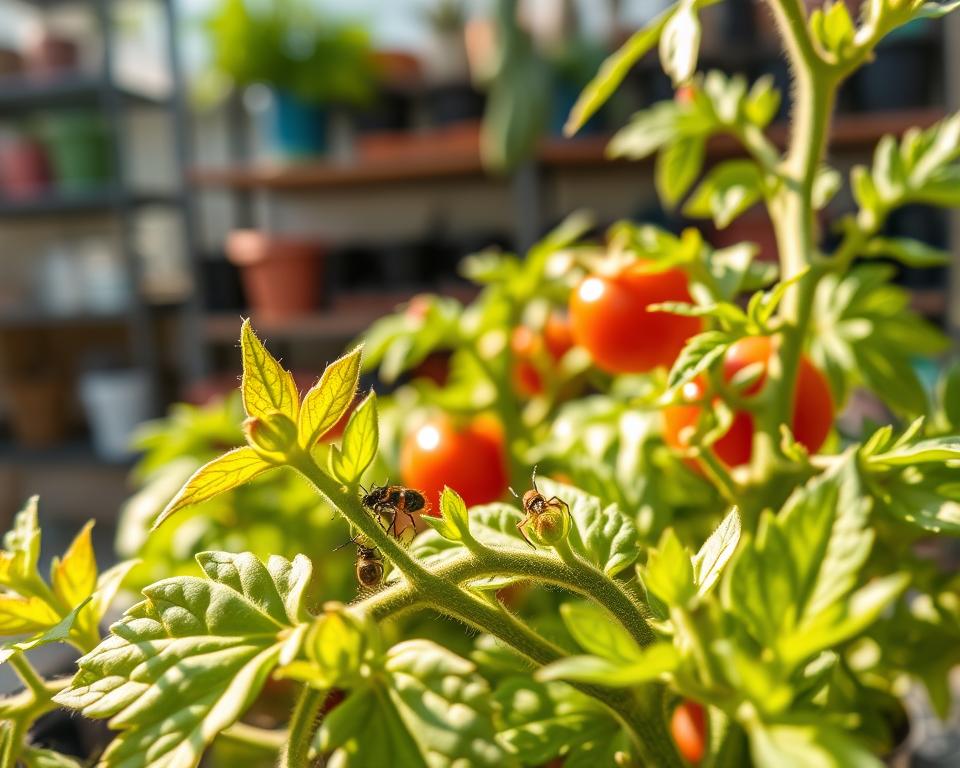
Indoor cherry tomato plants can face issues from pests like aphids, whiteflies, spider mites, and mealybugs. Aphids are small insects that suck plant sap. Whiteflies are tiny, winged insects that spread disease. Spider mites turn leaves yellow or bronze, and mealybugs look like cottony masses on stems and leaves.
Natural Pest Control Methods
To fight pests without harsh chemicals, try natural methods. Introducing beneficial insects like ladybugs or lacewings can help control aphids and whiteflies. Insecticidal soap or neem oil works against many pests. For small infestations, wiping plants with a damp cloth can remove pests.
How to Prevent Infestations
Preventing pests is the best way to manage them in indoor gardens. Good air circulation, avoiding overwatering, and keeping the area clean help prevent pests. Regularly check your plants for pests and isolate new ones before adding them to your garden.
Disease Prevention for Indoor Tomatoes
Disease is a big threat to indoor tomato plants. It can spread fast if not controlled. Growing best cherry tomatoes for indoor growing means preventing disease is essential for a healthy crop.
Identifying Common Diseases
Indoor tomato plants face many diseases. These include fungal infections, bacterial spot, and root rot. Fungal diseases show up as powdery mildew or leaf spot. Bacterial infections cause lesions on leaves and stems.
Best Practices for Disease Management
To fight diseases, keep growing conditions good and watch your plants closely. Here are some tips:
- Make sure plants have good air flow to stop fungal diseases.
- Water plants carefully to avoid splashing water on leaves, which can spread disease.
- Quickly remove any infected leaves or stems to stop disease spread.
Importance of Sanitation
Keeping things clean is key to stopping disease spread in your small cherry tomato plants. Regularly cleaning tools and containers helps a lot.
| Disease | Symptoms | Prevention |
|---|---|---|
| Fungal Infections | Powdery mildew, leaf spot | Improve air circulation, remove infected leaves |
| Bacterial Spot | Lesions on leaves and stems | Avoid overhead watering, use copper-based fungicides |
| Root Rot | Wilting, yellowing leaves | Ensure good drainage, avoid overwatering |
Watering Your Indoor Cherry Tomatoes
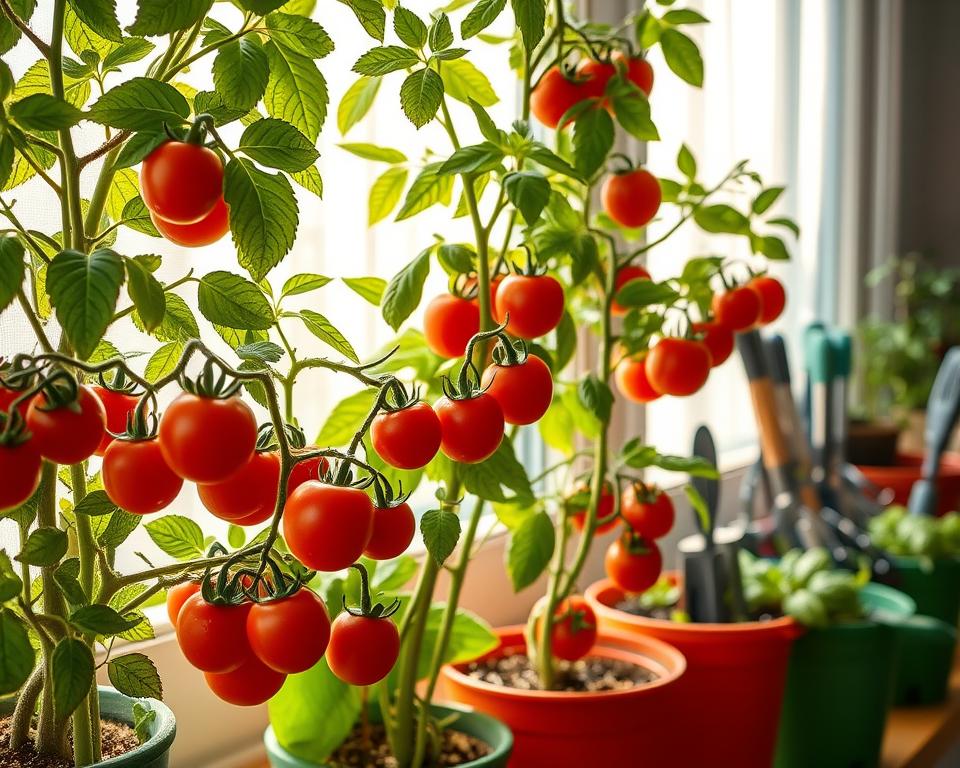
Watering your indoor cherry tomatoes right is key to their health. It’s not just about giving them water. It’s about giving the right amount at the right time.
Understanding Watering Needs
Indoor cherry tomato plants need specific watering. This depends on the pot size, temperature, and humidity. They like soil that’s moist but not too wet.
To know when to water, stick your finger into the soil up to the first knuckle. If it’s dry, it’s time to water. If it’s moist, wait a day or two before checking again.
Signs of Overwatering or Underwatering
Too much or too little water can harm your plants. Too much water can cause root rot. Too little can stress the plant and reduce fruit.
- Signs of overwatering include yellowing leaves, soft stems, and a decline in health.
- Signs of underwatering include wilted leaves, slow growth, and less fruit.
| Watering Issue | Symptoms | Solution |
|---|---|---|
| Overwatering | Yellowing leaves, soft stems | Reduce watering, improve drainage |
| Underwatering | Wilting leaves, slow growth | Water more, keep soil moist |
Tips for Efficient Watering
Here are some tips for watering your indoor cherry tomatoes well:
- Water in the morning so the plants can absorb it all day.
- Use water at room temperature to avoid shocking the roots.
- Don’t get water on the leaves to prevent diseases. Water at the soil level instead.
- Think about using a self-watering pot or a watering globe for steady moisture.
“The key to successful watering is consistency and observation. By paying attention to your plants’ needs and adjusting your watering schedule, you can ensure a healthy and productive harvest.”
By following these tips and watching your plants, you can enjoy a great harvest of cherry tomatoes from your indoor garden.
Pruning and Supporting Cherry Tomato Plants
To get the most from your indoor cherry tomatoes, pruning and support are key. Pruning keeps plants healthy, encourages fruit, and fights disease. Support helps them grow straight and bear more fruit.
When to Prune for Best Results
Pruning at the right time is critical for your plants. Prune when they’re 6-8 inches tall, removing lower leaves to avoid disease. Regular pruning keeps the plant in shape and stimulates new growth.
Key pruning times include:
- When the plant is 6-8 inches tall
- After the first fruit set
- Every week to maintain shape and promote fruiting
Types of Supports to Use
Choosing the right support is vital for your cherry tomatoes. You can use trellises, tomato cages, or stakes. Each has its own benefits.
- Trellises: Ideal for training indeterminate varieties
- Tomato cages: Easy to use and effective for supporting multiple stems
- Stakes: Simple and cost-effective, suitable for smaller plants
Tips for Training the Plants
Training your plants to use supports is essential. Gently twine stems around supports as they grow. Remove weak growth to focus energy on fruit.
Some additional tips include:
- Start training early, as soon as the plants begin to vine
- Be gentle to avoid damaging the stems
- Monitor your plants regularly to adjust the supports as needed
Harvesting and Storing Your Tomatoes
There’s nothing quite like biting into a freshly harvested cherry tomato from your indoor garden. The sweetness and burst of flavor are a reward for your careful nurturing. Knowing the best practices for harvesting and storing your tomatoes is essential.
When to Harvest Cherry Tomatoes
Cherry tomatoes are ready when they are fully colored and slightly soft. They should be a vibrant red, though some may be yellow, orange, or purple. It’s important to check your plants regularly, as cherry tomatoes can quickly go from ripe to overripe.
- Check for ripeness daily, as cherry tomatoes ripen fast.
- Gently tug on the tomato; it should come off the plant easily.
- Harvest in the morning, when the plants are at their highest water content.
Best Practices for Storing Tomatoes
To keep your cherry tomatoes fresh, store them properly. Avoid washing them before storage, as excess moisture can lead to spoilage. Store them in a cool, dry place, away from direct sunlight.
- Store cherry tomatoes at room temperature, away from direct sunlight.
- Use breathable containers or bags to maintain air circulation.
- Refrigerate only if necessary; it can affect the flavor and texture.
Using Your Harvest in Recipes
Cherry tomatoes are versatile and great in many dishes. They’re perfect for salads, pasta, sauces, and roasted vegetable medleys. Here are a few ideas to get you started:
- Toss cherry tomatoes with mozzarella, basil, and a balsamic vinaigrette for a simple caprese salad.
- Add halved cherry tomatoes to pasta dishes for a burst of flavor.
- Roast cherry tomatoes with olive oil, garlic, and herbs for a delicious side dish.
By following these guidelines, you’ll enjoy your cherry tomatoes for weeks. Happy cooking!
Troubleshooting Common Issues
Growing cherry tomatoes indoors can be rewarding but comes with challenges. Issues like yellowing leaves and blossoms that don’t set can happen. Knowing how to fix these problems is essential for a good harvest.
Diagnosing Yellowing Leaves
Yellow leaves on your indoor cherry tomato plants might mean you’re watering too much, not enough nutrients, or not enough light. Check your watering schedule and adjust it if needed. Make sure your plants get enough light, and use grow lights if they don’t.
Also, fertilizing with a balanced fertilizer can help with nutrient deficiencies.
Addressing Blossom Drop
Blossoms that don’t set can be caused by poor pollination, high temperatures, or stress. Try gently vibrating the plants or using a soft-bristled brush to move pollen. Keeping your garden at 65-70°F helps blossoms set well.
Promoting Healthy Plant Growth
To keep your plants healthy, ensure good air circulation and keep your garden pest-free. Regularly check your plants and prune them when needed. This helps prevent disease and encourages a good harvest of your favorite cherry tomatoes.