


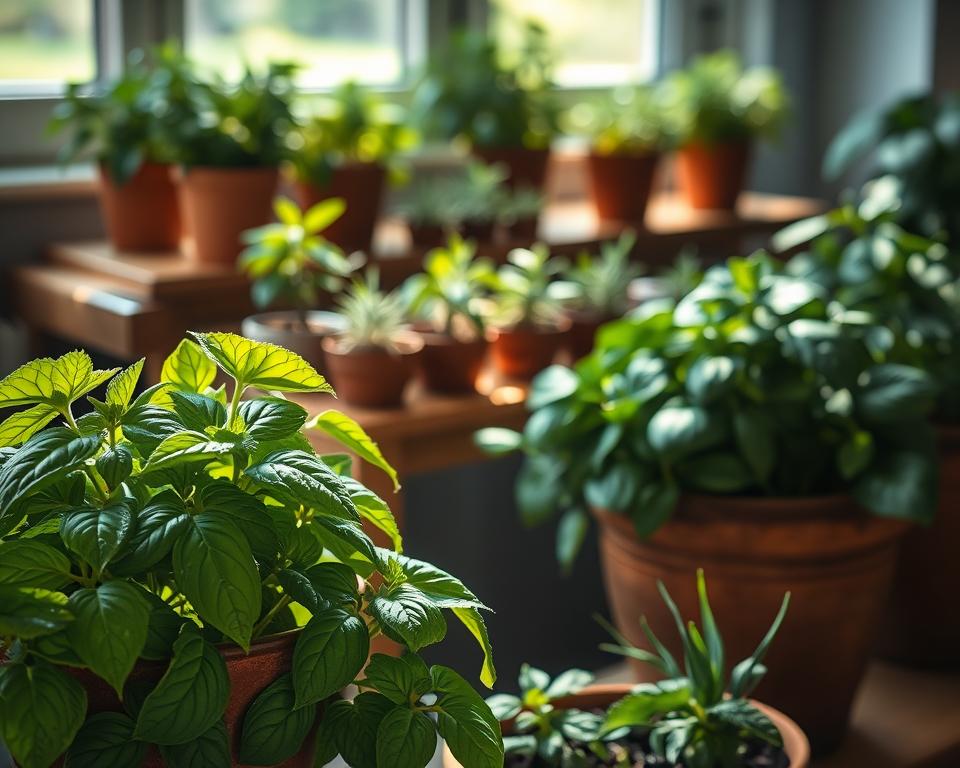
Growing your own shade-tolerant culinary herbs can change your kitchen game. Imagine having fresh flavors right at your fingertips, even in dark corners. Many think herbs need direct sunlight, but many can grow well in low light.
I’ve found that growing herbs for low light boosts my cooking and adds greenery to my home. With the right herbs and care, you can have a constant supply of tasty herbs all year.
Key Takeaways
- Discover the benefits of growing shade-tolerant herbs indoors.
- Learn which herb varieties thrive in low-light conditions.
- Understand how to care for your shade-tolerant culinary herbs.
- Explore the culinary possibilities with fresh, homegrown herbs.
- Enhance your indoor spaces with the beauty of greenery.
What Are Shade-Tolerant Culinary Herbs?
Culinary herbs that grow well in shade are perfect for gardeners with shaded spots. These herbs are tough and add great flavors and smells to food.
Definition and Characteristics
Shade-tolerant culinary herbs can grow in less sunlight. They have special traits like bigger leaves or different ways to make food from sunlight. Some common traits include:
- Adaptability: They adjust well to low light, ideal for spots without direct sun.
- Diverse flavors: Many offer unique and strong tastes, making dishes better.
- Low maintenance: These herbs need less care for sunlight.
Benefits of Growing in Shade
There are many good things about growing herbs in shade. For example, shade:
- Reduces water loss: Plants in shade lose less water because of cooler temperatures and less evaporation.
- Protects from intense sunlight: Shade keeps herbs safe from sunburn, which can harm leaves and plant health.
- Extends the growing season: In hot places, shade helps herbs last longer, extending their growing time.
Knowing about shade-tolerant culinary herbs and their benefits helps gardeners plan better. Whether you’re experienced or new, adding these herbs makes your garden more interesting and hardy.
Best Shade-Tolerant Herbs to Grow
Shade doesn’t have to limit your herb garden. Many herbs do well in low light. If you want to grow shade-loving herbs for cooking, you have many choices. For more tips on growing herbs in shade, check out this resource.
Mint
Mint is a hardy, shade-tolerant herb that loves moist places. It’s great for cooking and can be used in many dishes. To stop mint from spreading, grow it in pots or special areas.
Chives
Chives also do well in shade, but they like some sun. They need little care and can be picked often for a fresh onion taste. Chives also attract good bugs to your garden.
Parsley
Parsley grows slowly and likes partial shade. It’s full of vitamins and can be used as a garnish or in salads. Parsley likes well-drained soil and steady moisture.
Cilantro
Cilantro, or coriander, grows fast and can handle shade, more so in warm places. It’s used a lot in Mexican and Asian food. Cilantro likes cooler weather and can bolt if it gets too hot, so shade helps it grow.
Growing these herbs that thrive in shade can make your cooking better. Knowing what each herb needs helps you create a shade garden. This garden will give you fresh flavors all the time.
How to Choose the Right Location for Your Herbs
Finding the perfect spot for your herbs can greatly improve their health and taste. It’s important to know the specific needs of your garden.
Assessing Sunlight in Your Garden
Shade-tolerant herbs need some light to grow well. Check the sunlight in your garden by observing it at different times. You can also use a sunlight meter for accuracy.
Most herbs prefer dappled shade or indirect sunlight. This kind of light is similar to what they get under trees or near north walls. Too little light can make them weak and leggy, while too much can burn them.
| Herb Type | Ideal Sunlight Condition | Notes |
|---|---|---|
| Mint | Partial Shade | Can tolerate some direct sunlight but prefers shade |
| Chives | Dappled Shade | Requires some sunlight for healthy growth |
| Parsley | Indirect Sunlight | Prefers shade, more so in warmer climates |
Importance of Moisture
Keeping your herbs moist is key to their health. Keep the moisture consistent to avoid stress. This stress can lead to diseases and pests.
To keep the soil moist, mulch around your plants. It helps keep moisture in and reduces evaporation. Also, make sure your garden beds drain well to prevent waterlogged soil.

By carefully checking sunlight and keeping the soil moist, you’ll create a great spot for your herbs. This will lead to healthier plants and tastier herbs for cooking.
Soil Preparation for Shade Gardens
To grow shade-tolerant culinary herbs, you need to prepare the soil right. Good soil gives herbs the nutrients, air, and water they need to grow well in shade.
Soil Type Considerations
The soil type in your shade garden is key for herb growth. Most herbs like well-draining, fertile soil that’s full of organic matter. You can find out your soil type by feeling its texture and what it’s made of.
If your soil is heavy clay, it might hold too much water, causing root rot. Sandy soil might drain too fast, leaving herbs dry.
Loamy soil, a mix of clay, silt, and sand, is best for many herbs. It holds moisture but also drains well.
Amending Soil for Herb Growth
Improving your soil can make it better for your herbs. Adding organic matter like compost or well-rotted manure helps. It makes the soil hold more water, improves its structure, and adds nutrients.
For shade herbs, adding balanced fertilizers is good. They help with leaf growth without over-fertilizing. Always follow the instructions to avoid harming your herbs.
- Add compost to improve soil fertility and structure.
- Use well-rotted manure to enhance nutrient content.
- Apply balanced fertilizers according to the manufacturer’s instructions.
By preparing your soil well and knowing what your shade-tolerant herbs need, you can make a great shade garden. It will give you fresh flavors for cooking.
Watering Techniques for Shade-Tolerant Herbs
Knowing how to water is key for healthy shade-tolerant herbs. Shade gardens need careful watering to avoid too much or too little water.
Understanding Water Requirements
Shade-tolerant herbs need less water than sun-loving ones. This is because shade slows down water loss from the soil. But, they shouldn’t be ignored. Consistent moisture levels are essential for their growth.
To figure out when to water, check the soil moisture. Stick your finger into the soil up to the knuckle. If it’s dry, it’s time to water. If it’s already moist, wait a day or two before checking again.
Effective Watering Methods
There are good ways to water shade-tolerant herbs. Water them in the morning so they can soak it up all day. Don’t water in the evening to avoid fungal diseases that love wet conditions.
A drip irrigation system or soaker hose works well for shade gardens. They send water straight to the roots, cutting down on evaporation and runoff.
| Herb | Watering Frequency | Soil Preference |
|---|---|---|
| Mint | Frequent | Moist, rich soil |
| Chives | Moderate | Well-draining soil |
| Parsley | Moderate | Moist, fertile soil |
Fertilizing Shade-Tolerant Culinary Herbs
To make your shade-loving herbs grow well and taste great, knowing how to fertilize them is important. Fertilizing helps give them the nutrients they need to thrive.
Choosing the Right Fertilizer
Picking the right fertilizer for your herbs is key. A balanced fertilizer with equal parts nitrogen, phosphorus, and potassium (NPK) is best. Organic fertilizers, like compost or fish emulsion, are great because they release nutrients slowly and make the soil better.
Think about what your herbs need. For example, mint and parsley need more nitrogen for leaf growth. But chives do better with less nitrogen and more phosphorus for their roots.
| Herb | Nitrogen (N) | Phosphorus (P) | Potassium (K) |
|---|---|---|---|
| Mint | High | Medium | Medium |
| Parsley | High | Medium | Medium |
| Chives | Medium | High | Medium |
Frequency and Application Tips
How often to fertilize depends on the fertilizer and your herbs’ growth stage. Generally, fertilizing every 4-6 weeks during the growing season is enough. But always follow the package instructions for the right amount.
“The key to successful fertilization is not just about providing nutrients but also about maintaining soil health. Organic fertilizers, in particular, contribute to soil fertility and structure.”
Make sure the soil is moist when fertilizing to avoid burning the roots. Mixing the fertilizer into the soil is better than just sprinkling it on top. For herbs in containers, use a diluted fertilizer solution to avoid too much.
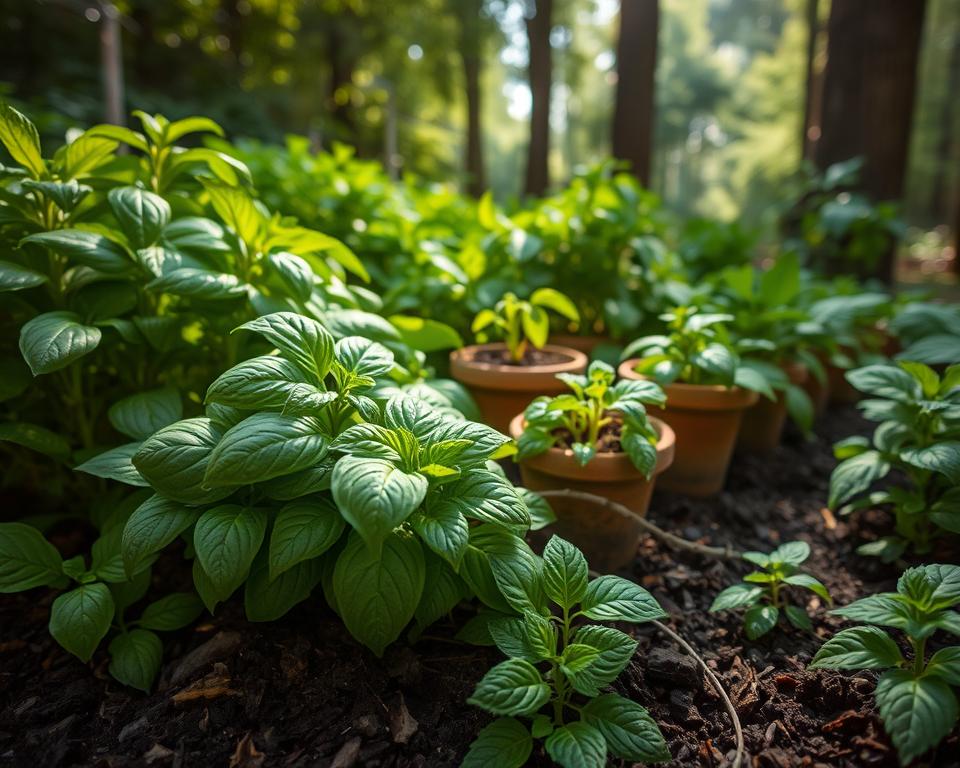
Knowing how to pick and use the right fertilizer can really help your shade-tolerant herbs grow well and taste better. With regular fertilizing and proper care, you’ll get a big harvest of tasty and fragrant herbs.
Pest and Disease Management in Shade Gardens
To keep your shade garden healthy, it’s key to manage pests and diseases well. Even though shade-tolerant herbs are tough, they can get sick or infested if not cared for right.
Common Pests to Look Out For
Many pests can harm your shade-tolerant herbs. Some common ones are:
- Aphids, which spread disease and eat plant sap.
- Slugs and snails, that chew on leaves and stems.
- Spirochetes, tiny bugs that damage plants by eating sap.
Organic Control Methods
Using organic ways to fight pests and diseases is good for the planet and keeps your herbs safe to eat. Here are some good methods:
- Neem oil works well against aphids and other pests.
- Barriers around plants keep slugs and snails away.
- Keeping your garden clean stops diseases from spreading.
| Pest/Disease | Organic Control Method | Benefits |
|---|---|---|
| Aphids | Neem Oil Spray | Works on many pests, safe for food plants. |
| Slugs/Snails | Copper Barriers | Keeps slugs and snails off without harming good bugs. |
| Fungal Diseases | Organic Fungicides | Stops disease, safe for herbs you eat. |
Using these organic methods helps keep your shade-tolerant herbs healthy and your garden growing well.
Companion Planting with Shade-Tolerant Herbs
Growing shade-tolerant herbs with other plants makes your garden better. It makes your herbs grow stronger and adds variety to your garden.
Companion planting helps your herbs grow well. It’s about picking the right plants to live together. This way, your garden becomes a balanced and healthy place.
Benefits of Companion Planting
Companion planting has many benefits. Some plants give shade, improve soil, or keep pests away. For example, mint keeps pests off other herbs. Chives make nearby plants taste and smell better.
- Improved growth and health
- Enhanced flavor and aroma
- Pest and disease control
- Increased biodiversity
Gardening expert says, “Companion planting is an old practice. It helps gardens grow well.”
“The right plants together can really help your garden.”
Suggested Companion Plants
Choosing the right plants for your herbs is key. Here are some good ones:
| Companion Plant | Benefits |
|---|---|
| Mint | Repels pests, improves flavor |
| Chives | Improves flavor, repels aphids |
| Parsley | Repels pests, adds nutrients |
I’ve seen how well these plants work with herbs. For instance, marigolds keep nematodes and other pests away.
Harvesting Techniques for Shade-Grown Herbs
To get the most from your shade-tolerant culinary herbs, knowing the right harvesting techniques is key. Harvesting at the right time and using the proper methods boosts flavor and aroma. This makes your dishes more delicious.
When to Harvest
Harvesting your shade-grown herbs at the right time is important. Most herbs are best picked in the morning. This is after the dew has dried but before it gets hot.
This timing helps keep their essential oils and flavor. For example, mint and chives are ready to use when they have enough leaves.
- Mint: Can be harvested continuously throughout the growing season. Pinch or cut off the top sets of leaves to encourage branching.
- Chives: Can be harvested by snipping off the leaves with scissors. Regular harvesting promotes new growth.
- Parsley: Harvest individual leaves or stems as needed. For a larger harvest, cut off the outer stems at the base.
- Cilantro: Harvest leaves and stems as needed. Cilantro can bolt quickly, so regular harvesting is necessary.
For more detailed guidance on growing and harvesting herbs, you can visit the Royal Horticultural Society’s guide on growing.
Proper Harvesting Methods
Using the right harvesting methods can significantly improve your herbs’ quality. Here are some tips:
- Pinch or Cut: For herbs like mint and basil, pinching or cutting off the top leaves encourages the plant to bush out.
- Use Scissors: For herbs like chives and parsley, using scissors to snip off the leaves is a gentle way to harvest without damaging the plant.
- Harvest Regularly: Regular harvesting not only provides you with a continuous supply of fresh herbs but also promotes healthy plant growth.
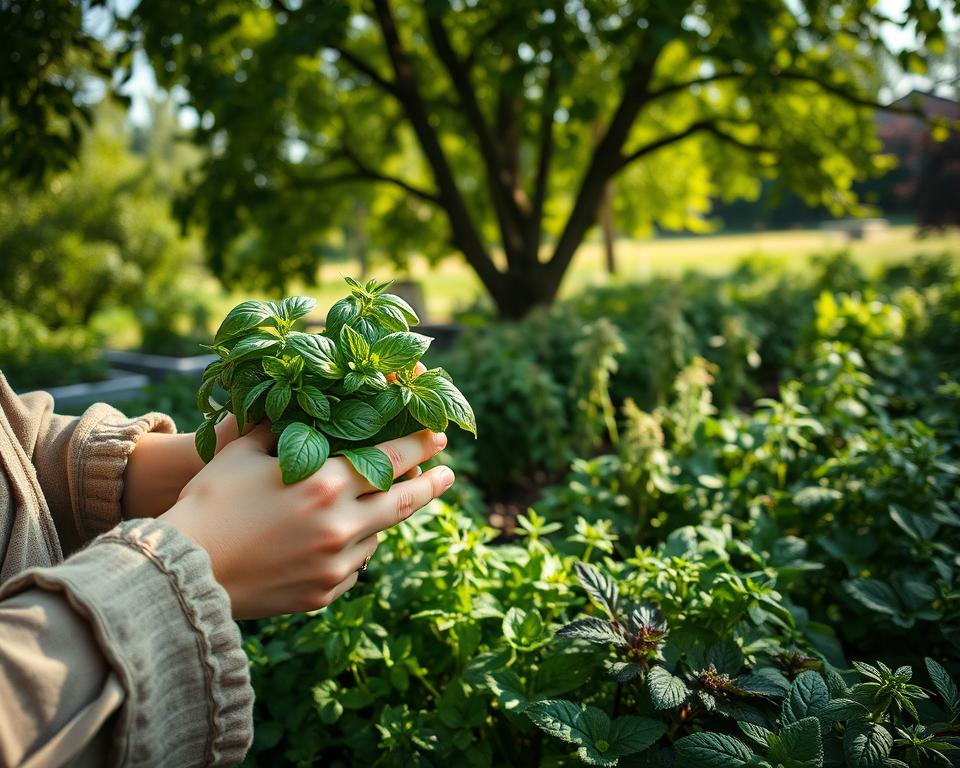
By following these harvesting techniques, you can enjoy a bountiful and flavorful harvest from your shade-grown culinary herbs. Whether you’re using them in cooking or as a fresh garnish, the right harvesting methods will enhance their quality and your culinary creations.
Culinary Uses of Popular Shade Herbs
Shade-loving herbs like mint and chives can spice up your cooking. They’re easy to grow and add a lot to your dishes. Let’s see how to use them in different recipes.
Flavoring Dishes with Mint
Mint is loved for its cool taste and smell. It’s great in many dishes, from drinks to sweets. Here are some ideas for using mint:
- Add fresh mint leaves to salads for a burst of flavor.
- Use mint to make refreshing drinks like mint tea or mojitos.
- Incorporate mint into desserts like ice cream or sorbet.
Using Chives in Recipes
Chives are also very versatile. They have a mild onion taste and can be used in many ways. Here are some ideas for using chives:
- Sprinkle chopped chives over soups or salads for added flavor.
- Mix chives into dips or spreads for a delicious snack.
- Use chives as a garnish for baked potatoes or other dishes.
| Herb | Common Uses | Flavor Profile |
|---|---|---|
| Mint | Drinks, desserts, salads | Refreshing, cooling |
| Chives | Soups, salads, dips | Mild onion flavor |
Adding mint and chives to your cooking can make your dishes more exciting. Try out different ways to use them and enjoy the taste of your homegrown herbs.
Tips for Growing Herbs Indoors in Low Light
You can grow herbs indoors, even in low light, with the right approach. This lets you enjoy fresh flavors in your cooking. It’s perfect for those without a sunny garden or a south-facing window.
Choosing the Right Containers
Start by picking the right containers for your herbs. Herbs need good drainage to prevent root rot. So, choose containers with holes in the bottom.
Size matters too. A larger container can support more herb plants. But, make sure it’s not too big to keep the soil from getting too wet. A good size is 6-8 inches deep to give the roots room.
Indoor Light Solutions
Even though shade-tolerant herbs can handle low light, they need some light to grow. Here are a few ways to improve indoor lighting:
- Place herbs near a north- or east-facing window for indirect sunlight.
- Use mirrors or reflective surfaces to bounce light onto your herbs.
- Invest in grow lights, which can be useful in winter or rooms with little natural light.
Some of the best herbs for shaded culinary gardens that do well indoors are mint, chives, and parsley. These shade-tolerant herbs for culinary use can add fresh flavor to many dishes.
| Herb | Lighting Needs | Watering Needs |
|---|---|---|
| Mint | Low to Medium Light | Keep soil consistently moist |
| Chives | Medium Light | Water when top inch of soil feels dry |
| Parsley | Low to Medium Light | Water when top inch of soil feels dry |
By following these tips, you can have a thriving indoor herb garden, even in low light. Shade-tolerant herbs are great for cooking or as a decorative element in any indoor space.
Troubleshooting Common Shade Herb Issues
Growing shade-tolerant culinary herbs can be rewarding but comes with challenges. I’ve found a few common problems that can be fixed with the right steps.
Diagnosing Yellowing Leaves
Yellow leaves on herbs like mint or chives often mean too much water or poor soil. I check the soil moisture and adjust my watering. Good air flow around plants also helps prevent fungal diseases.
Addressing Stunted Growth
Stunted growth in low-light herbs like parsley or cilantro might be due to lack of nutrients or light. I use a balanced fertilizer during the growing season. If they’re not getting enough light, I move them to a brighter spot or use grow lights.
Knowing these common problems and how to fix them helps me keep my shade herb garden healthy all year.