


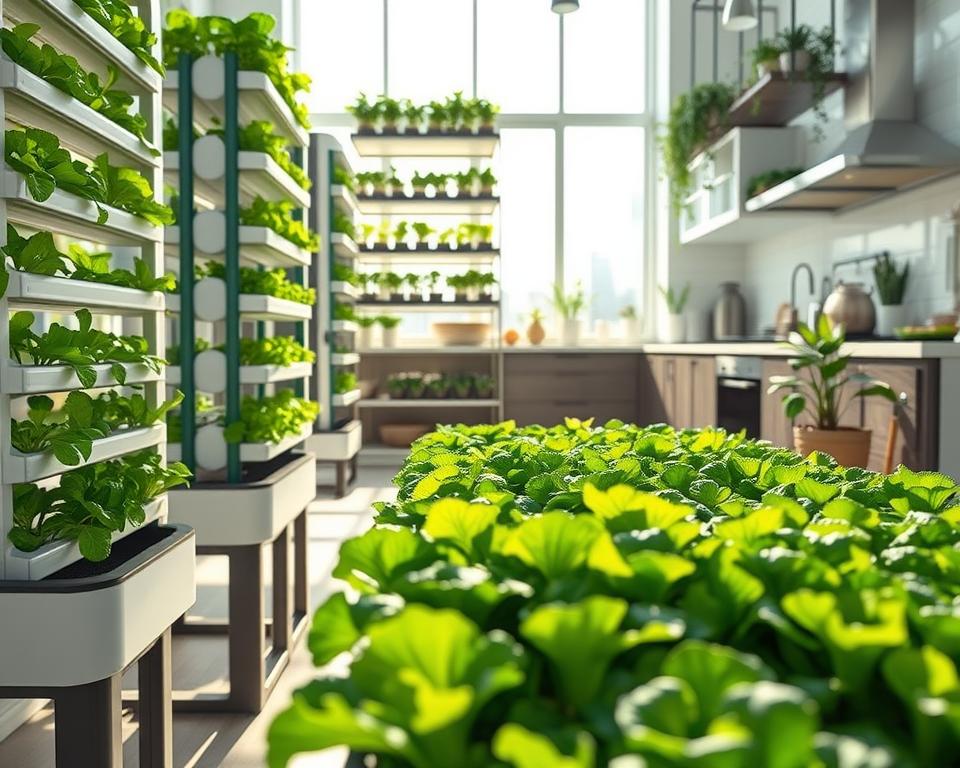
Did you know over 80% of city folks worldwide want to grow their own food? But, they often face space issues. That’s where modern hydroponic designs come in, changing how we grow food.
These cutting-edge systems let people grow many fruits, veggies, and herbs in tiny spaces. I’ve seen it myself, and compact hydroponic designs are great for city homes. They make it easy to have fresh produce right at home.
Key Takeaways
- Compact hydroponic systems save space, ideal for urban dwellers.
- Modern designs allow for a variety of produce to be grown.
- Hydroponic systems enable fresh produce to be grown at home.
- These systems are perfect for those with limited gardening space.
- They offer a modern and efficient way to grow favorite fruits and vegetables.
What is Hydroponics?
In hydroponics, plants grow in nutrient-rich solutions, not soil. This opens up new ways for gardening in cities. It’s efficient and lets you control growing conditions for better health and growth.
Understanding the Basics of Hydroponics
Hydroponics means plants’ roots hang in a solution full of nutrients. This way, they get what they need to grow. It’s great for small space hydroponics because it doesn’t need soil. A hydroponic system has a nutrient reservoir, a pump, and a growing chamber.
Benefits of Growing Hydroponically
Hydroponics has many perks, like more crops and less water use. It uses much less water than regular farming. This makes it perfect for places where water is hard to find.
It also means you can grow plants all year, no matter the season. The produce from hydroponics is often better in taste and nutrition. Plus, it’s cleaner because it uses fewer chemicals.
Advantages of Compact Hydroponic Designs
Compact hydroponic designs are changing how we grow food in small spaces. These systems are space-saving hydroponic solutions that benefit both urban gardeners and commercial growers.
One key benefit is their space efficiency. With efficient hydroponic layouts, you can grow a lot of food in tiny areas. This is something traditional gardening can’t match.
Space Efficiency for Urban Gardening
Urban gardening is on the rise, and compact hydroponics lead the way. These systems let city folks grow their own food, even in tight spots. They use vertical space well and optimize growing conditions, making city gardens possible.
Compact hydroponics offer many benefits in cities. They provide fresh food to locals, help cool the city, and improve air quality. They also support community gardens, boosting food security and community spirit.
Reducing Water Usage in Agriculture
Another big plus is how they cut down water use in farming. Traditional farming uses a lot of water, but hydroponics use much less to get the same or better yields. This is key in places where water is scarce or getting scarcer.
Using compact hydroponics helps make farming more sustainable. These systems save water and reduce environmental harm from traditional farming, like soil erosion and nutrient runoff.
Types of Compact Hydroponic Systems
Compact hydroponic designs come in many shapes and sizes. They fit different gardening needs and spaces. Each system has its own benefits and is perfect for certain tasks.
Nutrient Film Technique (NFT)
The Nutrient Film Technique (NFT) uses long, narrow channels for plants. A constant flow of nutrients keeps them healthy. It’s great for growing leafy greens and herbs.
Deep Water Culture (DWC)
Deep Water Culture (DWC) suspends roots in a nutrient-rich water. It’s easy to use and perfect for beginners. Plants like lettuce and tomatoes thrive in it.
Aeroponic Systems
Aeroponic systems hang roots in the air and mist them with nutrients. This method boosts root health and saves water. It’s efficient and effective.
Vertical Hydroponics
Vertical hydroponics is ideal for small spaces. It stacks plants to save floor space. It’s perfect for city living.

| System Type | Space Requirement | Water Efficiency | Ideal Plants |
|---|---|---|---|
| NFT | Low | High | Leafy Greens, Herbs |
| DWC | Medium | Medium | Lettuce, Tomatoes |
| Aeroponic | Low | High | Various |
| Vertical Hydroponics | Low | High | Leafy Greens, Strawberries |
Knowing about different compact hydroponic systems helps you pick the right one. Whether you’re new to gardening or experienced, there’s a system for you.
Ideal Plants for Compact Hydroponic Systems
Compact hydroponic designs are great for growing many plants. You can grow leafy greens and even strawberries. They’re perfect for city gardens and small spaces, making it easy to grow your own food.
Leafy Greens and Herbs
Leafy greens like lettuce, kale, and spinach grow fast and need little space. They’re ideal for compact hydroponic designs. Herbs like basil, mint, and cilantro also do well, adding flavor to many dishes.
To grow these plants well, keep the nutrients balanced and light levels right. Most leafy greens need a nutrient solution with a pH of 5.5 to 6.5.
Strawberries and Other Berries
Strawberries are a favorite for hydroponic systems. They grow easily and produce a lot of fruit. Blueberries and raspberries can also be grown hydroponically, but they need special care.
When growing strawberries and berries, make sure they get enough nutrients and water. Innovative hydroponic setups often have systems to help with this. These systems make sure plants get what they need to grow well.
Choosing the right plants and keeping the right growing conditions is key. This way, you can enjoy a lot of fresh, healthy food from your compact hydroponic system. Whether it’s leafy greens, herbs, or berries, these systems are a smart way to grow your own food.
Designing Your Compact Hydroponic System
A well-designed compact hydroponic system can thrive in even the smallest of spaces, providing a bountiful harvest. When planning your system, it’s essential to consider several factors to ensure optimal performance and efficiency.
Considerations for Space and Layout
The first step in designing your compact hydroponic system is to assess the available space and plan the layout. Think about the mature size of the plants you intend to grow. Leave enough space for air circulation and maintenance. A well-planned layout will not only maximize space but also reduce the risk of disease and pests.
To optimize your space, you can use vertical hydroponics or stackable systems. These designs allow you to grow more plants in a smaller footprint. They are ideal for urban gardening or small spaces.
Choosing the Right Materials
Selecting the right materials for your compact hydroponic system is key to its success. The materials should be durable, resistant to corrosion, and able to support the weight of the plants and the water or nutrient solution.
Common materials used in hydroponic systems include PVC, plastic, and metal. Each material has its pros and cons. The choice will depend on your specific needs and budget.
Comparison of Materials for Hydroponic Systems
| Material | Durability | Cost | Corrosion Resistance |
|---|---|---|---|
| PVC | High | Moderate | High |
| Plastic | Moderate | Low | Moderate |
| Metal | High | High | Low |
By carefully considering your space, layout, and materials, you can create a compact hydroponic system that is both efficient and productive.
Setting Up Your Compact Hydroponic Garden
Starting a compact hydroponic garden is exciting. It’s about saving space and growing plants efficiently. You’ll learn how to create a sustainable growing system.
Essential Equipment and Tools
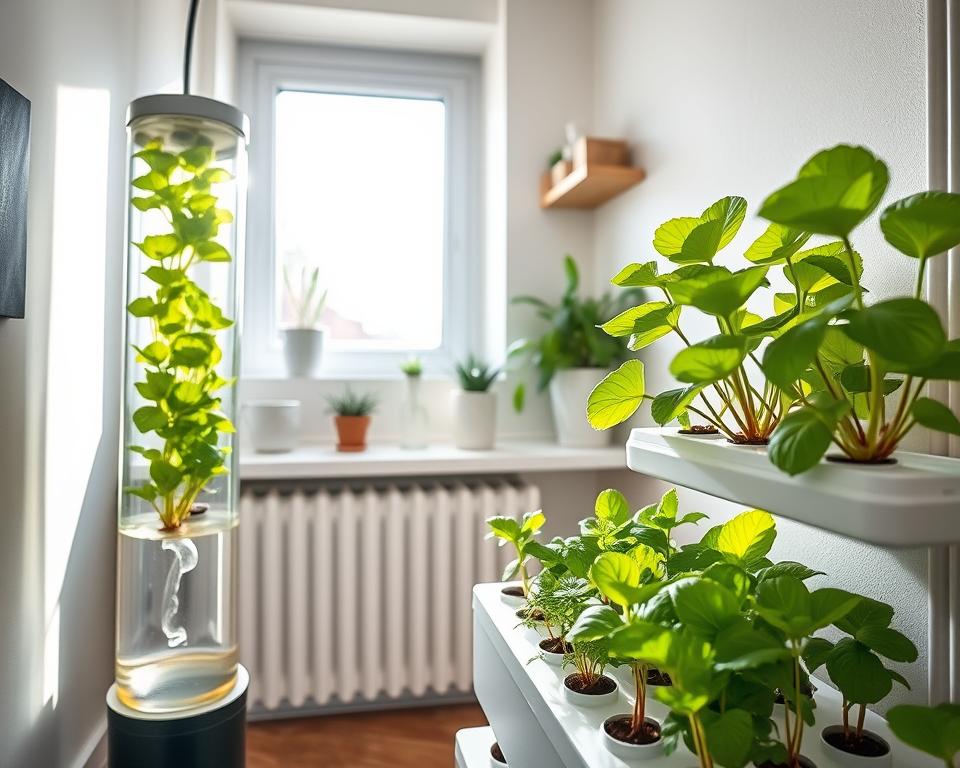
You’ll need some basic items to start. These include a grow tank, pump, nutrient solution, and growing medium like clay pebbles. The grow tank holds the nutrient solution. The pump circulates it to the plants’ roots.
You’ll also need pH test kits and thermometers. These tools help keep the solution’s acidity right and the temperature perfect for growth. Good equipment means less trouble and better crops.
| Equipment | Purpose |
|---|---|
| Grow Tank | Reservoir for nutrient solution |
| Pump | Circulates nutrient solution to roots |
| pH Test Kits | Monitors acidity of nutrient solution |
| Thermometers | Monitors temperature for optimal growth |
Step-by-Step Setup Guide
Setting up your garden has several steps. First, put together your grow tank and pump as the manual says. Then, mix your nutrient solution with water, keeping the pH right for your plants.
After setting up and mixing your solution, plant your crops. Space them well to use space and light efficiently. Keep an eye on your system to make sure it’s working right and adjust as needed.
“Hydroponics is the future of agriculture, allowing us to grow more food using fewer resources.” –
By following these steps and using the right tools, you can have a thriving garden. It’s all about planning and paying attention to the details, whether you’re using space-saving or vertical hydroponics.
Maintaining Your Hydroponic System
To keep your hydroponic garden healthy, regular care is essential. A well-kept system helps plants grow well and increases your harvest. We’ll look at how to keep your hydroponic system in top shape. This includes checking nutrient levels and managing pests.
Monitoring Nutrient Levels
Checking nutrient levels is key in hydroponics. Unlike soil gardens, hydroponics needs a precise mix of nutrients for plants. Regular checks help avoid nutrient shortages and ensure plants grow well. For more tips, see The Complete Maintenance Guide for Your Hydroponic.
There are many ways to check nutrient levels:
- Nutrient testing kits
- pH meters
- EC/TDS meters
Keeping the right pH and nutrient mix is critical. As
“The key to successful hydroponics is understanding the delicate balance between nutrient delivery and plant uptake.”
This balance helps plants get what they need, promoting growth and health.
| Nutrient | Role | Ideal Level |
|---|---|---|
| Nitrogen | Promotes leaf growth | 100-150 ppm |
| Phosphorus | Supports root development | 30-50 ppm |
| Potassium | Aids overall health | 150-300 ppm |
Pest Management Strategies
Pests can harm hydroponic systems, just like in regular gardens. It’s important to manage pests well to protect your plants. Regular checks and being proactive are your best defense. Look for pests on your plants and act fast if you find any.
Some good ways to manage pests include:
- Using beneficial insects
- Physical barriers to keep pests out
- Keeping the growing area clean and well-ventilated
By using these methods and checking often, you can make your hydroponic system efficient. This helps avoid pests and boosts your harvest. For indoor systems, good air flow and a clean environment are also key to prevent pests and diseases.
Tips for Maximizing Yield
To get the most out of modern hydroponic designs, you need the right lighting and space use. It’s key to know what your plants need and set up your system to meet those needs.
Lighting Options for Compact Systems
Lighting is vital in hydroponics because it affects how plants grow. LED grow lights are great for small systems because they use less energy and are flexible. They offer different light spectrums to match what plants need.
Other lights like fluorescent and HPS (High Pressure Sodium) lights work well too. But LEDs are better because they give strong light without making too much heat.
Utilizing Vertical Space
Using vertical space is another way to boost yield in small hydroponic systems. Vertical hydroponic systems let you stack plants, so you can grow more in less space.
| System Type | Space Efficiency | Yield Potencial |
|---|---|---|
| Vertical Hydroponics | High | High |
| NFT Systems | Medium | Medium |
| DWC Systems | Low | High |
By using the right lights and making the most of vertical space, growers can really increase their yields. This method not only boosts production but also uses space wisely.
Cost Considerations for Compact Hydroponics
Thinking about compact hydroponic designs often leads to cost worries. The setup can be pricey, but it’s worth looking at the long-term savings and benefits.
“Hydroponics, though more costly at first, can save money in the long run,” says a hydroponic expert. This highlights the need to know both the upfront and ongoing costs of compact hydroponics.
Initial Setup Costs
The cost to start a compact hydroponic system varies. It depends on the system’s size, technology, and materials. Key costs include:
- Growing tanks or reservoirs
- Pumps and aeration systems
- Nutrient solutions
- Grow lights (if necessary)
- Monitoring and control systems
Choosing the right materials and equipment is key. For example, picking energy-saving pumps and LED grow lights can cut costs. Also, consider DIY or cheaper options for some parts, but quality and reliability are important.
Ongoing Maintenance Expenses
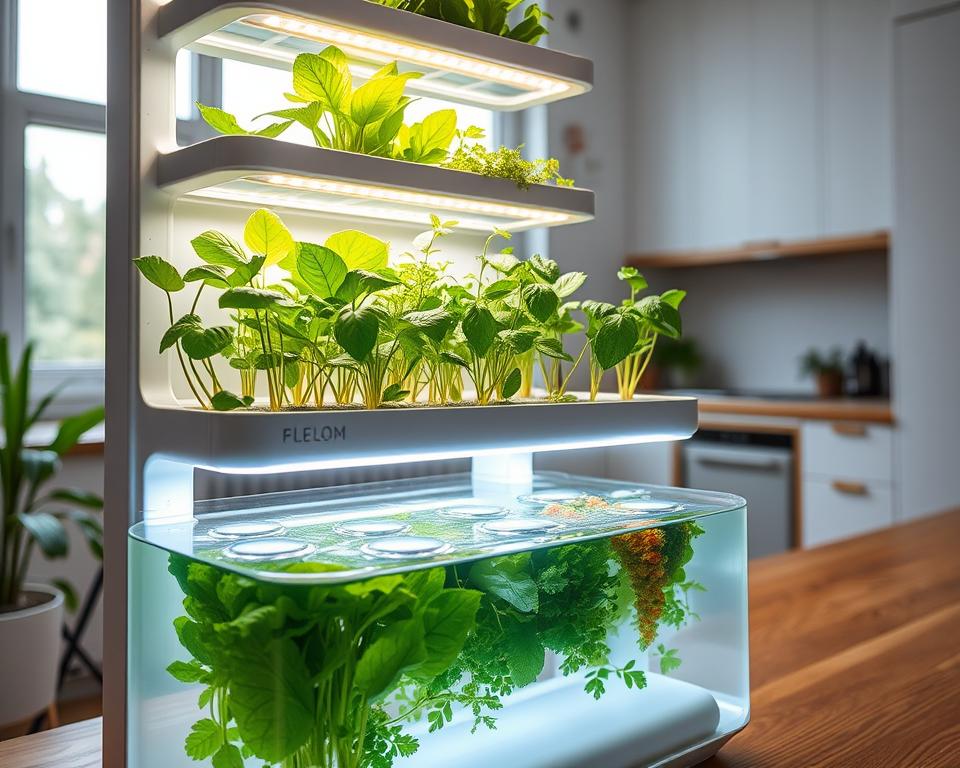
Keeping a compact hydroponic system running costs money. You’ll need to pay for nutrients, electricity, and sometimes new parts. Regular checks are vital to avoid expensive problems or lower yields.
To keep costs down, consider:
- Using energy-efficient gear
- Sticking to a maintenance plan
- Finding affordable nutrient and supply sources
Knowing and managing both setup and ongoing costs helps make smart choices for using compact hydroponic designs in gardening.
Troubleshooting Common Hydroponic Issues
Keeping a hydroponic garden healthy needs more than just setting it up. You must also solve problems like nutrient shortages. With small space hydroponics, watching for issues is very important.
Identifying Nutrient Deficiencies
Nutrient shortages are a big problem in hydroponics. The signs depend on which nutrient is missing. For example, too little nitrogen makes older leaves turn yellow. Iron shortage makes leaves yellow with green veins.
- Watch your plants for signs of nutrient shortages.
- Change your nutrient solution as your plants need.
- Think about using space-saving hydroponic solutions for easier care.
Acting fast can stop many nutrient problems. Check your plants often and tweak your nutrient mix. This keeps your hydroponic garden healthy and fruitful.
Solutions for Algae Growth
Algae is another big problem in hydroponics, caused by too much nutrient and light. To fight algae, cut down on light to the nutrient solution and keep your system clean.
- Use materials that block light for your reservoir.
- Keep your system clean to stop algae.
- Look into space-saving hydroponic solutions to reduce light.
By tackling these common issues, you can keep your small space hydroponics system thriving. Regular checks and tweaks are essential to solve problems and get a good harvest.
Hydroponics in Small Spaces: Success Stories
I’ve seen how hydroponics can turn small, unused areas into lush gardens. This change isn’t just for hobbyists; it also benefits communities and people living in apartments.
The success of hydroponics in small spaces comes from its efficient use of space and vertical hydroponics. Growing plants upwards lets people get more yield without needing a lot of land.
Community Gardens Using Compact Hydroponics
Community gardens are using compact hydroponics to grow more food and be kinder to the environment. These gardens not only give fresh produce but also teach people about green gardening.
One big plus of compact hydroponics in community gardens is the efficient hydroponic layouts. This efficiency means more food can be grown in less space. It’s great for cities where land is hard to find.
Apartment Dwellers Thriving with Hydroponics
People living in apartments are also doing well with hydroponics. They use balconies, rooftops, or indoor spots to grow their own food. The small size of these systems is perfect for tiny living areas.
For newcomers, starting small is a good idea. Many start with a Deep Water Culture (DWC) or a Nutrient Film Technique (NFT) system. Both are great for small spaces and can be very productive.
The stories of people and communities using hydroponics in small spaces show its power. As more people learn about hydroponics, we’ll see even more creative uses of compact hydroponic designs.
Conclusion: Embrace Compact Hydroponic Designs
Compact hydroponic designs are changing how we grow food. These modern systems make gardening indoors sustainable and rewarding. They let people enjoy fresh produce all year.
Growing Fresh Produce with Ease
Compact hydroponics allows growing many crops in small spaces. This includes leafy greens and strawberries. It’s a great way to enjoy hydroponic gardening’s benefits, like using less water and growing more food.
Starting Your Hydroponic Journey
Ready to start your hydroponic garden? Look into the different compact systems. Think about your space, budget, and what you want to grow. With the right tools and knowledge, you can grow your own food indoors.