


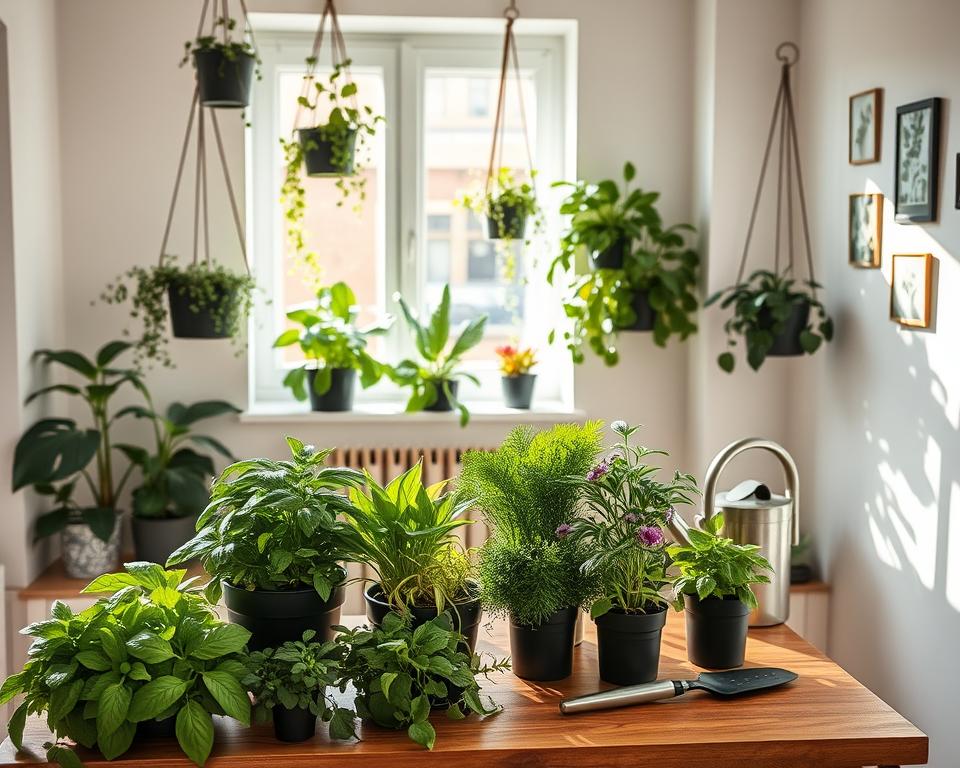
Did you know that indoor plants can boost your mood and productivity by up to 15%? I’ve grown a lush oasis in my small space. I’m excited to share my knowledge with you. Starting an urban garden might seem tough, but with the right tips, you can enjoy gardening’s benefits, even without a big yard.
In this article, I’ll cover the basics of starting an apartment garden. We’ll talk about picking the right plants, essential supplies, and how to keep your garden healthy. Whether you have a small balcony or a sunny windowsill, I’ll show you how to use your space well and create a beautiful garden.
Key Takeaways
- Choose the right plants for your indoor garden
- Learn essential supplies for urban gardening
- Discover techniques for maintaining a healthy garden
- Maximize your small space for gardening
- Create a thriving oasis in your apartment
Why Start Apartment Gardening?
As cities grow, apartment gardening offers a fresh escape and many benefits. It brings greenery into your home, making it healthier and more beautiful.
Benefits of Gardening in Small Spaces
Gardening in small spaces, like apartments, boosts your well-being. You can grow herbs, veggies, and flowers, even with little room. Small space gardening turns small areas into lush, green spots.
Some key benefits include:
- Improved air quality
- Better looks
- Ability to grow your own food
Improving Your Mental Health
Apartment gardening is good for your mental health. Caring for plants can be calming, reducing stress and anxiety. Plant care gives a sense of purpose and happiness.
| Mental Health Benefits | Description |
|---|---|
| Reduced Stress | Gardening can ease stress and anxiety. |
| Increased Mindfulness | Plant focus improves mindfulness and presence. |
| Improved Mood | Plant care boosts mood and well-being. |
Sustainable Living in an Urban Environment
Apartment gardening helps with sustainable living by cutting down on carbon emissions. Growing your own food means less need for transportation, lowering emissions.
It also encourages sustainable practices like recycling and reusing materials for gardening.
Choosing the Right Plants for Your Space
Finding the right plants for your apartment is key to a successful garden. Even in small spaces, you can enjoy the joys of gardening. The right plants make it possible.
Low-Light Plants for Dark Corners
Not all apartments get lots of sunlight. But, there are plants that do well in the dark. The Snake Plant and Pothos are great choices. They’re easy to care for and brighten up dark spots.
Best Herbs for Apartment Gardens
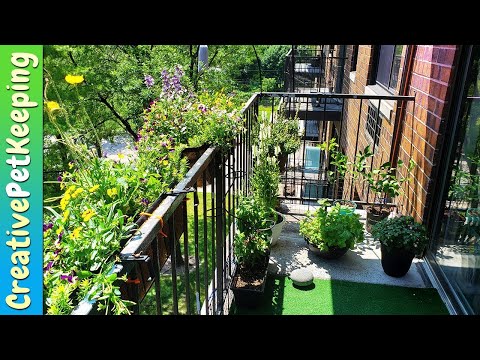
Growing herbs is a fantastic way to add fresh flavors to your cooking. It’s easy to do in an apartment garden. Basil, Mint, and Cilantro are excellent choices. They’re easy to care for and can grow well in pots.
- Basil: Perfect for adding flavor to Italian dishes
- Mint: Great for teas and desserts
- Cilantro: Adds a fresh flavor to Mexican and Asian dishes
Air-Purifying Plants
Indoor gardening does more than just look good; it also improves your air quality. Some plants remove toxins from the air. The Spider Plant, Peace Lily, and Dracaena are great examples. They’re good for your health and add beauty to your home.
| Plant | Benefits | Care Level |
|---|---|---|
| Snake Plant | Low-light tolerant, air-purifying | Easy |
| Pothos | Low-maintenance, versatile | Easy |
| Basil | Culinary herb, fragrant | Moderate |
Essential Supplies for Apartment Gardening
Before starting your apartment garden, knowing what you need is key. The right tools and materials make gardening fun and successful.
Pots and Containers: What to Look For
Choosing the right pots and containers is important. You want them to be both functional and look good. Here are some things to think about:
- Material: Pots can be made from plastic, clay, or ceramic. Each has its own benefits and drawbacks. For example, clay pots are good for air but can be heavy and break easily.
- Drainage: Make sure your pots have holes for water to drain. This stops the soil from getting too wet and causing root rot.
- Size: The pot size depends on the plant you’re growing. Bigger plants need bigger pots.
Soil Types and Their Importance
The soil you choose is very important for your plants. Different plants need different soils. Pick a soil that fits your plant’s needs.
Key considerations for soil:
- Nutrients: Some soils have extra nutrients that help plants grow well.
- Drainage: Soils that drain well are important to avoid waterlogged soil and root rot.
- pH Level: Some plants do best in certain pH levels. Choose a soil that matches your plant’s pH needs.
Tools for Simple Maintenance
Having the right tools makes caring for your garden easy. Here are some must-haves:
- Watering Can: A watering can with a long spout helps you water plants without spilling.
- Pruning Shears: Pruning shears are needed for cutting and shaping your plants.
- Gardening Gloves: Gardening gloves protect your hands from thorns and dirt.
By getting the right supplies and knowing their importance, you’ll be ready to create a beautiful apartment garden.
Light Requirements for Indoor Plants
Light is key for indoor plants. It’s not just a need, but a must for their health and growth. Knowing what light your plants need is vital for their survival.
Understanding Natural Light in Apartments
Natural light is best for plants, but it’s hard to get in apartments. The light your plants get depends on your windows, the time of day, and the season. South-facing windows get the most light, while north-facing get the least.
To get more natural light, keep your windows clean and clear. Mirrors or reflective surfaces can also help spread light around the room. But, watch out for direct sunlight, as it can burn your plants.
Grow Lights: Are They Necessary?
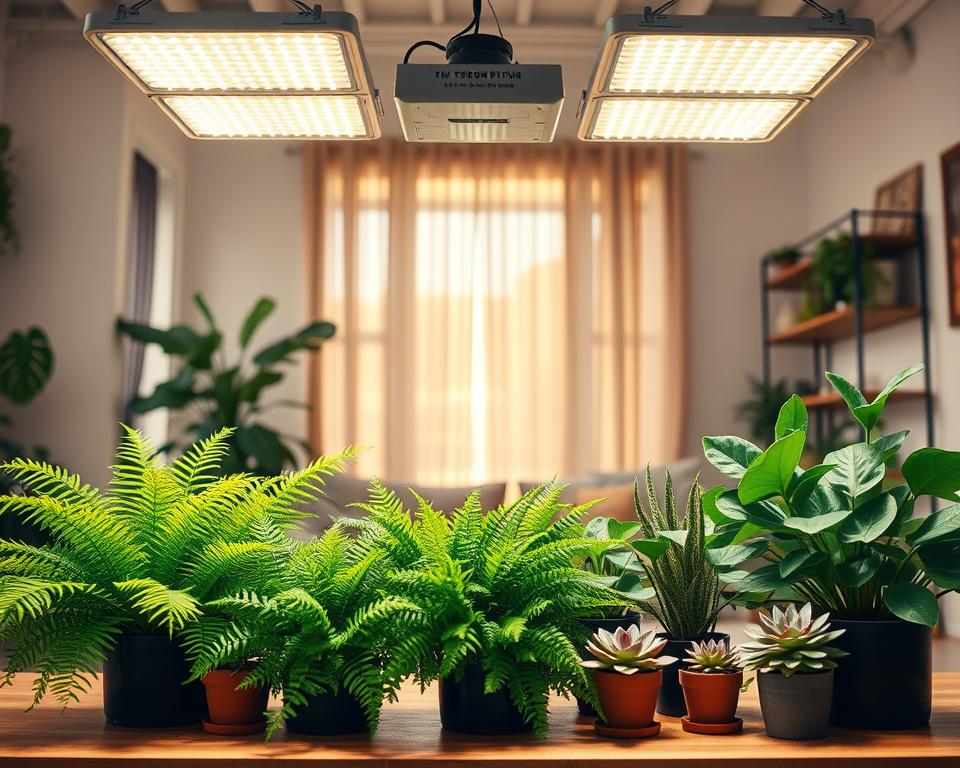
Grow lights are a must for many indoor gardeners, mainly in winter or low-light rooms. They provide the spectrum and intensity plants need to grow well.
There are many grow light types, like LED, fluorescent, and incandescent. LED lights are popular for being energy-efficient and customizable for plants.
Tips for Plant Placement Based on Light
Placing plants right is key. Put light-loving plants like succulents near south-facing windows. Plants that like low light, like Chinese Evergreen or Pothos, do well in north-facing rooms or with little natural light.
- Rotate your plants regularly to ensure even light distribution.
- Monitor your plants’ response to light and adjust their position as needed.
- Consider using grow lights for plants that are not receiving enough natural light.
By understanding and meeting your plants’ light needs, you can create a vibrant indoor garden. It will add joy and freshness to your home.
Watering Techniques and Frequency
Mastering the art of watering is key in apartment gardening. It ensures your plants get the right moisture to grow well.
Signs of Underwatering vs. Overwatering
Knowing the signs of underwatering and overwatering is vital. Underwatering makes plants wilt, turn yellow, or have dry leaves. Overwatering causes root rot, yellow leaves, and a soft stem.
To fix this, check the soil moisture by feeling it with your finger. If it’s dry, water. If it’s moist, wait a bit before watering again.
Strategies for Each Plant Type
Each plant needs different watering. Succulents and cacti need less water than ferns and peace lilies. Learn what your plants need to water them right.
For more tips on watering, check out this article on when to water your garden.
| Plant Type | Watering Frequency | Soil Preference |
|---|---|---|
| Succulents | Water every 7-10 days | Dry soil |
| Ferns | Water every 2-3 days | Moist soil |
| Peace Lilies | Water every 4-5 days | Well-draining soil |
Self-Watering Options for Busy Schedules
Self-watering pots are great for busy people. They have a water reservoir that lets plants water themselves, cutting down on watering.
With the right watering techniques, your apartment garden can flourish, even with a hectic schedule.
Maximizing Small Spaces with Vertical Gardening
Vertical gardening is a great way to make the most of small spaces. It lets you use your walls to grow plants. This not only makes your home look better but also improves the air and your health.
Installing Wall Planters
Starting with wall planters is easy. They come in many materials like wood, plastic, or metal. Pick ones that can hold the weight of your plants and soil.
Tips for Installing Wall Planters:
- Use a strong wall anchor to hold the planter and soil.
- Think about the light on the wall where you’ll put the planter.
- Make sure the planter is straight and securely attached.
Choosing Appropriate Climbing Plants
Climbing plants are perfect for vertical gardens. They use the space well. Ivy, clematis, and morning glories are good choices. Think about how they grow and if they need support.
Some factors to consider when choosing climbing plants:
- Light needs: Some plants love full sun, others prefer shade.
- Support needs: Some plants need trellises or other supports to climb.
- Growth rate: Faster-growing plants might need more pruning.
DIY Vertical Garden Ideas
Building a DIY vertical garden is fun and rewarding. You can use old items like pallets, crates, or ladders. Be creative and think differently.
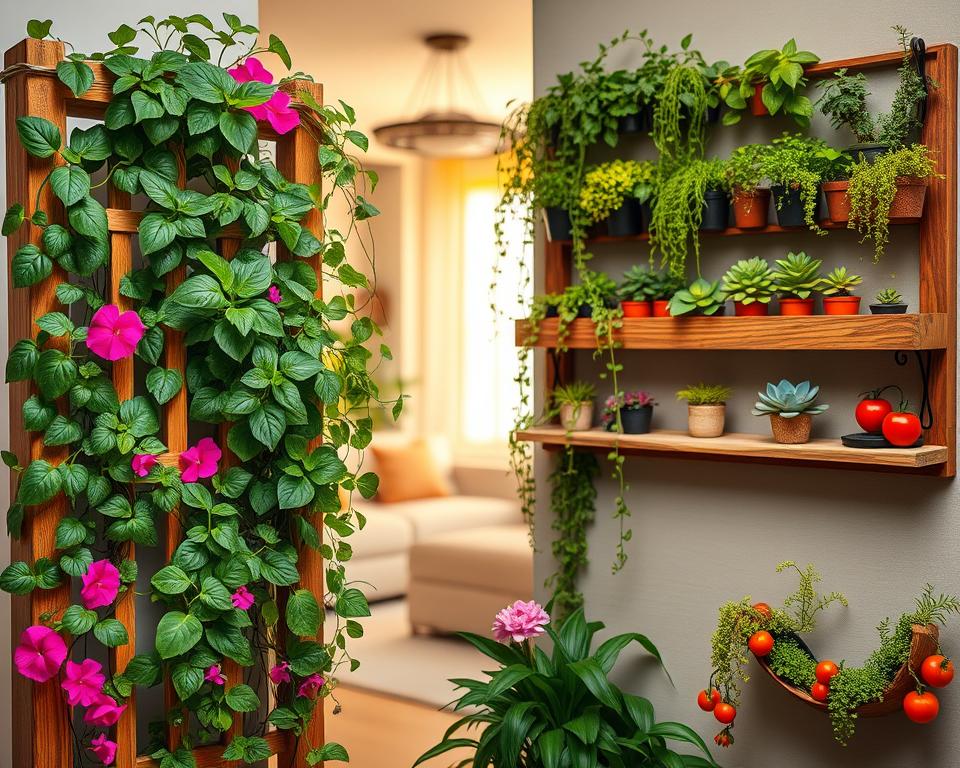
Here are some ideas to start:
- Make a tiered garden with a wooden pallet.
- Turn an old ladder into a living wall planter.
- Make a hanging garden with macramé plant holders.
Pest Control in Apartment Gardens
Gardening in apartments has its own set of challenges, like managing pests. As I care for my indoor garden, I watch for pests that could harm my plants. Keeping pests under control is key to a healthy apartment garden.
Common Pests to Watch For
Apartment gardens face pests like spider mites, mealybugs, and fungus gnats. These pests can damage your plants if not stopped. Spider mites can turn leaves yellow or bronze, while mealybugs can stunt growth.
Organic Pest Control Solutions
Organic pest control is better for the environment and safer for you and your plants. Neem oil is a good choice to control many pests. You can also bring in beneficial insects like ladybugs or lacewings to eat pests. For more on safe pest control, check out Smiling Gardener’s guide on non-toxic pest control.
Preventative Measures for Healthy Plants
Preventing pests is essential in your apartment garden. Good air circulation helps prevent fungal diseases that attract pests. Regularly check your plants and remove dead or dying leaves to prevent pests.
Healthy soil with the right nutrients also helps plants resist pests. By being proactive and using these strategies, you can keep your garden healthy and pest-free. A healthy garden is about more than just pest control; it’s about creating a thriving environment for your plants.
Seasonal Care for Your Indoor Garden
To keep your indoor garden thriving, it’s key to know how seasons affect plant care. As seasons change, so do your home’s temperature and humidity. This impacts your plants.
Adjusting Care for Different Seasons
In spring and summer, most indoor plants grow fast. They need more water and nutrients. It’s also a good time to repot plants that have outgrown their containers.
But, autumn and winter are slower and colder. Plants drink less water, and some need protection from cold drafts. Adjusting your watering is vital during these months.
| Season | Plant Needs | Care Adjustments |
|---|---|---|
| Spring/Summer | More water, nutrients | Increase watering, fertilize |
| Autumn/Winter | Less water, protection from cold | Reduce watering, protect from drafts |
Preparing Plants for Seasonal Changes
Before winter, check your plants for pests and diseases. Treat them if needed. For summer, make sure they get enough light. Move them to brighter spots or use grow lights.
Indoor Gardening Year-Round
Keeping an indoor garden all year needs consistent care. Regularly check your plants for stress or disease signs. Adjust their care as needed. This way, you can enjoy a thriving garden all year.
For urban gardening and balcony gardening for beginners, these tips help create a lush space. Even in small apartments, you can have a vibrant garden.
Joining a Gardening Community
Starting your apartment garden can be exciting. Connecting with others who garden can really help. You can share ideas, learn new things, and stay motivated. Being part of a community is key, whether you’re new to gardening or need tips.
Local Gardening Groups
Looking for local gardening groups is a smart move. You can find them online or at local spots like nurseries. Many cities have meetups where you can meet other gardeners and learn from their experiences.
Online Resources and Forums
There are also online places to connect with gardeners. Sites like GardenWeb and Reddit’s r/gardening are great for asking questions and sharing your garden. You can get advice and support from a community of gardeners.
Sharing Your Journey
Don’t hesitate to share your gardening story. Use social media, a blog, or join a local group to share. Your experiences can inspire others and help you feel connected. Sharing your journey can also bring valuable insights and tips from others.