

Growing your own indoor herb garden is rewarding and easy. Did you know plants indoors can boost your mood and productivity? Studies show plants can lower stress and improve well-being.
In this guide, I’ll show you how to grow perennial herbs in your apartment. You’ll learn about indoor garden benefits, herb selection, and care tips. This guide is for everyone, whether you’re new to gardening or experienced.
Key Takeaways
- Learn how to choose the right perennial herbs for your apartment.
- Discover the benefits of having an indoor herb garden.
- Get tips on caring for your perennial herbs.
- Understand how to create a thriving indoor garden.
- Find out how to make the most of your indoor herb garden.
Why I Love Growing Herbs in My Apartment
Growing herbs in my apartment has changed my cooking and home. It’s a simple joy that’s part of my daily routine.
The Benefits of Having Fresh Herbs
Fresh herbs have changed my cooking for the better. A few snips from my garden add flavor to any dish. Herbs like basil, mint, and cilantro are tasty and healthy.
Using fresh herbs makes cooking fun and creative. It encourages me to try new recipes and flavors.
How Herbs Enhance My Cooking
Fresh herbs add a flavor that dried herbs can’t. For example, fresh basil in pasta sauce or mint in a salad improves the dish a lot.
My herb garden also inspires me to explore different cuisines. I’ve started using herbs in my baking too.
Aesthetic Appeal of Herb Gardens
My indoor herb garden makes my apartment feel greener and more welcoming. The plants clean the air and create a peaceful atmosphere.
Having herbs in pots or hanging baskets has turned my home into a cozy oasis. It’s perfect for unwinding after a busy day.
Choosing the Right Perennial Herbs
Choosing the right perennial herbs is key to a thriving indoor herb garden. With many options, it can feel overwhelming. But, picking herbs that do well indoors makes it easier.
Top Herbs for Indoor Growth
Some herbs are better for indoor growing than others. Mint, chives, and thyme are great because they’re hardy and easy to care for. Mint, for example, grows well in partial shade, perfect for rooms without direct sunlight.
“Herbs like mint and lemongrass can spread a lot,” says a gardener. “But in pots, they’re easy to manage.” This makes them perfect for small spaces.
Climate Considerations for My Herbs
Knowing what your herbs like is important. Most herbs need good air and temperatures between 65-75°F (18-24°C). But, rosemary and sage can handle cooler temperatures, great for apartments with changing temperatures.
- Mint: Prefers moist soil and partial shade.
- Thyme: Thrives in well-drained soil and full sun.
- Chives: Requires well-drained soil and partial to full sun.
Companion Planting Tips
Companion planting is growing different plants together to help them grow better. For indoor gardens, pairing basil and mint is good, as basil keeps pests away from mint. But, choose plants that need similar things to grow well together.
By picking the right herbs and knowing their needs, you can have a lush indoor herb garden, even in tiny spaces.
Where to Place My Herb Garden
Choosing the right spot for your herbs in an apartment is key. The right location can greatly affect your herbs’ health and taste. We’ll look at the best places for your herb garden, focusing on sunlight, space, and easy access.
Sunny Spots vs. Shady Corners
Most herbs need lots of sunlight to grow well. A sunny spot near a window is perfect for herbs like basil and rosemary. But, some like mint can handle partial shade. If your place doesn’t get much sun, grow lights can help.
Pros of sunny spots:
- Promotes healthy growth and flavor
- Encourages bushy growth and prevents legginess
Cons of shady corners:
- Can lead to weak and leggy growth
- May reduce flavor and aroma
Using Vertical Space Effectively
In small apartments, using vertical space is key for urban herb gardening. Wall-mounted planters, trellises, or tiered shelves are great for this. They add beauty and keep your herbs organized and easy to reach.
Some top picks for vertical gardening are:
- Wall-mounted herb planters
- Stackable planters
- DIY trellises
Windowsills: An Ideal Location
Windowsills are perfect for herb gardens, with the right sunlight and easy access. Choose a planter that fits well and think about using a self-watering pot to cut down on care.
“A windowsill herb garden is not only practical but also adds a touch of greenery to your kitchen.”
By picking the right spot for your herb garden, you can enjoy fresh herbs all year, even in a small space. Whether it’s a sunny windowsill or a creative vertical garden, with the right care, your herbs will flourish.
Best Containers for Growing Herbs
Finding the perfect container for your indoor herb garden can really make a difference. The right container looks great and helps your herbs grow well.
Material Choices: Clay, Plastic, or Metal?
The type of container you choose is key. Clay pots are loved for their breathability and natural look. But, they can be heavy and dry out fast. Plastic containers are light and easy to clean, but they don’t breathe as well as clay. Metal containers are stylish, but they can get too hot, harming your herbs’ roots.
| Material | Breathability | Weight | Aesthetic Appeal |
|---|---|---|---|
| Clay | High | Heavy | Natural |
| Plastic | Low | Light | Varied |
| Metal | Low | Varied | Modern |
Drainage: Why It’s Crucial
Good drainage stops waterlogged soil, which can cause root rot. Make sure your containers have enough holes for water to drain. Adding small rocks or broken pottery at the bottom helps even more.
DIY Container Ideas
For something unique and affordable, try using old mason jars, wooden crates, or apartment-friendly herbs containers from recycled stuff. These creative containers make your garden special.
Choosing the right container is vital for a healthy indoor herb garden. Whether it’s a classic clay pot or a DIY project, your herbs will appreciate it.
Soil and Fertilizer: The Basics
As an apartment herb gardener, I’ve learned that soil and fertilizer are key. They are the foundation of a lush herb garden. Knowing the basics of these components is vital for my herbs’ health and productivity.
Choosing the Right Potting Mix
Choosing the right potting mix is the first step. I look for a mix that drains well and is rich in organic matter. A good mix should hold moisture but also let excess water drain to prevent root rot.
When shopping, I check the ingredients. A mix with peat moss, vermiculite, or perlite is best for my urban herbs.
When to Fertilize My Herbs
Fertilizing my herbs is key during the growing season, from spring to early fall. I use a balanced fertilizer to give my herbs the nutrients they need for growth.
The frequency of fertilization depends on the fertilizer type. For liquid fertilizers, I fertilize every two weeks. For slow-release fertilizers, I follow the package instructions.
Organic vs. Synthetic Nutrients
The debate between organic and synthetic nutrients is ongoing. I find that organic nutrients, like compost or fish emulsion, provide a slow release of nutrients. They promote healthy microbial activity in the soil.
Synthetic nutrients offer a quick fix but can harm the soil’s ecosystem if overused. I use a balanced approach. Sometimes, I use organic nutrients and occasionally add synthetic fertilizers when needed.
| Nutrient Type | Release Rate | Microbial Activity |
|---|---|---|
| Organic | Slow | Promotes healthy activity |
| Synthetic | Quick | Can harm if overused |
By understanding soil and fertilizer basics, I can create the best growing environment for my apartment herbs. This ensures they stay healthy and productive all year.
Watering Tips for Indoor Herbs
To keep your indoor herbs thriving, it’s key to understand the right watering techniques. Watering is a critical part of caring for your herbs. Getting it right can greatly impact their health and productivity.
How Often Should I Water?
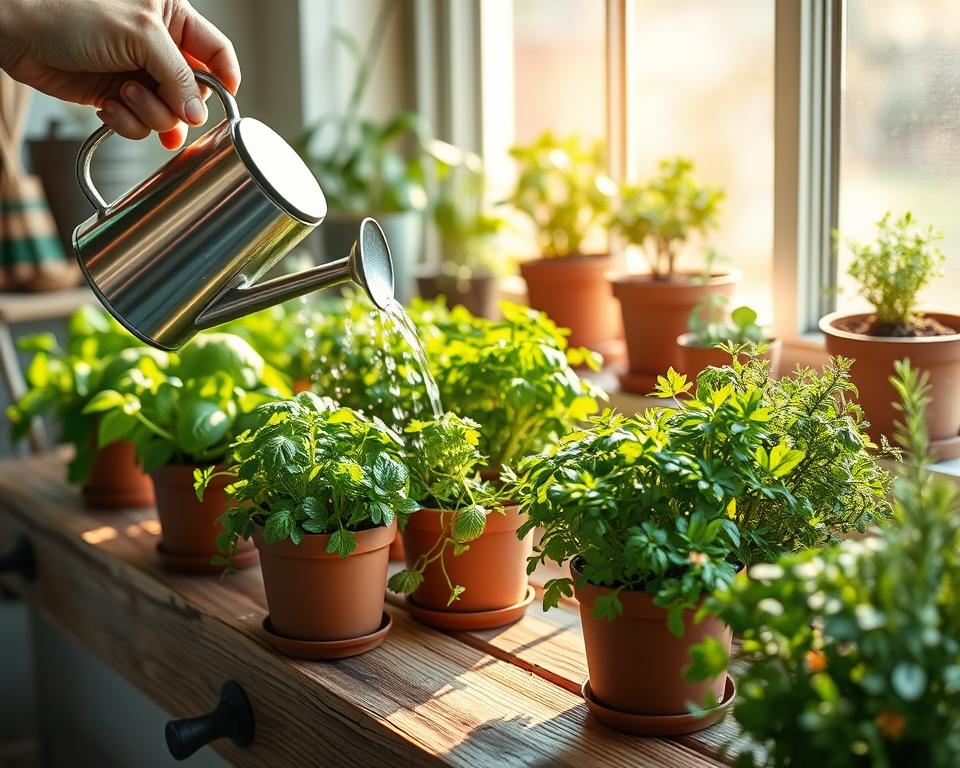
The frequency of watering your indoor herbs depends on several factors. These include the type of herb, the size of the pot, and the ambient temperature and humidity. As a general rule, water your herbs when the top inch of soil feels dry to the touch.
- Check the soil moisture by inserting your finger into the soil.
- Water thoroughly until you see water draining out of the bottom of the pot.
- Avoid getting water on the leaves to prevent fungal diseases.
Signs of Overwatering
Overwatering is a common mistake that can lead to root rot and other problems. Keep an eye out for these signs:
- Yellowing or droopy leaves
- Soft, mushy stems
- Water pooling around the base of the plant
If you notice any of these symptoms, adjust your watering schedule.
Techniques for Effective Watering
To water your indoor herbs effectively, consider the following techniques:
- Water at the base of the plant, avoiding the leaves.
- Use room-temperature water to avoid shocking the roots.
- Water in the morning to give the plants the entire day to absorb the water.
By following these tips, you’ll be well on your way to becoming a pro at watering your indoor herbs.
Light Requirements for Perennial Herbs
Light is key for growing perennial herbs indoors. I’ll dive into why it’s so important. The right light is essential for these plants to thrive.
Understanding Natural Light vs. Artificial Light
Perennial herbs do well in both natural and artificial light. But knowing the difference is vital. Natural light is best, but apartments might not have enough.
In such cases, artificial lighting can help out. For herbs in apartments, a south-facing window is perfect for natural light. If that’s not possible, using grow lights is a good alternative.
Grow Lights: Are They Necessary?
Grow lights aren’t always needed, but they’re helpful when natural light is scarce. They give the right spectrum and intensity for plants to grow well.
Let’s look at different grow lights:
| Type of Grow Light | Spectrum | Intensity | Energy Efficiency |
|---|---|---|---|
| LED Grow Lights | Full Spectrum | High | High |
| Fluorescent Grow Lights | Broad Spectrum | Medium | Medium |
| HID Grow Lights | Specific Spectrum | High | Low |
Rotating My Plants for Even Growth
Rotating your plants is key for even growth. It’s very important when using grow lights. The light might not spread evenly.
By rotating your plants every few days, you help them grow evenly. This stops them from leaning towards the light.
Pruning and Maintenance Techniques
Living in an apartment and loving herbs, I’ve learned the value of pruning and care. Regular upkeep is key for my indoor herb garden to stay healthy and long-lasting. A bit of time each week keeps my herbs growing strong and flavorful all year.
When and How to Prune My Herbs
Pruning is vital for my herbs’ health. I do it often to keep them bushy and prevent them from getting too long. Spring is the best time to prune, when new growth starts. I use sharp scissors or shears to cut off dead or damaged parts.
Each herb has its own pruning needs. Basil and mint need a lot of pruning to stay bushy. But rosemary and thyme only need it sometimes to keep their shape.
Dealing with Pests and Diseases
Indoor herb gardens face pests and diseases. I check my plants often for signs of trouble. Common pests include aphids, spider mites, and mealybugs. I use organic solutions like neem oil or insecticidal soap to fight them.
Diseases can come from too much water or poor air. I make sure my herbs drain well and aren’t too close together. If a disease shows up, I treat it quickly to stop it from spreading.
Seasonal Care Tips
Seasons change, and so do my herbs’ needs. In winter, they need less water and food. I water and fertilize them less during this time.
In spring and summer, they need more care. I fertilize them regularly and water them more. I also repot them every couple of years to give their roots room to grow.
By using these pruning and care tips, my perennial herbs for apartments stay healthy and fresh all year.
Harvesting My Herbs
Harvesting my herbs is a key part of caring for my indoor garden. It’s important to pick them at the right time. This not only makes them taste better but also helps them grow more.
In this section, I’ll share how to harvest without harming the plants. I’ll also talk about the best times to pick them and how to keep them fresh for later.
How to Harvest Without Damaging Plants
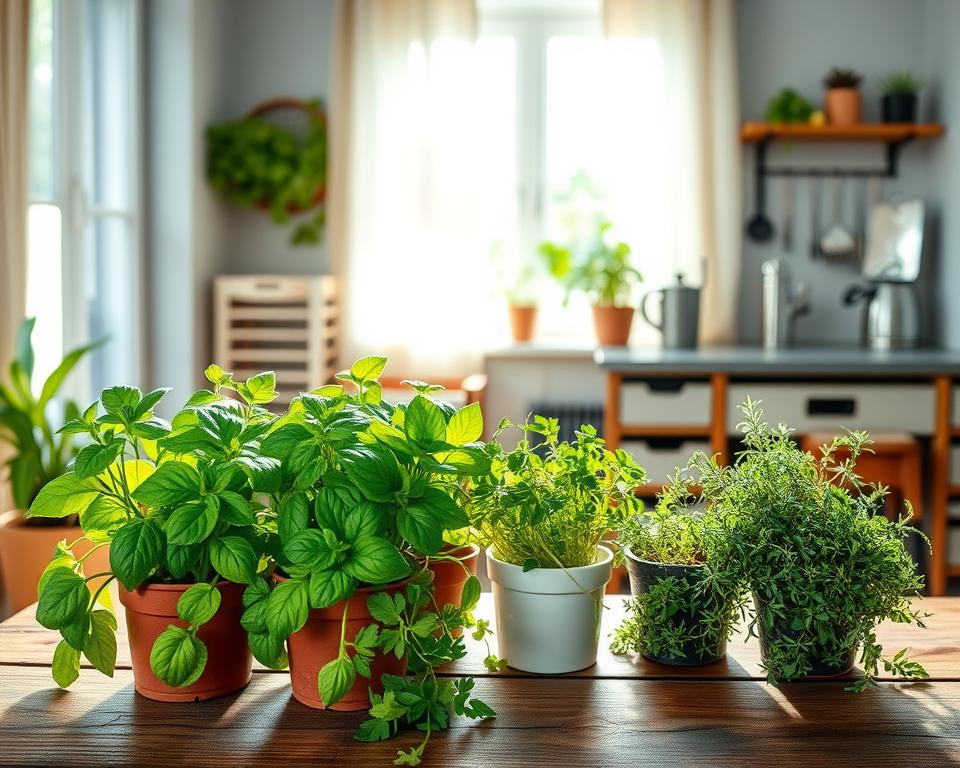
When I harvest my apartment-friendly herbs, I aim to help them grow more. For herbs like basil and mint, I cut off the leaves just above a node. This encourages the plant to grow more leaves.
For herbs like rosemary and thyme, I trim the top leaves. This keeps the plant looking good and helps it grow more.
Best Times for Harvesting
The best time to pick herbs depends on the type and how they grow. I find that morning is usually best, after the dew but before it gets too hot. This is when they taste and smell the best.
For herbs like chamomile and lavender, I pick them when they’re in full bloom. Knowing how my easy-to-grow apartment herbs grow helps me pick them at the perfect time.
Preserving Herbs for Later Use
To enjoy my herbs all year, I use different ways to preserve them. Drying is simple; I tie them in bunches and hang them in a warm, dry spot. Freezing is another good method; I chop them finely and freeze them in ice cube trays with water or olive oil.
This way, I can add fresh flavor to my cooking even in winter.
By following these tips, I can always have fresh, fragrant herbs from my indoor garden. They make my cooking better and add greenery to my home.
Common Mistakes to Avoid
Reflecting on my indoor herb gardening journey, I’ve found common pitfalls. Growing herbs indoors in apartments can be fun, but knowing mistakes helps succeed.
Overwatering My Herbs
One big mistake in urban herb gardening is overwatering. Herbs need water, but too much harms them. I check soil moisture before watering and use pots with drainage holes.
Herbs have different water needs. For instance, basil and mint like moist soil. But rosemary and thyme can handle drier conditions.
Not Providing Enough Light
Light is key in small space herb gardening. Most herbs need lots of light to thrive. Indoor herbs benefit from sunny windows or grow lights.
Once, my herbs grew weak without enough light. Now, I rotate them to get even light.
Ignoring Pest Problems
Pests can harm indoor gardens. Ignoring them can lead to big problems. I check my plants for pests like spider mites and aphids.
If pests show up, act fast. Isolate affected plants, improve air flow, and use organic pest control.
Knowing these mistakes helps you grow a healthy indoor herb garden. Whether you’re new or experienced, urban herb gardening and small space herb gardening add flavor and beauty to your home.
Expanding My Herb Collection
My indoor herb garden is doing great, and I want to add more. I’m looking for low maintenance herbs for small spaces to go with what I already have.
I think about my apartment’s growing conditions when picking new herbs. Herbs like mint, chamomile, and lemongrass are great for city living. They’re easy to care for and add great flavors to my food.
What to Plant Next?
Choosing the right herbs means thinking about their needs and how they’ll fit with others. For example, if a spot gets a lot of sun, I might pick basil or rosemary.
But if it’s shadier, parsley or chives might be better. It’s also important to make sure each plant has enough room to grow.
Joining Local Gardening Groups
Joining local gardening groups has really helped me grow. These groups are full of experienced gardeners who love to share their knowledge.
Being part of these groups has taught me about new herbs and gardening tips. I’ve also gotten seeds and tools to help me garden.
Attending Herb Workshops
Herb workshops have been a big help too. They offer hands-on learning and practical tips for gardening.
I’ve learned how to grow and use herbs in cooking. These workshops also let me meet other gardening fans and learn from their experiences.
Conclusion: Enjoying the Fruits of My Labor
Growing herbs in my apartment has been rewarding. I love harvesting fresh flavors right at home. My indoor herb garden lets me enjoy a variety of herbs, making my cooking better and adding greenery to my space.
Celebrating Successes
Looking at my thriving herbs, I feel proud. Celebrating these small wins is fun and keeps me motivated to care for my garden.
Incorporating Fresh Herbs
Using fresh herbs in cooking is easy and makes dishes better. I add basil to pasta sauces and rosemary to roasted meats. The options are endless with my homegrown herbs.
A Lifelong Hobby
Herb gardening is more than a hobby; it’s a way to connect with nature. As I tend to my herbs, I’m excited to try new varieties and techniques. This journey of discovery and growth is lifelong.