

Growing your own indoor herb garden can change the game for home cooks. Fresh herbs can make your dishes pop with flavor. My friend grew basil and thyme indoors and saw a huge difference in her cooking.
In this article, I’ll share the best herbs for indoor gardens. Plus, I’ll give you tips on how to care for them.
By growing your own indoor herbs, you can enjoy fresh flavors all year. Whether you’re an experienced cook or just starting, having herbs on hand can elevate your dishes.
Key Takeaways
- Discover the top herbs to grow indoors for cooking
- Learn how to care for your indoor herb garden
- Find out how to use your homegrown herbs in your cooking
- Get tips on how to keep your indoor herbs thriving year-round
- Explore the benefits of growing your own indoor herbs
Why Grow Herbs Indoors?
Growing herbs indoors is a big plus for home cooks. It lets you add fresh flavors to your meals. Bringing your herb garden inside offers many benefits that make cooking better.
Benefits of Indoor Gardening
Indoor gardening lets you control the environment. This means your herbs get the right light and water. This leads to healthier plants and more herbs to harvest. Some main benefits are:
- Year-round growing: You can grow your favorite herbs indoors all year.
- Protection from pests: Indoor gardens are safer from pests that harm plants.
- Improved air quality: Herbs can clean the air and make your home healthier.
Freshness at Your Fingertips
Having an indoor herb garden means you always have fresh herbs at your fingertips. This freshness can really boost your dish’s flavor. For example, adding fresh basil to pasta sauce or mint to a salad can make your cooking stand out.
Space-Saving Solutions
One big plus of growing herbs indoors is saving space. You can use vertical planters, hanging baskets, or old containers. This way, even small kitchens can have a lush herb garden. It also makes your home look nice.
Indoor herb gardening lets you enjoy fresh, healthy herbs all year. It doesn’t matter how big or small your kitchen is, or what the weather is like outside.
Essential Indoor Herbs for Beginners
Starting an indoor herb garden is a fun hobby. Beginners can pick easy-to-grow herbs that taste great in cooking. These herbs not only flavor food but also add greenery to your home.
Basil: A Culinary Staple
Basil is great for indoor gardens because it’s easy to grow and used in many dishes. I love making pesto with it, adding it to salads, and using it as a soup garnish. Basil needs sunlight and moist soil to thrive.
Tips for Growing Basil: Pinch off flower buds to help leaves grow. Harvest leaves often to encourage new growth.
Mint: Versatile and Refreshing
Mint is perfect for beginners. It’s hardy, needs little care, and is used in many dishes and drinks. Mint adds a refreshing taste, but it can spread fast.
“The fragrance of mint can be invigorating, making it a great addition to both sweet and savory dishes.”
Tips for Growing Mint: Keep mint in pots to stop it from spreading. Prune it often to control its growth.
Chives: Subtle Onion Flavor
Chives are easy to grow indoors and need little care. They add a mild onion taste to dishes. Chives are great as a garnish or in soups, salads, and baked potatoes. They also have edible purple flowers.
| Herb | Ease of Growth | Culinary Uses |
|---|---|---|
| Basil | Easy | Pesto, salads, soups |
| Mint | Hardy | Teas, cocktails, salads, desserts |
| Chives | Low Maintenance | Garnish, soups, salads, baked potatoes |
The Joy of Growing Thyme
Growing thyme indoors is very rewarding. It needs little care but adds a lot of flavor. You can use thyme in many dishes, like soups and roasted meats. It also makes your home smell great.
Varieties of Thyme to Consider
There are many types of thyme to pick from. English thyme is great for cooking. Lemon thyme gives dishes a citrusy flavor. You can also grow French thyme and Creeping thyme indoors. They each bring their own taste and smell.
Tips for Care and Maintenance
To keep thyme healthy, it needs the right conditions. It likes well-draining soil and lots of sunlight. Here are some indoor herb growing tips:
- Water thyme when the top inch of soil feels dry.
- Prune thyme often to keep it bushy and healthy.
- Give thyme 4-6 hours of direct sunlight each day.
- Fertilize thyme with a balanced fertilizer now and then.
By following these tips, you can have fresh thyme all year. Growing thyme indoors is easy and makes your cooking better. It also makes your home smell fresh.
How to Grow Parsley Indoors
Parsley is a versatile herb that’s easy to grow indoors. It adds fresh flavor to many meals. Having parsley on hand has made my cooking better, adding a burst of flavor with little effort.
To grow parsley indoors, you need to know the different types and the right conditions. There are mainly two types: flat leaf and curly leaf.
Flat Leaf vs. Curly Leaf
Flat leaf parsley has a strong flavor, making it great for cooking. It blends well into dishes without losing its taste. Curly leaf parsley, on the other hand, is more for decoration and garnishes. You can grow both indoors, but it depends on what you like and how you plan to use it.
Optimal Growing Conditions
To grow parsley indoors well, you need to give it the right conditions. It likes well-draining soil and a deep pot, at least 6-8 inches, for its taproot. It does best in partial shade to full sun, so a south-facing window is perfect.
Water it regularly, keeping the soil moist but not too wet. Also, keep the temperature cool, around 60-70°F (15-21°C), for healthy growth.
By following these tips, you can have a steady supply of fresh parsley. It will make your dishes taste better and be healthier.
Lovage: The Overlooked Herb
Lovage is an herb that deserves more love from indoor gardeners and cooks. It has a unique flavor that makes it exciting to use in cooking. As someone who loves cooking with herbs indoors, I find lovage to be a standout.
Lovage tastes like a mix of celery and parsley. This makes it great for many recipes. You can use its leaves, stems, and seeds in cooking, opening up lots of possibilities.
Unique Flavor Profile
Lovage has a flavor that’s both subtle and unique. It’s perfect for soups, stews, and salads. Fresh lovage adds a bright, sweet taste. Dried lovage, on the other hand, brings a deeper, savory flavor.
Lovage is easy to grow indoors. With the right care, it can provide plenty of this special herb. Its easy growth and care make it a favorite for indoor gardeners.
Best Culinary Uses
Lovage is great in many dishes, from soups and stews to salads and sauces. Its versatility makes it a valuable ingredient in many recipes.
| Dish | Use of Lovage | Flavor Impact |
|---|---|---|
| Soups and Stews | Add fresh or dried lovage leaves | Deepens flavor, adds warmth |
| Salads | Chop fresh lovage leaves and stems | Adds freshness, complexity |
| Sauces and Marinades | Use lovage seeds or dried leaves | Enhances savory flavors |
Adding lovage to your indoor herb garden and cooking can introduce new flavors. It can also make your dishes even more delicious.
Indoor Herb Gardening Tips
To have a lush indoor herb garden, knowing the basics is key. To grow herbs indoors well, focus on a few important factors. These affect their growth and health.
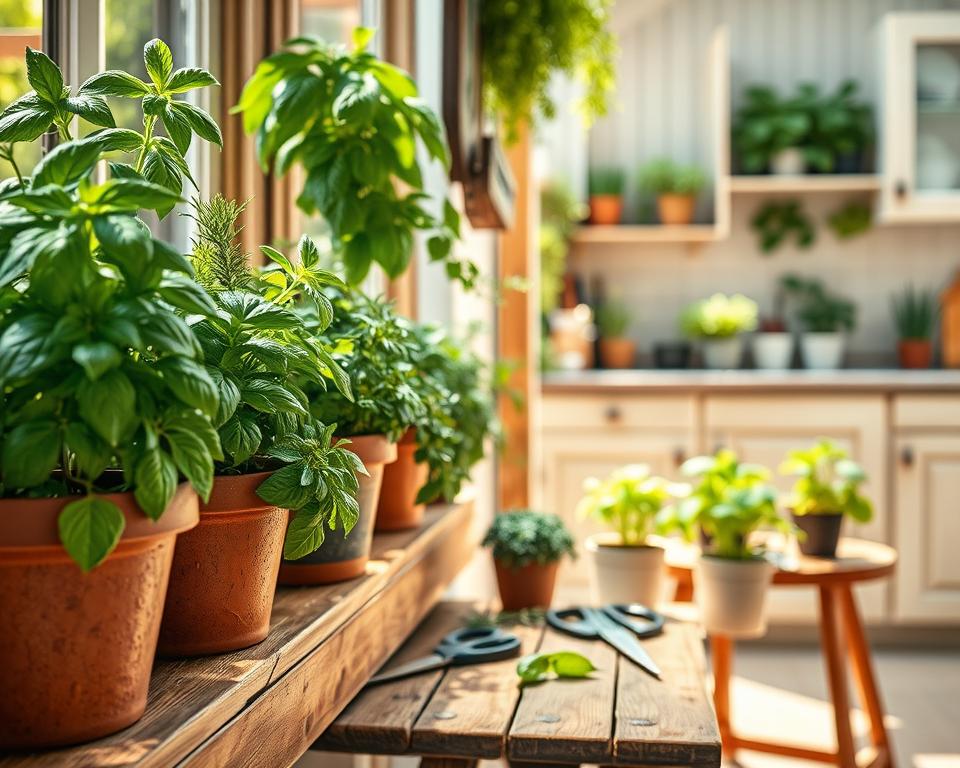
Soil and Pot Selection
The right soil and pot are the start of a healthy indoor herb garden. Use a well-draining potting mix to avoid waterlogged soil and root rot. Choose pots that are at least 6 inches deep for root growth. You can find these at gardening stores or online.
Watering Techniques
Watering is vital for your indoor herbs. They like consistent moisture but can’t handle too much water. Check the soil daily and water only when the top inch feels dry. This method prevents both too little and too much water.
Light Requirements
Light is also key for indoor herb gardening. Most herbs need bright, indirect light to grow. Place them near a sunny window or use grow lights. For more tips on setting up an indoor herb garden, check out this guide on growing herbs indoors.
Troubleshooting Common Problems
As I care for my indoor herbs, I’ve learned to spot and fix common issues early. Indoor herbs can face problems like pests, diseases, and watering issues, even with good care.
Pests and Diseases
It’s important to regularly check my plants for pests. Aphids, spider mites, and mealybugs are common pests. If I find any, I quickly isolate the plant and treat it.
- Aphids: These small, soft-bodied insects can spread disease. Use insecticidal soap or neem oil.
- Spider Mites: These tiny, spider-like insects cause yellowing leaves. Increase humidity and use miticides if necessary.
- Mealybugs: White, cottony patches indicate mealybugs. Use alcohol to gently remove them, then treat with insecticidal soap.
Overwatering and Underwatering
Watering problems are common with indoor herbs. Too much water can cause root rot, while too little causes stress.
To solve these issues, I check the soil moisture by inserting a finger into the soil. If it’s dry, it’s time to water. Good drainage and adjusting watering frequency based on the herb’s needs and environment help prevent these problems.
By being proactive and attentive to my indoor herb plants’ needs, I can prevent many common problems. This way, I enjoy a healthy, thriving indoor herb garden.
Harvesting and Using Familiar Herbs
Enjoying your indoor herbs all year starts with learning to harvest them right. I’ve found that how you pick your herbs affects their health and growth. It’s all about doing it correctly.
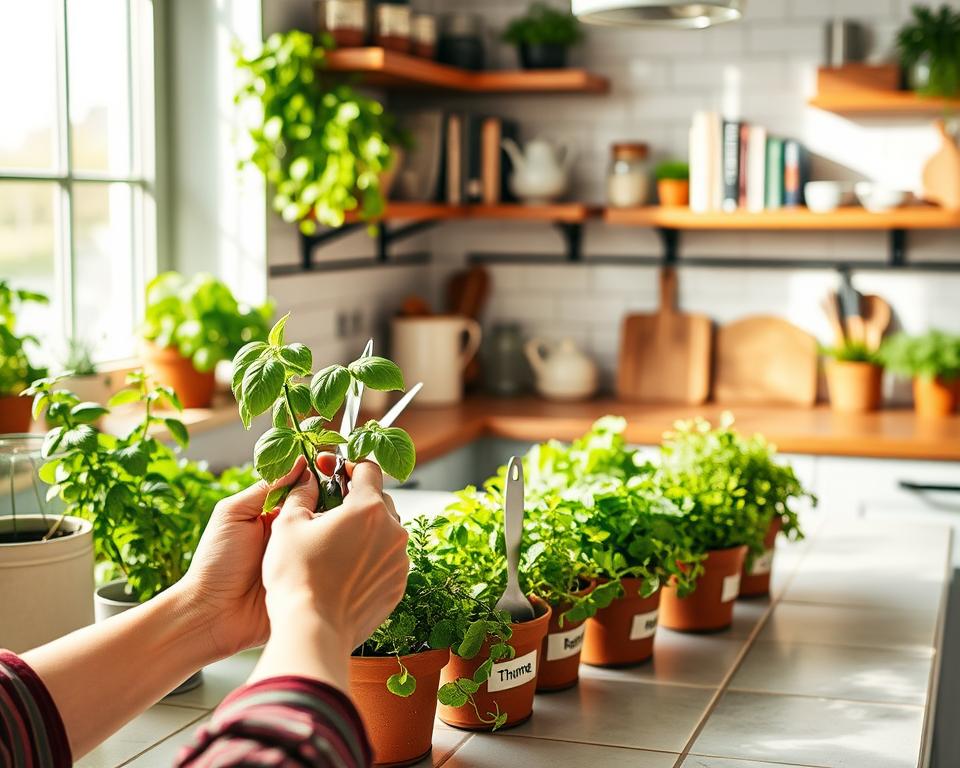
How to Harvest Without Killing Plants
Timing is key when picking herbs. I harvest mine in the morning, after the dew but before it gets hot. This makes them taste better and keeps the plant healthy.
To keep your herbs growing, harvest them the right way. Pinching or cutting off the top leaves encourages more growth. For basil, I remove flower buds to focus on leaf growth.
Best Culinary Practices
After picking your herbs, it’s time to use them in cooking. I add them to soups, salads, sauces, and marinades. The trick is to add them at the right moment for the best taste.
Consider saving some herbs for later. I freeze or dry them to enjoy all year. Freezing is easy: just chop and freeze in water or oil. Drying needs tying herbs in bunches and hanging them in a warm, dry spot.
By following these indoor herb growing tips, you can have a rich and flavorful herb garden all year.
Seasonal Considerations for Indoor Herbs
As the seasons change, my indoor herb garden needs adjustments to thrive. Indoor herbs are somewhat protected from outdoor changes. But they do need care that changes with the seasons.
Adjusting Care with the Seasons
In winter, many herbs need less water because the air is dry indoors. It’s also important to keep them away from cold drafts near windows or doors. On the other hand, summer may mean more watering as the plants grow more. It’s also key to keep them from getting too hot, as high temperatures can stress them out.
Some key seasonal adjustments include:
- Reducing watering in winter
- Increasing watering in summer
- Protecting herbs from cold drafts
- Monitoring temperature to prevent overheating
Indoor Temperature Tips
Most herbs like daytime temperatures between 65-75°F (18-24°C) and cooler nights. To keep them happy, consider these tips:
- Keep herbs away from heating vents and radiators.
- Use a thermometer to monitor the temperature near your herbs.
- Avoid placing herbs near drafty windows or doors.
By making these seasonal adjustments and keeping a good indoor temperature, you can enjoy a healthy and thriving indoor herb garden all year.
Combining Herbs for Flavor
Combining herbs is an art that can make your dishes better and add freshness. When you grow your own indoor herb garden, you can try out different herb mixes. These can make your cooking even more exciting.
Pairing Basil and Tomatoes
Pairing basil with tomatoes is a classic choice. This combo is loved in many cuisines, like Italian cooking. The sweetness of tomatoes goes well with basil’s bright, spicy taste.
Try using fresh basil in tomato salads or on pasta dishes. It makes a big difference in taste.
Using Mint in Desserts
Mint is great in sweet treats. It pairs well with chocolate, fruit, and creamy desserts. Add fresh mint to your favorite desserts, like mint chocolate chip ice cream or chocolate mint brownies.
You can also make a soothing tea with mint or add it to fruit salads. It brings a refreshing burst of flavor.
Trying out different herb mixes is fun and creative. It lets you discover new flavors and improve your dishes. Whether you’re experienced or new in the kitchen, growing your own best indoor herbs for cooking opens up new culinary adventures.
My Favorite Indoor Herb Recipes
I’m excited to share some of my favorite recipes that use indoor herbs. Growing herbs indoors lets me try new flavors and make my dishes better. From classic Italian dishes to refreshing teas, the options are endless.
Delicious Pesto
Fresh basil pesto is a favorite of mine. It’s made with basil, garlic, and olive oil. It’s great on pasta, pizza, or as a dip. Basil is a must-have for indoor cooking.
Soothing Mint Tea
Mint tea is another favorite of mine. It’s made by steeping fresh mint leaves in hot water. It’s perfect for relaxing after a long day. Growing mint indoors means I always have it on hand.
Chive and Cheese Spread
I also love a chive and cheese spread. It’s made with chives, cream cheese, and a bit of salt. It’s delicious on crackers or as a sandwich topping. Trying different herb combinations has really expanded my culinary horizons.