
Imagine having fresh fruit right in your living room. With indoor gardening, this is now possible, even in small spaces. Did you know that certain dwarf fruit trees can thrive indoors? They provide delicious fruit and a touch of greenery to your home?
I will guide you through growing dwarf fruit trees inside your home. This guide is for both seasoned gardeners and beginners. It will give you the steps and tips to grow these trees indoors successfully.
Key Takeaways
- Learn how to choose the right dwarf fruit trees for indoor growing.
- Understand the essential care and maintenance tips for healthy tree growth.
- Discover how to optimize indoor conditions for fruit production.
What Are Dwarf Fruit Trees?
Indoor gardening has become more exciting with dwarf fruit trees. These trees are bred to grow small, perfect for those with little outdoor space. They let you enjoy fresh fruit right at home.
Characteristics of Dwarf Fruit Trees
Dwarf fruit trees are small, making them great for indoor pots. They grow to be 6 to 10 feet tall. This size is achieved through grafting or using special rootstocks.
Benefits of Growing Dwarf Varieties
There are many perks to growing dwarf fruit trees indoors. They need little care, can grow in pots, and start producing fruit quickly. Plus, their small size makes them easy to handle and prune.
Popular Dwarf Fruit Tree Options
Some top picks for indoor dwarf fruit trees include dwarf Washington navel oranges and dwarf apple trees like ‘Red Delicious’ or ‘Gala’. Dwarf citrus trees like ‘Dwarf Meyer’ lemon are also great. These trees are fruitful and adapt well to indoor settings.
| Tree Variety | Expected Height | Fruit Production Time | Special Care Needs |
|---|---|---|---|
| Dwarf Apple | 6-8 feet | 2-3 years | Regular pruning |
| Dwarf Orange | 6-10 feet | 3-4 years | Protection from frost |
| Dwarf Meyer Lemon | 4-6 feet | 2-3 years | High humidity |
Knowing about dwarf fruit trees helps you choose the right ones for your indoor garden. With the right care, they can give you a lot of tasty fruit.
Choosing the Right Dwarf Fruit Trees for Indoors
Choosing the right dwarf fruit tree for indoors is key to success. The right tree can thrive and give you plenty of fruit. The wrong tree might not make it.
Factors to Consider When Selecting Trees
When picking a dwarf fruit tree for indoors, think about a few things. The tree’s size, how much fruit it will produce, and what it needs to grow are all important. Some trees are smaller and fruit faster than others. Make sure the tree fits your space and meets your fruit needs.
Key considerations include:
- Tree size and growth habits
- Pollination requirements
- Lighting needs
- Temperature and humidity tolerance
- Soil and fertilizer requirements
Best Dwarf Fruit Trees for Indoor Growing
Some dwarf fruit trees are better for indoors than others. Dwarf citrus trees like lemons and limes are great because they’re small and fruit quickly. Dwarf apple and cherry trees also do well indoors with the right care.
For more tips on growing dwarf fruit trees indoors, check out United Van Lines’ guide on the topic.
Seasonal Fruit Production in Dwarf Trees
Dwarf fruit trees produce fruit at different times. Knowing when your tree will fruit helps you care for it better.
| Fruit Tree Variety | Typical Production Season |
|---|---|
| Dwarf Lemon | Year-round, with peak production in winter |
| Dwarf Apple | Fall to early winter |
| Dwarf Cherry | Spring to early summer |
By picking the right dwarf fruit tree for indoors and knowing when it fruits, you can enjoy a lot of fruit. Growing your own fruit is rewarding.
Essential Tools for Indoor Gardening
Growing dwarf fruit trees indoors needs the right tools for a healthy environment. You’ll need to pick the best containers, soil, fertilizers, and lighting and humidity gear.
Planters and Pots
Choosing the right planters and pots is key for your dwarf fruit trees’ health. Look for containers that are at least 12-18 inches deep for the roots. Make sure the pots have drainage holes to avoid waterlogged soil.
- Terracotta pots are a popular choice due to their breathability.
- Plastic pots are lightweight and easy to move.
- Wooden planters can add a decorative touch to your indoor garden.
Soil and Fertilizer Recommendations
The right soil and fertilizer are vital for your dwarf fruit trees’ growth. Use a well-draining potting mix made for fruit trees. For fertilizers, a balanced, water-soluble one is best.
| Fertilizer Type | N-P-K Ratio | Application Frequency |
|---|---|---|
| Balanced Fertilizer | 10-10-10 | Every 2 weeks |
| High Phosphorus Fertilizer | 15-30-15 | Monthly |
Lighting and Humidity Equipment
Dwarf fruit trees need enough light to produce fruit. If natural light is not enough, use grow lights. For humidity, a humidifier or misting system can help keep the air moist.
Grow lights come in different spectrums and intensities. LED grow lights are energy-efficient and don’t get too hot.
Understanding the Growth Habit of Dwarf Trees
Dwarf fruit trees need special care to thrive indoors. Knowing how they grow is key to their success. This knowledge is essential for indoor fruit tree care.
Dwarf fruit trees are small, perfect for indoor spaces. But, their growth can differ based on the type. For example, some dwarf apple trees grow tall, while dwarf citrus trees spread out.
Growth Patterns and Sizes
Dwarf fruit trees usually grow 6 to 10 feet tall. They fit well in containers. Their growth is influenced by light, water, and food. Keeping them healthy and fruitful requires regular care.
Some important traits of dwarf fruit trees include:
- A compact root system, ideal for container growing
- A smaller canopy, requiring less pruning
- Early fruiting, often within the first few years of growth
Experts say, “Dwarf fruit trees are not only productive but also highly adaptable to indoor conditions, given the right care and attention.” Knowing these traits helps provide the best conditions for your trees.
Pruning and Training Techniques
Pruning is vital for indoor dwarf fruit tree care. It keeps the tree’s shape, encourages fruiting, and removes bad branches. Prune your trees every year with clean, sharp tools to avoid disease.
Effective pruning techniques include:
- Removing lower branches to allow for good air circulation
- Thinning out the center to let in more light
- Cutting back tips to encourage branching
Training your dwarf fruit tree means guiding its growth. Use soft ties to gently shape branches or remove select branches to direct growth.
By learning these pruning and training methods, you can keep your dwarf fruit trees healthy and fruitful. They will fit perfectly in your indoor space.
Creating the Perfect Indoor Environment
To keep your dwarf fruit trees healthy and productive, you need to create the right indoor conditions. Several factors need to be considered and adjusted.
Ideal Temperature and Humidity Levels
Dwarf fruit trees do best in temperatures between 65°F to 75°F (18°C to 24°C). They should be kept away from drafts and extreme temperature changes. Maintaining a consistent temperature is key for their growth.
Humidity is also important. Indoor dwarf fruit trees like a humid environment, between 40% to 60% relative humidity. You can increase humidity by using a humidifier or by placing the pot on a tray with water and pebbles.
| Tree Type | Ideal Temperature (°F) | Ideal Humidity (%) |
|---|---|---|
| Citrus | 65-75 | 40-60 |
| Apple | 60-70 | 40-50 |
| Pear | 65-75 | 50-60 |
Using Grow Lights Effectively
Indoor dwarf fruit trees may not get enough natural light. Using grow lights can help provide the necessary light. LED grow lights are a good choice because they are energy-efficient and provide the right spectrum for plant growth.
Make sure grow lights are not too close to the trees to avoid burning the leaves. A distance of 6-12 inches is recommended. Also, keep a consistent light schedule to mimic natural daylight hours.
Air Circulation and Ventilation Tips
Good air circulation is essential for healthy growth and to prevent fungal diseases. Make sure your dwarf fruit trees have enough space around them. Using fans can help improve air circulation.
Ventilation is also important. Open windows or use an exhaust fan to exchange stale air for fresh air, which is important in heated or air-conditioned spaces. This helps keep a healthy environment for your trees.
- Ensure good air circulation around your trees.
- Use fans to improve air movement.
- Regularly ventilate your indoor growing area.
Watering and Nutrient Needs
Proper watering and nutrients are key for dwarf fruit trees indoors. Knowing their needs helps them thrive.
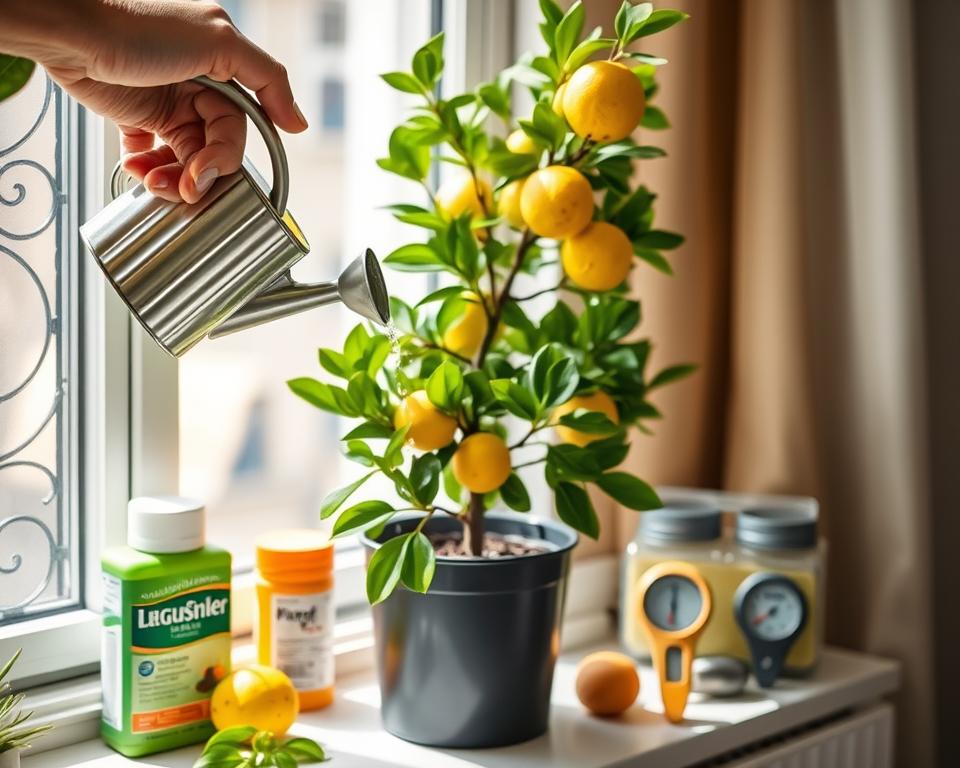
How to Water Dwarf Fruit Trees
Watering dwarf fruit trees right is important. Too much water can cause root rot, while too little can stress them. I check the soil by feeling it with my finger. If it’s dry, it’s time to water.
Watering Tips:
- Water until you see water coming out of the pot’s holes.
- Don’t let water get on the leaves to avoid diseases.
- Water less in winter when the tree is sleeping.
Fertilizing Schedules and Tips
Fertilizing is key for indoor fruit tree care. Dwarf fruit trees need regular food, more so when they’re growing. I use a balanced fertilizer (20-20-20) in spring and summer.
| Season | Fertilizer Type | Frequency |
|---|---|---|
| Spring | Balanced (20-20-20) | Every 2 weeks |
| Summer | Balanced (20-20-20) | Every 2 weeks |
| Fall | Low Nitrogen (15-30-15) | Monthly |
| Winter | No Fertilizer | – |
For more tips on fertilizing and caring for dwarf citrus trees, check the University of Maryland Extension’s resource. It offers detailed advice for your indoor dwarf fruit trees.
Managing Pests and Diseases
Growing dwarf fruit trees indoors comes with challenges like pests and diseases. I watch my trees closely for any signs of trouble. Early detection is key to keeping them healthy.
Common Pests and How to Combat Them
Indoor dwarf fruit trees face pests like aphids, spider mites, and mealybugs. I use different methods to fight these pests.
- Regularly check your trees for pests.
- Use neem oil or insecticidal soap to treat infestations.
- Keep infested trees separate to stop pests from spreading.
Aphids can be washed off with water or treated with neem oil. Spider mites are managed by raising the humidity and using miticides if needed.
| Pest | Signs of Infestation | Control Measures |
|---|---|---|
| Aphids | Curled or distorted leaves, sticky substance on leaves | Spray with water, neem oil, or insecticidal soap |
| Spider Mites | Fine webbing on leaves, yellowing or speckled leaves | Increase humidity, use miticides |
| Mealybugs | White, cottony patches on leaves or stems, stunted growth | Isolate plants, use insecticidal soap or neem oil |
Preventative Measures for Indoor Plants
Prevention is the best way to deal with pests and diseases in indoor dwarf fruit trees. I take steps to protect my trees.
- Keep the indoor environment clean and dust-free.
- Avoid overwatering, which can cause root rot and diseases.
- Ensure good air circulation around your trees.
By being proactive and taking these steps, I can lower the risk of pests and diseases in my indoor dwarf fruit trees.
Pollination and Fruit Set
Growing dwarf fruit trees indoors needs a good understanding of pollination. This process is key for trees to reproduce and produce fruit. Without it, your trees might not grow fruit, or the fruit could be deformed or fall off early.
Importance of Pollination for Dwarf Trees
Pollination is vital for dwarf fruit trees to grow fruit. Many dwarf trees need cross-pollination to produce fruit. Even self-fertile trees can get better fruit with cross-pollination.
There are several reasons why pollination is important:
- Increased fruit production: Proper pollination leads to more fruit.
- Better fruit quality: Well-pollinated flowers result in healthier, more robust fruit.
- Reduced fruit drop: Effective pollination minimizes the premature dropping of fruit.
Hand Pollination Techniques
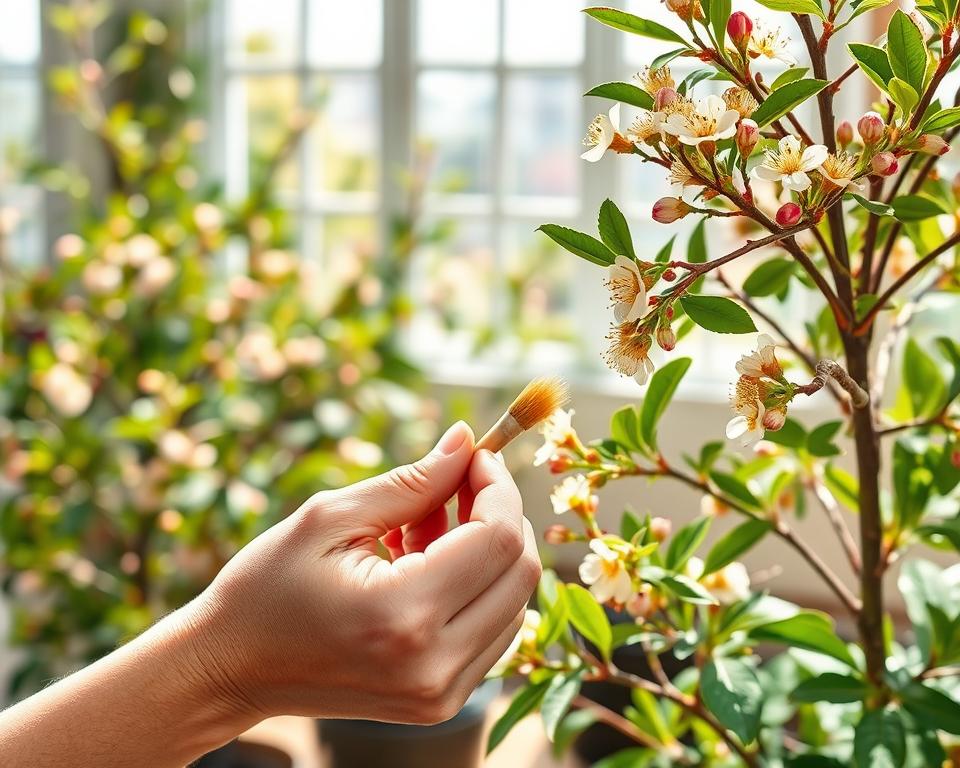
Indoor dwarf fruit trees often lack natural pollinators like bees. Hand pollination is then needed. This involves moving pollen from the male part of the flower to the female part.
To hand pollinate your dwarf fruit trees:
- Identify the right tools: Use a small, clean brush or a cotton swab to collect and transfer pollen.
- Collect pollen: Gently brush the anther to collect pollen on your tool.
- Transfer pollen: Carefully transfer the collected pollen to the stigma of the same or another tree.
- Repeat the process: Continue hand pollination for multiple flowers to ensure a good fruit set.
Tips for Effective Hand Pollination:
- Timing is key: Pollinate when flowers are fully open.
- Be gentle: Avoid damaging the delicate flower parts.
- Repeat as needed: Depending on the number of flowers, you may need to pollinate multiple times.
Understanding pollination and mastering hand pollination can greatly improve your indoor dwarf fruit trees’ fruit production. This not only increases your harvest but also boosts your trees’ health and vitality.
Harvesting Your Dwarf Fruit
Growing your own dwarf fruit trees is a joy. The moment you harvest is both rewarding and important. It’s the time to enjoy the fruits of your hard work.
When to Know It’s Time to Harvest
Knowing when to harvest your dwarf fruit is key for the best taste and texture. Check the fruit regularly as it gets ready. Look for color changes, softening, or a sweet smell. Each fruit has its own signs of ripeness.
Refer to specific guidelines for your dwarf fruit tree. The ripening time can vary a lot. For example, strawberries are ready when they turn red. Dwarf apples need a certain number of days after they flower.
How to Properly Harvest Fruits
When your fruits are ready, it’s time to harvest them right. Use clean, sharp tools to cut them from the tree. Leave a small piece of stem if you can. For berries, pick them by hand to avoid damage.
- Handle fruits gently to prevent bruising.
- Harvest in the morning, after the dew has dried but before the heat of the day.
- Regular harvesting can encourage the tree to produce more fruit.
By following these tips, you can enjoy a lot of healthy fruit from your dwarf trees. You’ll get to enjoy your hard work all season long.
Troubleshooting Common Issues
Even with the best care, indoor dwarf fruit trees can face problems. We’ll look at common issues and how to fix them.
Yellowing Leaves and Stunted Growth
Yellow leaves often mean too much or too little water, or not enough nutrients. Check your watering schedule and adjust it if needed. Make sure your tree gets the right amount of light and that the soil is just right.
If you think it’s a nutrient issue, try a balanced fertilizer. Also, look for pests that might stress your tree.
“The key to healthy leaves is a balance between watering, nutrients, and light.”
Underperforming Fruit Production
If your dwarf fruit tree isn’t producing fruit, there could be several reasons. First, make sure it’s getting adequate pollination. Some trees need cross-pollination to bear fruit.
Also, check if your tree has enough light. Not enough light can really cut down on fruit production. Extreme temperatures and humidity can also impact fruiting.
To boost fruit production, you might need to adjust your care routine. This includes pruning, fertilizing, and ensuring proper pollination.
Enjoying the Fruits of Your Labor
Growing dwarf fruit trees indoors is very rewarding. The best part is enjoying fresh, delicious fruits right at home. When you harvest your fruits, you can try out many culinary ideas.
Culinary Delights
You can make jams, preserves, and marmalades with your favorite fruits. Fresh fruits are great for snacking, adding to salads, or blending into smoothies. For example, homegrown lemons make a refreshing lemonade. Fresh berries are perfect with yogurt or oatmeal.
Sharing the Joy
Sharing your harvest with friends and family is a wonderful way to spread joy. You can give them a basket of fresh fruits or share your favorite recipes. This strengthens bonds and inspires others to start their own indoor gardening journey.