
Growing your own food indoors can be a game-changer. You can harvest fresh produce right in your own home. Some edible plants can even thrive in low light. This is great news for city dwellers or those with shaded homes.
I’ll share my knowledge on picking the right plants and techniques for a successful indoor garden. With the right approach, you can enjoy a variety of delicious and nutritious produce all year.
Key Takeaways
- Choose the right plants for low-light conditions.
- Understand the basics of indoor gardening.
- Learn techniques for maximizing your harvest.
- Discover how to care for your indoor garden.
- Enjoy a bountiful harvest of fresh produce.
Understanding Low-light Conditions
To grow low-light edible plants, knowing what low-light conditions are is key. These plants do well in places with little natural light. This makes them great for indoor gardens. As we explore low-light edible plants, understanding these conditions is vital.
Low-light areas lack direct sunlight. They are often found in rooms with small windows or blocked by trees or buildings. Edible plants for low light are made to grow well in these spots.
What are Low-light Plants?
Low-light plants have evolved to live in low light. They might have big leaves to catch more light or grow slowly to save energy. Chinese Evergreen and Pothos are examples. For low-light herbs, mint and parsley are good picks.
Identifying Low-light Areas in Your Home
To spot low-light spots, watch how light changes in your home. Places with little direct sunlight are perfect for these plants. You can also use a light meter to check the light level. Low-light spots usually have readings between 0-500 lux.
By knowing and finding low-light spots, you can make a great space for your edible plants for low light. This way, they can grow well and give you fresh food.
Benefits of Growing Edible Plants Indoors
Growing your own edible plants indoors has many benefits. It gives you fresh produce right at home. Plus, it offers several other advantages.
Nutritional Value of Fresh Herbs and Greens
When you grow your own low-light vegetables and herbs indoors, you get fresh, nutritious food all year. Herbs like basil, cilantro, and parsley are full of vitamins and antioxidants. Leafy greens like spinach and kale are rich in iron and calcium, making them great for a healthy diet.
For more tips on growing veggies in low light, check out Gardening Know How.
Cost Savings on Groceries
Having an indoor garden can save you a lot on groceries. Growing your own herbs and leafy greens means you don’t have to buy as much from the store. This saves money and ensures you always have fresh ingredients for your meals.
Some of the best plants for low light to grow indoors include Chinese Evergreen, Pothos, and ZZ Raven. These plants are easy to care for and make your home look great.
In summary, growing edible plants indoors is both practical and rewarding. It brings health and financial benefits. By adding low-light vegetables and herbs to your indoor garden, you enjoy fresh, nutritious food while cutting down on grocery bills.
Choosing the Right Low-light Edible Plants
Growing edible plants in low-light areas needs careful plant selection. In my indoor gardening journey, I’ve learned that some herbs and greens are great for low light.
Best Herbs for Low-light Environments
Some herbs handle low light better than others, making them ideal for indoor spots with little natural light. Chives are a hardy, easy-to-care-for choice for low light. Mint is also popular, but it can spread fast, so keep it in check.
Parsley and basil also do well in low light, but basil might need extra light to grow well. As
“The right herb can elevate any dish, and growing your own indoors ensures a fresh supply year-round.”
Leafy Greens that Thrive Indoors
Leafy greens are perfect for indoor gardening in low light. Lettuce and kale are favorites that grow well in low light. They’re not only healthy but also easy to care for.
- Lettuce: A versatile green that can be harvested continuously.
- Kale: Packed with nutrients and can be grown in a variety of low-light conditions.
- Spinach: Another nutritious option that thrives in low light.
By picking the right low-light edible plants, you can have a big harvest even in tough lighting. Remember, the secret to success is knowing what your plants need and giving them the right place to grow.
How to Create an Ideal Indoor Garden
An ideal indoor garden is key for growing healthy, thriving plants. To get there, you must think about several important factors. These factors help your plants stay healthy and productive.
Selecting Suitable Containers
Choosing the right containers is vital for your indoor plants. The container should fit the plant’s root system when it’s fully grown. Most herbs and leafy greens need a container that’s at least 6-8 inches deep. Also, the container’s material can impact your plant’s health. For example, terracotta pots are good because they let air in and prevent waterlogged soil. Plastic pots, on the other hand, keep moisture better.
Importance of Drainage in Pots
Good drainage is key to prevent root rot and keep your plants healthy. Without drainage holes, water can build up and harm your plants. To improve drainage, add small rocks or broken pottery at the bottom of the container before the potting mix. Here are some tips for better drainage:
- Use pots with built-in drainage holes.
- Add a layer of material like gravel or perlite at the bottom of the pot.
- Avoid using saucers that can collect water under the pot.
By focusing on these points, you can make a great indoor garden. It will help your low-light edible plants grow well.
Soil and Fertilization Tips
Soil and fertilization are key for growing low-light edible plants indoors. The right mix and fertilization can greatly help your plants thrive.
Understanding Potting Mix for Indoor Plants
Choosing the right potting mix is essential for indoor gardening. It should hold moisture but also drain excess water to avoid root rot. Look for mixes made for indoor plants, as they offer the best balance of nutrients and moisture.
Each plant has its own needs. So, pick a potting mix that fits your low-light edible plants. For example, mixes with peat moss or coconut coir keep moisture in. Perlite or vermiculite help with drainage.
Organic Fertilizers for Optimal Growth
Organic fertilizers are great for indoor gardening. They slowly release nutrients, helping plants grow without over-fertilizing. Compost, fish emulsion, and worm casting are full of nutrients and good for your plants.
Using organic fertilizers is good for your plants and the planet. It keeps your indoor garden healthy and productive while being kind to the environment.
Understanding soil and fertilization helps create a better home for your low-light edible plants. This leads to a rich harvest.
Watering Techniques for Low-light Plants
Learning how to water is key for healthy low-light plants. It’s important to know the right ways to water. This can greatly help your plants grow well.
Signs of Overwatering and Underwatering
It’s important to know when you’re watering too much or too little. Too much water can cause root rot. Not enough water can stress the plant.
Signs of Overwatering:
- Yellowing leaves
- Soft, mushy stems
- Water pooling around the base
Signs of Underwatering:
- Dry, crispy leaves
- Slow growth
- Wilting
“The key to successful watering is to strike a balance between providing enough moisture and avoiding excess water.”
Best Practices for Indoor Watering
To water your plants well, follow these tips:
| Watering Method | Description | Benefits |
|---|---|---|
| Bottom Watering | Water is absorbed through the drainage holes | Encourages healthy root growth |
| Top Watering | Water is poured directly onto the soil | Easy and straightforward |
Check the soil moisture by feeling it with your finger. If it’s dry, it’s time to water.
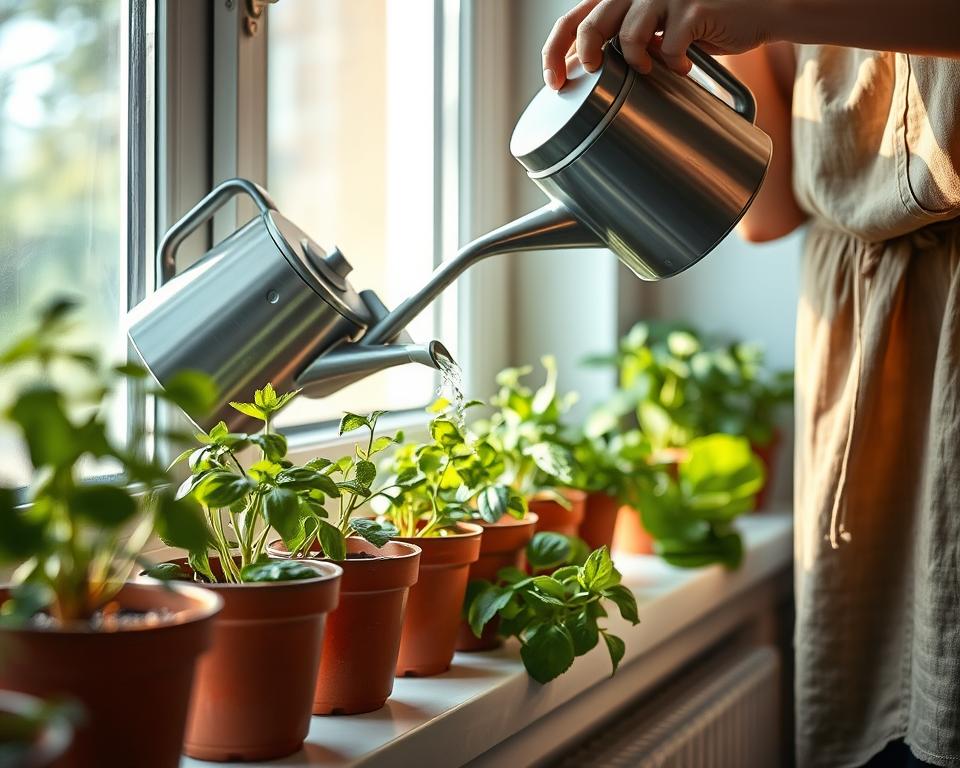
By following these tips and watching your plants, you can give them the right water. This will help them thrive.
Providing Necessary Light for Growth
Learning about indoor gardening has taught me the importance of light. Even low-light plants need some light to grow. Knowing what your plants need is key to a healthy garden.
Using Grow Lights Effectively
Grow lights are great for indoor gardens with little natural light. They give plants the spectrum and intensity they need. LED grow lights are good because they’re energy-efficient and don’t get too hot.
Tips for Using Grow Lights:
- Choose the right spectrum: Different plants need different light spectrums. Low-light plants do well with a mix of blue and red light.
- Adjust the duration: Most plants need 12-14 hours of light a day. Use a timer for consistency.
- Maintain the right distance: Keep grow lights the right distance from your plants to avoid burning them.
Natural Light vs. Artificial Light
Natural and artificial light both have their perks. Natural light is best, but it’s not always available indoors. Artificial light, like grow lights, can help fill in the gaps.
The secret to successful low-light gardening is finding the right balance of light and care. With the right lighting and care, your indoor garden can thrive with edible plants.
Pest Management in Indoor Gardens
Keeping an indoor garden healthy means fighting pests. Pests can harm your plants if not stopped.
Common Pests and How to Identify Them
Know the pests that target low-light plants. Common ones include:
- Aphids: Small, soft insects on leaves or stems.
- Spider Mites: Tiny, spider-like insects that turn leaves yellow or bronze.
- Fungus Gnats: Small flying insects that damage roots in moist areas.
- Mealybugs: Small, white, cottony insects on leaves and stems.
Spotting pests early is key. Check your plants often for signs like unusual growth or pests.
Eco-friendly Pest Control Solutions
Act fast when you find pests. Here are green ways to fight them:
- Neem Oil: A natural pesticide for many pests.
- Insecticidal Soap: Mild and works on soft-bodied pests like aphids and mealybugs.
- Predatory Insects: Ladybugs or lacewings can control pest numbers.
- Cultural Controls: Better air flow or not overwatering can prevent pests.
These methods help manage pests without harsh chemicals. This keeps your garden healthy and productive.
Harvesting Your Edible Plants
Harvesting my indoor garden’s low-light edible plants is the most rewarding part. It’s amazing to enjoy what you’ve grown. Harvesting correctly is key to getting the most from your garden.
When and How to Harvest Herbs and Greens
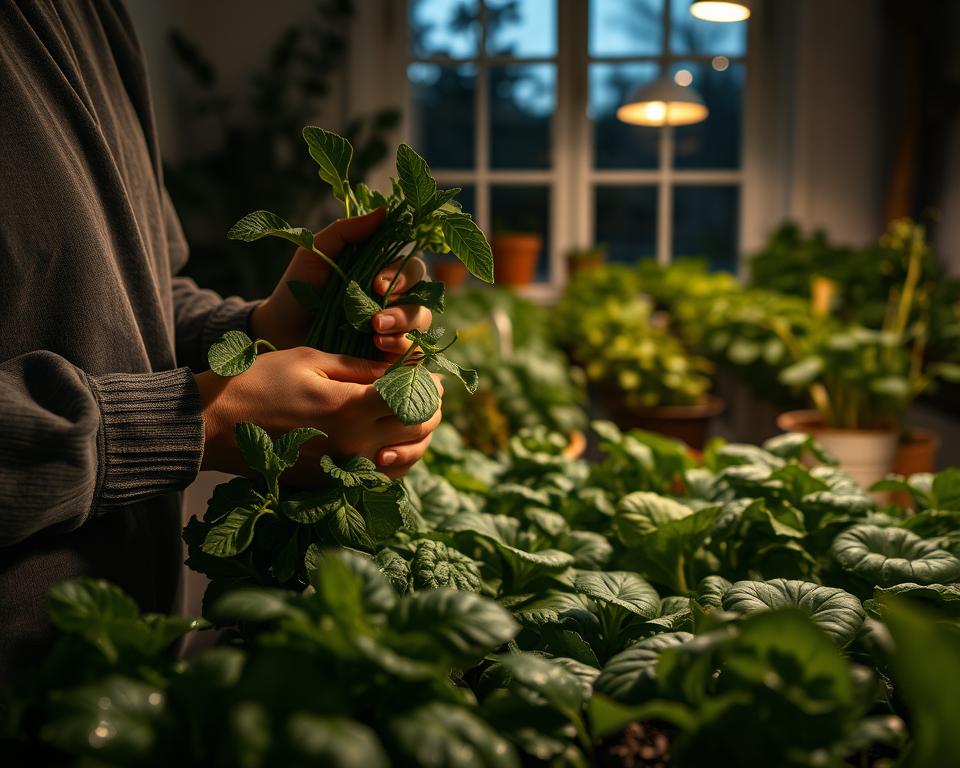
It’s important to know when and how to pick your low-light herbs and greens. For herbs like basil and mint, pick them just before they flower for the best taste. Simply pinch or cut off the top leaves to keep the plant growing.
For leafy greens like lettuce and kale, start picking individual leaves when they’re big enough. This method lets the plant keep growing. Use scissors to cut the leaves just above the soil, leaving enough for more growth.
“The way you harvest your herbs and greens can significantly impact their flavor and longevity. Harvesting at the right time and in the right manner ensures you enjoy the best taste and texture.”
Tips for Extending Harvest Time
To make your edible plants for low light last longer, give them the best growing conditions. Make sure they get the right water and nutrients. Also, watch for pests and diseases and act fast if you see any.
- Rotate your plants regularly to ensure even growth and prevent them from leaning towards the light source.
- Keep your indoor garden at a consistent temperature, as fluctuations can stress the plants.
- Consider using grow lights to supplement natural light, which is less during winter.
By following these tips and knowing when and how to harvest, you can enjoy a long and fruitful harvest. Happy gardening!
Seasonal Considerations for Indoor Gardening
Indoor gardening changes with the seasons. You need to adjust your care to keep your plants healthy. Temperature, humidity, and light all change, affecting your plants.
Adapting Care Routines in Different Seasons
Seasons mean different care needs for your plants. In winter, they might need less water because it’s drier and cooler. But in spring and summer, they grow faster and need more water and food.
Seasonal Care Adjustments for Low-light Edible Plants
| Season | Watering Frequency | Fertilization Needs | Temperature Considerations |
|---|---|---|---|
| Spring | Increase watering | Fertilize regularly | Maintain 65-75°F (18-24°C) |
| Summer | Water as needed | Continue fertilization | Keep below 85°F (29°C) |
| Autumn | Reduce watering | Reduce fertilization | Maintain 65-75°F (18-24°C) |
| Winter | Water sparingly | Avoid fertilization | Keep above 55°F (13°C) |
Temperature Management Tips
Keeping the right temperature is key for your indoor plants. Most prefer daytime temperatures of 65-75°F (18-24°C) and cooler nights. Don’t put plants near heaters, fireplaces, or drafty windows.
By adjusting your care to the seasons and managing temperature, your indoor garden will thrive all year.
Inspiration from My Own Low-light Garden
My indoor garden is full of low-light edible plants. It brings me joy and connects me to nature, even on dark days.
Personal Experiences and Success Stories
Growing edible plants indoors has been rewarding. I faced challenges and triumphs. My first success was growing lettuce in a dark spot. It thrived, giving me fresh greens for months.
Key takeaways from my journey include:
- Choosing the right plant varieties for low light.
- Keeping watering and fertilization consistent.
- Adapting to plants’ changing needs with the seasons.
I’ve also learned from failures. For example, growing basil in very low light didn’t work. This taught me about providing the right conditions for each plant.
Photos of My Edible Plants at Home
that thrive here.
In the photos, you’ll see leafy greens like kale and spinach. There are also herbs like parsley and cilantro. These plants make my meals fresh and brighten my indoor space.
I hope my story inspires you to grow your own low-light edible plants. With care and patience, you can enjoy a rich harvest, even in the darkest spots.
Resources for Further Exploration
As we wrap up our look at low-light edible plants, I’m thrilled to share some great resources. These will help you grow and learn more. Whether you’re an experienced gardener or just starting, these resources will boost your indoor garden skills.
Recommended Reading
If you want to learn more about low-light gardening, check out books on indoor gardening and edible plants. They offer practical tips and insights for a thriving indoor garden.
Connecting with Fellow Gardeners
Joining online communities for indoor gardening is a great idea. It lets you connect with others, share knowledge, and learn from their experiences. You’ll find new ways to grow edible plants in low light and get tips for a healthy garden.
Exploring these resources will help you become a skilled low-light gardener. You’ll be able to grow a variety of tasty edible plants right at home.