

I recently found out that aquaponics can be set up at home. It lets you grow fish and plants together in a small, self-sustaining ecosystem. This new way of growing food is changing how we think about it.
Using a desktop aquaponics system, you can get fresh veggies and healthy fish. It’s a great way to live sustainably and enjoy hobby farming.
Key Takeaways
- Desktop aquaponics allows for compact, home-based food production.
- It combines fish and plant growth in a symbiotic ecosystem.
- This method promotes sustainable living and reduces environmental impact.
- It’s ideal for hobbyists and those interested in sustainable food sources.
- Fresh produce and healthy fish can be enjoyed year-round.
What is Desktop Aquaponics?
Desktop aquaponics is a mix of new tech and green living. It lets people grow food at home in a small, smart way. It’s a big step forward in indoor gardening and living green.
Definition and Overview
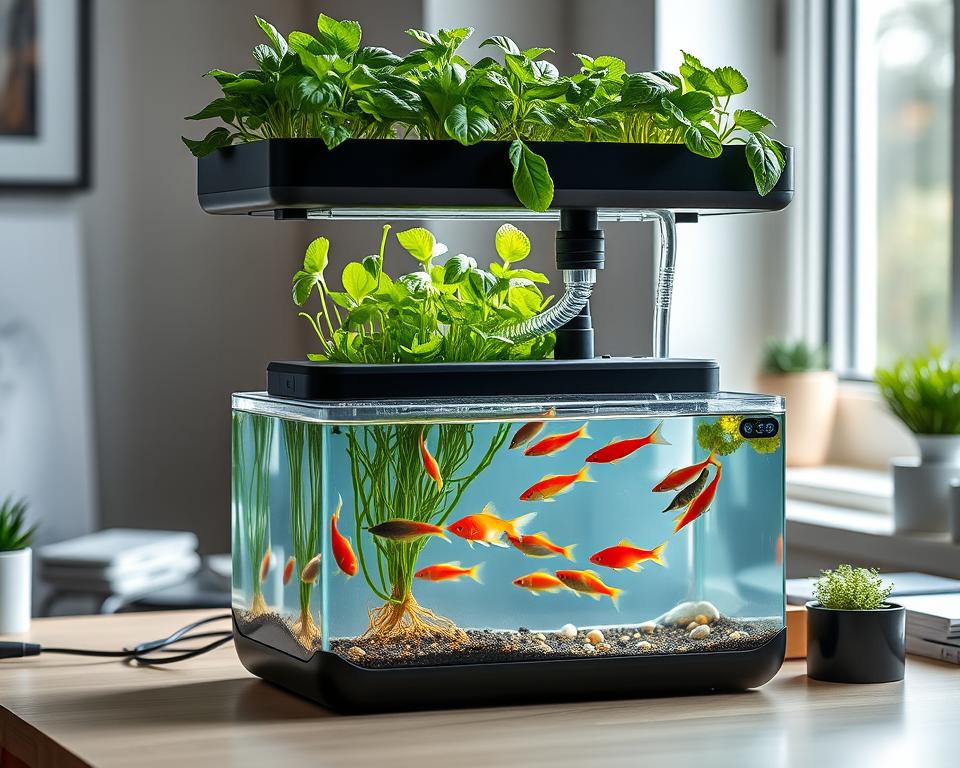
Desktop aquaponics is a small, all-in-one indoor aquaponics system for tiny spaces. It’s an aquaponics kit for small spaces that links fish farming with plant growing. It uses water from the fish tank to feed the plants, making a loop that saves water and grows more food.
How It Works
In a desktop aquaponics setup, fish waste turns into food for plants with the help of good bacteria. Plants clean the water for the fish, making a good cycle. A water pump moves water between the fish tank and the plant bed.
The main parts of a desktop aquaponics system are:
- A fish tank for the fish
- A grow bed for the plants
- A water pump to move water
- An aeration system for oxygen
- Beneficial bacteria to turn fish waste into plant food
| Component | Function |
|---|---|
| Fish Tank | Houses the fish, providing a healthy environment |
| Grow Bed | Supports plant growth using nutrient-rich water |
| Water Pump | Circulates water between the fish tank and grow bed |
Knowing how desktop aquaponics works helps people see its value for growing food in small areas.
Benefits of Desktop Aquaponics
Desktop aquaponics is great for growing your own food and fish. It’s productive and has many benefits. It’s perfect for those who want to grow their own food.
Eco-Friendly Solution
Desktop aquaponics is an eco-friendly solution. It uses less water and no chemicals. The water goes from the fish tank to the plants and back, saving water.
Some eco-friendly points are:
- Less water used
- No chemicals needed
- It’s good for the planet because it’s local
Fresh Produce and Fish
A compact aquaponics garden lets you grow many foods. You can have leafy greens, herbs, and even fish. It’s great for getting healthy food at home.
Some foods you can grow are:
- Leafy greens like lettuce and kale
- Herbs such as basil and mint
- Vegetables like tomatoes and cucumbers
Educational Opportunities
Desktop aquaponics is also a great educational tool. It teaches about ecosystems, sustainability, and science. It’s perfect for schools and homeschooling.
Here’s what you can learn:
- About ecosystems and biodiversity
- How to grow food sustainably
- Basic biology, chemistry, and environmental science
Choosing the Right System
Starting a desktop aquaponics system requires careful choice. I learned the importance of picking the right parts for my mini setup. It’s key to making your system thrive.
Size and Space Considerations
Before starting, measure your desk space. This will tell you the biggest system you can fit. Compact systems work well in small areas and are just as effective.
Think about the system’s height, width, and depth. Also, remember space for upkeep. A small aquaponics tank is perfect for beginners.
Types of Aquaponics Systems
There are many aquaponics systems to pick from. Each has its own benefits. Here are a few common ones:
- Nutrient Film Technique (NFT): Great for leafy greens and herbs.
- Media Bed: Good for many plants and is easy to set up.
- DWC (Deep Water Culture): Simple to care for and perfect for newbies.
I chose a media bed setup for its flexibility and simplicity.
Key Features to Look For
When picking a desktop aquaponics system, look for these key features:
| Feature | Description |
|---|---|
| Water Pump | Ensures water moves and gets oxygen. |
| Filtration System | Keeps water clean and clear. |
| Grow Bed Material | Affects plant growth and system durability. |
By focusing on these, you’ll find a mini aquaponics setup that fits your needs. It will create a healthy space for fish and plants.
Essential Components for Your Setup
To make a thriving desktop aquaponics system, knowing the key parts is vital. A good system has several important components. These work together to keep fish and plants healthy.
Fish Tank Requirements
The fish tank is the core of your system, home to the fish that feed your plants. Pick a tank that fits your space and the number of fish you want. A bigger tank can hold more fish but needs more room and resources.
- Size and Material: Go for a tank made from durable, safe materials like glass or food-grade plastic. It should be big enough for the water your system needs.
- Accessibility: Make sure the tank is easy to clean and handle fish from.
- Aeration and Circulation: Good air and water flow are key for fish health. Add aerators or pumps for this.
Grow Bed Essentials
The grow bed is where your plants grow, using water from the fish tank. Picking the right grow bed is key for your system’s success.
- Media: Pick a grow medium like clay pebbles or rockwool. It should help roots grow and hold water well.
- Size and Depth: The bed needs to be deep enough for your plants’ roots. Aim for 10-12 inches deep.
- Drainage: Make sure the bed drains well to avoid waterlogging and root rot.
Water Pump and Filtration
A water pump and filtration system are vital for keeping water quality and flow good. The pump moves water from the fish tank to the grow bed and back. The filter removes waste.
- Pump Selection: Pick a pump that fits your system’s volume and flow needs.
- Filtration Types: Use a mechanical filter for solid waste, then a biological filter to change ammonia to nitrate.
In summary, setting up a successful desktop aquaponics system needs careful planning and the right parts. Knowing what your fish tank, grow bed, and water pump and filter need helps create a healthy space for fish and plants.
Popular Plants for Desktop Aquaponics
Desktop aquaponics lets you grow many plants at home. You can have fresh food all year, no matter the season outside.
Leafy Greens
Leafy greens are top picks for desktop aquaponics. They grow fast, are healthy, and ready in 2-3 weeks. Favorites include lettuce, kale, and spinach. These plants love the rich water from indoor systems.
Herbs
Herbs are great for your small garden. They make food taste better and can be dried for later. Basil, mint, and cilantro grow well here. They need little care and can be picked often.
Edible Flowers
Edible flowers make food look good and taste great. Nasturtiums, violas, and pansies are good for indoor gardens. They’re easy to care for and brighten up your space.
For your indoor garden to do well, the water must be full of nutrients. Plants need 4-6 hours of light daily. With the right light and water, your garden will grow well, giving you fresh food all the time.
Choosing the Right Fish for Your System
The key to a thriving desktop aquaponics system is picking the right fish. When setting up an aquaponics kit for small spaces or a small aquaponics tank, choose fish that fit your system’s size. They should also be resilient and easy to care for.
Best Fish for Beginners
For beginners, some fish species are better than others. They are hardy and easy to care for. Here are some good choices:
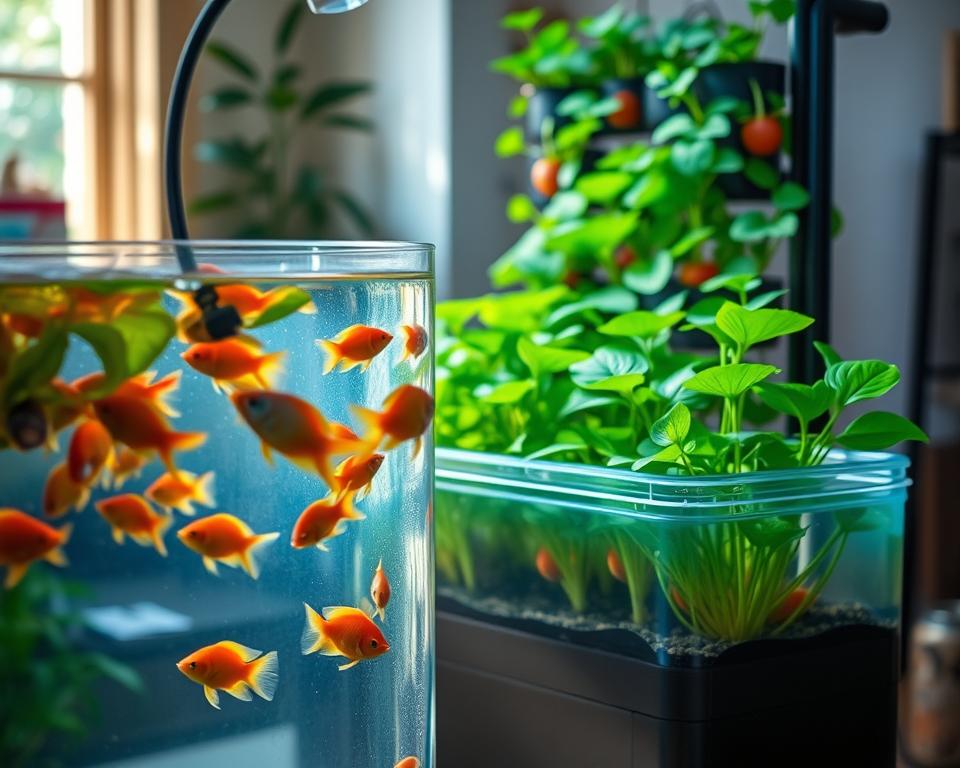
- Goldfish: They can handle cooler temperatures and are easy to care for.
- Guppies: These small, colorful fish do well in small spaces and are low maintenance.
- Tilapia: They need warmer water but are strong and grow fast in a good system.
For more details on the best fish for desktop aquaponics, check out this resource.
Fish Care and Maintenance
Keeping your fish healthy is key to a good aquaponics system. You need to check the water quality, feed them right, and keep the tank clean. It’s also important to make sure both fish and plants do well together.
Nutrient Benefits of Fish Waste
Aquaponics turns fish waste into nutrients for plants. Fish waste is rich in ammonia, which bacteria turn into nitrate. Nitrate is great for plants. This natural process means you don’t need to use a lot of fertilizers.
In short, picking the right fish for your system is important. It involves thinking about your system’s size, the fish’s needs, and keeping the ecosystem balanced. With the right fish and care, your aquaponics system will thrive.
Setting Up Your Desktop Aquaponics System
Setting up your desktop aquaponics system is easy and fun. You can make a mini aquaponics setup or a tabletop aquaponics system. Knowing the key parts and steps is key to success.
Step-by-Step Assembly
Assembling your system needs careful planning and detail. Here are the basic steps:
- Unpack and check all parts to make sure everything is there.
- Set up the fish tank, making sure it’s clean and ready for water.
- Build the grow bed and attach it to the system.
- Put in the water pump and filtration system.
- Connect the pipes and check for leaks.
These steps will help you build a strong base for your aquaponics system.
Water Cycle and Chemistry
It’s important to know the water cycle and chemistry for a healthy system. The water moves between the fish tank and the grow bed. Bacteria turn fish waste into nutrients for plants, and plants clean the water for fish.
Key things to watch include:
- pH levels: Keep it between 6.8 and 7.2 for best health.
- Ammonia and nitrite levels: Test these often to keep the balance right.
- Water temperature: Keep it right for fish and plants.
Fish and Plant Introduction
After setting up and starting the water cycle, it’s time to add fish and plants. Start with hardy fish and plants that do well in aquaponics.
- Start with a few fish and watch their health before adding more.
- Pick plants that do well in aquaponics, like leafy greens and herbs.
- Slowly add plants to the grow bed, avoiding overcrowding.
By following these tips, you’ll be on your way to a thriving desktop aquaponics system.
Maintenance Tips for Success
Keeping your desktop aquaponics system in top shape is key. It lets you grow healthy fish and plants. With a few simple steps, your system will stay balanced and productive.
Regular Water Checks
Checking water quality is vital for your fish and plants. Regular tests spot problems early. Watch for pH, ammonia, nitrite, and nitrate levels.
- Test your water at least once a week
- Keep a log of your water test results
- Adjust your system’s parameters as needed
Feeding and Care for Fish
Feeding your fish right is essential. Too much food can harm water quality, while too little stresses them.
Tips for Feeding Your Fish:
- Feed your fish 2-3 times a day, only as much as they can eat in a few minutes
- Choose high-quality fish feed that fits your fish species
- Watch for signs of stress or disease in your fish
Pruning and Harvesting Plants
Pruning and harvesting plants keep them healthy and growing. Pruning controls size and encourages bushy growth. Harvesting gives you fresh produce.
Best Practices for Pruning and Harvesting:
- Prune plants often to keep them healthy and promote growth
- Harvest crops when ready to keep production going
- Use clean tools to avoid spreading disease
Follow these maintenance tips for a thriving sustainable aquaponics solution. It will give you fresh produce and fish for your home aquaponics setup. Regular checks and balances catch issues early, ensuring your system’s long-term success.
Troubleshooting Common Issues
Fixing problems is essential for a healthy indoor aquaponics system. Issues can pop up, but being ready helps a lot.
Algae Growth Prevention
Algae can be a big problem in desktop aquaponics. Make sure your system is balanced and water circulates well. Limiting light exposure also helps, as too much light encourages algae.
Fish Health Problems
Keep an eye on your fish all the time. Watch for signs of stress or illness, like being very tired or swimming oddly. Maintaining optimal water quality is key for their health. So, check the water often.
Plant Growth Issues
If your plants aren’t doing well, check a few things. Look at nutrient levels, pH, and light. Adjusting the system’s parameters might fix the problem. Make sure plants get enough nutrients from the fish waste.
Being proactive and quick to solve problems keeps your system healthy and productive. Regular care and watching your system closely can prevent many issues.
Integrating Technology with Aquaponics
In my experience with desktop aquaponics, adding modern tech boosts efficiency and productivity. Smart sensors, monitoring systems, and automated feeders make compact aquaponics gardens more sustainable and thriving.
Smart Sensors and Monitoring
Smart sensors and monitoring systems are big advancements in aquaponics. They track water quality, temperature, and more in real-time. For example, pH sensors keep levels right for fish and plants.
This data is available on phones or computers. It lets users make quick changes to keep the environment healthy.
Benefits of smart sensors include:
- Early detection of water quality issues
- Remote monitoring capabilities
- Data logging for historical analysis
Automated Feeding Systems
Automated feeding systems are another big tech addition to aquaponics. They feed fish on schedule and in the right amount. This keeps fish healthy and water quality high by avoiding food waste.
Automated feeders have key features like:
- Programmable feeding schedules
- Precise control over feed quantity
- Reduced labor for aquaponics maintenance
By using these technologies in an aquaponics kit for small spaces, gardening becomes easier and more efficient. As tech improves, we’ll see even more ways to make desktop aquaponics better.
Inspiring Success Stories
I’ve seen how desktop aquaponics can turn a room into a thriving space. It’s a new way to grow plants and raise fish at home. It’s great for gardeners and teachers.
Home Gardeners Transforming Spaces
Many people have added desktop aquaponics to their homes. They enjoy fresh food and the calm of caring for fish. A small tank can even be a cool addition to your kitchen or living room.
Desktop aquaponics is very flexible. It works in big homes or small apartments. This lets people grow their own food, even in cities.
Classroom Projects using Aquaponics
Teachers are using aquaponics in classrooms. It helps teach about biology, ecology, and sustainability. Students learn about how living things are connected.
Using aquaponics in class makes learning fun. It boosts STEM education. So, more schools are adding it to their lessons. This helps raise a green and smart next generation.
Getting Started Today
Starting a desktop aquaponics journey is rewarding. It gives you fresh produce and fish. When looking into tabletop systems, knowing the first steps is key.
Budgeting for Your First System
Setting a budget for your first system is important. You need to think about the cost of things like the fish tank and grow bed. Looking around for prices helps find a system that fits your budget.
Local Resources and Communities
Joining local aquaponics groups is helpful. They offer advice and support. Many cities have online forums where people share their experiences.
Future of Desktop Aquaponics Systems
The future of desktop aquaponics is bright. New tech and a growing interest in green living are driving progress. As more people use these systems, we’ll see even better solutions.