
Growing your own lettuce in containers is easy and rewarding. You can enjoy fresh, crisp greens right at home, even with little space. More people are now growing their own food, thanks to urban gardening.
Container gardening lets you grow many plants in small areas. It also brings greenery to cities. By following simple steps, you can harvest lots of tasty lettuce.
Key Takeaways
- Choose the right variety of lettuce for container gardening.
- Understand the basic requirements for growing lettuce in containers.
- Learn how to prepare your containers for planting.
- Discover tips for maintaining healthy lettuce plants.
- Find out how to harvest your lettuce for maximum freshness.
Understanding the Benefits of Container Gardening
Container gardening is great for city dwellers and those with little space. It lets you grow your own food right at home. This method has many benefits, making it popular among many gardeners.
Accessibility for Urban Gardeners
Container gardening is perfect for city gardeners. They often face challenges like small spaces or poor soil. Using containers, they can create a garden on balconies, patios, or indoors. A guide on container gardening for vegetables shows it gives more control over growing conditions.
Great for Smaller Spaces
Container gardening is ideal for small spaces. You can grow lettuce on tiny balconies or small backyards. This flexibility lets you enjoy fresh lettuce, even in tight spots.
Year-Round Growing Opportunities
Container gardens can be moved with the seasons. This is great for lettuce, which likes cooler weather. By moving containers, you can grow lettuce all year long.
| Feature | Traditional Gardening | Container Gardening |
|---|---|---|
| Space Requirements | Large garden beds | Small, flexible spaces |
| Soil Control | Limited control over soil quality | High control over soil quality |
| Mobility | Fixed garden beds | Containers can be moved |
The table shows container gardening is more flexible and controlled. It’s perfect for growing lettuce and other veggies in different places.
Selecting the Right Lettuce Varieties
Choosing the right lettuce variety is key to a successful container garden. There are many types of lettuce out there. Knowing the differences will help you make a good choice.
Leaf Lettuce vs. Head Lettuce
There are mainly two types of lettuce: leaf and head. Leaf lettuce is great for containers because it grows easily and can be picked over and over. Head lettuce, by contrast, needs more room and care because it forms a tight head.
Fast-Growing Options
Fast-growing lettuce varieties are perfect for containers. They can be ready to eat in just 20 days. This means you can harvest them many times during the growing season. ‘Red Leaf’ and ‘Green Leaf’ are some of the fastest-growing types.
Best Varieties for Container Growth
Some lettuce varieties are made for growing in small spaces. They are more compact, produce fewer leaves, and are less likely to bolt. ‘Tom Thumb’ and ‘Winter Density’ are good examples.
When picking lettuce for your container garden, think about how fast it grows, the size of its leaves, and its color. This will help you choose the best variety for your needs.
Choosing the Ideal Containers for Lettuce
Choosing the right container is key for growing lettuce. The right one can make a big difference in your lettuce’s health and growth.
Recommended Sizes and Shapes
For lettuce, a container that’s 6-8 inches deep is best. This depth helps the roots grow well. Wider containers are better because they give lettuce more room to spread.
Here are some key considerations for container sizes:
- Minimum depth: 6 inches
- Minimum width: 8 inches
- More surface area allows for more plants
Material Considerations
The material of your container affects soil temperature and moisture. Common materials include:
| Material | Pros | Cons |
|---|---|---|
| Clay | Good drainage, aesthetically pleasing | Can dry out quickly |
| Plastic | Retains moisture, lightweight | May require more careful watering |
| Wood | Natural look, good insulation | Can rot if not properly treated |
Ensuring Proper Drainage
Good drainage is key to avoid waterlogged soil. This can cause root rot and other problems. Make sure your container has adequate drainage holes. Adding a layer of small rocks or broken pottery at the bottom helps too.
Here are some tips for ensuring proper drainage:
- Drill sufficient drainage holes in the container
- Add a layer of gravel or small rocks
- Use a well-draining potting mix
Preparing Soil for Container Growing
The foundation of a thriving container lettuce garden lies in its soil. The right mix can make a huge difference in your lettuce plants’ health and productivity.
Importance of Quality Potting Mix
A high-quality potting mix is key. It keeps moisture but drains excess water, preventing waterlogged soil. This is vital for container gardening for beginners, as it avoids common mistakes like overwatering.
When picking a potting mix, choose one made for containers. Look for ingredients like peat moss or coconut coir for better moisture retention.
Adding Nutrients for Thriving Plants
Lettuce grows fast and needs nutrient-rich soil. Using organic fertilizers provides the necessary nutrients. A balanced, water-soluble fertilizer promotes leafy growth.
Adding compost to your potting mix also boosts soil fertility and structure.
pH Balance for Lettuce Growth
Lettuce likes a slightly acidic to neutral soil pH, between 6.0 and 7.0. The right pH balance is key for nutrient uptake and plant health. If your mix is off, adjust it with lime or elemental sulfur.
Regularly check your soil’s pH to ensure your lettuce plants thrive.
By focusing on these soil preparation aspects, you’ll grow delicious and healthy lettuce in containers. Remember, how to care for lettuce in pots begins with the right soil. With proper care, you’ll enjoy a fresh, crisp lettuce harvest.
Optimal Planting Techniques for Lettuce
To get the most out of your container-grown lettuce, it’s key to start with the right planting techniques. Whether you’re a seasoned gardener or just starting out, knowing the best practices for planting lettuce can make a big difference in your harvest.
Sowing Seeds vs. Transplanting Seedlings
One of the first decisions you’ll need to make when planting lettuce is whether to sow seeds directly into your containers or to transplant seedlings. Sowing seeds directly can be cost-effective and lets you control spacing better. On the other hand, transplanting seedlings can give your lettuce a head start, which is important for varieties that take longer to mature.
“The key to successful lettuce cultivation lies in the initial planting technique.”
When deciding between sowing seeds and transplanting seedlings, think about the specific needs of your lettuce variety and your local climate. Some lettuce varieties are bred for direct sowing, while others may do better when started indoors before being transplanted outside.
Spacing Guidelines for Healthy Growth
Proper spacing is key to prevent overcrowding, which can lead to reduced air circulation and increased risk of disease. For most lettuce varieties, a spacing of about 4-6 inches between plants is recommended. But, this can vary depending on the specific variety you’re growing. Leaf lettuce, for example, can be grown closer together than head lettuce.
- Check the seed package or seedling label for specific spacing recommendations.
- Consider the mature size of the lettuce variety when determining spacing.
- Don’t be afraid to thin out seedlings to maintain proper spacing.
Timing Your Planting for Success
Timing your planting to avoid extreme weather conditions and to align with your local climate’s growing seasons can significantly impact the success of your lettuce crop. In most regions, spring and fall are the best times to plant lettuce, as these seasons offer the cooler temperatures that lettuce prefers.
For container gardeners, it’s also important to consider the microclimate around your containers. For example, if your containers are located in a spot that receives intense afternoon sun, you may need to adjust your planting schedule.
Providing the Right Amount of Sunlight
Sunlight is key for lettuce to grow well. The amount needed can change based on where you live and where you put your containers. Lettuce does best in partial shade to full sun, making it great for many container gardens.
Ideal Sun Exposure for Lettuce
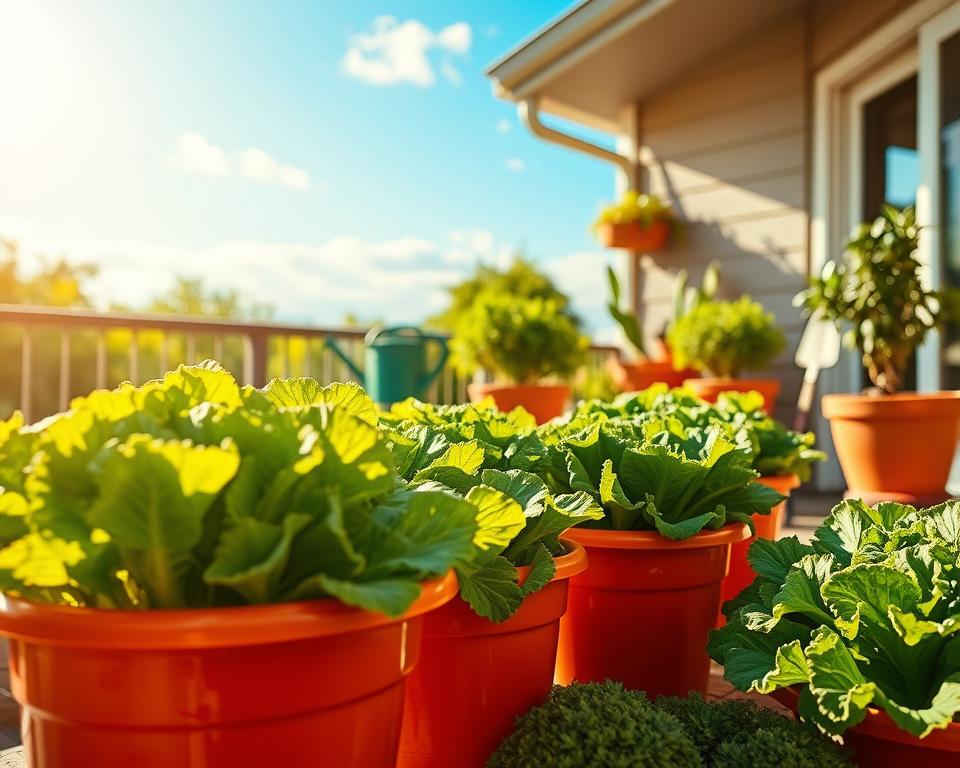
Most lettuce types need 4 to 6 hours of direct sunlight each day. But in warmer places, some shade is good, too. This helps prevent the lettuce from getting too hot and scorching. For container gardening for beginners, knowing how much sun lettuce needs is very important.
Managing Shade During Hot Days
In very hot places, it’s important to manage shade. A light curtain or shade cloth can protect lettuce from too much heat. This trick is very helpful for urban gardening techniques where containers are in sunny spots.
Rotating Containers for Even Sunlight
Rotating your containers is key for even growth. It makes sure all parts of the lettuce get enough sunlight. This is very useful for growing vegetables in small spaces, as it helps use space and sunlight better.
| Sunlight Hours | Lettuce Variety | Climate Consideration |
|---|---|---|
| 4-6 hours | Leaf Lettuce | Cooler climates |
| 2-4 hours | Romaine Lettuce | Warmer climates |
| 6+ hours | Buttercrunch Lettuce | Partial shade in hot climates |
Watering and Maintaining Moisture Levels
Watering lettuce in containers is an art that needs careful attention. Lettuce needs consistent moisture, which is key when it’s growing leaves. The goal is to keep the soil moist but not too wet.
Watering Techniques
To see if your lettuce needs water, check the soil moisture. Stick your finger into the soil up to the knuckle. If it’s dry, it’s time to water.
Watering in the morning helps the plants absorb water all day.
Effective Watering Tips:
- Water gently but thoroughly.
- Avoid getting water on the leaves to prevent fungal diseases.
- Use a saucer under the container to catch excess water.
Signs of Overwatering and Underwatering
Overwatering can cause yellowing leaves and soft stems. Underwatering makes leaves wilt and taste bitter. Regular checks can help catch problems early.
| Condition | Signs | Action |
|---|---|---|
| Overwatering | Yellowing leaves, mushy stems | Reduce watering frequency |
| Underwatering | Wilted leaves, bitter taste | Increase watering frequency |
Effective Water Retention Techniques
Methods like mulching and using moisture-retentive potting mixes help keep moisture right. Mulching retains soil moisture and keeps weeds away.
“Mulching is a simple yet effective way to retain moisture in the soil and reduce the need for frequent watering.”
Choosing a good potting mix for containers is also key. These mixes hold moisture but also drain excess water. This prevents the soil from getting too wet.
Managing Temperature and Environmental Conditions
Lettuce loves cool weather and needs the right temperature to grow well in containers. It’s key to know and control the temperature and environment around your lettuce.
Ideal Temperature Range for Lettuce
Lettuce grows best when it’s between 40°F and 75°F (4°C and 24°C). If it gets too hot or cold, it can bolt or taste bitter. Keeping the right temperature is vital for a good harvest.
Protecting Lettuce from Extreme Weather
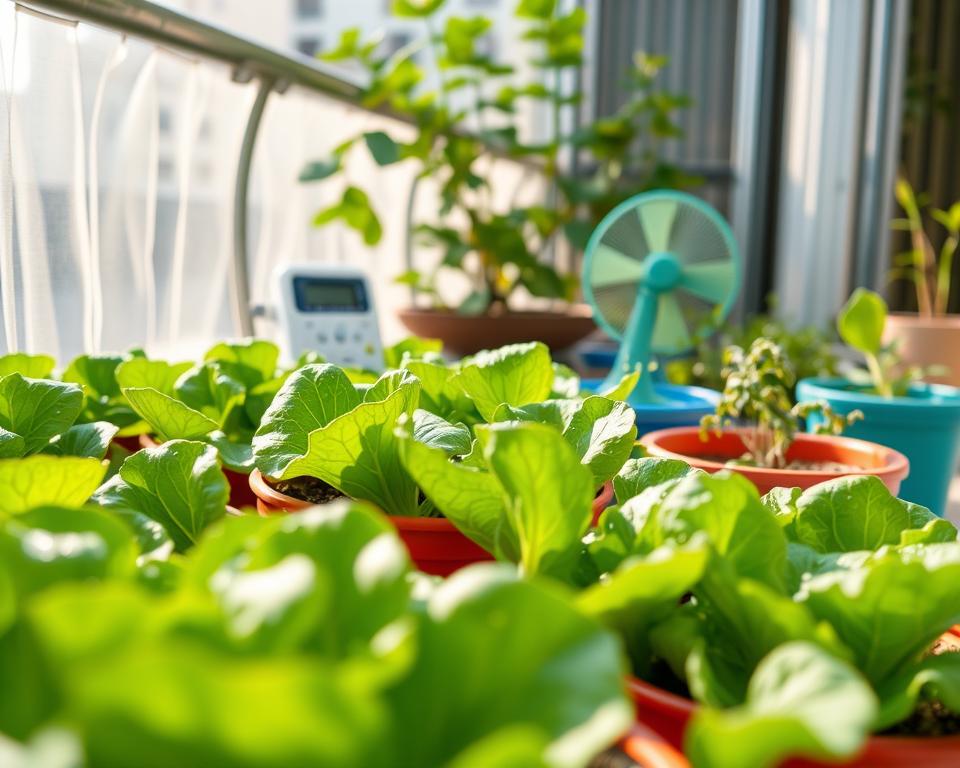
Extreme weather like frost or heat can harm your lettuce. In cold places, cover your containers or use frost blankets. In hot weather, give your plants shade and make sure air flows well.
For example, a shade cloth can greatly lower the temperature around your lettuce during the hottest times.
Seasonal Adjustments for Growth
Move your containers with the seasons to help your lettuce grow all year. In cold months, put them in sunnier spots to keep the soil warm. In hot summers, move them to shadier areas to avoid overheating.
- Watch the weather forecast for extreme weather.
- Use covers or shades as needed to keep temperatures right.
- Change where you put your containers with the seasons to grow better.
Pest and Disease Management in Container Lettuce
To get a good harvest, it’s important to know how to handle pests and diseases in your container lettuce. Container gardens have many benefits but can face pests and diseases like regular gardens.
Common Pests Affecting Lettuce
Lettuce in containers can get hit by pests like aphids, slugs, and snails. These pests can really harm your plants, making them grow poorly. It’s important to check your plants often to catch these problems early.
Organic Solutions for Pest Control
Choosing organic pest control methods is good for the planet and keeps your lettuce safe. Adding beneficial insects or using neem oil can help control pests without hurting your plants.
Recognizing and Treating Diseases
Diseases like fungal infections and bacterial leaf spot can hit container lettuce too. Keep an eye out for disease signs and act fast to stop it from spreading. Cutting out sick plants or parts and making sure there’s air circulation around your containers helps a lot.
By being proactive and using these methods, you can keep your container lettuce safe from pests and diseases. This way, you’ll get a healthy and bountiful harvest.
Harvesting and Enjoying Your Lettuce
Growing lettuce in containers is rewarding. It gives you fresh, crisp leaves right at home. Knowing when and how to pick your lettuce is key to a great harvest.
Optimal Harvest Time
For leaf lettuce, start picking when leaves are big enough. Take the outer leaves, letting the inner ones grow. For head lettuce, wait until it’s firm and fully grown. Picking in the morning, when leaves are cool, tastes best.
Using Your Fresh Lettuce
Fresh lettuce is great in many dishes, from simple salads to complex recipes. The Tomato Lady Blog has creative ideas for using your lettuce. By growing the right lettuce and following good techniques, you’ll enjoy a lot of fresh lettuce.