
As a plant enthusiast, I’ve seen many beautiful plants suffer from root rot due to improper care. Did you know that over 60% of potted plants are affected by root rot at some point in their lives? This staggering statistic highlights the importance of proper plant care tips to prevent this common issue.
Root rot can be a devastating problem, but it’s preventable with the right techniques. In this article, I’ll share my knowledge on how to stop root rot in its tracks and keep your potted plants thriving. By following simple plant care tips, you can ensure your plants remain healthy and flourish.
Key Takeaways
- Understand the causes of root rot in potted plants
- Learn effective techniques for preventing root rot
- Discover simple plant care tips for healthy plants
- Identify the signs of root rot and take action
- Improve your plant care routine for thriving plants
Understanding Root Rot and Its Causes
Knowing why root rot happens is key for anyone who loves plants. Root rot can really hurt your potted plants’ health.
What Is Root Rot?
Root rot happens when a plant’s roots decay because of fungal or bacterial infections. This decay stops the plant from getting water and nutrients. It can make the plant very sick or even kill it. For more info on root rot and how to stop it, check out Sybotanica’s guide on root rot.
Common Causes of Root Rot
There are a few reasons why potted plants get root rot. Knowing these reasons helps you stop it from happening.
- Overwatering: Too much water can kill the roots by taking away oxygen.
- Poor Drainage: Pots without holes can make the soil too wet, causing root rot.
- Wrong Potting Mix: Using a mix that holds too much water can also cause root rot.
The table below shows the main reasons for root rot and how it affects plants:
| Cause | Effect |
|---|---|
| Overwatering | Roots rot due to lack of oxygen |
| Poor Drainage | Waterlogged soil leads to root rot |
| Wrong Potting Mix | Excessive water retention causes root decay |
By knowing these causes, you can prevent root rot and keep your plants healthy. It’s important to water right and make sure the soil drains well. These steps help avoid root rot and keep your plants’ roots healthy.
Signs Your Potted Plant May Have Root Rot
Spotting root rot early can save your potted plant. Root rot is a serious issue that needs quick action.
Identifying Symptoms
Yellow leaves are a first sign of root rot. You might also see soft, mushy stems. These signs mean your plant is not doing well.
A bad smell from the soil is another warning. If you see these signs, act fast to stop more damage.
Observing Your Plant’s Health
Watching your plants closely is important. Look for any changes in how they look or act. For more help with root rot, check out this guide on root rot.
By checking your plants often, you can catch root rot early. Here are some container gardening tips to avoid overwatering, a root rot cause:
| Tip | Description | Benefit |
|---|---|---|
| Watering Schedule | Establish a regular watering routine | Prevents overwatering |
| Soil Moisture Check | Regularly check soil moisture | Helps in avoiding waterlogged soil |
| Drainage | Ensure pots have adequate drainage holes | Reduces risk of water accumulation |
Using these preventing overwatering tips can lower root rot risk. Good watering and regular checks keep your plants healthy.
Choosing the Right Pot for Your Plants
Choosing the right pot is key to preventing root rot. A good pot supports healthy drainage. This is vital for your plant’s health.
Drainage Holes: Why They Matter
Drainage holes are essential. They let excess water out, preventing soil from getting too wet. This stops root rot and keeps roots healthy.
Key benefits of pots with drainage holes include:
- Prevents water accumulation
- Reduces the risk of root rot
- Promotes healthy root growth
Selecting the Best Material
The pot’s material affects your plant’s health. You can choose from terracotta, ceramic, or plastic. Each has its own advantages and disadvantages.
Terracotta pots are good for air flow and moisture control but dry out fast. Ceramic pots are stylish and breathable but heavy and can crack. Plastic pots are light and easy to clean but hold moisture if not managed well.
When picking a pot, think about your plant’s needs. Consider its watering needs and growth habits. The right pot helps prevent root rot and keeps your plant healthy.
The Importance of Proper Soil Mix
The right soil mix is key to stopping root rot in potted plants. A good mix holds moisture but also lets water drain. This gives roots the oxygen they need.
Components of Good Potting Soil
A balanced potting mix has peat moss, vermiculite, and perlite. Peat moss keeps moisture in. Vermiculite and perlite help with drainage and air.
- Peat moss or coconut coir for moisture retention
- Vermiculite or perlite for drainage and aeration
- Compost for nutrient supply
Avoiding Heavy Soils
Heavy soils can cause waterlogging and root rot. It’s best to avoid using garden soil in pots. Garden soil can compact and block drainage.
| Soil Type | Drainage Capability | Root Rot Risk |
|---|---|---|
| Garden Soil | Poor | High |
| Potting Mix | Good | Low |
Choosing a potting mix for good drainage and air can lower root rot risk. It helps roots grow healthy.
Watering Techniques to Prevent Root Rot
To avoid root rot, it’s key to know how to water your potted plants right. Watering is a fine art. When done well, it keeps your plants healthy and thriving.
How Much Water is Enough?
Finding the right water amount for your plants can be tricky. A simple way is to check the soil moisture by feeling it with your finger. If it’s dry up to the first knuckle, it’s time to water. As gardening expert, Jeff Cox, once said, “The key to successful gardening is not just in the watering, but in the understanding of when not to water.”
Don’t overwater, as it can cause root rot. It’s important to not water too often, even more so in cooler weather. The soil takes longer to dry out then.
Optimal Watering Schedule
Finding the best watering schedule depends on several things. These include the plant type, pot size, and your climate. Most houseplants do well with watering once a week. But, this can change.
“The best time to water plants is early in the morning, allowing the plants to absorb the water throughout the day.”
To avoid overwatering, use pots with drainage holes and a mix that drains well. This combo stops waterlogged soil, a main cause of root rot.
By using these watering tips and watching your plant’s needs, you can lower root rot risk. This way, you’ll have healthy, thriving plants.
Checking Soil Moisture Levels
It’s important to check the moisture in your soil to prevent root rot. As a gardener, keeping the soil just right is key to your plants’ health.
Tools for Moisture Testing
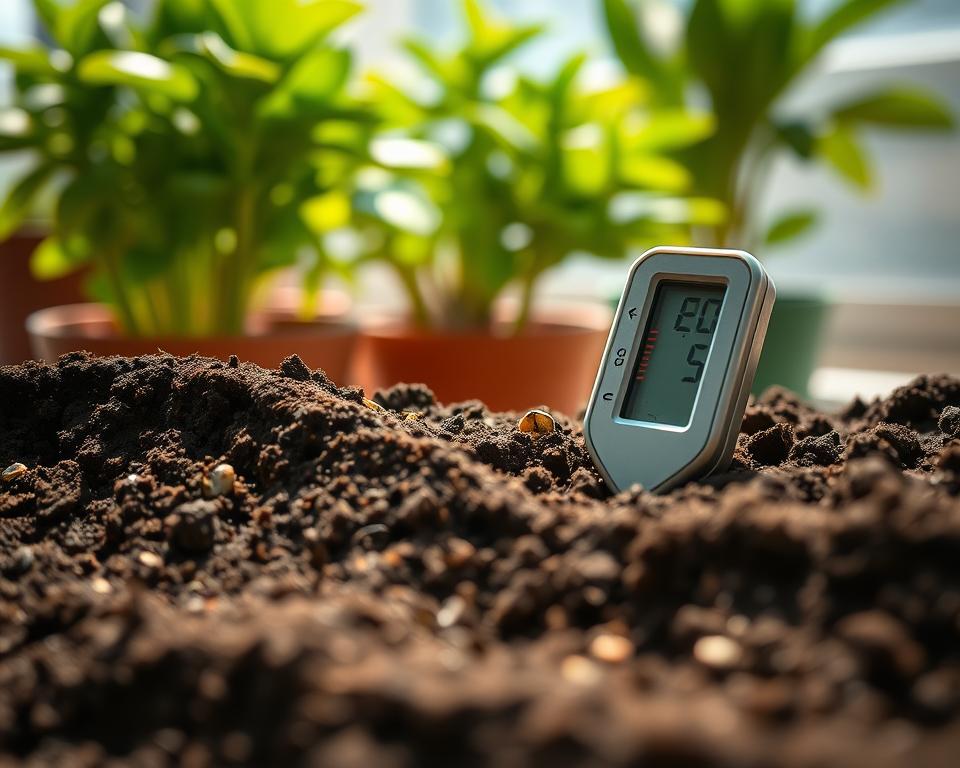
There are many tools to test soil moisture. Some top ones are:
- Moisture meters: These give quick and accurate moisture readings.
- Tensiometers: They measure soil water tension, guiding when to water.
- Soil probes: Simple and cheap, they let you manually check moisture.
These tools help you water wisely. For example, a moisture meter can prevent overwatering by showing exact moisture levels.
Signs of Overwatering
Overwatering can cause root rot. Look out for these signs:
| Sign | Description |
|---|---|
| Yellowing leaves | Yellow or droopy leaves mean too much water. |
| Soft stems | Stems that feel soft or mushy are overwatered. |
| Water pooling | Water pooling around the plant or in the saucer shows overwatering. |
Spotting these signs and adjusting your watering can prevent root rot. For container gardening, keeping an eye on soil moisture is essential for your plants’ health.
“The key to successful container gardening is understanding the delicate balance between watering and drainage.”
By following these tips and watching soil moisture, you’ll become a great container gardener. Your plants will surely appreciate it.
The Role of Fertilization in Plant Health
Fertilizing your plants is more than just adding nutrients. It’s about creating a balanced environment for growth. A well-fertilized plant has strong roots, which are key for absorbing water and nutrients.
Fertilization is vital for healthy plant roots in pots. The right nutrients prevent deficiencies that can cause root rot or other problems. A balanced NPK ratio (Nitrogen, Phosphorus, Potassium) is essential for plant health.
Nutrient Balance for Healthy Roots
Finding the right nutrient balance is critical. Here are some plant care tips to help your plants get the nutrients they need:
- Use a balanced fertilizer made for potted plants.
- Consider your plant’s specific needs, as some need more nutrients.
- Soil pH affects nutrient availability, so check and adjust it as needed.
A slightly acidic to neutral soil pH (around 6.0-7.0) is best for many plants. It promotes healthy root growth. Regular soil testing helps you make informed fertilization decisions.
Avoiding Over-Fertilization
While fertilization is good, too much can harm. Over-fertilization can damage roots and cause problems. Watch for these signs:
- Yellowing or browning of leaf tips.
- Slow growth or a burnt look on leaves.
- Visible salt buildup on the soil surface.
If you see these signs, adjust your fertilization. Flushing the soil with water can remove excess salts and nutrients. This gives your plant a fresh start.
By understanding fertilization’s role and using it wisely, you can promote healthy plant roots in pots. This leads to a thriving, vibrant plant.
Seasonal Changes and Root Rot Risk
Knowing how seasons impact your plants is key to avoiding root rot. As seasons shift, so do the risks for root rot in potted plants. Staying informed about these changes helps protect your plants.
Recognizing Seasonal Needs
Each season poses unique challenges for your plants. In spring and summer, they need more water and nutrients. But, this also means you must check moisture and nutrients often to avoid overwatering, a root rot cause.
Spring and Summer Care: Make sure your pots have drainage holes to avoid waterlogged soil. Regularly check soil moisture and avoid watering leaves to prevent fungal diseases.
Adjusting Care with the Seasons
In fall and winter, plants often go dormant, needing less water and nutrients. It’s important to adjust your care to meet these needs.
Fall and Winter Adjustments: Water less to match the plant’s needs. Consider repotting in a mix that holds less moisture in cold months to prevent root rot.
By understanding and adjusting to your plants’ seasonal needs, you can lower root rot risk. This proactive care, along with good container gardening tips, ensures your plants stay healthy all year.
Repotting Plants to Prevent Root Rot
Repotting your plants regularly is a great way to stop root rot. It lets you check the roots, cut out any bad ones, and update the soil. This is key for keeping your plants’ roots healthy.
When to Repot Your Plant
It’s important to know when to repot your plant. Most plants need a new pot every 1-3 years. This depends on how fast they grow and how big their pot is. If your plant is showing signs of root rot or is too big for its pot, it’s time to repot.
- Check for roots growing out of the drainage holes.
- Inspect the plant’s growth; if it’s slowing down, it might be root-bound.
- If the soil is breaking down or becoming compacted, repotting with fresh potting mix for root rot prevention can help.
Steps for Successful Repotting
Repotting can be stressful for plants, but the right steps can help. Here’s how to do it right.
- Choose a pot that is only slightly larger than the current one to prevent the soil from becoming too wet.
- Gently remove the plant from its pot, taking care not to damage the roots.
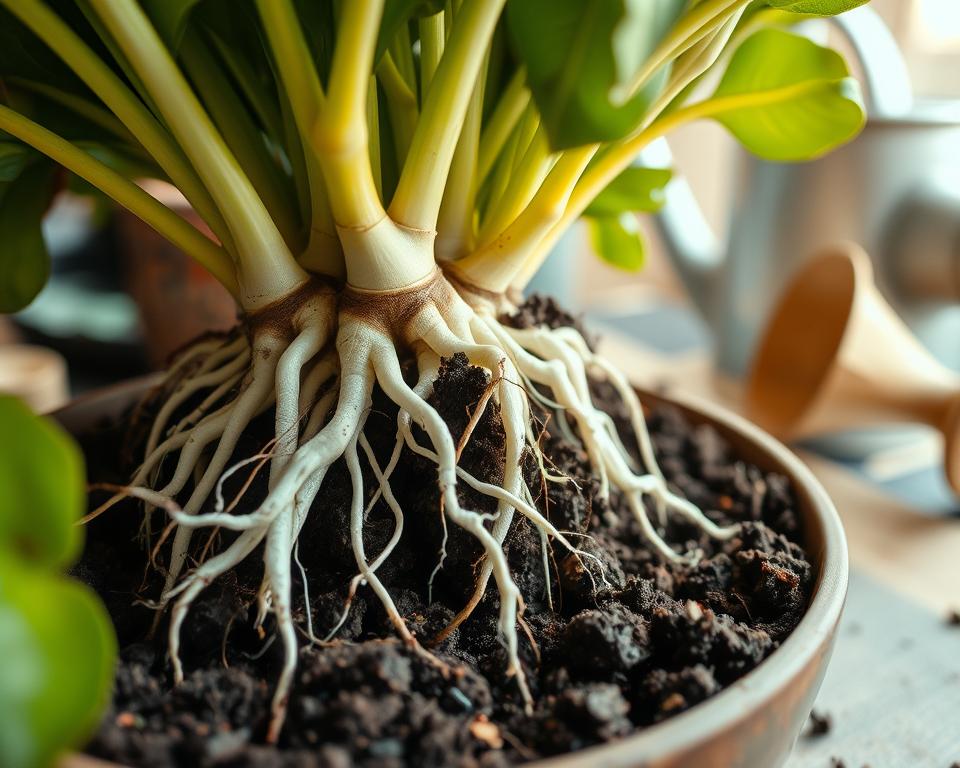
- Inspect the roots and trim away any rotten or circling roots.
- Use a fresh potting mix for root rot prevention that drains well to prevent waterlogged soil.
Gardening expert says, “Repotting is not just about changing the pot; it’s about giving your plant a fresh start with healthy roots and a nutrient-rich environment.”
“The key to successful repotting is handling the roots with care and providing the right conditions for the plant to thrive.”
| Repotting Step | Benefit |
|---|---|
| Inspecting and trimming roots | Removes rotten roots, promoting healthy growth |
| Using fresh potting mix | Prevents waterlogging and root rot |
| Choosing the right pot size | Prevents the soil from becoming too wet, reducing root rot risk |
Using Fungicides and Treatments
Got root rot in your potted plants? There are many treatments to fight it. If your plant gets root rot, act fast to stop more damage.
Natural Remedies for Root Rot
Try natural remedies before using chemicals. Some good natural treatments are:
- Repotting the plant in fresh, well-draining soil
- Using organic fungicides like neem oil or cinnamon
- Improving air circulation around the plant
- Reducing watering to prevent further moisture accumulation
These methods work well if you catch it early. Neem oil, for example, fights root rot with its antifungal properties.
Chemical Solutions: When to Use Them
For severe root rot or when natural remedies fail, chemical fungicides might be needed. These products target the fungi causing root rot. Remember to:
- Choose a fungicide made for root rot
- Follow the product’s instructions to avoid overuse
- Watch your plant’s response and adjust treatment if needed
Chemical solutions can be helpful but use them wisely. They should not harm your plant or the environment.
Preventative Measures for Long-Term Care
To stop root rot in potted plants, mix good habits with regular care. These steps can greatly lower the chance of root rot. This way, your plants will stay healthy and thrive.
Good Habits for Potted Plant Care
Good habits are key for your potted plants’ long-term health. One major habit is proper watering. Don’t overwater, as it can cause root rot. Check the soil moisture before watering. Water only when the top inch of soil is dry.
Also, use pots with good drainage holes. This prevents waterlogged soil.
Another habit is to monitor your plant’s environment. Make sure they get the right light and temperature. Most houseplants like temperatures between 65-75°F (18-24°C). Watch for signs of stress or disease to catch problems early.
Regular Maintenance Tips
Regular care is vital to prevent root rot and keep plants healthy. This includes repotting your plants when their roots outgrow the container. Repot every 1-3 years. Use a well-draining potting mix to prevent waterlogged soil.
Fertilizing your plants regularly promotes growth. But, avoid over-fertilizing. Use a balanced, water-soluble fertilizer in the growing season (spring and summer). Always follow the manufacturer’s instructions.
By following these habits and maintenance tips, you can prevent root rot. Your potted plants will stay healthy and vibrant for many years.
When to Seek Professional Help
Even with the best care, potted plants can get root rot. Knowing when to get help is key to saving your plants and keeping them healthy.
Expert Guidance for Root Rot
If your plants show signs of root rot, despite your best efforts, it’s time to ask for help. Experts can give you tips on how to keep your plants’ roots healthy in pots.
For plant care advice, check out local nurseries, gardening clubs, and online forums. They offer great tips on keeping your plants healthy and avoiding root rot.
Support for Long-Term Care
Getting help when you need it and using the right tips can keep your plants happy. Regular care and attention will help your plants’ roots stay healthy. This way, your plants will keep growing strong.