
Did you know a well-pruned orchard can see a 20% increase in yield? As a gardener or farmer, finding ways to boost crop yields is key. Pruning is a simple yet powerful method to improve plant health and productivity.
Learning about pruning techniques and using the right methods can help you achieve higher yields. Effective pruning not only increases your harvest but also makes your plants healthier and better structured.
Key Takeaways
- Pruning can increase crop yields by up to 20%.
- Effective pruning techniques enhance plant health and productivity.
- Proper pruning methods improve the overall structure of plants.
- Pruning is a simple yet powerful technique for gardeners and farmers.
- Understanding pruning techniques is key to maximizing yields.
Understanding Pruning Techniques for Better Yields
To get the most from your crops, learning about pruning is key. Pruning means cutting off parts of a plant to help it grow better and produce more. By using the right pruning methods, farmers can really boost their crop’s success.
What is Pruning?
Pruning is a way farmers manage their plants by cutting off parts like branches or roots. It helps control growth, improves the plant’s shape, and boosts its productivity. Good pruning can also make air flow better, lower disease risk, and increase fruit. Experts say, “Pruning is a key part of farming, helping farmers get the best from their crops.”
“Pruning is not just about cutting plants; it’s an art that requires understanding the plant’s growth patterns and needs.”
Importance of Pruning in Agriculture
Pruning is very important in farming because it affects how much and how well crops grow. By pruning well, farmers can:
- Make plants stronger and healthier
- Get more fruit and better quality crops
- Lower disease and pest problems
- Improve air flow and fight off fungal diseases
The role of pruning in farming is huge. It’s a simple yet powerful way to make farming better. By knowing and using the best pruning methods, farmers can increase their yields and help farming be more sustainable.
Types of Pruning Techniques
Farmers use different pruning techniques to boost plant health and productivity. These methods help farmers get better results from their crops.
Thinning
Thinning means removing some branches or stems. This lets more sunlight reach the rest of the plant. It helps plants grow stronger by reducing competition for water and nutrients.
Thinning works well for dense crops or orchards. It’s key for air circulation and sunlight.
Topping
Topping cuts off the top of a plant to control its height. It makes plants bushier. This is good for plants that grow too tall or leggy.
Topping also makes lateral branches grow more. This can lead to higher yields.
Using these pruning techniques, farmers can improve their crops’ health and structure. They can also increase yield by using resources better and getting more sunlight.
When to Prune: Timing Matters
The success of pruning strategies for higher yield depends a lot on when you do it. Pruning at the right time can greatly affect your crops’ health and how much they produce. Each plant has its own needs based on its growth stage and the seasons.
Seasonal Considerations
Knowing what your plants need seasonally is key. For many, pruning during their dormant season is best. It gets them ready for new growth in the next season. For example, pruning fruit trees in late winter helps them get more sunlight in spring.
But, some plants do better when pruned when they’re actively growing. This is true for flowering plants. Pruning them after they’ve bloomed encourages more growth and blooms next time.
Growth Stage Pruning
Pruning at the right time in a plant’s growth is also vital. Young plants benefit from pruning to shape them and help them grow well. Mature plants get a boost from pruning, making them more productive. For example, pruning tomato plants to remove suckers helps them focus on making more fruit.
Watching your plants’ growth stages and pruning at the right time is important. This way, your pruning strategies for higher yield will work best. Keeping an eye on your plants and pruning when needed is key to success.
By thinking about seasonal changes and your plants’ growth stages, you can make a good pruning plan. This plan will help your crops stay healthy and productive.
Tools and Equipment for Pruning
Having the right pruning tools is key to getting better yields in farming. As I explore pruning, it’s clear that the tools used greatly affect its success.
Using the right equipment makes pruning easier and ensures it’s done right. This boosts yield. A good set of pruning tools is vital for plant health and productivity.
Essential Pruning Tools
Several tools are must-haves for effective pruning. These include:
- Pruning Shears: Great for cutting small branches and stems.
- Loppers: Needed for thicker branches that shears can’t handle.
- Pruning Saws: Essential for cutting through big branches.
- Knives: Useful for precise cuts and for pruning small plants or seedlings.
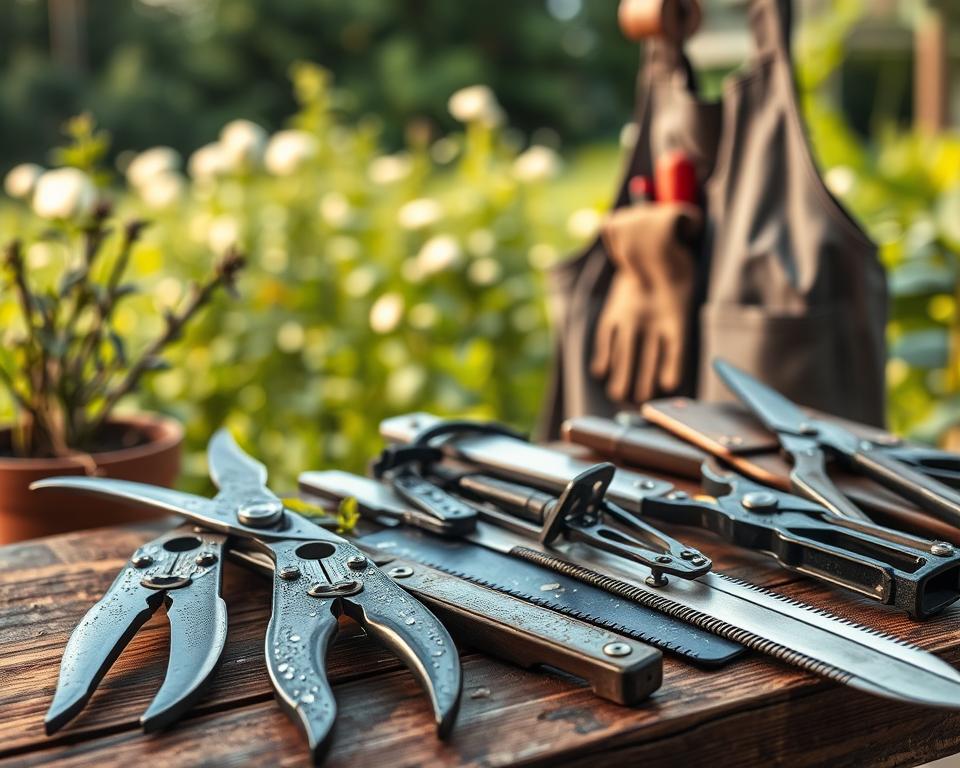
The quality of these tools is very important. Sharp tools make clean cuts. This helps plants heal faster and reduces disease risk.
Maintenance for Pruning Tools
Keeping pruning tools in good shape is as important as having them. Proper care ensures tools work well. Here are some tips:
| Tool | Maintenance Tip |
|---|---|
| Pruning Shears | Regularly sharpen blades and oil moving parts. |
| Loppers | Keep blades clean and apply lubricant to hinges. |
| Pruning Saws | Sharpen teeth regularly and store in a dry place. |
By keeping your pruning tools in top shape and using the right ones, you can improve your pruning skills. This helps in getting better yields through pruning.
Pruning for Different Types of Crops
Knowing what your crops need for pruning is key to getting more from them. Each crop has its own pruning needs to boost its growth and fruiting. We’ll look at how to prune different crops, focusing on fruit trees and veggies.
Fruit Tree Pruning
Pruning fruit trees is an art that needs a good grasp of the tree’s growth and fruiting. Proper pruning can greatly improve fruit production and tree health. Cutting out dead or sick branches not only looks better but also stops disease spread.
Timing is everything when pruning fruit trees. Prune during the tree’s dormant season to avoid disease and encourage growth in spring. Also, thinning the tree’s center lets more sunlight in, helping fruits ripen and reducing disease risk.
| Fruit Tree Type | Pruning Objective | Best Time to Prune |
|---|---|---|
| Apple Trees | Enhance fruiting, maintain structure | Dormant season (Winter) |
| Peach Trees | Promote new growth, fruit production | Early Spring |
| Pear Trees | Maintain shape, encourage fruiting | Dormant season (Winter) |
Vegetable Plant Pruning
Vegetable plants also need pruning, but in different ways than fruit trees. Pruning vegetable plants improves air flow, lowers disease risk, and boosts growth. For example, removing tomato leaves from the bottom can stop soil-borne diseases.
It’s important to know what each vegetable plant needs. Some, like cucumbers and squash, need pruning to control their spread and encourage fruiting. Others, like tomatoes and peppers, need pruning to grow bushy and stay healthy.
| Vegetable Type | Pruning Objective | Pruning Technique |
|---|---|---|
| Tomatoes | Promote bushy growth, prevent disease | Remove lower leaves, suckers |
| Cucumbers | Control spread, encourage fruiting | Prune lateral vines |
| Peppers | Enhance growth, prevent disease | Remove weak growth |
By using pruning methods specific to your crops, you can boost yields and keep plants healthy. Whether you’re growing fruit trees or veggies, knowing and using the right pruning techniques is essential for better harvests.
Techniques for Maximizing Yields
Pruning is an art that can greatly improve farm productivity. By using the right pruning methods, farmers and gardeners can boost their crop yields.
Controlled Pruning Techniques
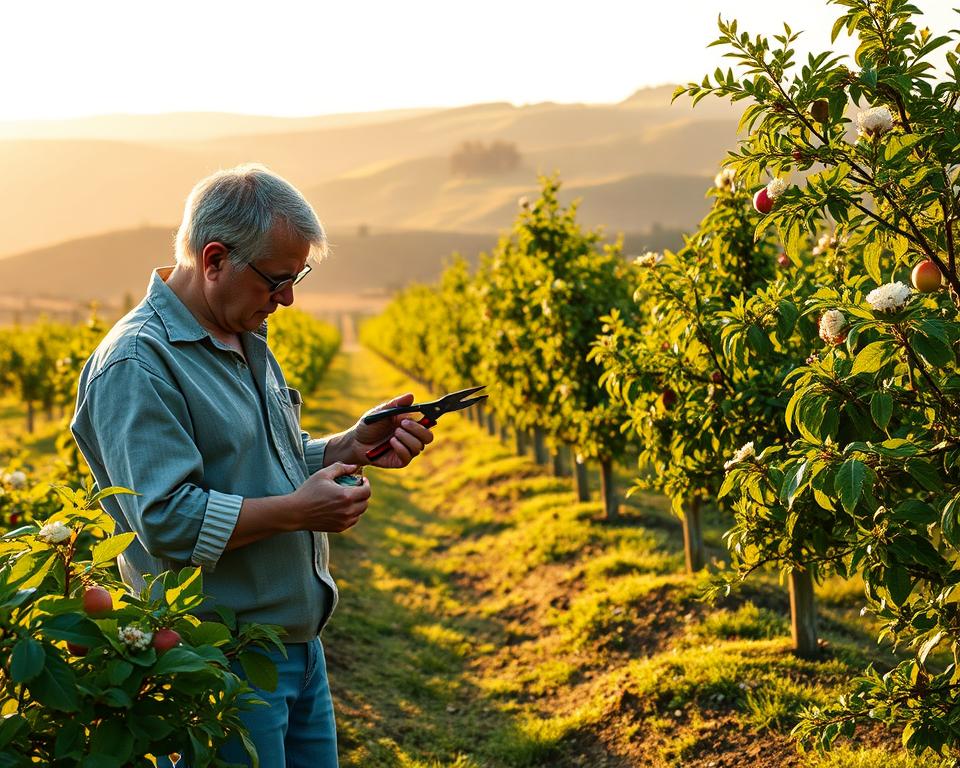
Controlled pruning means carefully cutting parts of a plant to guide its growth. It’s about knowing the plant’s growth patterns and needs. By selectively pruning branches, you can improve air flow, lower disease risk, and boost plant productivity.
In fruit trees, controlled pruning shapes the tree for better sunlight and fruit. It’s about finding the right balance between growth and fruiting.
Benefits of Strategic Pruning
Strategic pruning plans pruning based on the plant’s growth stage and season. This method boosts yields and keeps the plant healthy for longer.
The advantages of strategic pruning include:
- Increased fruit quality and size
- Improved plant structure and aesthetics
- Enhanced resistance to diseases and pests
- Better management of plant growth and development
By using strategic pruning practices, farmers and gardeners can see a big jump in their crop yields and plant health.
Common Pruning Mistakes to Avoid
To get the most from your plants, it’s key to avoid common pruning errors. Pruning is a precise task. If done wrong, it can harm plant health and reduce yields. Here, we’ll look at common mistakes and how to sidestep them.
Over-Pruning
Over-pruning is a big mistake many make. Cutting too much can stress the plant, making it sick or attracting pests. For example, losing too much foliage hurts photosynthesis, weakening the plant and cutting down on fruit or flower production.
To avoid this, know your plant’s growth and pruning needs. Start with a gentle touch and adjust as needed. Always use the right pruning techniques for your plant type.
Ignoring Plant Health
Another big mistake is ignoring plant health when pruning. Pruning is more than just cutting; it’s also about checking for disease or pests. Not doing this can spread disease and harm the plant more.
Before pruning, inspect your plants. Look for disease signs like color changes, odd growth, or pests. Fixing these issues early stops them from getting worse. Good pruning means cutting and keeping an eye on plant health.
Knowing these common mistakes and how to avoid them can greatly boost your yields and plant health. Remember, pruning should help plants grow better, not stress them out.
Case Studies: Successful Pruning Practices
Farmers and gardeners have seen big gains in their crops by using smart pruning. This part looks at real examples of how pruning has boosted maximizing crop yield in various farms.
Example from the Winery Industry
The winery world has greatly benefited from good pruning. A vineyard in California used a special pruning method. This led to a 25% increase in grape yield.
They did this by carefully cutting back grape clusters. This allowed more sunlight and air to reach the grapes.
The secret to their success was knowing when and how to prune. Here are some important points from their story:
- Prune grapevines when they’re dormant to avoid stress.
- Get rid of dead or sick wood to stop disease spread.
- Thin out fruiting branches for better sunlight.
Lessons from Community Gardens
Community gardens have also seen big gains from pruning. A garden in New York saw a 30% boost in tomato yields after pruning. They pruned their tomato plants to a single stem.
They learned that pruning helps with air flow and disease prevention. It also directs plant energy to fruit production. Here are some key lessons they shared:
- Prune plants often to keep them healthy and in shape.
- Choose the right pruning tools to avoid harming the plants.
- Keep an eye on plant health and adjust pruning as needed.
These examples show how pruning can greatly increase maximizing crop yield. By using the right pruning methods, farmers and gardeners can greatly boost their harvests.
The Science Behind Pruning Effectiveness
Pruning affects plant growth through hormones and growth responses. When a plant is pruned, it sets off a series of biological reactions. These reactions can change how the plant grows and how much it produces.
Plant Hormones and Growth Response
Plant hormones like auxins, cytokinins, and ethylene control growth. Auxins help cells grow and divide, while cytokinins push cells to divide. Pruning changes the hormone balance, guiding the plant’s growth towards fruitfulness.
Strategic pruning boosts yield by improving plant structure. This lets more sunlight and air reach the plant. It makes the plant healthier and more productive. By knowing how pruning affects hormone levels, growers can use best practices for pruning to get better yields.
Research Studies Supporting Pruning Techniques
Many studies prove pruning boosts crop yields. For example, pruning fruit trees at the right time can increase fruit by improving the tree’s shape and health. Vegetable plants also grow stronger and produce more when pruned.
A study on tomatoes showed pruning them to a single stem boosted yield by over 20%. This shows the value of evidence-based pruning practices for increasing yield through pruning. By using research insights, farmers and gardeners can make their pruning more effective, leading to better gardens and farms.
Conclusion: Enhancing Yield through Pruning
Pruning is key to getting more from your crops. The right pruning can make your plants healthier and more productive.
Key Takeaways
This article covers everything from simple to complex pruning techniques. These methods help you optimize yield with pruning. Knowing when and how to prune boosts your crops’ performance.
Maximizing Your Harvest
To get a better harvest, focus on pruning strategies for higher yield. The right tools, timing, and methods are vital for a big harvest.
Using these pruning techniques will help you grow more and sustainably. You’ll enjoy a more fruitful harvest.