

Did you know a good nutrient mix can boost herb yields by up to 30%? As someone who loves growing herbs, I’ve found that the right nutrients are key. They help herbs grow strong and healthy.
In the beginning, I had trouble getting my herbs to grow. But when I started using a balanced herb plant food, they really took off.
With the right nutrient solutions, your herb garden can become lush and vibrant. In this article, I’ll share tips on how to pick the perfect nutrient mix for your herbs.
Key Takeaways
- Understand the basics of nutrient solutions for optimal herb growth
- Identify the nutritional needs of different herbs
- Choose the best nutrient solutions for your herbs
- Create a balanced fertilizer schedule for your herb garden
- Avoid common mistakes when using nutrient solutions for herbs
Understanding the Basics of Nutrient Solutions for Herbs
To grow a healthy herb garden, knowing about nutrient solutions is key. These solutions give herbs the nutrients they need to grow well.
What Are Nutrient Solutions?
Nutrient solutions are special mixes of nutrients that herbs need to thrive. They can be made to fit the needs of different herbs, ensuring they get the right nutrients.
The mix in nutrient solutions changes based on the herb, its stage of growth, and where it’s growing. For example, some herbs need more nitrogen for leaves, while others need more phosphorus for roots.
How Do Nutrient Solutions Benefit Herbs?
Nutrient solutions are very important for healthy herb growth. They provide a balanced mix of nutrients, helping herbs to:
- Develop strong roots and lush foliage
- Produce more flowers and fruits
- Resist pests and diseases
- Withstand environmental stresses
Using nutrient solutions can make herbs grow better and taste better. For instance, a balanced solution can make basil and mint taste and smell amazing.
Key Components of Nutrient Solutions
Nutrient solutions have both macro and micronutrients. Macronutrients like nitrogen, phosphorus, and potassium are key for plant growth. Micronutrients, like iron and zinc, are important for many plant functions.
A good nutrient solution has the right mix of these nutrients for herb growth. The NPK ratio is important, as it shows how much nitrogen, phosphorus, and potassium are in the solution.
Identifying Nutritional Needs of Different Herbs
Different herbs need different nutrients to grow well. It’s important to know what each herb needs. This way, we can make sure they get the right food.
Common Nutritional Requirements
Most herbs need a mix of big and small nutrients to grow. Nitrogen, Phosphorus, and Potassium help with leaves, roots, and health. Iron, Zinc, and Boron are also key for many functions.
Knowing these basics helps us make good food for herbs. This way, herbs can grow strong and give lots of leaves.
Tailoring Solutions for Specific Herb Types
Even though herbs share some needs, each type is different. For example, Basil and Cilantro need different things than Rosemary or Thyme. Making food just for each herb can really help them grow.
To make the right food, we need to learn what each herb likes. We must find out the best mix of nutrients for each one. This includes knowing the right amounts and ratios.
With this knowledge, we can make special food for our herbs. This way, they can grow as well as they can.
Essential Nutrients for Optimal Growth
Herbs need the right mix of nutrients to grow well. They require a variety of nutrients to develop fully.
Macro and Micronutrients Explained
Herbs need both macro and micronutrients. Macronutrients are needed in large amounts. They include nitrogen, phosphorus, and potassium. These nutrients are key for plant growth.
Micronutrients are needed in small amounts but are just as important. They include trace elements like iron, zinc, and boron. These support plant functions.
Role of Nitrogen, Phosphorus, and Potassium
The three main macronutrients for herbs are nitrogen, phosphorus, and potassium. Nitrogen helps with leaf growth. Phosphorus supports root and flower development. Potassium boosts plant health and fights disease.
- Nitrogen is key for chlorophyll and amino acids.
- Phosphorus is important for photosynthesis and root and flower growth.
- Potassium helps with water balance and plant health.
Essential Trace Elements for Herbs
Herbs also need micronutrients like iron, zinc, and boron. These trace elements are vital for plant growth.
| Trace Element | Role in Plant Growth |
|---|---|
| Iron | Essential for chlorophyll production and energy transfer |
| Zinc | Involved in enzyme production and protein synthesis |
| Boron | Crucial for cell wall development and sugar translocation |
Choosing the Right Nutrient Solutions
There are many nutrient solutions out there. Picking the right one for your herbs is important. The solution you choose can really affect your herb garden’s health and growth.
Liquid vs. Solid Nutrient Options
Nutrient solutions can be liquid or solid. Each has its own benefits. Liquid nutrients are easy to use and get absorbed by plants quickly.
Liquid Nutrient Benefits:
- Easy to apply
- Quick absorption
- Flexible dosing
Solid nutrients, like granules or powders, release nutrients slowly. This can be good for keeping your herbs healthy over time.
Organic vs. Synthetic Nutrients
The choice between organic and synthetic nutrients is a big one. Organic nutrients come from nature and help the soil. Synthetic nutrients are made to meet specific plant needs.
Considerations for Organic Nutrients:
- Promotes soil health
- Environmentally friendly
- Variable nutrient content
Think about your gardening style and what your herbs need when choosing between organic and synthetic nutrients.
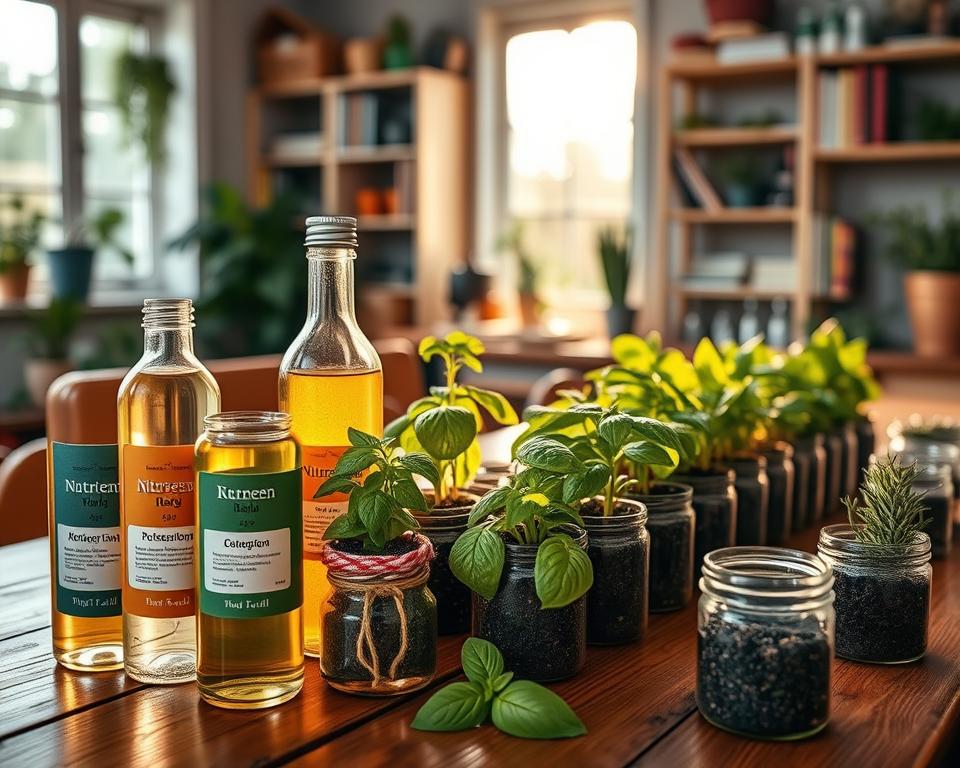
| Nutrient Type | Characteristics | Benefits |
|---|---|---|
| Liquid Nutrients | Easy to apply, quick absorption | Ideal for immediate nutrient needs |
| Solid Nutrients | Gradual release, can be more cost-effective | Suitable for long-term nutrient supply |
| Organic Nutrients | Derived from natural sources, promotes soil health | Environmentally friendly, enhances soil ecosystem |
| Synthetic Nutrients | Precise formulation, tailored to specific plant needs | Highly effective, controlled nutrient delivery |
Timing Your Nutrient Application
For herb growers, knowing when to feed their plants is key. The right nutrient mix at the right time can boost yield and quality. Understanding your herbs’ growth cycles is essential.
Best Practices for Feeding Herbs
Feeding herbs on schedule is more than random application. It’s about matching nutrient application to their growth patterns. Most herbs need more nutrients when they’re growing fast.
Nutrient Application Schedule:
| Growth Stage | Nutrient Requirement | Application Frequency |
|---|---|---|
| Seedling | Low | Once a week |
| Active Growth | High | Twice a week |
| Flowering | Medium | Once a week |
Gardening expert says, “Healthy herbs need nutrients at the right time. This supports their natural growth.”
“The art of nourishing herbs lies in understanding their nutritional needs at different stages of their growth.”
Seasonality and Nutrient Needs
Seasonal changes impact herb nutrient needs. In spring and summer, when herbs grow fast, they need more nutrients. In fall and winter, their growth slows, and they need less.
Adjusting nutrient application with the seasons ensures your herbs get what they need. This promotes healthy growth and high yields.
By following these best practices and considering seasonal needs, you can greatly improve your herbs’ health and productivity.
Customizing Nutrient Solutions
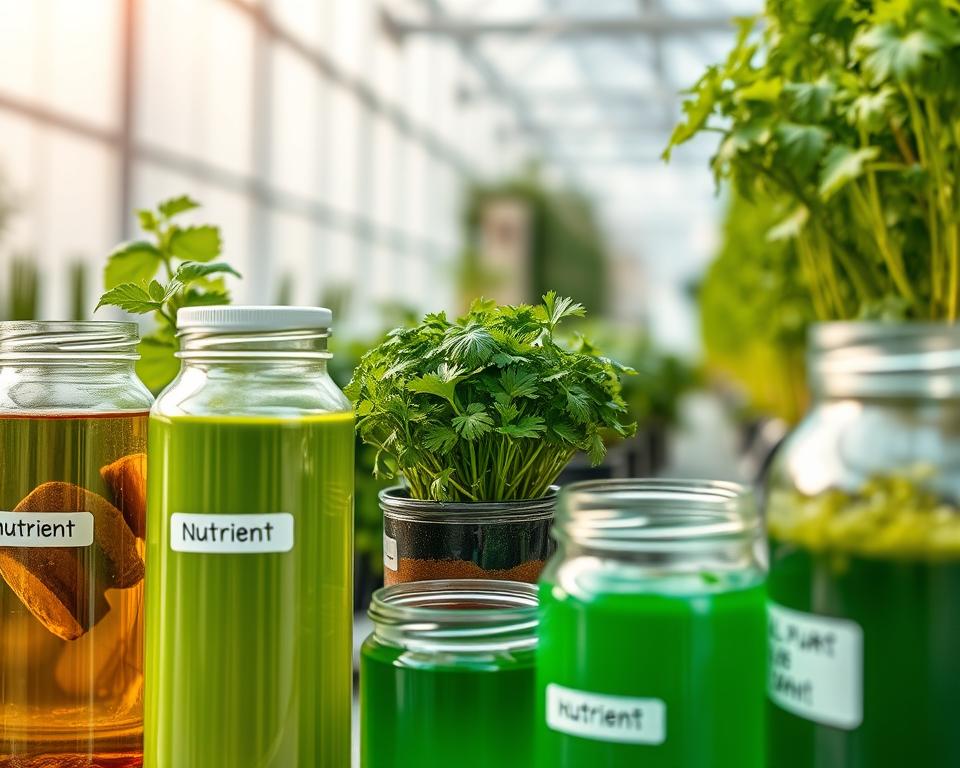
Creating a personalized nutrient solution can greatly improve your herbs’ health and productivity. Tailoring the nutrient mix to your plants’ specific needs optimizes their growth. This ensures they get exactly what they need to thrive.
Creating Your Own Nutrient Mix
To make your own nutrient mix, first understand your herbs’ nutritional needs. Consider the type of herbs, their growth stage, and the growing conditions. For example, organic nutrient solutions are a natural and sustainable choice for growing herbs.
Here’s a basic guide to get you started:
- Identify the macro and micronutrients your herbs need.
- Choose the right balance of nitrogen, phosphorus, and potassium.
- Consider adding essential trace elements.
When mixing your nutrient solution, it’s important to follow a recipe tailored to your herbs’ needs. You can find various herb growing nutrients recipes online or consult with a gardening expert to create a custom blend.
Factors Affecting Nutrient Composition
Several factors can affect the nutrient composition your herbs require. These include:
- The type of growing medium used (soil, hydroponics, etc.).
- The herbs’ growth stage (seedling, mature, flowering).
- Environmental conditions such as temperature and humidity.
Understanding these factors helps you adjust your nutrient-rich solutions for herb growth as needed. For example, herbs in a hydroponic system may need a different nutrient balance than those grown in soil.
By customizing your nutrient solution, you can greatly improve your herbs’ health and productivity. This leads to more robust plants and better flavor and nutritional value.
Signs of Nutritional Deficiency in Herbs
To keep your herbs healthy, it’s key to spot nutritional deficiencies. These can show up in many ways, impacting your herbs’ health and growth.
Leaf Discoloration and Other Symptoms
Leaf discoloration is a common sign of nutrient lack. For example, too little nitrogen can turn leaves yellow. Magnesium shortage causes veins to stay green but the rest of the leaf turns yellow. You might also see stunted growth, weak stems, and lower yields.
Spotting these signs early is vital. The Royal Horticultural Society says knowing which nutrients are missing helps fix the problem. This means using the right nutrient solutions for herbs.
Diagnosing and Correcting Deficiencies
Figuring out nutrient deficiencies means watching for symptoms and knowing what your herbs need. For instance, basil and mint need more nitrogen for leaf growth. But rosemary and thyme need less.
| Nutrient | Deficiency Symptoms | Correction |
|---|---|---|
| Nitrogen | Yellowing leaves, stunted growth | Apply nitrogen-rich fertilizer |
| Magnesium | Interveinal chlorosis | Use magnesium sulfate |
| Potassium | Weak stems, poor yields | Apply potassium-rich hydroponic nutrients |
By spotting nutrient deficiencies and acting fast, you can give your herbs what they need. This boosts their health, flavor, and aroma. Your kitchen will benefit from the best nutrient solutions for herbs.
Nutrient Solutions in Hydroponics
Hydroponics is becoming more popular, and the right nutrient solutions are key for herb growth. Hydroponic systems need a precise mix of nutrients for herbs to grow well.
Hydroponic nutrients are made to give herbs the right mix of nutrients. They are designed to be easily absorbed by plants.
Benefits of Hydroponic Nutrients
Using hydroponic nutrients has many advantages, including:
- Increased crop yields due to optimized nutrient delivery
- Improved plant health through balanced nutrient profiles
- Water conservation, as hydroponic systems recirculate nutrient-rich water
Key Benefits of Hydroponic Nutrients
| Benefit | Description |
|---|---|
| Increased Crop Yields | Optimized nutrient delivery results in healthier plants and higher yields. |
| Improved Plant Health | Balanced nutrient profiles ensure that herbs receive all necessary nutrients. |
| Water Conservation | Hydroponic systems conserve water by recirculating nutrient-rich solutions. |
Tips for Hydroponic Herb Cultivation
To get the most out of hydroponic nutrients, follow these tips. Keep the pH levels right, check nutrient levels, and make sure plants have enough light and warmth.
Monitoring pH levels is very important. It affects how well plants can use nutrients. Regular pH checks and adjustments help plants absorb nutrients better.
Understanding nutrient solutions in hydroponics and following best practices can lead to great results in growing herbs.
Maintaining Optimal Growing Conditions
To make sure your herbs grow well, you need to keep the growing conditions just right. This means more than just the right food for them. You also have to watch the pH and EC levels and know how the environment affects how they take in nutrients.
pH and EC Levels: The Foundation of Healthy Growth
Keeping the pH and EC levels right is key for your herbs to grow well. pH affects how nutrients are available, and EC shows how much nutrient is in the solution. Most herbs like a slightly acidic to neutral pH, between 6.0 and 7.0. It’s a good idea to check these levels often and adjust your plant food for herbs as needed.
Environmental Factors at Play
Temperature, humidity, and light are important environmental factors for herb growth. For example, high temperatures can help herbs take in more nutrients. But, very high or low temperatures can stress them out. Knowing how these factors work is important for using your herb plant food well.
By managing these factors well and adjusting your nutrient solutions as needed, you can make a great growing space. This space will help your herbs grow healthy and strong, and you’ll get more from your plants.