
Did you know that the right optimal light spectrum for plants can boost crop yields by up to 20%? As someone who gardens indoors, I’ve found that the right light is key for healthy plants. The correct indoor gardening light spectrum can lead to lush leaves, bright flowers, and strong roots.
I’m excited to share my knowledge with you about indoor gardening. In this guide, we’ll look at why picking the right LED spectrum for indoor plants is so important. It can greatly affect their growth and health.
Key Takeaways
- Understanding the importance of the right LED spectrum for indoor plants.
- Learning how different light spectrums impact plant growth and development.
- Discovering the optimal light spectrum for various types of indoor plants.
- Exploring the benefits of using LED lighting for indoor gardening.
- Getting tips on how to choose the best LED grow lights for your indoor garden.
Understanding the Importance of Light Spectrum
Light spectrum is key for indoor plants’ growth and health. Different light wavelengths affect plants in unique ways.
Why Plants Need Specific Light Spectra
Plants need specific light to photosynthesize well. This process is vital for their growth. It turns light into energy for plants.
The best plant lighting spectrum for photosynthesis includes blue, red, and green light. This mix helps plants grow.
- Blue light helps leaves grow.
- Red light is important for flowers and fruits.
- Green light aids in photosynthesis and reaches deeper into leaves.
Knowing these needs helps choose the right LED grow lights spectrum for your garden.
The Role of Photosynthesis in Plant Growth
Photosynthesis is essential for plant growth. It lets plants make the energy they need. The light’s intensity and spectrum affect photosynthesis.
LED grow lights can be set to give the best spectrum for each growth stage.
By giving the right plant growth spectrum, you boost photosynthesis. This makes plants healthier and stronger. It also helps them grow faster and fight off diseases better.
- Make sure your LED grow lights have a balanced spectrum.
- Change the spectrum as plants grow.
- Watch how your plants react to the light and adjust as needed.
Types of LED Light Spectrums Available
Knowing the different LED light spectrums is key for indoor plants. The right spectrum boosts plant health and growth.
Full Spectrum LEDs
Full spectrum LEDs mimic natural daylight. They offer a wide range of light, covering all visible colors. This is great for many plants, from greens to flowers.
Benefits of Full Spectrum LEDs: They keep plants healthy, support photosynthesis, and work well for many plants.
Red and Blue Spectrum LEDs
Red and blue LEDs focus on specific growth stages. Blue light helps with leaf growth, while red light boosts flowering and fruiting.
- Blue Spectrum: Best for leafy greens and plants in the growing stage.
- Red Spectrum: Good for flowering plants and when they’re producing fruit.
Specialized Spectrums for Specific Plants
Some plants need special lighting. Succulents and cacti need strong light, while orchids need a specific spectrum to bloom.
Examples of Specialized Spectrums:
| Plant Type | Recommended Spectrum |
|---|---|
| Succulents | High intensity, broad spectrum |
| Orchids | Specific spectrum for flowering, often with a higher red light component |
| Leafy Greens | Blue spectrum for vegetative growth |
Understanding LED light spectrums helps you choose the best for your indoor garden. This supports plant health and growth.
How to Choose the Right LED Spectrum for Your Plants
Choosing the right LED spectrum is key. You need to know what your plants need, their growth stages, and the environment. As an indoor gardener, understanding these is vital for a great growing space.
Assessing Your Indoor Garden’s Needs
To pick the right LED spectrum, first figure out what your indoor garden needs. Know the types of plants, their growth stage, and the environment they’re in.
Plant Type: Different plants need different lights. For example, leafy greens like lettuce and spinach do well with cool, blue-rich light. Flowering plants like orchids need warmer, red-rich light.
Matching Light to Plant Growth Stages
Plants need different lights at different growth stages. Seedlings and young plants often do best with blue light. This helps with leaf growth and development.
- Seedlings: Blue spectrum for leaf development
- Mature plants: Balanced spectrum for overall health
- Flowering plants: Red spectrum to promote flowering
Factors Influencing Spectrum Choice
Several things can affect your LED spectrum choice. These include climate, the plants you want, and their growth stage.
Climate Consideration: In warm climates, cool light helps avoid heat stress. In cool climates, warm light supports growth.
By thinking about these factors and adjusting your LED spectrum, you can make a great growing space. This will help your indoor garden thrive.
The Benefits of Using LED Lights for Indoor Plants
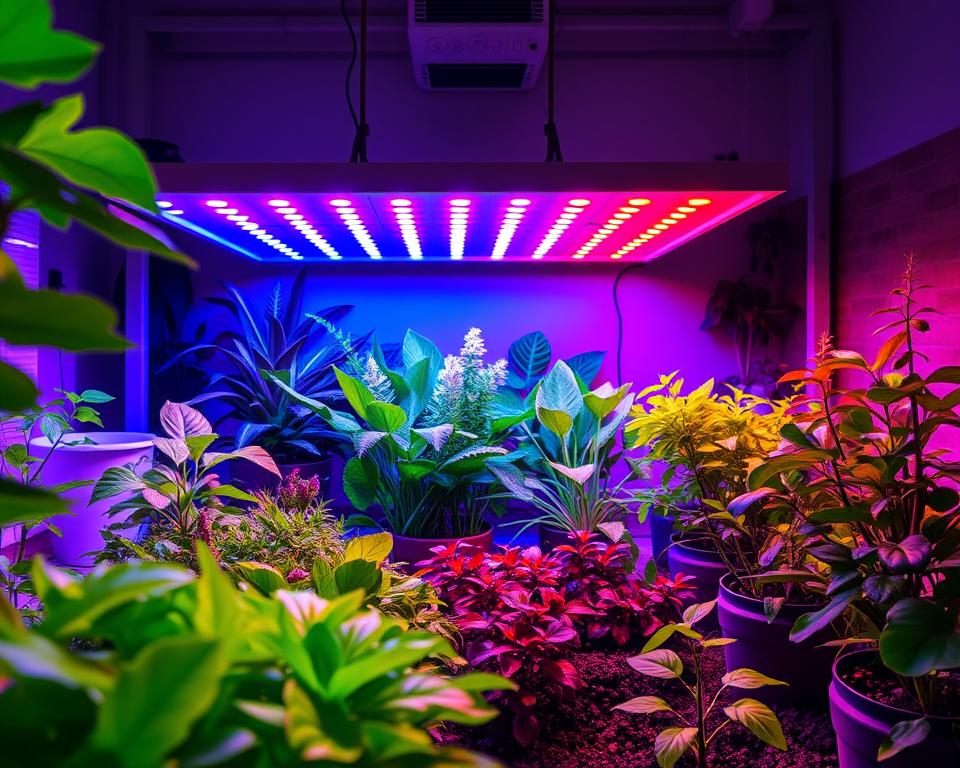
LED grow lights with specific spectrums have changed indoor gardening. They offer many benefits, making them perfect for gardeners.
Energy Efficiency and Cost Savings
LED grow lights are energy efficient. They use much less power than old grow lights. This means cost savings for gardeners over time.
Using LED lights helps lower energy bills. It lets gardeners give their plants the light they need without spending a lot.
Longevity of LED Technology
LED grow lights also last a long time. They can go up to 50,000 hours or more. This means gardeners don’t have to replace them often.
LEDs lasting so long saves money and effort. It’s a big plus for those who love gardening indoors.
Heat Emission Comparison with Other Lights
LED grow lights also give off less heat. This is compared to HPS or fluorescent lights. Less heat is better for plants.
It makes the growing space more comfortable. It also lowers the chance of plants getting too hot, which can harm them.
Choosing the right LED spectrum is key. It helps create the best growing space for plants. The benefits of energy saving, long life, and less heat make LED lights a great choice.
Placement and Setup of LED Grow Lights
To get the most out of LED grow lights, knowing how to place and set them up is key. The right spot ensures your plants get the light they need to grow well.
Determining Optimal Distance from Plants
The distance between LED grow lights and plants is very important. If the lights are too close, they can overheat and harm the plants. On the other hand, if they’re too far, the plants might not get enough light for photosynthesis.
Most LED grow lights work best 12-24 inches away from plants. But, this can change based on the light’s strength and the plants’ needs. For example, lettuce and herbs do well at 12-18 inches, while bigger plants or those needing more light might need 18-24 inches.
Always check the manufacturer’s guide for the best distance for your LED grow lights. You can learn more about LED grow light placement on our website.
Arranging Lights for Even Coverage
It’s important to arrange LED grow lights for even coverage. This depends on your growing area’s size and how many lights you use. For small spaces, one light might be enough if placed right. But for bigger areas, you might need more lights to light all plants well.
Try arranging lights in a grid or staggering them for even coverage. Also, think about the light’s beam angle and adjust its height and angle to avoid hot spots and ensure even light.
Using Reflective Surfaces to Enhance Light
Reflective surfaces around your grow area can boost your LED grow lights’ effectiveness. Materials like Mylar, aluminum foil, or white fabric can reflect light back to plants, increasing the light they get.
By lining your grow space’s walls and floor with reflective materials, you can cut down on light loss. This is great for small, enclosed spaces where light efficiency is key.
| Plant Type | Recommended Distance | Light Intensity |
|---|---|---|
| Lettuce/Herbs | 12-18 inches | Low-Moderate |
| Tomatoes/Peppers | 18-24 inches | Moderate-High |
| Flowering Plants | 18-24 inches | High |
By carefully placing and setting up your LED grow lights, you can create the best growing environment for your indoor plants. This not only helps them grow better but also makes sure you’re getting the most from your LED grow light investment.
Understanding PAR and Its Relevance
LED lighting is key for indoor plants, thanks to Photosynthetically Active Radiation (PAR). PAR is the light spectrum plants use for growth. It’s vital for photosynthesis.
What is Photosynthetically Active Radiation?
PAR covers light wavelengths from 400 to 700 nanometers. This range includes blue, red, and green light. Blue and red light are most important for plant growth.
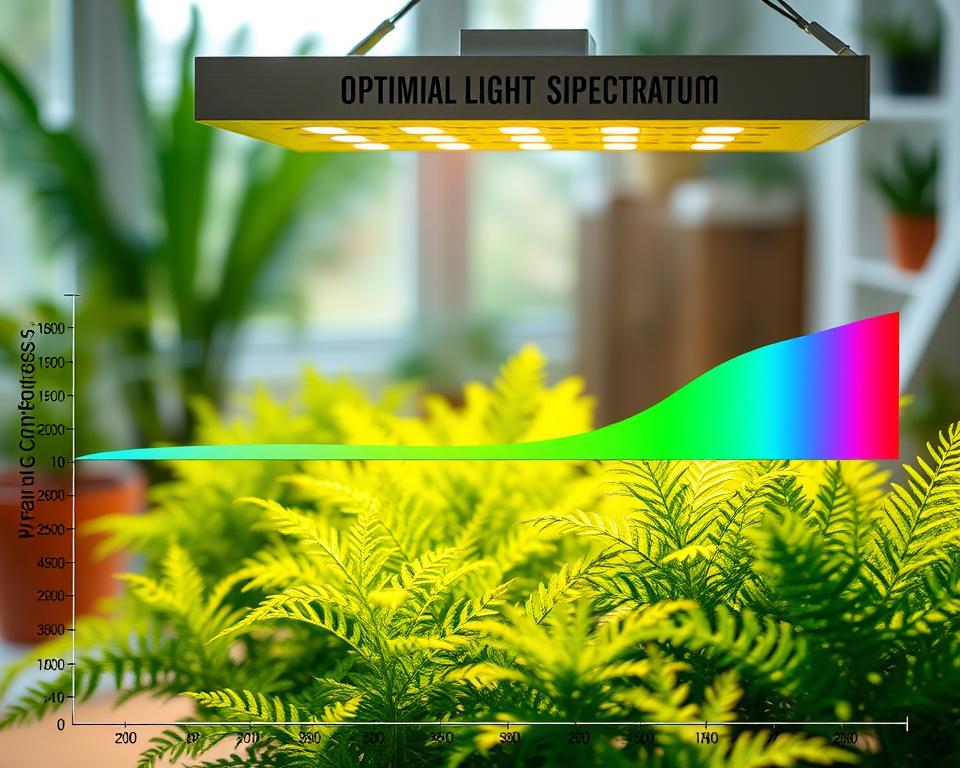
Knowing about PAR helps pick the best LED spectrum for indoor plants. By focusing on PAR, growers can improve plant health and increase yields.
Measuring PAR for Your Indoor Setup
To measure PAR, use a PAR meter. It’s a tool made to measure photosynthetically active radiation in your garden. This is key to ensure your plants get the right amount of light.
| PAR Measurement | Light Intensity | Plant Response |
|---|---|---|
| Low PAR (< 100 μmol/s) | Insufficient light | Weak growth, stretching |
| Optimal PAR (100-500 μmol/s) | Adequate light | Healthy growth, robust development |
| High PAR (> 500 μmol/s) | Excessive light | Light stress, possible damage |
By understanding and measuring PAR, you can tweak your LED lighting. This ensures your plants get the best light spectrum. It boosts their growth and productivity.
Timing and Duration of Light Exposure
Knowing when and how long to give light to indoor plants is key. The right amount of light can greatly affect how well plants grow, how much they produce, and their overall health.
Each plant has its own light needs. Some plants do best with light all the time, while others need darkness to grow. It’s important to know these needs to create the best growing space.
Recommended Light Cycles for Different Plants
Plants react differently to light cycles. For example, lettuce and herbs do well with light all day. But tomatoes and cannabis need a day-night cycle like we do.
| Plant Type | Recommended Light Cycle |
|---|---|
| Lettuce and Herbs | 18-24 hours of light |
| Tomatoes and Cannabis | 12-18 hours of light |
| Flowering Plants | 12 hours of light |
Choosing the right light cycle can really help plants grow and produce more. It’s also important to think about the light’s intensity and spectrum. These things also affect how plants grow.
How to Use Timers for Consistent Light
Timers are a great way to make sure plants get the right light. They automate the lighting schedule, so plants get the light they need without you having to remember.
To use timers well, you should:
- Set the timer according to the recommended light cycle for your plants.
- Make sure the timer can handle the power needs of your LED grow lights.
- Think about using a backup timer or a smart timer that you can control from anywhere.
Timers help create a consistent and perfect lighting schedule for indoor plants. This leads to healthy growth and higher yields.
Troubleshooting Common LED Lighting Issues
Fixing LED lighting problems is vital for a healthy indoor garden. LED lights for plants can face several challenges. Knowing how to solve these issues is key to successful gardening.
Identifying Signs of Light Stress
Plants under LED lights may show stress signs if the light is wrong. Look for yellowing or curling leaves, slow growth, or wilting. Check your plants often and adjust the light as needed.
If plants get too much light, move them further from the LED. Or change the spectrum to a better range.
Adjusting Spectrum Based on Plant Response
How plants react to LED light is a key sign of good lighting. If plants aren’t doing well, try changing the spectrum to meet their needs. Plants in the growing stage need more blue light, while flowering plants need red light.
Watch your plants closely and adjust the light to help them grow better.
- Observe plant color and growth patterns.
- Adjust the LED spectrum according to plant needs.
- Watch for better plant health.
Solutions for Illumination Gaps
Sometimes, parts of your indoor garden don’t get enough light. To fix this, rearrange the LED lights for better coverage. You can also use reflective surfaces to spread light.
Think about adding supplemental lighting where main lights are weak. This ensures all plants get enough light for even growth and health.
Understanding and fixing LED lighting problems helps your indoor plants grow better. This leads to healthier and more productive plants.
Enhancing Plant Growth with Supplemental Light
LED lights are great for indoor gardening, but sometimes you need more. Adding extra light can really help your plants grow better. It’s all about finding the right balance for your plants.
When to Add Additional Light Sources
Knowing when to add more light is important. If your plants aren’t getting enough light, it’s time to think about extra lighting. This is true when plants are growing fast or making flowers and fruits.
Signs that your plants need more light include:
- Slow growth or stunted development
- Pale or discolored leaves
- Stretching or leaning towards the light source
Integrating Other Light Types with LEDs
Mixing different lights can give your plants a better light spectrum. For example, adding high-pressure sodium (HPS) lights or fluorescent lights with LEDs can improve the light quality. HPS lights are great for making plants produce more flowers and fruits.
| Light Type | Benefits |
|---|---|
| LED | Energy-efficient, long-lasting, and customizable spectrum |
| HPS | Promotes fruiting and flowering, high intensity |
| Fluorescent | Provides a broad spectrum, suitable for seedlings and leafy greens |
Seasonal Adjustments for Reliability
Lighting needs change with the seasons. In winter, when it’s darker, extra light is key. In summer, you might need to turn down the lights to avoid too much light. Being ready to change your lighting plan helps your plants all year round.
By choosing the right supplemental lighting and adjusting as needed, you can make your indoor garden strong and healthy. This careful approach to plant lighting spectrum and adapting to your plants’ needs will lead to better growth and health.
Innovative Technologies in LED Grow Lights
The world of indoor gardening is changing fast with new LED grow light technologies. These new tools make growing plants indoors more efficient. They also help gardeners create the best conditions for their plants.
Smart LEDs for Automated Growth
Smart LEDs are a big deal in LED grow light tech. They can change their light and intensity to meet plant needs. This means plants grow better with less work from gardeners.
These smart LEDs have easy-to-use interfaces. Gardeners can set up their plants’ needs, like the plant type and growth stage. Then, the LEDs adjust to give the best LED spectrum for growing plants.
Advances in Spectrum-Tuning Technologies
LED grow lights can now be tuned for different plant needs. Gardeners can change the LED spectrum for indoor plants to help plants grow better. This affects photosynthesis, plant shape, and even the plant’s nutritional value.
Being able to change the spectrum opens up new possibilities. Growers can try different light combinations to get the results they want. This was not possible with old grow lights, making LEDs a big step forward for indoor farming.
As these technologies get better, we’ll see even more advanced LED grow light systems. These will make indoor gardening easier and more efficient.
Conclusion: Maximizing Growth with the Right LED Spectrum
The right LED spectrum is key for indoor plant growth. Knowing about light spectrum and picking the right LEDs boosts plant health and productivity. The grow light spectrum for indoor plants is essential for growth, flowering, and fruiting.
Optimizing Your Indoor Garden
To make your indoor garden better, think about what your plants need. LED grow lights let you change the spectrum for different growth stages. Try different spectrums and setups to find the best for your plants.
Continuing Your Journey
Keep learning and growing in your indoor gardening journey. Understanding and meeting your plants’ needs is the secret to success. By choosing the right spectrum and adjusting your lights, you can see amazing results. Keep exploring and learning to make your indoor garden thrive.